Quick Verdict: The Electric Lotus That Actually Handles Like One
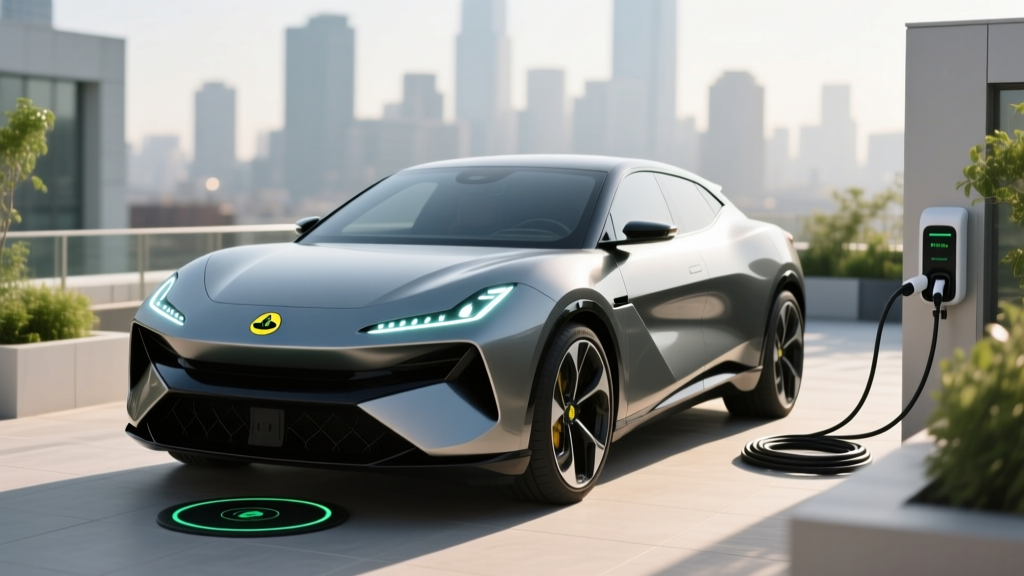
The 2026 Lotus Eletre is the brand's first all-electric SUV and arguably the most polarizing vehicle to wear the Lotus badge. Built in Wuhan, China, under Geely ownership, the Eletre pairs a massive 112 kWh battery pack with up to 905 horsepower in R trim, challenging the Porsche Cayenne EV, Tesla Model X, and BMW iX in the luxury electric SUV segment. It's not a lightweight track car — at over 5,800 pounds, it's a grand tourer that happens to corner with startling competence for its mass.
For US buyers, the big question isn't just whether an electric Lotus delivers on the brand's handling DNA — it's whether the charging infrastructure, parts availability, and dealer network justify the six-figure commitment. Here's every number that matters.
| Specification | Eletre (Base) | Eletre S | Eletre R |
|---|---|---|---|
| EPA Range | ~304 mi | ~304 mi | ~304 mi |
| Battery (usable) | 112 kWh NMC | 112 kWh NMC | 112 kWh NMC |
| Drivetrain | AWD (dual-motor) | AWD (dual-motor) | AWD (dual-motor) |
| Horsepower | 603 hp | 603 hp | 905 hp |
| 0-60 mph | 4.5 sec | 4.5 sec | 2.95 sec |
| Peak DC Charge Rate | 350 kW | 350 kW | 350 kW |
| 10-80% DCFC Time | ~20 min | ~20 min | ~20 min |
| Level 2 Rate | 22 kW | 22 kW | 22 kW |
| MPGe (combined) | ~83 MPGe | ~83 MPGe | ~80 MPGe |
| Base MSRP | $107,400 | $114,900 | $146,400 |
Range and Efficiency: EPA Numbers vs. Reality
Real-World Expectation: Expect 240-270 miles on sustained highway driving at 75+ mph. In cold weather (below 30°F), anticipate a 20-30% reduction — dropping effective range to roughly 210-240 miles. City driving with regenerative braking recovers closer to the EPA sticker.
Lotus equips every Eletre with a 112 kWh usable NMC (nickel-manganese-cobalt) battery — one of the largest packs in any production SUV. The chemistry favors energy density over cycle-life longevity compared to LFP, which matters when you're pushing 905 hp through the cells. Lotus has not published an LFP option for the US market as of the 2026 model year.
Efficiency sits around 83 MPGe combined for the standard Eletre and Eletre S, translating to approximately 40 kWh per 100 miles. The R trim, with its more aggressive powertrain calibration and wider 23-inch wheel option, dips slightly to around 80 MPGe. For context, the BMW iX xDrive50 achieves roughly 86 MPGe with a smaller 111.5 kWh pack, while the Tesla Model X Long Range posts ~102 MPGe thanks to superior aerodynamic efficiency and a lighter curb weight.
The Eletre's 0.26 drag coefficient is competitive, but its 5,843-pound curb weight (base trim) is the efficiency penalty. Physics doesn't negotiate: moving that mass at highway speeds demands energy. Plan real-world road trips around 220-250 miles between DC fast-charging stops to maintain a comfortable buffer.
Charging Speed: 350 kW Peak, But Read the Curve
| Charging Level | Power / Rate | Miles Added per Hour | Notes |
|---|---|---|---|
| Level 1 (120V) | ~1.4 kW | ~3-4 mi/hr | Emergency/trickle only |
| Level 2 (240V, 48A) | ~11.5 kW | ~28-30 mi/hr | Standard home charging |
| Level 2 (240V, max onboard) | 22 kW | ~55 mi/hr | Requires 90A+ circuit; rare residential |
| DC Fast Charge (peak) | 350 kW | N/A | 10-80% in ~20 minutes |
| DC Fast Charge (sustained) | ~200-250 kW avg | N/A | Average across 10-80% session |
The Eletre's 800-volt architecture enables a peak 350 kW DC fast-charge rate — among the highest of any production EV. On a 350 kW-rated station (Electrify America, select Tesla Supercharger V4 stalls with Magic Dock for CCS vehicles), the Eletre can recover from 10% to 80% State of Charge in approximately 20 minutes under ideal thermal conditions.
However, peak is not sustained. The charge curve tapers significantly above 60% SoC, and real-world average charging power across the 10-80% window is closer to 200-250 kW. Battery preconditioning is essential: use the Eletre's navigation-routed preconditioning to warm the pack before arrival at a DC station. Without preconditioning — especially in cold weather — your peak rate may not exceed 150 kW, extending that 10-80% session to 30+ minutes.
At home, the 22 kW onboard charger is a standout feature, but it requires a dedicated 90-amp or larger circuit and hardwired Level 2 equipment (such as a ChargePoint Home Flex configured for 80A output). Most residential installations use a 48A circuit delivering ~11.5 kW — still enough for a full overnight charge in roughly 10 hours. Budget $800-$2,000 for a professional Level 2 installation depending on your electrical panel capacity and run length.
Performance: 905 HP and Genuine Chassis Communication
The Eletre R's 2.95-second 0-60 mph time places it squarely in supercar-SUV territory alongside the Tesla Model X Plaid (2.5 sec) and Porsche Cayenne Turbo E-Hybrid (3.6 sec). But straight-line speed is the least interesting thing about this car.
Lotus tuned the Eletre's dual-motor AWD system with a rear bias and torque-vectoring capability that makes the 5,800+ pound mass feel surprisingly adjustable mid-corner. The available active rear-wheel steering (standard on R trim) tightens the turning circle and adds a layer of agility unusual in this segment. The adaptive air suspension with continuous damping control offers a 55 mm ride-height range, dropping into a low, stiffened mode at speed or in Dynamic drive mode.
Braking is handled by six-piston front calipers with 412 mm discs (Brembo) on the R trim, necessary given the vehicle's mass and performance envelope. Regenerative braking offers adjustable levels but does not provide true one-pedal driving to a full stop — Lotus expects you to use the friction brakes at low speeds.
Interior, Cargo, and Daily Livability
The Eletre seats five in a cabin dominated by a 15.1-inch OLED center touchscreen that folds flat into the dashboard when not in use — a distinctive design choice Lotus calls a "disappearing" display. A 12.6-inch driver display and an available 29-inch AR head-up display round out the screen complement. The infotainment runs Lotus's HyperOS, which supports wireless Apple CarPlay and Android Auto, over-the-air updates, and a 5G-connected navigation system.
Cargo volume behind the rear seats measures approximately 21.2 cubic feet, expanding to roughly 54 cubic feet with the 40/20/40 split rear seats folded. That trails the BMW iX (35.5 cu ft behind rear seats) and the Tesla Model X (behind the second row varies by configuration but generally exceeds 40 cu ft). The Eletre also includes a small front trunk (frunk) of approximately 1.6 cubic feet — enough for a charging cable bag, not much more.
Rear legroom is generous at around 39.4 inches, and the flat floor (no transmission tunnel) makes the middle seat usable for adults on shorter trips. Build quality in the Geely-produced vehicle is solid, with available Nappa leather, Alcantara, and a recycled-fiber textile option. Panel gaps on early US-delivery units have been generally consistent, though Lotus's US dealer network remains thin — roughly 15-20 locations as of early 2026 — which matters for service and warranty work.
Pricing, Trims, and Federal Tax Credit Eligibility
| Trim | Base MSRP | Est. As-Tested | §30D Federal Credit | Effective Price |
|---|---|---|---|---|
| Eletre (Base) | $107,400 | $112,000-$118,000 | $0 (exceeds MSRP cap) | $107,400+ |
| Eletre S | $114,900 | $120,000-$130,000 | $0 (exceeds MSRP cap) | $114,900+ |
| Eletre R | $146,400 | $155,000-$165,000 | $0 (exceeds MSRP cap) | $146,400+ |
The Eletre does not qualify for the federal §30D EV tax credit. Under current IRS rules, SUVs must have an MSRP at or below $80,000 to be eligible. Every Eletre trim exceeds that cap significantly. Additionally, buyer income limits apply ($300,000 joint / $150,000 single for the §30D credit), and critical-mineral and battery-component sourcing requirements must be met — though the MSRP cap alone disqualifies the Eletre regardless of income or sourcing.
Some states offer their own EV incentives that may apply to higher-priced vehicles. Check your state's energy office or DMV for current programs, as these vary by jurisdiction and change frequently.
Driver Assistance and Smart Features
Lotus equips the Eletre with its Intelligent Drive system, which includes adaptive cruise control with stop-and-go, lane-centering assist, automated emergency braking, blind-spot monitoring, and a 360-degree camera system. The Eletre uses four LiDAR units (deployable from the A-pillars and roof) for enhanced environmental mapping — a hardware choice that sets it apart from camera-centric competitors like Tesla.
In practice, the system performs comparably to BMW's Driving Assistant Professional or Mercedes-Benz's Driver Assistance Package. It handles highway lane-keeping and stop-and-go traffic competently but does not offer hands-free driving on mapped highways like GM's Super Cruise or Ford's BlueCruise. Lotus has suggested future over-the-air updates may expand capability, but as of the 2026 model year, the system requires active driver supervision at all times.
Other notable tech: a deployable LiDAR system, a 23-speaker KEF Reference audio system (standard on S and R), digital key via smartphone, and a "Lotus Drive" mode configurator that lets you customize steering weight, suspension firmness, regen level, and throttle response independently.
Warranty, Battery Longevity, and Ownership Costs
Lotus provides a 4-year/50,000-mile basic vehicle warranty and an 8-year/100,000-mile battery and powertrain warranty — standard for the luxury EV segment. The battery warranty guarantees a minimum 70% capacity retention over the 8-year/100,000-mile period, which is the industry norm (Tesla and BMW offer the same threshold).
NMC chemistry in the Eletre's 112 kWh pack is expected to degrade approximately 10-15% over the first 100,000 miles based on industry averages for similar large-format NMC packs. Factors that accelerate degradation include frequent DC fast-charging to 100%, sustained high-SoC storage (parking at 100% for days), and repeated high-power discharge cycles (launching the R trim repeatedly). For maximum longevity, charge to 80% for daily use and reserve 100% charges for road trips.
Insurance costs for the Eletre are significant. Expect annual premiums in the $3,500-$5,500 range depending on your state, driving record, and coverage level — roughly 25-40% higher than a comparably priced BMW iX, based on early insurer data. The combination of high repair costs, limited parts availability from a small US dealer network, and the vehicle's performance envelope drives these premiums. Get quotes before purchasing.
Pros, Cons, and Who Should Buy the Electric Lotus
- 350 kW peak DC charging — among the fastest in production
- Genuine chassis dynamics for a 5,800-lb SUV; rear-steer agility
- 22 kW onboard AC charger (with appropriate home circuit)
- Distinctive design; stands out in a sea of Model X and iX
- Generous 112 kWh battery provides comfortable road-trip buffer
- LiDAR-equipped ADAS hardware for future capability
- No federal tax credit eligibility (MSRP exceeds $80K cap)
- Thin US dealer network (~15-20 locations) limits service access
- Cargo space (21.2 cu ft) trails BMW iX and Tesla Model X
- High insurance premiums due to parts cost and limited repair network
- No true one-pedal driving; regen doesn't bring vehicle to full stop
- Heavy — efficiency (83 MPGe) lags lighter competitors
Choose a competitor (BMW iX, Tesla Model X, Porsche Cayenne EV) if: You need maximum cargo space, want the widest service network, require federal tax credit eligibility (iX xDrive50 at ~$87K MSRP still exceeds the cap, but certified pre-owned or lower trims of competitors may qualify), or prioritize efficiency and MPGe over handling engagement.
Frequently Asked Questions
What is the real-world range of the electric Lotus Eletre?
The EPA estimates approximately 304 miles for all trims. In real-world mixed driving, expect 260-280 miles. Sustained highway driving at 75+ mph reduces this to roughly 240-270 miles. Cold weather (below 30°F) can drop effective range to 210-240 miles due to battery resistance and cabin heating demands. The Eletre's heat pump helps mitigate winter losses but doesn't eliminate them.
How fast does the Lotus Eletre charge?
On a 350 kW DC fast charger with a preconditioned battery, the Eletre charges from 10% to 80% in approximately 20 minutes, with peak power reaching 350 kW but averaging 200-250 kW across the session. At home on a standard 48A Level 2 charger (11.5 kW), a full charge takes about 10 hours. With a 22 kW-capable home setup (requiring a 90A+ circuit), that drops to roughly 5.5 hours.
Does the Lotus Eletre qualify for the federal EV tax credit?
No. The IRS §30D tax credit caps eligible SUVs at $80,000 MSRP. The Eletre starts at $107,400, disqualifying all trims regardless of buyer income or battery sourcing. Some state-level incentives may still apply — check your state's official energy or DMV website for current programs.
Is the Lotus Eletre worth buying over a Tesla Model X or BMW iX?
It depends on your priorities. The Eletre offers superior handling dynamics and 350 kW charging versus both competitors. However, the Tesla Model X provides access to the Supercharger network (though NACS adapters are expanding access for CCS vehicles), more cargo space, and a lower starting price for the Long Range trim (~$79,990). The BMW iX offers a more established dealer network, slightly better efficiency, and comparable luxury. If handling engagement and exclusivity matter most, the Eletre earns its premium. If practicality and service access lead your decision, the iX or Model X are safer bets.
What battery chemistry does the Eletre use?
The Eletre uses an NMC (nickel-manganese-cobalt) lithium-ion battery with 112 kWh of usable capacity. NMC offers higher energy density than LFP, which is necessary to achieve 300+ miles in a performance SUV. The trade-off is slightly faster degradation over time and higher sensitivity to sustained high-SoC storage. Lotus warranties the pack for 8 years/100,000 miles at 70% minimum capacity retention.
How many Lotus dealers are in the US?
As of early 2026, Lotus operates approximately 15-20 retail and service locations in the United States, concentrated in major metro areas (New York, Los Angeles, San Francisco, Miami, Dallas, Chicago). If you don't live near a Lotus dealer, factor in the logistics of service visits — mobile service options are limited compared to Tesla's ranger fleet. Check Lotus's official site for the current dealer locator before committing to a purchase.