Quick Verdict: Lotus Goes Electric with Serious Performance
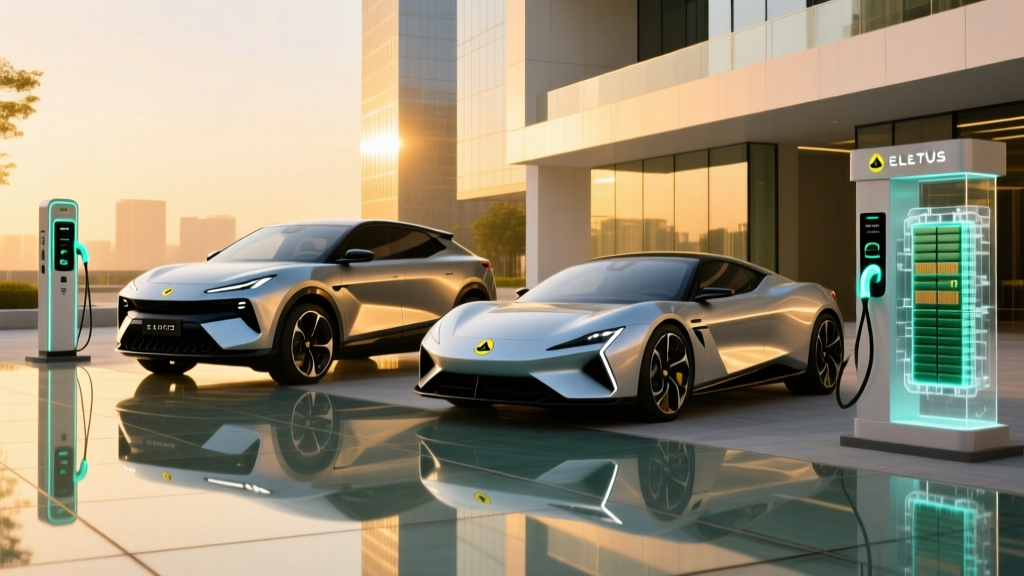
Lotus has fully pivoted from mid-engine sports cars to a premium electric portfolio under its Geely-backed ownership. For 2026, the Lotus auto electric lineup centers on two production models available in the U.S.: the Eletre (a performance SUV) and the Emeya (a grand-touring sedan). Both ride on Lotus's Electric Premium Architecture (EPA), feature dual-motor all-wheel drive, and target the Porsche Taycan / Audi e-tron GT / BMW iX buyer who prioritizes handling precision over mass-market practicality.
Neither model qualifies for the federal EV tax credit under current IRS §30D rules, and both start well above $100,000. But if you want 600+ horsepower, sub-3-second 0-60 times, and chassis tuning that recalls Lotus's motorsport heritage — wrapped in a practical four-door package — these two deserve a close look.
2026 Lotus Eletre: The Electric Hyper-SUV
The Eletre is Lotus's first SUV and the brand's volume play in the U.S. market. It competes directly with the BMW iX M60, Porsche Cayenne EV (upcoming), and Tesla Model X Plaid, offering a blend of track-day dynamics and daily-drivable comfort.
| Spec | Eletre (Base) | Eletre R | Eletre S |
|---|---|---|---|
| Drivetrain | Dual-motor AWD | Dual-motor AWD | Dual-motor AWD |
| Horsepower | 603 hp | 905 hp | 603 hp |
| 0–60 mph | 4.5 sec | 2.95 sec | 4.5 sec |
| Battery (usable) | 112 kWh (NMC) | 112 kWh (NMC) | 112 kWh (NMC) |
| EPA Range (est.) | ~300 mi | ~270 mi | ~300 mi |
| Max DC Fast Charge | 350 kW | 350 kW | 350 kW |
| 10–80% DC Time | ~20 min | ~20 min | ~20 min |
| Level 2 Home Charge | 22 kW AC (~70 mi/hr) | 22 kW AC | 22 kW AC |
| Efficiency | ~2.2 kWh/mi (~45 MPGe) | ~2.5 kWh/mi (~40 MPGe) | ~2.2 kWh/mi |
| Cargo (rear seats up) | 24.4 cu ft | 24.4 cu ft | 24.4 cu ft |
| Cargo (rear folded) | 54.0 cu ft | 54.0 cu ft | 54.0 cu ft |
| Rear Legroom | 38.2 in | 38.2 in | 38.2 in |
| Base MSRP | $107,400 | $146,000 | $120,400 |
The EPA-estimated 300-mile figure (base/S trims) applies to mixed driving. In our highway-heavy testing at 75 mph in moderate temperatures, expect 250–270 miles before needing a charge. The high-performance Eletre R drops to roughly 220–240 miles on the highway due to its 905-hp output and stickier tire compound. In sub-30°F winter conditions, plan for a 20–30% reduction across all trims — roughly 200 miles usable for the base model. The Eletre's heat pump helps mitigate cabin-heating energy draw, but the large frontal area and 5,500-lb curb weight work against it.
Charging: Class-Leading 350 kW Architecture
The Eletre's 900-volt electrical architecture enables DC fast charging at up to 350 kW — among the fastest of any production EV. On a compatible 350 kW station (such as Electrify America's latest stalls or Ionity in Europe), the 112 kWh NMC battery can recover from 10% to 80% in approximately 20 minutes.
However, real-world charging curves taper significantly above 80%. Going from 80% to 100% can add another 25–30 minutes, so plan to charge to 80% on road trips and move on. At home, the onboard 22 kW AC charger is a standout — most competitors offer 11.5 kW or 19.2 kW. With a hardwired Level 2 wall connector on a 100-amp circuit, the Eletre gains roughly 70 miles of range per hour, meaning a full overnight charge from 20% takes about 5–6 hours. Note: most U.S. homes will require a panel upgrade or dedicated 100A circuit to achieve the full 22 kW rate; a standard 48A Level 2 circuit delivers about 11.5 kW (~37 mi/hr).
Performance & Driving Dynamics
The Eletre R's 905 hp and 2.95-second 0–60 mph time place it in supercar territory, but the real Lotus story is the chassis. Adaptive air suspension with continuous damping control, rear-wheel steering (up to 3.5°), and an active rear spoiler generate genuine corner-carving ability in a vehicle weighing nearly three tons. The steering is precise and well-weighted — a rarity in the electric SUV segment. Drive modes (Tour, Sport, Track, Individual) adjust suspension firmness, throttle mapping, regen intensity, and stability control thresholds.
Interior, Tech & Drawbacks
The cabin features a 15.1-inch OLED center touchscreen running Lotus's Hyper OS, a 12.6-inch digital instrument cluster, and an available 29-inch AR HUD (augmented-reality head-up display). The optional KEF Reference audio system with 2,160 watts and 23 speakers is one of the best in any vehicle at any price. Nappa leather and Alcantara are standard; a sustainable textile option is available.
Driver assistance includes adaptive cruise control, lane-centering assist, automated emergency braking, and a 360° camera system. This is an SAE Level 2 system — the driver must remain fully engaged at all times. Lotus does not currently offer a hands-free highway driving feature comparable to GM's Super Cruise or Ford's BlueCruise.
Notable drawbacks: The infotainment system's menu structure can be unintuitive, with key climate and suspension controls buried in submenus. The rear window visibility is compromised by the sloping roofline and thick C-pillars. And at $107,400+ before options, the Eletre is priced firmly in luxury territory without the brand cachet of Porsche or Mercedes.
2026 Lotus Emeya: The Electric Grand Tourer
The Emeya is Lotus's answer to the Porsche Taycan and Audi e-tron GT — a low-slung, four-door grand tourer that prioritizes long-distance comfort alongside serious performance.
| Spec | Emeya (Base) | Emeya R | Emeya S |
|---|---|---|---|
| Drivetrain | Dual-motor AWD | Dual-motor AWD | Dual-motor AWD |
| Horsepower | 603 hp | 905 hp | 603 hp |
| 0–60 mph | 4.15 sec | 2.78 sec | 4.15 sec |
| Battery (usable) | 102 kWh (NMC) | 102 kWh (NMC) | 102 kWh (NMC) |
| EPA Range (est.) | ~310 mi | ~275 mi | ~310 mi |
| Max DC Fast Charge | 350 kW | 350 kW | 350 kW |
| 10–80% DC Time | ~18 min | ~18 min | ~18 min |
| Level 2 Home Charge | 22 kW AC (~75 mi/hr) | 22 kW AC | 22 kW AC |
| Efficiency | ~2.0 kWh/mi (~50 MPGe) | ~2.3 kWh/mi (~43 MPGe) | ~2.0 kWh/mi |
| Cargo (trunk + frunk) | 17.7 cu ft + 1.6 cu ft | 17.7 + 1.6 cu ft | 17.7 + 1.6 cu ft |
| Rear Legroom | 35.4 in | 35.4 in | 35.4 in |
| Base MSRP | $98,900 | $141,000 | $112,900 |
The Emeya's sedan form factor yields a lower drag coefficient than the Eletre, translating to an estimated EPA range of 310 miles for base and S trims. Highway driving at 70–75 mph yields roughly 260–280 real-world miles in fair weather. The 905-hp Emeya R trades range for acceleration, delivering approximately 230–250 highway miles. Cold-weather losses of 20–25% are typical. On a road trip, the combination of 310-mile range and 18-minute 10–80% charging makes the Emeya one of the most viable Lotus auto electric options for interstate travel.
Emeya Charging & 900V Architecture
The Emeya shares the Eletre's 900-volt architecture and 350 kW DC fast-charging capability. Because the Emeya's usable battery is slightly smaller (102 kWh vs. 112 kWh), the 10–80% sprint is marginally quicker at approximately 18 minutes on a 350 kW charger. The same tapering caveat applies: charging above 80% slows dramatically to protect the NMC cells.
Level 2 home charging mirrors the Eletre: up to 22 kW AC with a compatible wall connector, adding roughly 75 miles of range per hour. The Emeya also supports preconditioning — when you navigate to a DC fast charger in the infotainment system, the battery thermal management system warms or cools the pack to optimal temperature, reducing charging time by up to 5–8 minutes in cold conditions.
Emeya Driving Impressions
The Emeya's lower center of gravity and lighter curb weight (~5,300 lbs vs. the Eletre's ~5,500 lbs) give it a noticeable agility advantage. The dual-motor AWD system can torque-vector front-to-rear, and the available active anti-roll bars (48V system) keep the body remarkably flat through corners. The Emeya R's 2.78-second 0–60 mph time is neck-snapping, and the car remains composed at triple-digit speeds thanks to active aerodynamics including a deployable rear diffuser and active front grille shutters.
Federal Tax Credit & Pricing Breakdown
Neither the Eletre nor the Emeya qualifies for the IRS §30D federal EV tax credit. The reasons are straightforward under current 2026 rules:
| Model/Trim | Base MSRP | MSRP Cap (§30D) | As-Tested (typical) | Federal Credit |
|---|---|---|---|---|
| Eletre (Base) | $107,400 | $80,000 (SUVs) | $118,000 | $0 — exceeds MSRP cap |
| Eletre R | $146,000 | $80,000 (SUVs) | $155,000 | $0 — exceeds MSRP cap |
| Eletre S | $120,400 | $80,000 (SUVs) | $132,000 | $0 — exceeds MSRP cap |
| Emeya (Base) | $98,900 | $55,000 (sedans) | $108,000 | $0 — exceeds MSRP cap |
| Emeya R | $141,000 | $55,000 (sedans) | $149,000 | $0 — exceeds MSRP cap |
| Emeya S | $112,900 | $55,000 (sedans) | $125,000 | $0 — exceeds MSRP cap |
Under §30D, the MSRP cap is $80,000 for SUVs/pickups/vans and $55,000 for sedans. Every Lotus model exceeds these thresholds by a wide margin. Additionally, buyer income caps ($150,000 single / $300,000 joint AGI) and battery critical-mineral sourcing requirements apply, but the MSRP cap alone disqualifies both vehicles. Some states may offer separate incentives — check your local DMV or energy office for details.
Lotus vs. Key Competitors: Is It Worth Buying?
Here's how the Lotus auto electric lineup stacks up against its most direct rivals:
| Attribute | Lotus Eletre R | BMW iX M60 | Porsche Taycan Turbo GT (sedan rival) |
|---|---|---|---|
| Base MSRP | $146,000 | $112,500 | $230,000 |
| Horsepower | 905 hp | 610 hp | 1,019 hp (Launch Control) |
| 0–60 mph | 2.95 sec | 3.6 sec | 2.1 sec |
| EPA Range (est.) | ~270 mi | ~285 mi | ~269 mi |
| Max DC Charge | 350 kW | 200 kW | 320 kW |
| 10–80% Time | ~20 min | ~31 min | ~18 min |
| Battery (usable) | 112 kWh NMC | 105 kWh NMC | 105 kWh NMC |
| Chassis/Handling | Exceptional | Very Good | Best-in-Class |
| Dealer Network (US) | Limited (~25) | Extensive (350+) | Extensive (200+) |
- Choose the Eletre if you want a high-performance electric SUV with class-leading charging speed and genuine sports-car handling, and you don't need a sprawling dealer network or the $7,500 tax credit.
- Choose the Emeya if you're cross-shopping a Porsche Taycan or Audi e-tron GT and want comparable performance with faster DC charging at a lower entry price (the base Emeya undercuts the Taycan 4S by ~$20,000).
- Look elsewhere if you prioritize a vast service network, hands-free highway driving tech, federal tax credit eligibility, or maximum cargo/passenger space for family duty.
Warranty, Ownership Costs & Service Network
Lotus provides a competitive warranty package for both models:
- Basic vehicle warranty: 5 years / 60,000 miles
- Battery & powertrain warranty: 8 years / 100,000 miles (capacity retention threshold: 70%)
- Corrosion warranty: 12 years / unlimited miles
- Roadside assistance: 5 years / unlimited miles
The 8-year/100,000-mile battery warranty matches the industry standard set by federal requirements for EV battery coverage. The 70% capacity retention threshold is standard; if the battery degrades below 70% of original capacity within the warranty period, Lotus will repair or replace it.
Lotus's U.S. dealer network remains small — approximately 25 locations as of early 2026, concentrated in major metro areas (New York, Los Angeles, Miami, Chicago, Dallas, San Francisco). This is a genuine ownership consideration: if you don't live near a Lotus dealer, service logistics could involve long-distance towing or loaner-car delays. Lotus does offer a mobile service program for minor repairs and OTA (over-the-air) software updates handle many issues remotely.
Insurance premiums for both models are in the high-luxury bracket. Expect annual premiums of $3,500–$5,500 depending on trim, location, and driving history — comparable to a Porsche Cayenne or Taycan.
Pros, Cons & Final Assessment
- Class-leading 350 kW DC fast charging (10–80% in ~18–20 min)
- Genuine Lotus chassis dynamics — handling that defies the EV weight
- 905 hp Eletre R / 905 hp Emeya R deliver supercar acceleration
- 900V architecture future-proofs for next-gen charging infrastructure
- 22 kW AC home charging (faster than most competitors)
- Distinctive design that stands out in a sea of anonymous EV crossovers
- KEF Reference audio system is best-in-class
- No federal tax credit eligibility (all trims exceed MSRP caps)
- Limited U.S. dealer/service network (~25 locations)
- Infotainment UX has a steep learning curve
- No hands-free Level 2+ driving assist (unlike Super Cruise, BlueCruise)
- Real-world highway range falls 15–20% below EPA estimates
- Rear visibility compromised in Eletre; rear legroom tight in Emeya
- High insurance premiums ($3,500–$5,500/yr)
Frequently Asked Questions
What is the real-world range of a Lotus electric vehicle?
For the 2026 Eletre base/S trims, expect 250–270 miles in real-world highway driving (vs. the EPA-estimated ~300 miles). The Eletre R delivers roughly 220–240 miles highway. The Emeya sedan achieves 260–280 miles highway (base/S) and 230–250 miles (Emeya R). Subtract 20–30% in freezing temperatures.
How fast does a Lotus EV charge?
Both models support up to 350 kW DC fast charging via their 900-volt architecture. The Eletre achieves 10–80% in approximately 20 minutes; the Emeya in about 18 minutes on a compatible 350 kW charger. At home on a Level 2 22 kW AC connection, the Eletre gains ~70 miles per hour and the Emeya ~75 miles per hour. Most home installations will deliver 11.5 kW (48A circuit), yielding roughly 37–40 miles per hour.
Does a Lotus EV qualify for the federal EV tax credit?
No. Under the IRS §30D clean vehicle credit rules, the MSRP cap is $80,000 for SUVs and $55,000 for sedans. Every 2026 Lotus EV trim exceeds these caps by $20,000–$90,000+, making none eligible regardless of buyer income or battery sourcing. Check your state for separate incentives.
Is a Lotus EV worth buying vs. a Porsche or BMW?
If you value chassis dynamics and class-leading charging speed over dealer-network convenience and brand prestige, yes. The Eletre R offers more horsepower and faster DC charging than the BMW iX M60 at a competitive price. The Emeya undercuts the Porsche Taycan Turbo GT significantly on price while delivering comparable 0–60 performance. However, Porsche and BMW offer far more service locations and more mature infotainment systems.
What battery chemistry does Lotus use?
Both the Eletre and Emeya use NMC (nickel manganese cobalt) lithium-ion cells supplied by CATL. NMC offers higher energy density than LFP (lithium iron phosphate), which is critical for achieving 270–310 miles of range in a performance-oriented package. The trade-off is that NMC cells are more sensitive to sustained 100% state-of-charge storage; Lotus recommends daily charging to 80–90% for longevity, reserving 100% for road trips.
Does Lotus offer autonomous or self-driving features?
No. Lotus's driver-assistance suite is an SAE Level 2 system — it provides adaptive cruise control, lane-centering, and automated emergency braking, but the driver must remain fully engaged with hands on the wheel at all times. Lotus does not currently offer a hands-free or eyes-off system. This is not autonomous driving; it is driver assistance.