Quick Answer: Is an EV Worth It in Los Angeles in 2026?
For most LA drivers, yes — but the math depends on your commute, home charging access, and which model you choose. A typical LA commuter driving 15,000 miles/year in a mid-range EV like the Hyundai Ioniq 6 (EPA 361 mi, ~$42,000 MSRP) will spend roughly $540/year on electricity using LADWP residential rates versus $1,950+/year on gasoline in a comparable 28 MPG gas sedan. That's ~$1,400/year in fuel savings alone. Add the federal §30D tax credit (up to $7,500 if your chosen model qualifies), California's HOV lane stickers for new zero-emission vehicles, and lower maintenance costs, and most LA buyers reach break-even within 3–4 years. The catch: you need reliable Level 2 home or workplace charging, and your model must meet IRS battery-sourcing and MSRP/income caps to claim the full credit.
Why Los Angeles Is One of the Best EV Markets in the Country
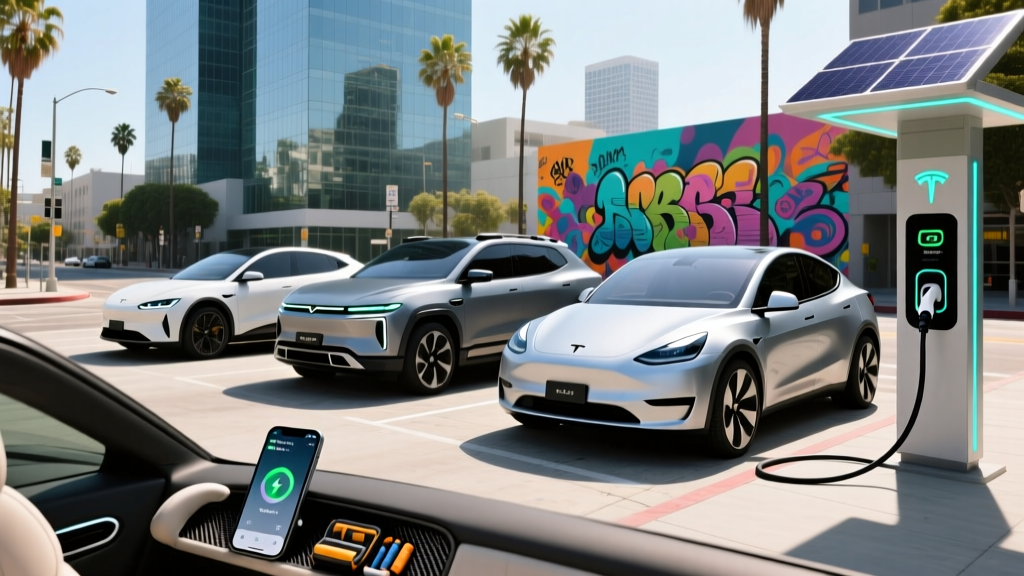
LA isn't just EV-friendly — it's structurally optimized for electric ownership in ways most U.S. cities aren't. The region combines mild year-round temperatures (averaging 55–75°F), a massive public charging network, aggressive state incentives, and some of the worst traffic congestion in the nation — which paradoxically makes EVs more efficient because regenerative braking recovers energy in stop-and-go conditions.
California's Zero Emission Vehicle mandate means nearly every major automaker prioritizes the state for inventory allocation, giving LA buyers access to trims and models that sell out elsewhere. As of early 2026, LA County has over 15,000 public charging ports across networks including Tesla Supercharger, Electrify America, EVgo, and ChargePoint, according to the Alternative Fuels Data Center. The NACS (Tesla) connector has become the dominant standard, with most 2025–2026 model-year EVs shipping with NACS ports natively, and legacy CCS vehicles able to use Tesla Superchargers via adapter.
The climate advantage is significant and quantifiable. Battery range loss from cold weather — a major concern in northern states — is minimal in LA. Where a driver in Chicago might see 25–30% range reduction at 20°F, LA drivers rarely experience temperatures that trigger meaningful thermal losses. Expect real-world range within 5–8% of the EPA sticker in typical LA driving, versus 15–25% in cold-climate cities.
Real Costs: EV vs Gas in Los Angeles
The headline fuel-cost advantage is real, but LA buyers need the full picture — including higher insurance premiums, potential home electrical upgrades, and the nuances of California electricity rates.
| Category | EV (e.g., Ioniq 6 SEL) | Gas Sedan (e.g., Toyota Camry LE) |
|---|---|---|
| Purchase price (MSRP) | $42,450 | $28,500 |
| Federal tax credit (§30D) | −$3,750 to −$7,500* | $0 |
| CA Clean Fuel Rebate / local | −$1,000 to −$2,000 | $0 |
| Fuel/Energy (5 years) | $2,700 (LADWP residential) | $9,750 (CA avg $4.50/gal, 28 MPG) |
| Maintenance (5 years) | $1,800 | $3,500 |
| Insurance (5 years) | $11,500 | $8,500 |
| Home charger install (Level 2) | $1,200–$3,500 | $0 |
| Estimated 5-year net cost | $49,950–$54,700 | $50,250 |
* §30D credit amount depends on battery sourcing compliance, buyer income caps ($150K single / $300K joint), and MSRP caps ($55K sedans / $80K SUVs). Verify your exact eligibility on IRS.gov or with a tax professional. The credit is available as a point-of-sale transfer at the dealer.
Key takeaways from the numbers:
- Fuel savings are the biggest lever. LADWP's residential EV rate (as low as $0.13/kWh off-peak with the TOU-D-PRIME plan) means a 77 kWh battery costs roughly $10 to fill from empty — yielding 3–4 cents per mile. Gas at $4.50/gal in a 28 MPG car costs 16 cents per mile.
- Maintenance savings are real but modest. EVs eliminate oil changes, transmission fluid, spark plugs, and exhaust repairs. Brake pad life extends significantly due to regenerative braking. But tire wear can be 15–20% higher due to vehicle weight and instant torque.
- Insurance costs 20–35% more for EVs. Higher repair costs, specialized parts, and battery replacement risk drive premiums up. Get quotes before purchasing — the spread varies dramatically by carrier and model.
- Home charging installation is the wildcard. If your panel has capacity and your garage is near the electrical service, a Level 2 (240V, 40–48 amp) charger installation runs $1,200–$2,000. If you need a panel upgrade from 100A to 200A, add $2,000–$4,000.
Charging in LA: Home, Workplace, and Public Networks
Charging access is the single most important factor in EV satisfaction. LA buyers fall into three categories, and each has a different strategy.
Home Charging (Single-Family Home or Townhouse with Garage)
This is the ideal scenario. A Level 2 home charger (7.7–11.5 kW) adds 25–44 miles of range per hour of charging, easily replenishing a daily 40-mile LA commute overnight. Budget $500–$700 for a quality Level 2 unit (ChargePoint Home Flex, Emporia Level 2, or Tesla Wall Connector) plus $700–$2,800 for licensed electrician installation depending on run length and panel capacity.
LADWP offers a $500 rebate for residential EV charger installation on qualifying TOU rate plans, partially offsetting costs. Always get a load calculation from your electrician before committing — a 200A panel with existing heavy loads (A/C, electric range, dryer) may need an upgrade.
Apartment and Condo Charging
Roughly 55% of LA residents rent or live in multi-unit buildings, making this the most common pain point. California's "Right to Charge" law (Civil Code §4745) requires HOAs to permit installation of charging equipment in designated parking spaces, but the unit owner typically bears the cost — $3,000–$8,000 per port when shared electrical infrastructure upgrades are needed.
Practical alternatives: workplace charging (offered by many LA employers), LADWP public fast-charging stations, or relying on nearby Supercharger and Electrify America locations. If you can't charge at home, a PHEV (plug-in hybrid) with 30–40 miles of electric range may be a more practical choice than a full BEV.
Public DC Fast Charging
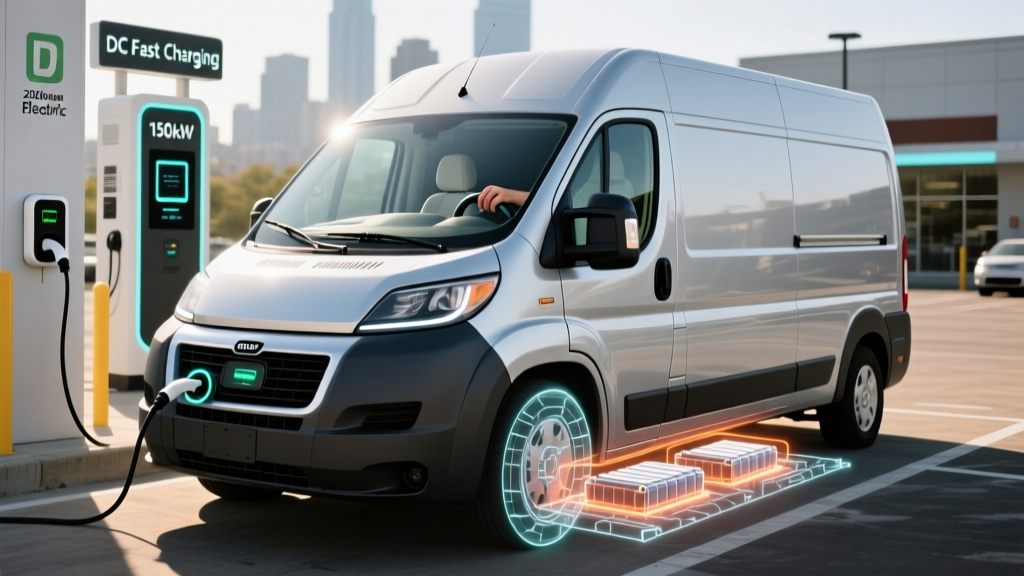
LA's public DC fast-charging network is among the densest in the U.S. Expect 150–350 kW chargers at most major locations. Real-world charging speed depends on your vehicle's peak acceptance rate and the charge curve:
- Hyundai Ioniq 5/6 (800V architecture): Peaks at ~240 kW, 10–80% in ~18 minutes on a 350 kW charger. Sustains high rates to ~60% SoC before tapering.
- Tesla Model Y: Peaks at ~250 kW at V3 Superchargers, 10–80% in ~20 minutes.
- Ford Mustang Mach-E: Peaks at ~150 kW, 10–80% in ~35 minutes.
DC fast charging costs significantly more than home charging — typically $0.30–$0.55/kWh on Electrify America or EVgo, or $0.28–$0.36/kWh at Tesla Superchargers for non-Tesla vehicles. This still undercuts gasoline on a per-mile basis, but exclusive public charging erodes the cost advantage to ~30–40% savings instead of 70%+.
HOV Lane Access: LA's Hidden EV Perk
For LA commuters on the 405, 10, or 101 freeways, the Clean Air Vehicle decal program is arguably the most valuable EV incentive in the state. New zero-emission vehicles purchased in 2025–2026 qualify for white Clean Air Vehicle decals granting single-occupant HOV lane access through January 1, 2029.
The time savings are substantial. A 405 commute from Westwood to Sherman Oaks at 8 AM can drop from 45 minutes to 18 minutes with HOV access. Over a year of weekday commuting, that's roughly 220 hours saved — a benefit with no direct price tag but enormous quality-of-life value.
Qualifying vehicles include all battery-electric vehicles (BEVs) and fuel cell vehicles (FCVs). Plug-in hybrids (PHEVs) received green decals through September 2025; check the California Energy Commission for current PHEV eligibility, as rules have tightened.
EV vs Gas vs Hybrid: Which Powertrain Fits Your LA Driving Pattern?
| Factor | BEV (Full Electric) | PHEV (Plug-in Hybrid) | Gas / HEV |
|---|---|---|---|
| Best for | Home chargers, <250 mi daily | No home charging, mixed driving | High mileage, no charging access |
| EPA range / efficiency | 250–361 mi / 120–140 MPGe | 28–42 mi electric + 400+ mi gas | 400–550 mi / 28–52 MPG |
| "Fuel" cost per mile (LA) | 3–5¢ (home) / 10–15¢ (public DC) | 3–5¢ electric + 14–16¢ gas | 14–18¢ |
| HOV lane sticker (2026) | Yes (white decal) | Limited (check CEC) | No |
| Federal tax credit | Up to $7,500 (§30D) | Up to $7,500 (if eligible) | $0 |
| Maintenance (annual) | ~$350 | ~$550 | ~$700 |
| LA traffic advantage | Regen braking recovers energy | Electric mode at low speeds | Idling burns fuel |
LA Powertrain Decision Framework
Choose a BEV if: You have home or workplace Level 2 charging, your daily driving is under 200 miles, you want HOV lane access, and you plan to keep the vehicle 5+ years to recoup the higher purchase price through fuel savings.
Choose a PHEV if: You rent an apartment without charging, you take regular road trips beyond 300 miles, or you want EV-style commuting (30–40 electric miles covers most LA errands) with gas backup for Malibu-to-Palm Springs weekend runs.
Choose a hybrid (HEV) if: You have zero charging access at home or work, you drive 20,000+ miles/year on the freeway, and your budget is under $32,000. A Toyota Prius (57 MPG combined) still beats most EVs on pure cost-per-mile when home charging isn't available.
Common LA EV Misconceptions — Fact-Checked
| Myth | Fact |
|---|---|
| "The grid can't handle everyone driving EVs." | LADWP has added over 2 GW of renewable capacity since 2020. EVs charging overnight (off-peak) actually improve grid utilization. A single EV uses roughly the same annual electricity as a central A/C unit. |
| "EV batteries need replacing every 5 years." | Federal law mandates 8-year/100,000-mile battery warranties. Real-world degradation data shows most NMC batteries retain 88–92% capacity at 100K miles; LFP chemistry degrades even slower. Replacement costs $8,000–$18,000 but is rarely needed within normal ownership. |
| "Public charging in LA is unreliable." | Network uptime has improved significantly since 2023. Tesla Superchargers maintain ~99.5% uptime. Electrify America and EVgo report 95%+ uptime at newer stations. Use PlugShare or the network's app to check real-time status before a trip. |
| "EVs don't work for long road trips." | LA to Las Vegas (270 mi): one 15-minute DC fast-charge stop. LA to San Francisco (380 mi): one 20-minute stop. With 250+ mile EPA ranges and 150–350 kW public chargers along I-5 and I-15, road trips add 15–25 minutes total. |
| "I won't qualify for any incentives." | The §30D credit has income caps ($150K single / $300K joint) and MSRP caps ($55K sedans / $80K SUVs/trucks). Many popular EVs (Ioniq 5, Model Y, Equinox EV) fall within these limits. The credit is now transferable at point-of-sale, so you don't need to wait for a tax refund. |
What First-Time LA EV Buyers Should Know Before Signing
After testing and owning multiple EVs in Southern California, here's the practical checklist that no brochure will give you:
- Get a home electrical assessment first. Before falling in love with a model, have an electrician confirm your panel can support a 40–48 amp Level 2 circuit. The $150–$300 consultation fee prevents $4,000 surprises.
- Test-charge before you buy. Visit the public chargers near your home and workplace. Download the EVgo, Electrify America, and ChargePoint apps. Confirm NACS vs CCS compatibility with your target vehicle. This 30-minute exercise prevents months of frustration.
- Understand the charge curve. A "240 kW peak charge rate" doesn't mean sustained speed. Most EVs peak between 10–50% SoC and taper significantly above 80%. Plan road-trip stops around 10–80% charges — the last 20% can take as long as the first 70%.
- Factor in insurance early. Get quotes from GEICO, State Farm, and Progressive for your specific model before purchasing. EV insurance premiums in LA County average $200–$280/month for a $45K EV versus $140–$180 for a comparable gas sedan. Some insurers offer EV-specific discounts.
- Preconditioning matters. Even in LA's mild climate, using your EV's preconditioning feature (warming/cooling the battery before DC fast charging) can improve charge speed by 10–15%. Most vehicles do this automatically when you navigate to a charger; confirm yours does.
- Check §30D eligibility for your exact trim. Battery sourcing requirements change by model year and even by trim. A vehicle that qualified in 2024 may not in 2026 due to shifting critical-mineral sourcing rules. Verify on fueleconomy.gov before committing.
Frequently Asked Questions
What's the cheapest EV to own in Los Angeles in 2026?
The Chevrolet Equinox EV (EPA 319 mi, starting ~$33,600) and Hyundai Kona Electric (EPA 261 mi, starting ~$32,975) offer the lowest entry prices among qualifying BEVs. After the §30D credit (if eligible), effective prices drop to $26,000–$28,000, making them competitive with gas compacts on total cost of ownership within 3 years.
Do I need a Tesla to use Superchargers in LA?
No. As of 2025–2026, Tesla has opened its Supercharger network to non-Tesla vehicles equipped with the NACS connector via a built-in adapter. Most new EVs from Ford, GM, Rivian, Hyundai/Kia, and others ship with NACS ports. Legacy CCS vehicles can use a Tesla-approved NACS adapter (~$200–$250) to access the network.
How long does it take to charge an EV at home on a standard outlet?
Level 1 charging (120V household outlet) adds roughly 3–5 miles of range per hour — about 40–60 miles overnight. This works for drivers with short commutes (under 30 miles/day) but is impractical as a primary charging method for most LA drivers. Budget 8–12 hours for a full charge on a 75 kWh battery at Level 1.
Will my EV's range drop in LA summer heat?
Yes, but modestly. Extreme heat (above 95°F) combined with aggressive A/C use can reduce range by 5–10%. LA's typical summer highs of 75–85°F cause minimal impact. The bigger range killers are sustained freeway speeds above 75 mph (expect 10–15% loss vs. EPA) and elevation climbs (e.g., Angeles Crest Highway). Regenerative braking recovers some energy on descents.
Is it worth buying a used EV in LA instead of new?
Used EVs offer strong value, especially 2–3 year-old models where initial depreciation has already hit. The federal used-EV credit (§25E) provides up to $4,000 or 30% of the sale price (whichever is less) for qualifying pre-owned EVs purchased from a dealer, with buyer income caps of $75K single / $150K joint. Check IRS.gov for eligibility details. Popular LA used-EV picks: 2022–2023 Tesla Model 3, Hyundai Ioniq 5, and Chevrolet Bolt EV (excellent value under $20K).
What happens if my EV battery degrades significantly?
Federal law requires automakers to warrant EV batteries for 8 years / 100,000 miles (10 years / 150,000 miles in California and states that follow CARB rules). The warranty covers capacity loss below 70% of original capacity. In practice, most modern NMC and LFP batteries lose only 8–12% capacity over 100,000 miles based on aggregated fleet data. If you do need an out-of-warranty replacement, expect $8,000–$18,000 depending on the model and battery size.