Quick Answer: What Does "Loading Electric" Actually Mean for Buyers?
"Loading electric" refers to the end-to-end process of fueling an electric vehicle — from installing a home Level 2 charger to using public DC fast-charging networks. For a typical 2026 EV buyer, loading electric at home costs between $500 and $2,500 for a Level 2 wall connector installation, adds roughly 25–44 miles of range per hour of charging, and delivers fuel savings of 50–70% compared to gasoline on a per-mile basis. The average US household pays $0.16/kWh for electricity versus $3.40/gallon for gas, making home-charged EVs cost roughly $0.04–$0.05 per mile versus $0.14–$0.17 per mile for a 25-MPG gas car. Public DC fast charging costs more — typically $0.30–$0.55/kWh — but still undercuts gasoline in most scenarios.
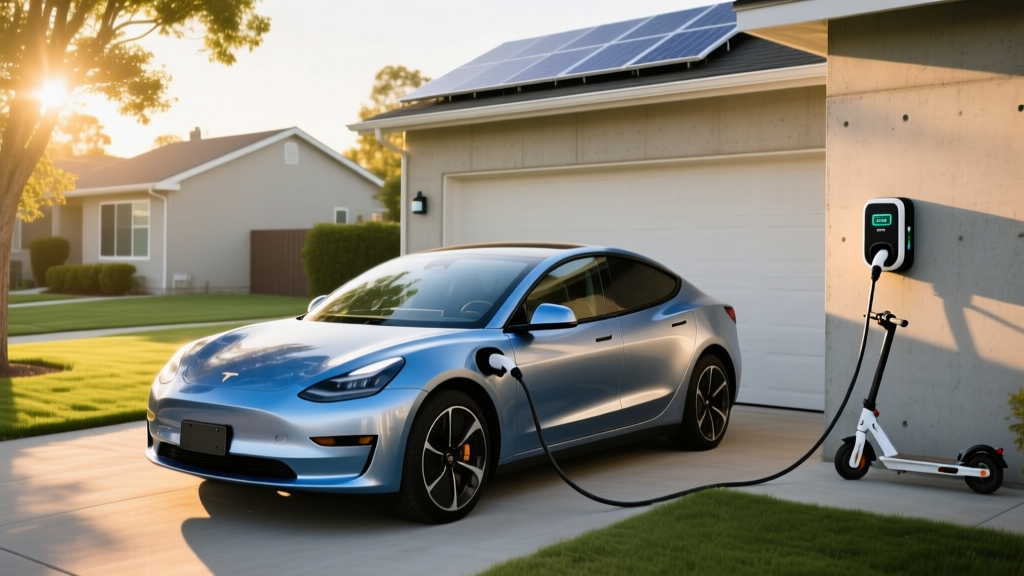
The Real Cost of Loading Electric at Home
Before you buy an EV, the most important question isn't range or 0-60 time — it's whether you can charge at home. Roughly 80% of EV charging happens at a residence, and home charging is where the economics overwhelmingly favor electric over gas. Here's what a typical Level 2 home installation actually costs in 2026:
| Component | Low End | High End | Notes |
|---|---|---|---|
| Level 2 Charger (240V, 32–48A) | $350 | $700 | Emporia, ChargePoint, Tesla Wall Connector |
| Electrician Labor | $300 | $1,200 | Depends on panel proximity and conduit run |
| Permit & Inspection | $50 | $300 | Varies by municipality |
| Electrical Panel Upgrade (if needed) | $1,500 | $3,500 | Required if panel is at capacity or below 200A |
| Total (no panel upgrade) | $700 | $2,200 | Most installations fall in this range |
| Total (with panel upgrade) | $2,200 | $5,700 | Older homes with 100A service |
The single biggest cost variable is your electrical panel. A modern 200-amp panel with spare breaker slots can usually accommodate a 40-amp or 50-amp circuit for a Level 2 charger without an upgrade. Homes built before 1990 often have 100-amp or 150-amp service that's already near capacity — requiring a panel upgrade before you can install a dedicated charger circuit.
Pro tip: Many utilities offer rebates of $200–$500 for Level 2 charger installations, and the federal Alternative Fuel Vehicle Refueling Property Credit covers up to 30% of installation costs (capped at $1,000) for qualifying homes in eligible census tracts. Check your utility and the IRS before paying full price.
Charging Speeds: How Fast Can You Load Electric?
Understanding charging speed requires distinguishing between kW (power — how fast energy flows) and kWh (energy — how much your battery holds). Think of kW as the width of a hose and kWh as the size of the bucket. Here's what each charging level delivers in practice:
| Level | Voltage | Power (kW) | Miles Added/Hour | Best For |
|---|---|---|---|---|
| Level 1 (Standard Outlet) | 120V | 1.0–1.4 kW | 3–5 mi/hr | Overnight top-up, PHEVs, low daily mileage |
| Level 2 (Home/Public AC) | 240V | 7.2–11.5 kW | 25–44 mi/hr | Daily home charging, workplace, shopping centers |
| DC Fast Charge | 400–800V DC | 50–350 kW | 150–1,200 mi/hr (peak) | Road trips, highway corridors, quick stops |
For a 75-kWh battery (typical midsize EV like the Tesla Model Y or Hyundai Ioniq 5), a full charge from empty on Level 2 takes 7–10 hours — perfect for overnight. On a 150-kW DC fast charger, you'll go from 10% to 80% in roughly 20–28 minutes depending on the vehicle's charge curve. Note that peak kW is not sustained kW: a vehicle rated for 250 kW peak charging may only sustain that rate between 10–30% state of charge, tapering significantly above 80% to protect battery health. This is why 10–80% charge time is the metric that matters, not peak kW alone.
EV vs Gas vs Hybrid: The Cost Comparison
Let's run the numbers on a 15,000-mile/year driving profile comparing a 2026 EV (Hyundai Ioniq 5 SEL, ~114 MPGe combined), a comparable gas car (2026 Toyota Camry LE, ~32 MPG combined), and a hybrid option (2026 Toyota Camry Hybrid, ~52 MPG combined). Electricity at $0.16/kWh (US average), gas at $3.40/gallon.
| Vehicle | Efficiency | Fuel Source | Annual Fuel Cost | Cost Per Mile |
|---|---|---|---|---|
| Hyundai Ioniq 5 (EV, home charging) | 30 kWh/100 mi | Electricity ($0.16/kWh) | $720 | $0.048 |
| Toyota Camry Hybrid | 52 MPG | Gas ($3.40/gal) | $981 | $0.065 |
| Toyota Camry Gas | 32 MPG | Gas ($3.40/gal) | $1,594 | $0.106 |
| Ioniq 5 (DC fast charging only) | 30 kWh/100 mi | DCFC ($0.42/kWh avg) | $1,890 | $0.126 |
The takeaway is stark: home-charged EVs cut fuel costs by roughly 55% versus a gas car and 27% versus a hybrid. But if you rely exclusively on public DC fast charging, your "fuel" cost can actually exceed gasoline. This is why home charging access is the single most important variable in EV ownership economics.
Maintenance savings add another layer. EVs have no engine oil, no transmission fluid, no spark plugs, no timing belts, and no exhaust systems. Brake pad life is typically 2–3x longer due to regenerative braking. According to fueleconomy.gov, annual maintenance for a BEV averages $0.061/mile versus $0.101/mile for a gas car — a savings of roughly $600/year at 15,000 miles.
Total 5-Year Ownership: Where EVs Win and Lose
Purchase price, fuel, maintenance, insurance, and depreciation all factor in. Here's a realistic 5-year / 75,000-mile ownership comparison:
| Cost Category | EV (Ioniq 5 SEL) | Gas (Camry LE) | Hybrid (Camry Hybrid) |
|---|---|---|---|
| Purchase Price (MSRP) | $45,650 | $29,500 | $33,500 |
| Federal Tax Credit (§30D) | −$7,500* | $0 | $0 |
| Effective Purchase | $38,150 | $29,500 | $33,500 |
| Fuel (5 years) | $3,600 | $7,970 | $4,905 |
| Maintenance (5 years) | $2,288 | $3,788 | $3,400 |
| Insurance (5 years) | $9,500 | $7,200 | $7,500 |
| Home Charger Install | $1,500 | $0 | $0 |
| Estimated Depreciation | $18,000 | $12,500 | $13,800 |
| Total 5-Year Cost | $73,038 | $60,958 | $63,105 |
*Federal §30D tax credit eligibility depends on MSRP caps ($55,000 for sedans, $80,000 for SUVs/trucks), buyer income limits ($150K single / $300K joint), and battery component/mineral sourcing requirements. Verify current eligibility at IRS.gov before purchasing. Credit may be applied at point of sale as of 2024+.
EVs still carry higher upfront costs and insurance premiums (typically 15–25% more than comparable gas cars due to repair complexity and battery replacement risk). Depreciation has also been steeper for some EV models as prices have dropped and battery technology has evolved. However, the fuel and maintenance savings accumulate year over year, and for high-mileage drivers or those with cheap electricity, the break-even point can arrive within 3–4 years.
Real-World Ownership: What First-Time Buyers Must Know
Range Is Not What the Sticker Says
EPA range estimates are measured under ideal mixed-driving conditions. In practice:
- Highway driving at 75+ mph reduces range by 10–20% due to aerodynamic drag
- Cold weather (below 32°F) reduces range by 15–30% due to battery chemistry limitations and cabin heating demand. Vehicles with heat pumps (Ioniq 5, Tesla Model Y, BMW iX) lose less than those with resistive heaters
- Mountain driving consumes significantly more energy on ascents, though regenerative braking recovers some on descents
- Battery buffer: Manufacturers reserve a top and bottom buffer (typically 5–10% of total kWh) to protect battery health. Usable capacity is always less than total capacity
A vehicle with a 303-mile EPA rating (like the Ioniq 5 Long Range AWD) will realistically deliver 240–260 miles on a cold-weather highway trip. Plan accordingly.
Charging Deserts Are Real
While the DC fast-charging network has expanded significantly through 2026 — with Tesla's Supercharger network opening to NACS-equipped vehicles from Ford, GM, Rivian, and others — rural corridors and some apartment-heavy urban areas still have limited public charging. Before buying, map your most common routes on PlugShare or A Better Routeplanner and confirm reliable stops exist.
Apartment and Condo Charging Challenges
If you can't install a home charger, your EV economics change dramatically. Relying on public DC fast charging at $0.30–$0.55/kWh erases most fuel savings versus gas. Some solutions include workplace charging (often free or subsidized), shared-building Level 2 installations (increasingly mandated in new construction in states like California and New York), and time-of-use utility rates that make overnight public Level 2 charging cheaper.
Common Misconceptions About Loading Electric
| Myth | Fact |
|---|---|
| "EV batteries need replacing every few years" | Modern NMC and LFP batteries are warrantied for 8 years/100,000 miles (federally mandated minimum). Real-world degradation data shows 85–92% capacity retention at 150,000 miles for most liquid-cooled packs. |
| "The grid can't handle EVs" | Most EVs charge overnight when grid demand is low. A DOE study found that 80% of EV charging could be accommodated without grid upgrades through managed/smart charging. |
| "EVs are worse for the environment" | Even on coal-heavy grids, EVs produce fewer lifecycle emissions than gas cars (per Argonne National Lab). On renewable-heavy grids, the advantage is 60–80% lower lifetime CO₂. |
| "Charging takes too long" | Home charging happens while you sleep — zero active time. Road-trip DC fast charging adds 20–30 minutes per 200+ miles, which aligns with normal rest/food stops. |
| "All EVs qualify for the $7,500 tax credit" | Under current §30D rules, eligibility depends on MSRP caps, buyer income, and battery sourcing. Many popular EVs qualify for partial or no credit. Always verify on the IRS source list. |
Decision Framework: Is Loading Electric Right for You?
Choose a Battery EV (BEV) If:
- You have access to home or workplace Level 2 charging
- Your daily driving is under 200 miles round-trip
- You want the lowest per-mile operating cost and minimal maintenance
- You qualify for the federal §30D credit or state incentives that close the price gap
- You're willing to plan road-trip charging stops in advance
Choose a Plug-In Hybrid (PHEV) If:
- You can charge at home but also take frequent long road trips where charging is sparse
- You want 25–50 miles of electric-only commuting with gas backup for longer drives
- You live in an area with extreme cold that significantly reduces EV range
- You want lower upfront cost and don't want to depend on charging infrastructure
Choose a Standard Hybrid (HEV) If:
- You have no access to any charging (apartment, street parking, no workplace charger)
- You want better fuel economy without changing your fueling habits at all
- You want the lowest upfront purchase price among electrified options
Wait on EVs If:
- Your only charging option is expensive public DC fast charging (over $0.40/kWh)
- You regularly tow heavy loads over long distances (towing can cut EV range by 40–50%)
- Your budget is strictly under $30,000 and the used EV market in your area is thin
First-Time EV Buyer Checklist
- Confirm charging access. Before anything else, determine whether you can install a Level 2 charger at home or have reliable workplace/public Level 2 access. Get an electrician quote ($200–$500 for an assessment visit, often credited toward installation).
- Check your electrical panel. A 200-amp panel with 2+ spare slots is ideal. If you need an upgrade, budget $1,500–$3,500 and factor this into your EV purchase decision.
- Verify tax credit eligibility. Check the current IRS qualified vehicle list at IRS.gov. Confirm your income is under the cap ($150K single, $225K head of household, $300K joint), the vehicle MSRP is under the cap, and the specific trim/battery qualifies.
- Match range to your worst-case drive. Don't buy based on your average commute — buy based on your longest regular trip. If you drive 180 miles one-way to visit family monthly in winter, you need a vehicle with at least 300 miles of EPA range to account for cold-weather and highway losses.
- Test the charging ecosystem. Before buying, download the charging apps (Tesla, Electrify America, EVgo, ChargePoint) and visit a DC fast charger near you. Understand the connector your vehicle uses — NACS (Tesla standard, now adopted by most automakers) or CCS — and confirm compatible chargers exist on your routes.
- Get insurance quotes first. EV insurance premiums are typically 15–25% higher than comparable gas cars. Get actual quotes before committing to a purchase to avoid surprises.
- Consider total cost, not just monthly payment. Factor in fuel savings, maintenance savings, higher insurance, potential home charger installation, and depreciation. A spreadsheet beats a gut feeling.
Frequently Asked Questions
Can I charge an EV from a regular 120V outlet?
Yes, but slowly. Level 1 charging from a standard household outlet delivers roughly 1.0–1.4 kW, adding 3–5 miles of range per hour. For a 75-kWh battery, a full charge from empty takes 50–75 hours. This works for PHEVs with smaller batteries (10–20 kWh) or for BEV owners who drive under 30 miles daily and can top up overnight. For most BEV owners, Level 2 is strongly recommended.
How much does it cost to charge an EV at home per month?
At the US average electricity rate of $0.16/kWh and driving 1,250 miles/month (15,000/year), an EV consuming 30 kWh/100 miles costs about $60/month in electricity. That compares to roughly $133/month in gasoline for a 32-MPG gas car at $3.40/gallon. The monthly savings is typically $50–$80 depending on local rates and vehicle efficiency.
Do EV batteries degrade quickly?
Modern liquid-cooled EV batteries degrade far more slowly than early models. Data from fleet studies and owner reports show typical capacity retention of 90–95% after 50,000 miles and 85–92% after 150,000 miles. LFP (lithium iron phosphate) batteries, used in standard-range Teslas and some other models, show even slower degradation and can tolerate regular 100% charging. All new EVs carry a federally mandated battery warranty of at least 8 years/100,000 miles covering defects and excessive capacity loss (typically below 70% of original capacity).
What happens if I can't install a home charger?
Without home charging, EV ownership is significantly less convenient and more expensive. You'll rely on public Level 2 chargers (slower, sometimes free at workplaces or shopping centers) or DC fast chargers ($0.30–$0.55/kWh). At DCFC rates, your per-mile fuel cost can exceed that of a fuel-efficient gas car. If home charging isn't possible, a PHEV or HEV is usually the more practical electrified choice until charging access improves.
Is NACS or CCS the better charging connector?
As of 2026, the industry is standardizing on NACS (the Tesla connector). Ford, GM, Rivian, Hyundai, Kia, BMW, and most other major automakers have adopted or committed to NACS. CCS remains available at many public stations via adapters, but NACS provides direct access to Tesla's Supercharger network — the largest and most reliable DC fast-charging network in North America with over 25,000 stalls. If you're buying new in 2026, NACS-equipped vehicles offer the broadest charging access.