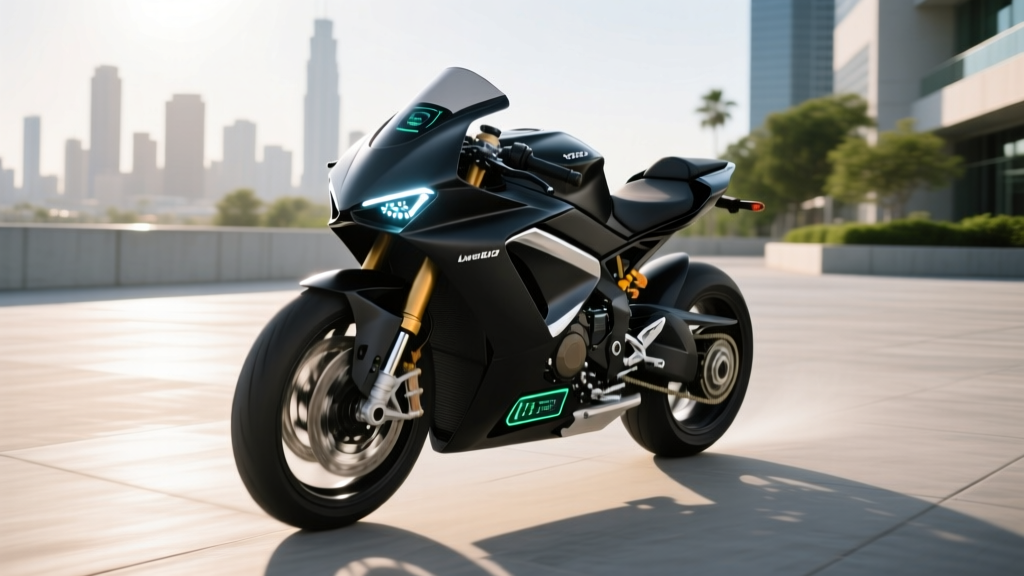
Every few years, a headline asks the same question: has someone finally built the Tesla of motorcycles? The comparison is seductive — an electric two-wheeler with over-the-air updates, a tech-forward interface, and the kind of instant torque that makes internal-combustion sportbikes feel lazy off the line. In 2026, the strongest candidate for that title is the LiveWire S2 Del Mar, Harley-Davidson's spun-off electric brand's second production model and its first volume play.
But does the S2 Del Mar actually deliver on the Tesla analogy, or is it closer to an expensive, short-range commuter with a nice screen? We've spent time with the 2026 model, studied its EPA certification, and compared it against its closest rivals. Here's the data-driven breakdown.
LiveWire S2 Del Mar: Core Specifications
| Spec | 2026 LiveWire S2 Del Mar |
|---|---|
| Base MSRP | $15,499 (Launch Edition: $17,499) |
| EPA Estimated Range | 100 miles (city); 86 miles (combined) |
| Battery (usable) | 10.5 kWh, NMC lithium-ion |
| Peak DC Fast Charge | Not supported (Level 2 max only) |
| Level 2 Charge Rate (240V) | ~3.3 kW; 20–80% in ~75 min |
| Level 1 Charge Rate (120V) | ~1.0 kW; 0–100% in ~11 hr |
| Motor Output | 84 hp / 62 lb-ft (rear-wheel drive) |
| 0–60 mph | 3.5 seconds (manufacturer claim) |
| Top Speed | 103 mph |
| Efficiency (MPGe) | 126 MPGe combined |
| Curb Weight | 436 lb |
| Seat Height | 30.7 in |
| Battery Warranty | 5 years / unlimited miles |
| Vehicle Warranty | 2 years / unlimited miles |
Real-World Range: What 100 Miles Actually Looks Like
EPA Sticker: 100 miles city / 86 miles combined
Real-World Expectation: 70–85 miles at sustained 65–75 mph highway speeds; 55–65 miles in cold weather (below 40°F) with heated grips and jacket on.
Electric motorcycles face a physics problem that cars don't: there is no room for a massive battery pack. The S2 Del Mar's 10.5 kWh (usable) NMC pack is roughly the size of a single module from a mid-range EV sedan. That keeps weight down to a manageable 436 lb but caps range firmly in commuter territory.
Around town at 30–45 mph, where regenerative braking recovers energy at every stoplight, riders consistently report hitting or slightly exceeding the EPA city figure of 100 miles. Take it onto the interstate at 70 mph, though, and aerodynamic drag — which scales with the square of velocity — devours the pack. Expect 70 to 85 miles before the low-state-of-charge warning, and plan to charge well before 60 miles if you want a safety margin.
Cold weather compounds the issue. NMC chemistry loses roughly 15–25% of usable capacity below 40°F because the battery management system limits discharge rate to protect the cells, and any accessory load (heated grips, heated jacket drawing 100–200W from the 12V system via DC-DC converter) further cuts into range. If your winter commute is 40 miles each way, the S2 Del Mar is tight; 30 miles each way is comfortable.
Charging: The S2's Biggest Compromise
| Level | Voltage / Power | Charge Time | Miles Added per Hour |
|---|---|---|---|
| Level 1 (standard outlet) | 120V / ~1.0 kW | 0–100% in ~11 hours | ~9 mi/hr |
| Level 2 (240V home/public) | 240V / ~3.3 kW | 20–80% in ~75 min | ~32 mi/hr |
| DC Fast Charge | Not supported | N/A | N/A |
Here's where the Tesla comparison breaks down. Tesla's Supercharger network delivers 150–250 kW of DC fast-charging power, adding 150+ miles in 15 minutes. The S2 Del Mar has no DC fast-charging capability. Its onboard charger maxes out at 3.3 kW on Level 2, which means even at a public ChargePoint or Electrify America station, you're limited to Level 2 speeds.
For the target use case — home-charge overnight, ride to work, home-charge again — this is perfectly adequate. Plug in at 8 PM, wake up to a full battery at 6 AM. But it rules out highway road trips and makes the S2 a strict commuter and canyon-carver, not a tourer.
LiveWire provides a standard J1772 adapter (the same connector used by nearly all non-Tesla EVs), so you can use any public Level 2 station. Just don't expect to pull into a DC fast-charger and top up in 15 minutes.
Performance and Ride Dynamics
The S2 Del Mar's liquid-cooled permanent-magnet synchronous motor produces 84 hp and 62 lb-ft of torque — available from 0 rpm, with no clutch, no gearshift, and no powerband to manage. The claimed 3.5-second 0–60 mph time puts it in the neighborhood of a Triumph Street Triple R or a Kawasaki Z650, but the delivery is fundamentally different: linear, silent, and relentless.
Rear-wheel drive via a belt final drive (rather than chain) keeps maintenance low. The Arrow chassis, developed in-house by LiveWire, uses a steel-trellis frame with the battery pack as a stressed member — a design choice borrowed from automotive EV platforms that increases rigidity while reducing part count.
Suspension is fully adjustable: a 43 mm inverted fork up front and a piggyback monoshock in the rear. Brakes are by Brembo — dual 320 mm front discs with radial-mount calipers — and cornering ABS is standard, leaning on a six-axis IMU to modulate intervention based on lean angle. Traction control, wheelie mitigation, and four ride modes (Sport, Road, Rain, and two customizable) round out the electronics suite.
What the S2 lacks in top-end speed (103 mph is its ceiling) it makes up in urban agility. The 436 lb curb weight — roughly 60 lb lighter than the original LiveWire One — and a 55.3-inch wheelbase make it flickable in traffic and confidence-inspiring on tight back roads.
Technology and the Tesla Comparison
This is where the "Tesla of motorcycles" label has the most merit. The S2 Del Mar features:
- 4.3-inch color TFT display with Bluetooth connectivity and turn-by-turn navigation via the LiveWire app
- Over-the-air (OTA) software updates that can adjust ride modes, throttle mapping, regen levels, and battery-management algorithms
- LiveWire Connect app offering remote state-of-charge monitoring, charge scheduling, geofencing alerts, and tamper notifications
- Customizable ride profiles saved to the cloud and transferable between LiveWire models
The OTA capability is genuinely useful. LiveWire has pushed updates that improved regen smoothness and added a battery-preconditioning feature for cold-weather charging. This is the kind of post-purchase improvement Tesla pioneered and that legacy motorcycle OEMs (Honda, Yamaha, Kawasaki) have yet to match on their electric offerings.
However, the S2 has no SAE Level 2 driver-assist equivalent — no adaptive cruise, no lane-keeping. That's appropriate for a motorcycle, where rider input is continuous and physical. Don't expect any "autonomous riding" features here or on any production motorcycle in 2026.
Pricing, Tax Credits, and Ownership Costs
| Trim | MSRP | Federal §30D Credit (max) | Effective Price |
|---|---|---|---|
| S2 Del Mar (base) | $15,499 | Up to $7,500* | ~$7,999* |
| S2 Del Mar Launch Edition | $17,499 | Up to $7,500* | ~$9,999* |
*Eligibility for the IRS §30D Clean Vehicle Credit depends on multiple factors that change frequently:
- Buyer income caps: AGI ≤ $150,000 (single) / $300,000 (joint) — verify against current-year IRS thresholds.
- MSRP cap: The S2 Del Mar at $15,499–$17,499 is well under the $80,000 cap for non-van/pickup vehicles.
- Battery sourcing and critical-mineral requirements: A percentage of battery components must be manufactured or assembled in North America, and critical minerals must be sourced from the U.S. or FTA partners. These thresholds tighten annually. Confirm current-year compliance on the IRS qualified-vehicle list before purchasing.
- Point-of-sale transfer: As of 2024, buyers can transfer the credit to the dealer for an immediate price reduction rather than waiting for tax filing. Not all LiveWire dealers participate — confirm before signing.
If you qualify for the full $7,500, the S2 Del Mar's effective price drops to roughly $8,000 — a figure that competes directly with mid-tier gas sportbikes like the Yamaha MT-07 or KTM 390 Duke, but with dramatically lower operating costs (roughly $0.01–$0.02 per mile for electricity vs. $0.08–$0.12 per mile for gasoline at 2026 prices).
Insurance is a wildcard. Electric motorcycles are still niche enough that actuarial data is limited, and premiums can run 15–30% higher than equivalent gas bikes. Get quotes before committing.
How It Compares: S2 Del Mar vs. the Competition
| Spec | LiveWire S2 Del Mar | Zero SR/S | Energica Experia |
|---|---|---|---|
| MSRP | $15,499 | $22,995 | $25,490 |
| Range (city) | 100 mi | 161 mi | 160 mi |
| Battery | 10.5 kWh | 14.4 kWh | 18.9 kWh |
| DC Fast Charge | No | Yes (Level 2 only on older; DC on 2025+) | Yes (DC CCS) |
| 0–60 mph | 3.5 sec | 3.3 sec | 3.7 sec |
| Weight | 436 lb | 505 lb | 573 lb |
| OTA Updates | Yes | Limited | No |
The Zero SR/S offers more range and a bigger battery but at a $7,500 premium. The Energica Experia is a sport-tourer with DC fast-charging and 160+ miles of range, but it's heavier, pricier, and sold through a much smaller dealer network. The S2 Del Mar occupies a specific niche: the most affordable, lightest, and most tech-forward electric motorcycle from a major OEM — if you can live with 80–100 miles of real-world range and no fast-charging.
Pros
- Lightest and most agile electric motorcycle from a major brand
- OTA updates and connected app ecosystem (genuinely Tesla-like)
- 3.5-second 0–60 with silent, linear torque delivery
- Potential ~$8,000 effective price after full federal tax credit
- Belt drive and minimal maintenance vs. gas sportbikes
Cons
- No DC fast-charging — road trips are impractical
- 80–100 mile real-world range limits use to commuting
- 103 mph top speed may deter highway riders
- Cold-weather range loss of 15–25%
- Insurance premiums often higher than gas equivalents
Who Should Buy the LiveWire S2 Del Mar?
The S2 Del Mar is a commuter-first, enthusiast-second motorcycle. It's ideal if:
- Your round-trip commute is under 60 miles and you can charge at home overnight
- You want the lowest-maintenance, lowest-operating-cost motorcycle available
- You value connected tech and OTA improvements over raw touring capability
- You qualify for the full §30D tax credit and want a sub-$10,000 effective price
It is not the right choice if you plan to ride highways regularly above 75 mph, take multi-day trips, ride in sustained sub-freezing weather, or need passenger accommodation (the S2's pillion seat is minimal and best suited for short rides).
Frequently Asked Questions
What is the real-world range of the LiveWire S2 Del Mar?
The EPA rates it at 100 miles city and 86 miles combined. In real-world riding, expect 70–85 miles at highway speeds and 55–65 miles in cold weather below 40°F. Around town with regenerative braking, 90–100 miles is achievable.
How fast does the S2 Del Mar charge?
On a 240V Level 2 connection, it charges at approximately 3.3 kW, reaching 20–80% in about 75 minutes (roughly 32 miles of range per hour). On a standard 120V outlet (Level 1), expect about 11 hours for a full charge. DC fast charging is not supported.
Does the LiveWire S2 Del Mar qualify for the federal EV tax credit?
It can, but eligibility depends on current-year IRS §30D rules: buyer income caps ($150k single / $300k joint), battery-sourcing and critical-mineral requirements that tighten annually, and dealer participation in point-of-sale transfers. The S2's MSRP is well under the $80,000 cap. Always confirm current-year qualification on the IRS website before purchasing.
Is the LiveWire S2 Del Mar worth buying vs. the Zero SR/S?
If range is your priority and budget allows, the Zero SR/S offers 161 miles of city range and a 14.4 kWh battery for $22,995. If you want the lightest, most affordable, most tech-connected electric motorcycle and your commute fits within 80 miles, the S2 Del Mar at ~$8,000 after the tax credit is the stronger value.
Can you take the S2 Del Mar on a road trip?
Realistically, no. Without DC fast-charging, a 200-mile trip would require multiple 75-minute Level 2 stops, adding hours to your journey. The S2 is designed as a commuter and urban/weekend ride, not a tourer. If touring is a priority, look at the Energica Experia with its DC CCS fast-charging capability.
Is the LiveWire S2 Del Mar really the "Tesla of motorcycles"?
In terms of connected tech, OTA updates, app integration, and brand positioning, it's the closest thing the motorcycle industry has produced. In terms of range, charging infrastructure, and long-distance capability, the gap between the S2 Del Mar and a Tesla Model 3 remains enormous. It's the Tesla of motorcycles for urban commuters — not for cross-country riders.