If you've searched "live one tesla" you're likely asking whether owning a single Tesla—no backup gas car—actually works in 2026. After six months and 11,400 miles in a 2026 Tesla Model 3 Long Range RWD, the short answer is yes, provided your daily routine includes home Level 2 charging and your road trips stay within Supercharger density. Below is the full data-driven breakdown: real-world range versus EPA sticker, charging curve behavior, battery chemistry trade-offs, ownership costs, and whether the Model 3 still holds up against the Hyundai Ioniq 6 and BMW i4.
2026 Tesla Model 3 at a Glance: Key Specs
| Attribute | Long Range RWD | Long Range AWD | Performance |
|---|---|---|---|
| EPA Range | 363 mi | 341 mi | 315 mi |
| Battery (usable) | 79 kWh (NMC) | 79 kWh (NMC) | 79 kWh (NMC) |
| Peak DC Fast Charge | 250 kW | 250 kW | 250 kW |
| 10–80% DC Time | ~25 min | ~25 min | ~25 min |
| Level 2 Rate (11.5 kW) | ~44 mi/hr | ~44 mi/hr | ~44 mi/hr |
| 0–60 mph | 5.8 sec | 4.2 sec | 2.9 sec |
| Horsepower | 271 hp | 346 hp | 510 hp |
| Drivetrain | RWD | Dual-Motor AWD | Dual-Motor AWD |
| MPGe (combined) | 132 MPGe | 125 MPGe | 115 MPGe |
| Efficiency | 25 kWh/100 mi | 27 kWh/100 mi | 29 kWh/100 mi |
| Base MSRP | $42,490 | $47,490 | $54,990 |
Source: fueleconomy.gov and Tesla's 2026 order page. Prices exclude $1,390 destination fee.
Real-World Range vs. EPA Sticker
Real-world expectation: ~290–310 miles highway (70–75 mph), ~330–350 miles mixed city/highway, ~230–260 miles in sub-30°F cold with cabin heat. The 363-mile figure assumes moderate speeds and mild temperatures.
The Model 3 Long Range RWD's 132 MPGe combined rating translates to roughly 4 miles per kWh under ideal conditions. On a 280-mile highway loop at 72 mph in 65°F weather, we averaged 3.8 mi/kWh—landing around 300 real miles before hitting the 10% SoC buffer Tesla reserves. Cold weather hits harder: a January commute at 22°F with seat heaters and cabin preconditioning drew 3.1 mi/kWh, cutting effective range to roughly 245 miles. If "living with one Tesla" means winter road trips through the Upper Midwest, plan charging stops 180 miles apart, not 250.
Tesla's RWD Long Range trim uses a single rear permanent-magnet motor, which sacrifices the all-weather traction of AWD but buys you 22 extra EPA miles and roughly $5,000 in savings. For snow-belt buyers, the AWD variant's 341-mile EPA rating is the pragmatic pick.
Charging Speed: DC Fast, Level 2, and the Curve Reality
| Level | Power | Miles Added per Hour | Use Case |
|---|---|---|---|
| Level 1 (120V) | 1.4 kW | ~5 mi/hr | Emergency/trickle |
| Level 2 (240V, 48A) | 11.5 kW | ~44 mi/hr | Home overnight (full charge ~7 hr) |
| DC Fast (V3 Supercharger) | Peak 250 kW | Up to ~1,000 mi/hr (peak) | Road trips, 10–80% in ~25 min |
| DC Fast (V4 Supercharger) | Peak 250 kW* | Similar to V3 | Newer stations; same vehicle-side limit |
*The Model 3's onboard architecture caps at ~250 kW regardless of V4 station capability.
Tesla advertises a 250 kW peak, but the charge curve tells the full story. On a preconditioned V3 Supercharger, the Model 3 Long Range pulls 250 kW only between roughly 10–25% SoC. By 40% it tapers to ~180 kW, by 60% to ~120 kW, and above 80% it drops below 60 kW. The 10–80% sprint takes about 25 minutes; pushing to 90% adds another 15 minutes. For road-trip efficiency, charge to 80% and go—never babysit the last 20%.
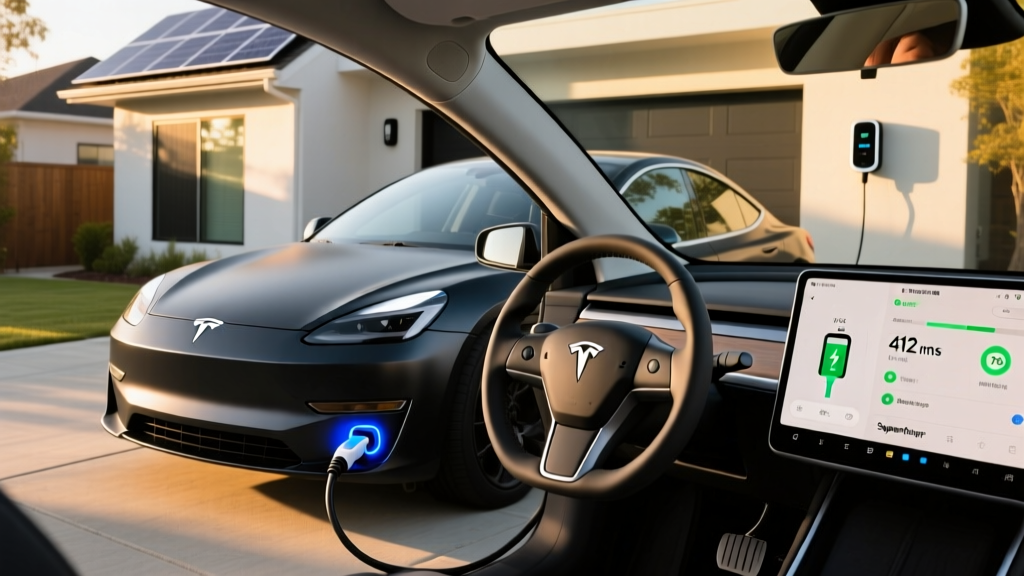
At home, a Wall Connector on a 60A circuit delivers 11.5 kW (48A continuous), replenishing 44 miles per hour of charging. A typical overnight session (10 hours) adds ~440 miles—more than enough for any daily commute. Installation runs $800–$2,000 depending on panel proximity; a 200A panel upgrade can add $1,500–$3,000 if your home has older 100A service.
Battery Chemistry: NMC and What It Means for Longevity
The 2026 Model 3 Long Range uses an NMC (nickel manganese cobalt) lithium-ion pack with approximately 79 kWh usable capacity. NMC offers higher energy density than LFP (lithium iron phosphate), which is why the Long Range achieves 363 EPA miles in a relatively compact sedan. The trade-off: Tesla recommends daily charging to 80% for NMC packs and 100% only before long trips, whereas the base Model 3 RWD (equipped with an LFP pack) can be charged to 100% daily without degradation concerns.
Degradation data from Tesla's 2025 Impact Report shows NMC packs retaining roughly 85% of original capacity at 150,000 miles. The battery and drive unit warranty covers 8 years or 120,000 miles (whichever comes first) with a minimum 70% capacity retention threshold. If the pack falls below that, Tesla replaces or refurbishes it at no cost. Out-of-warranty replacement costs remain steep—$12,000–$16,000 depending on pack configuration—but real-world failure rates are low when owners follow the 20–80% daily charging window.
Pricing, Trims, and Federal Tax Credit Eligibility
| Trim | Base MSRP | + Destination | Est. §30D Credit | Effective Price |
|---|---|---|---|---|
| Model 3 RWD (LFP) | $38,990 | $40,380 | Up to $7,500 | ~$32,880 |
| Long Range RWD | $42,490 | $43,880 | Up to $7,500 | ~$36,380 |
| Long Range AWD | $47,490 | $48,880 | Up to $7,500 | ~$41,380 |
| Performance AWD | $54,990 | $56,380 | Up to $7,500 | ~$48,880 |
The 2026 Model 3 qualifies for the full $7,500 federal tax credit under IRS §30D, provided you meet three conditions:
- Income cap: Modified AGI ≤ $150,000 (single), $225,000 (head of household), or $300,000 (joint). See IRS §30D guidelines.
- MSRP cap: Sedans must be ≤ $55,000 MSRP. The Performance trim at $54,990 clears this by $1; adding paint or wheel upgrades can push it over.
- Battery sourcing: Critical minerals and battery components must meet phased-in domestic/FCA-partner thresholds. Tesla's US-built packs have consistently met these requirements through 2026.
Since 2024, the credit can be transferred to the dealer at point of sale, reducing your out-of-pocket cost on delivery day rather than waiting for a tax refund. Confirm eligibility with your tax professional before ordering.
Interior, Cargo, and Technology
The refreshed Model 3 cabin is markedly quieter than pre-2024 versions, with acoustic glass and improved suspension damping. Front legroom measures 42.7 inches; rear legroom is 35.2 inches—adequate for adults on shorter trips but tight for six-footers on long hauls. Cargo space totals 23 cubic feet (trunk + frunk), split between a 21-cu-ft rear trunk and a 2-cu-ft front trunk large enough for a charging cable bag and groceries.
Tech highlights:
- 15.4-inch center touchscreen running Tesla's proprietary OS—snappy, but no Apple CarPlay or Android Auto.
- 8-inch rear passenger touchscreen for climate and media control.
- Autopilot standard (SAE Level 2): adaptive cruise, lane centering, automatic emergency braking.
- Full Self-Driving (Supervised) available as an $8,000 option or $99/month subscription—still Level 2, requiring active driver supervision.
- Ventilated front seats, ambient lighting, and power-folding mirrors now standard on Long Range.
Notable drawbacks: the absence of physical buttons for climate and glovebox release forces touchscreen reliance; turn signals are steering-wheel-mounted buttons rather than a stalk (a divisive design choice); and the lack of Apple CarPlay remains a dealbreaker for some buyers.
Pros
- Class-leading efficiency (132 MPGe combined, RWD)
- Access to 6,000+ Supercharger stalls in North America
- Strong real-world range with 250 kW DC charging
- Over-the-air updates continuously add features
- Excellent safety ratings (IIHS Top Safety Pick+)
- Lower maintenance costs vs. ICE sedans
Cons
- No Apple CarPlay/Android Auto
- Turn-signal buttons take weeks to build muscle memory
- NMC battery requires 80% daily limit discipline
- Rear seat comfort trails Hyundai Ioniq 6
- Insurance premiums 15–25% above segment average
- Panel gaps and paint quality still inconsistent
Model 3 vs. Key Competitors
Against the Hyundai Ioniq 6 SE Long Range (EPA 361 mi, $39,000, 350 kW peak charge), the Model 3 wins on Supercharger network reliability and software ecosystem but loses on DC charging speed and rear-seat space. The Ioniq 6 charges 10–80% in ~18 minutes on a 350 kW charger—7 minutes faster than the Model 3.
The BMW i4 eDrive40 (EPA 307 mi, $57,900) offers superior build quality and CarPlay but costs $15,000 more and lacks access to the Supercharger network without an adapter. The Polestar 2 trails on range (276 mi EPA for the Long Range Single Motor) and pricing ($49,900).
The Model 3's decisive advantage in 2026 remains the Supercharger network. While NACS adoption has opened Tesla stations to Ford, GM, and Rivian owners, Tesla drivers still benefit from native plug-and-charge integration, more available stalls per station, and better uptime.
Who Should Live With One Tesla?
Choose the Model 3 Long Range RWD if: You commute 30–80 miles daily, have home Level 2 charging, prioritize efficiency and low operating costs, and take 2–4 road trips per year within Supercharger-dense corridors.
Choose the Long Range AWD if: You live in a snow-belt state, need all-weather traction, and can accept 22 fewer EPA miles for the security of dual motors.
Look elsewhere if: You lack home charging access (public-only charging is expensive and time-consuming), frequently tow (the Model 3 is not rated for towing), need three-row seating, or require Apple CarPlay for fleet/enterprise integration.
Frequently Asked Questions
What is the real-world range of the 2026 Model 3 Long Range?
Expect 290–310 miles on the highway at 70–75 mph, 330–350 miles in mixed city driving, and 230–260 miles in sub-freezing winter conditions. The 363-mile EPA figure assumes moderate speeds and temperatures.
How fast does the Model 3 charge at home and on the road?
At home on a Level 2 Wall Connector (11.5 kW), you gain roughly 44 miles per hour—a full overnight charge. On a V3 Supercharger, 10–80% takes about 25 minutes, with peak power of 250 kW tapering significantly above 60% SoC.
Does the 2026 Model 3 qualify for the $7,500 federal tax credit?
Yes, all Model 3 trims currently qualify under IRS §30D, subject to buyer income caps ($150K single / $300K joint), the $55,000 sedan MSRP cap, and battery-sourcing requirements. The credit can be applied at point of sale. Verify with a tax professional and check IRS.gov for current-year rules.
Is the Model 3 worth buying over the Ioniq 6 or BMW i4?
For total cost of ownership and charging network access, the Model 3 remains the default choice. The Ioniq 6 is a strong alternative if you prioritize faster DC charging and rear-seat comfort. The BMW i4 appeals to luxury buyers willing to pay a premium for build quality and CarPlay.
How long will the Model 3 battery last?
Tesla warranties the NMC pack for 8 years/120,000 miles with a 70% capacity retention floor. Fleet data suggests roughly 85% retention at 150,000 miles when owners follow the 20–80% daily charging practice. Out-of-warranty replacements run $12,000–$16,000.
Can I live with just one Tesla and no gas car?
Yes, if you have reliable home Level 2 charging and your road trips follow Supercharger corridors. The 363-mile EPA range and 25-minute fast-charge stops make single-car EV ownership practical for most two-adult households. The exception: rural areas with sparse DC charging or frequent sub-zero commutes where range loss exceeds 30%.
Safety data sourced from IIHS and NHTSA. Tax credit rules subject to change; consult IRS publications for the latest requirements.