The Short Answer: What Is the Lincoln Electric Vantage 500?
The Lincoln Electric Vantage 500 is not an electric vehicle — it is a 500-amp industrial diesel-powered arc welder manufactured by Lincoln Electric for heavy-duty fabrication, pipeline, and structural steel work. It is powered by a diesel engine (not a battery or electric motor), weighs approximately 1,800 lbs, and is trailer-mounted or truck-bed installed. If you arrived here searching for an EV, you may be confusing this industrial welding machine with an electric vehicle model. No Lincoln Motor Company EV carries the "Vantage 500" nameplate.
Search engines sometimes surface the Lincoln Electric Vantage 500 alongside electric vehicle content because "Lincoln" triggers associations with the Lincoln Motor Company (Ford's luxury brand), and "Electric" triggers EV associations. This guide clears up the confusion and provides practical information for two audiences: EV owners who need welding services and welding professionals considering whether an electric welder makes sense in an EV-centric shop.
Lincoln Electric vs. Lincoln Motor Company: Clearing the Confusion
These are entirely separate companies with no corporate relationship:
| Attribute | Lincoln Electric (Welding) | Lincoln Motor Company (Automotive) |
|---|---|---|
| Founded | 1895, Cleveland, OH | 1917, Detroit, MI (now Ford subsidiary) |
| Primary Products | Arc welders, plasma cutters, welding consumables | Luxury SUVs and sedans |
| Current EV Models (2026) | N/A — industrial equipment manufacturer | Lincoln Aviator (PHEV), Lincoln Corsair (PHEV) |
| "Vantage 500" Product | 500A diesel engine-driven welder | No such model exists |
| Revenue | ~$4.0B (2025) | Part of Ford Motor Company |
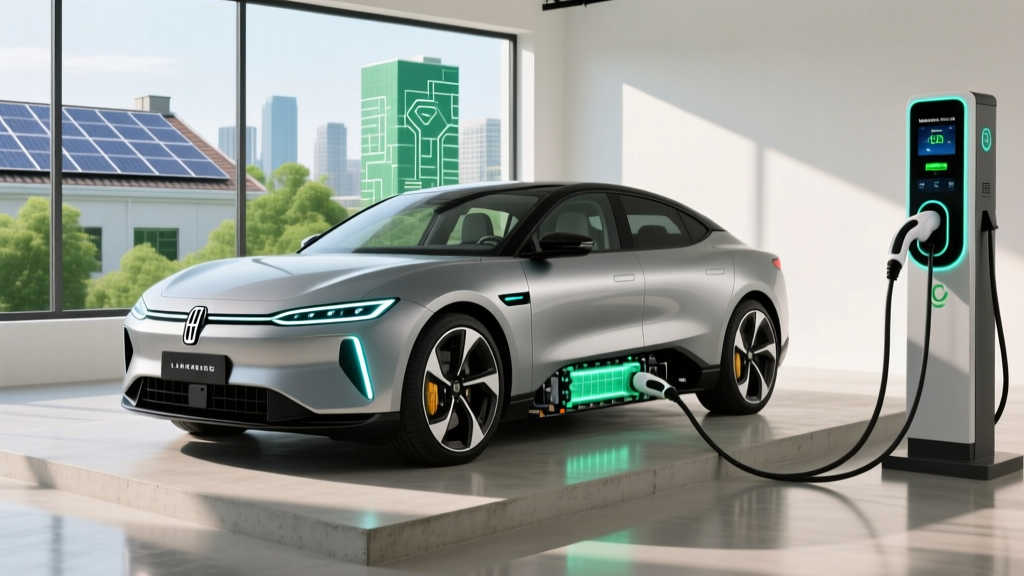
If you are researching a Lincoln luxury electric or plug-in hybrid vehicle, the current 2026 Lincoln electrified lineup includes the Lincoln Corsair Grand Touring PHEV (28 miles electric-only range, $52,590 base MSRP) and the Lincoln Aviator Grand Touring PHEV (21 miles electric-only range, $70,495 base MSRP). Lincoln has announced a fully electric three-row SUV expected for the 2027 model year, but as of 2026, no Lincoln BEV is in production.
Vantage 500 Specs: What Welding Professionals Actually Need
For the welding professionals and shop managers who landed here intentionally, here are the core specifications for the Lincoln Electric Vantage 500 (current-generation model):
| Specification | Value |
|---|---|
| Rated Output | 500A @ 40V, 100% duty cycle |
| Welding Processes | SMAW (Stick), DC TIG, MIG, Flux-Cored, Arc Gouging |
| Engine | Perkins/Cummins diesel, ~49 HP |
| Fuel Tank Capacity | 12 gallons (approx.) |
| Fuel Consumption | ~1.0–1.5 gal/hr at rated load |
| Weight | ~1,800 lbs (welder only) |
| Auxiliary Power | 12,000W peak / 10,000W continuous AC output |
| Dimensions (L×W×H) | ~44" × 24" × 33" |
| Approximate Price (2026) | $16,000–$22,000 depending on configuration |
The Vantage 500 is designed for field welding — pipeline, structural steel erection, heavy equipment repair. Its diesel engine provides independence from grid power, which is the entire point: you weld where the work is, not where the outlet is.
Electric Welders vs. Diesel Welders: The Real Cost Comparison
Lincoln Electric and competitors (Miller, ESAB) now offer engine-driven welders with electric/battery-assist options and fully electric shop welders. If you are running a welding operation and considering the transition, here is how costs compare for a high-duty-cycle 500A-class machine:
| Cost Factor | Diesel Engine-Driven (Vantage 500 class) | Electric Shop Welder (500A class) |
|---|---|---|
| Equipment Purchase | $16,000–$22,000 | $8,000–$14,000 |
| Annual Fuel / Energy (2,000 hrs) | $6,000–$9,000 (diesel at $3.50/gal) | $1,200–$2,400 (electric at $0.12/kWh) |
| Annual Maintenance | $800–$1,500 (oil, filters, engine service) | $100–$300 (minimal moving parts) |
| 5-Year Operating Cost | $34,000–$52,500 | $6,500–$13,500 |
| Noise Level | 75–85 dB (hearing protection required) | 55–65 dB (conversation level) |
| Indoor Use | Not safe (diesel exhaust, CO, NOx) | Fully safe with proper ventilation |
| Field Portability | Excellent — self-powered | Poor — requires 480V 3-phase or generator |
The math is decisive: if your welding is shop-based with access to 480V three-phase power, an electric welder saves $5,000–$10,000 annually in fuel and maintenance. If your work is field-based — pipeline, remote construction, roadside repair — the diesel Vantage 500 remains the correct tool because grid power simply does not exist at most job sites.
EV Owners Who Need Welding: Home Charger Circuit Considerations
Here is a scenario that actually comes up: an EV owner who also does metalworking at home wants to install both a Level 2 EV charger and a 240V welding machine in the same garage. This is feasible but requires careful electrical planning.
| Equipment | Voltage | Typical Circuit | Continuous Draw |
|---|---|---|---|
| Level 2 EV Charger (48A) | 240V | 60A breaker | 48A (11.5 kW) |
| Home/Shop Welder (200A class) | 240V | 50A breaker | 30–40A peak |
| Combined Load | — | — | ~78–88A peak |
Most residential panels are 200A service. Running a 48A EV charger and a 50A welder circuit simultaneously is possible but tight — you are drawing roughly 100A from a 200A panel, leaving limited headroom for HVAC, electric range, dryer, and other loads.
Practical recommendation: Do not run the EV charger and the welder simultaneously unless your electrician has performed a proper load calculation per NEC Article 220. Many EV owners with home shops install a manual transfer switch or interlock between the charger and welder circuits, or upgrade to a 300A–400A panel (cost: $2,500–$5,000 for the upgrade, depending on your region and utility requirements). Always consult a licensed electrician for the final specification — electrical code compliance is not a DIY assessment.
Real-World Ownership: EV, Welder, or Both?
If you are a tradesperson considering an EV for daily commuting while running welding equipment at your shop, the economics can work well in your favor:
- Commute savings: A 40-mile daily commute in a 2026 EV (e.g., Ford F-150 Lightning, 320 miles EPA range, ~$55,000 base) costs approximately $1.80/day in electricity at $0.12/kWh vs. $6.50/day in gasoline at $3.50/gal for a comparable gas truck. Annual savings: ~$1,200.
- Shop welder savings: Switching from a diesel engine-driven welder to an electric shop welder saves $5,000–$8,000/year in fuel alone.
- Federal tax credit: Under IRS §30D, qualifying new EVs may be eligible for up to $7,500 — subject to MSRP caps ($80,000 for trucks/SUVs), buyer income limits ($150,000 single / $300,000 joint), and battery critical-mineral sourcing requirements. Eligibility changes frequently; verify current-year rules with a tax professional.
- Home charging + shop power: Budget $3,000–$7,000 for a panel upgrade if your existing 200A service cannot support simultaneous EV charging and welding operations.
Decision Framework: What Should You Do?
- Choose the Lincoln Electric Vantage 500 (diesel) if you do field welding, pipeline work, or any job where grid power is unavailable. The diesel independence is non-negotiable in these scenarios.
- Choose an electric shop welder (500A class) if 90%+ of your welding happens indoors with 480V three-phase access. The fuel and maintenance savings are massive over 5 years.
- Choose a Lincoln PHEV (Corsair/Aviator Grand Touring) if you want a luxury Lincoln with some electric capability but still need gas-engine range for long trips. The 21–28 miles of electric-only range covers most daily commutes.
- Wait for Lincoln's announced BEV SUV (expected 2027) if you want a fully electric Lincoln and can delay your purchase. Specifications are preliminary and unconfirmed.
- Upgrade your electrical panel if you plan to run an EV charger and a welder from the same residential service. A 300A–400A upgrade prevents overload issues and future-proofs for additional loads.
Common Misconceptions — Fact-Checked
| Myth | Fact |
|---|---|
| "The Lincoln Electric Vantage 500 is an electric car" | It is a diesel-powered industrial arc welder. Lincoln Electric (welding) and Lincoln Motor Company (cars) are completely unrelated companies. |
| "Electric welders are weak compared to diesel" | Modern inverter-based electric welders deliver full 500A output with superior arc stability. The limitation is power access, not capability. |
| "I can run a welder and EV charger on a standard 200A panel" | Possible but tight — simultaneous use may trip the main breaker. A load calculation by a licensed electrician is mandatory per NEC 220. |
| "All Lincoln vehicles are electric" | As of 2026, Lincoln offers PHEV variants of the Corsair and Aviator. No fully electric Lincoln is currently in production. |
| "The $7,500 EV tax credit applies to everyone" | IRS §30D has income caps, MSRP caps, and battery sourcing requirements. Many buyers and vehicles do not qualify. Verify at irs.gov. |
Frequently Asked Questions
Is there a Lincoln electric vehicle called the Vantage 500?
No. The Vantage 500 is a diesel-powered arc welder made by Lincoln Electric, an industrial welding company founded in 1895. Lincoln Motor Company (the luxury car brand owned by Ford) has never produced a vehicle named Vantage 500. The name overlap is coincidental.
What Lincoln electric or hybrid vehicles are available in 2026?
Lincoln currently offers two plug-in hybrid (PHEV) models: the Corsair Grand Touring (28 miles electric-only range, 33 MPG combined when the battery is depleted, ~$52,590 MSRP) and the Aviator Grand Touring (21 miles electric-only range, 23 MPG combined, ~$70,495 MSRP). A fully electric Lincoln SUV has been announced for approximately the 2027 model year but is not yet available for purchase.
Can I charge my EV and run a welder on the same electrical panel?
Yes, but with caveats. A Level 2 EV charger typically requires a 60A circuit (48A continuous), and a home welder may need a 50A circuit. On a standard 200A residential panel, running both simultaneously leaves limited headroom for other appliances. A licensed electrician should perform a load calculation per NEC Article 220 to confirm your panel can handle the combined draw. A panel upgrade to 300A–400A may be necessary.
How much does it cost to operate a Lincoln Electric Vantage 500 welder?
At typical field-use duty cycles, expect $6,000–$9,000 annually in diesel fuel (2,000 operating hours at 1.0–1.5 gal/hr and $3.50/gal) plus $800–$1,500 in annual engine maintenance. Total 5-year operating cost: approximately $34,000–$52,500. An equivalent electric shop welder operating on grid power costs $6,500–$13,500 over 5 years but cannot be used in the field without a generator.
Do Lincoln PHEVs qualify for the federal EV tax credit?
Possibly, but eligibility depends on multiple factors. Under IRS §30D, the credit is up to $7,500 for qualifying new plug-in vehicles, subject to buyer income caps ($150,000 single / $300,000 joint modified AGI), MSRP caps ($80,000 for SUVs), and battery critical-mineral and component sourcing requirements. These rules change periodically. Check the latest requirements at irs.gov and consult a tax professional before making a purchase decision based on credit eligibility.
Where can I buy or service a Lincoln Electric Vantage 500?
The Vantage 500 is sold through authorized Lincoln Electric distributors — typically welding supply houses, not automotive dealerships. Use the dealer locator at lincolnelectric.com to find your nearest authorized distributor. Service and parts are handled through the same distributor network.
Sources: Lincoln Electric official product specifications; fueleconomy.gov (EPA ratings for Lincoln PHEV models); IRS §30D Clean Vehicle Credit guidelines.