Quick Answer: Does Lincoln Have an Electric Car?
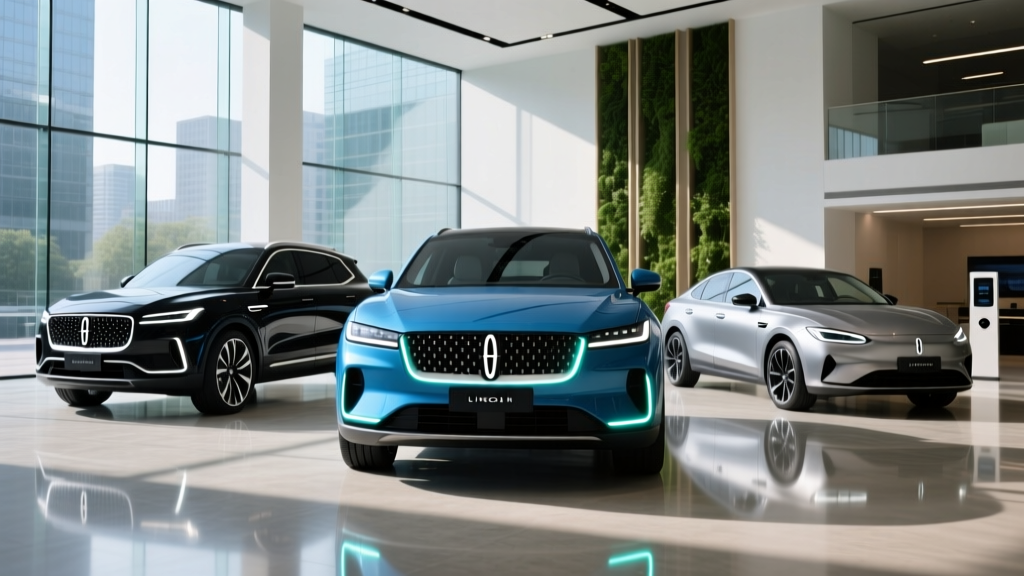
As of 2026, Lincoln does not currently sell a fully electric vehicle in the United States. The brand's previous electric efforts, including the limited-production Lincoln Aviator Grand Touring (a plug-in hybrid, not a full EV), have not resulted in a mass-market battery-electric vehicle. Lincoln has announced its intention to launch electric models, but no production BEV is available for purchase at this time. Lincoln's current lineup consists of traditional gasoline vehicles and the Aviator Grand Touring PHEV, which offers limited electric-only range but still relies on a gasoline engine.
Lincoln's Electrification Status: What Exists Today
Lincoln's path to electrification has been slower than many luxury competitors. While brands like BMW, Mercedes-Benz, Audi, and Cadillac have multiple electric models on sale, Lincoln's parent company Ford has focused its EV efforts on the Ford brand (Mustang Mach-E, F-150 Lightning, Explorer EV for Europe). Lincoln buyers looking for electrification currently have one option:
Lincoln Aviator Grand Touring (PHEV)
The Aviator Grand Touring is a plug-in hybrid electric vehicle, not a full battery-electric vehicle. Here are the key specifications:
- Powertrain: 3.0L twin-turbo V6 + electric motor
- Total system output: 494 horsepower, 630 lb-ft torque
- Battery: 13.6 kWh lithium-ion (usable capacity)
- EPA electric-only range: Approximately 21 miles
- EPA combined MPGe: 56 MPGe (electric + gas)
- EPA combined MPG (gas only): 23 MPG
- 0-60 mph: Approximately 5.5 seconds
- Starting MSRP: Approximately $69,000 (2026 model year, varies by trim)
- Federal tax credit: The Aviator Grand Touring PHEV may qualify for up to $7,500 under IRS §30D rules, subject to income caps, MSRP limits, and battery sourcing requirements. Check current eligibility at IRS.gov.
The Aviator Grand Touring is best understood as a luxury SUV that can handle short commutes on electric power (roughly 21 miles) before the gasoline engine engages. For buyers seeking a true zero-tailpipe-emission vehicle, this is not a full EV solution.
How Lincoln's PHEV Compares to Gas and Full EV Alternatives
If you're considering Lincoln but want electrification, you're likely cross-shopping the Aviator Grand Touring against gas-powered Aviator trims, full EVs from competing luxury brands, or waiting to see if Lincoln announces a BEV. Here's how the numbers break down:
| Vehicle | Powertrain | EPA Range / MPG | Starting Price | Annual Fuel Cost* |
|---|---|---|---|---|
| Lincoln Aviator Grand Touring | PHEV (21 mi electric + gas) | 56 MPGe / 23 MPG | $69,000 | $2,200 (mixed driving) |
| Lincoln Aviator (gas) | 3.0L V6 twin-turbo | 20 MPG combined | $58,000 | $2,900 |
| BMW iX xDrive50 | Full EV (BEV) | 324 miles EPA | $87,000 | $700 (electricity) |
| Cadillac Lyriq | Full EV (BEV) | 314 miles EPA | $60,000 | $650 (electricity) |
| Mercedes EQE SUV | Full EV (BEV) | 305 miles EPA | $78,000 | $680 (electricity) |
*Annual fuel costs estimated at 15,000 miles/year, $3.50/gallon gas, $0.15/kWh electricity. Actual costs vary by region and driving patterns. Source: fueleconomy.gov
Real Costs: Lincoln Aviator Grand Touring vs. Full EV Ownership
The Aviator Grand Touring's plug-in hybrid system offers some electric driving, but the economics differ significantly from a full EV. Here's a 5-year ownership comparison assuming 15,000 miles per year:
| Cost Category | Aviator Grand Touring (PHEV) | Cadillac Lyriq (BEV) |
|---|---|---|
| Purchase Price (MSRP) | $69,000 | $60,000 |
| Federal Tax Credit (estimated) | Up to $7,500 | Up to $7,500 |
| Effective Purchase Price | $61,500 | $52,500 |
| 5-Year Fuel/Energy Cost | $11,000 | $3,250 |
| 5-Year Maintenance | $4,500 | $2,000 |
| 5-Year Insurance (est.) | $9,000 | $8,500 |
| 5-Year Total Cost | $86,000 | $66,250 |
Maintenance estimates include oil changes, brake service, and scheduled maintenance for PHEV; BEV eliminates oil changes and has reduced brake wear due to regenerative braking. Insurance varies significantly by driver profile and region.
What Lincoln Buyers Should Know About Going Electric
Home Charging Access Is Critical
If you're considering any plug-in vehicle—whether the Aviator Grand Touring PHEV or a competitor's full EV—home charging access is the single most important factor in ownership satisfaction. Here's what you need:
- Level 1 charging (120V): Adds 3-5 miles of range per hour. Sufficient for PHEVs with small batteries but impractical for full EVs.
- Level 2 charging (240V): Adds 20-40 miles per hour. Essential for full EVs and recommended for PHEVs. Installation typically costs $500-$2,000 depending on electrical panel capacity and distance from panel to charging location.
- Electrical panel capacity: Most homes need a 200-amp panel for Level 2 charging. Older homes with 100-amp service may require a panel upgrade ($1,500-$3,000).
Without home charging, you'll rely on public charging infrastructure, which is less convenient and often more expensive than home charging. For PHEVs like the Aviator Grand Touring, public charging is manageable due to the small battery. For full EVs, lack of home charging makes ownership significantly more challenging.
Climate and Driving Patterns Matter
The Aviator Grand Touring's 21-mile electric range will decrease in cold weather (potentially 20-30% loss below freezing) and at highway speeds. If your daily commute exceeds 21 miles round-trip, you'll be using gasoline for most of your driving, reducing the economic and environmental benefits of the PHEV system.
Full EVs from competitors offer 300+ miles of range, making them more practical for longer commutes and road trips. However, EV range also decreases in cold weather (typically 20-40% loss) and at sustained highway speeds above 70 mph.
Lincoln's Electric Future: What's Announced
Lincoln has stated its intention to introduce electric vehicles, but as of 2026, no production models have been announced with specific release dates, pricing, or specifications. Ford's broader EV strategy has focused on the Ford brand, with Lincoln taking a backseat in the electrification timeline.
If you're committed to the Lincoln brand and want a full EV, you'll need to wait. Lincoln has not provided a public timeline for its first battery-electric vehicle. Industry analysts have speculated that Lincoln may introduce an electric SUV based on Ford's upcoming EV platforms, but these remain unconfirmed.
Decision Framework: Should You Buy a Lincoln, Go PHEV, or Choose a Competitor's EV?
Choose the Lincoln Aviator Grand Touring (PHEV) if:
- You want Lincoln's luxury and brand heritage
- Your daily commute is under 21 miles round-trip
- You have home charging access (Level 1 or Level 2)
- You need a three-row luxury SUV
- You're not ready to commit to a full EV due to range concerns or lack of charging infrastructure in your area
- You want to reduce fuel consumption without fully eliminating gasoline use
Choose a Competitor's Full EV (Cadillac Lyriq, BMW iX, Mercedes EQE SUV) if:
- You want zero tailpipe emissions and maximum fuel cost savings
- Your daily driving exceeds 21 miles
- You have reliable home Level 2 charging access
- You're willing to adapt to EV charging routines for road trips
- You want lower long-term maintenance costs (no oil changes, reduced brake wear)
- You prioritize the latest EV technology and longer electric range
Choose a Gas-Powered Lincoln Aviator if:
- You lack home charging access and public charging is limited in your area
- You frequently drive long distances in regions with sparse charging infrastructure
- You want the lowest upfront purchase price in the Aviator lineup
- You prefer the simplicity of gasoline refueling without charging considerations
Common Misconceptions About Lincoln and Electric Vehicles
| Myth | Fact |
|---|---|
| "Lincoln has a fully electric SUV available now." | Lincoln's only electrified offering is the Aviator Grand Touring PHEV, which still uses a gasoline engine and offers only 21 miles of electric range. |
| "The Aviator Grand Touring qualifies for the full $7,500 tax credit." | Federal tax credit eligibility under IRS §30D depends on battery sourcing, critical minerals requirements, MSRP caps, and buyer income limits. Check current rules at IRS.gov before assuming eligibility. |
| "PHEVs are just as good as full EVs for saving money." | PHEVs save money compared to gas-only vehicles, but full EVs typically offer lower per-mile energy costs and reduced maintenance expenses over time. The 5-year cost comparison above shows a nearly $20,000 difference. |
| "I don't need home charging for a PHEV." | While PHEVs can function without home charging, you'll miss out on the electric-only driving benefits and pay more for gasoline. The Aviator Grand Touring's 13.6 kWh battery charges in 3-4 hours on Level 2, making daily electric driving practical with home charging. |
| "Lincoln will have an EV out soon." | As of 2026, Lincoln has not announced a production EV with a release date. If you need an EV now, you'll need to look at competing luxury brands. |
Frequently Asked Questions
Does Lincoln make a fully electric car in 2026?
No. Lincoln does not currently sell a fully electric vehicle. The only electrified model is the Aviator Grand Touring plug-in hybrid, which combines a gasoline engine with a small electric motor and battery for limited electric-only range (21 miles EPA).
What is the difference between the Lincoln Aviator Grand Touring and a full EV?
The Aviator Grand Touring is a plug-in hybrid (PHEV) that can drive approximately 21 miles on electricity before the gasoline engine engages. A full EV (battery-electric vehicle, or BEV) runs exclusively on electricity with no gasoline engine, offering 250-400 miles of range depending on the model. PHEVs offer flexibility but higher fuel and maintenance costs; BEVs offer lower operating costs but require charging infrastructure.
Does the Lincoln Aviator Grand Touring qualify for the $7,500 federal tax credit?
The Aviator Grand Touring may qualify for up to $7,500 under IRS §30D rules, but eligibility depends on multiple factors: the vehicle's MSRP must not exceed $80,000 for SUVs, your adjusted gross income must fall below IRS thresholds ($150,000 single / $300,000 joint), and the battery must meet critical minerals and component sourcing requirements. These rules change frequently—verify current eligibility at IRS.gov and consult a tax professional.
Should I wait for Lincoln to release an electric vehicle?
If you're committed to the Lincoln brand and can wait an unspecified period (Lincoln has not announced a timeline), waiting may be an option. However, if you need an electrified luxury SUV now, competitors like Cadillac (Lyriq), BMW (iX), and Mercedes-Benz (EQE SUV) offer full EVs with 300+ miles of range, modern charging speeds, and established service networks.
How much does it cost to charge the Lincoln Aviator Grand Touring at home?
The Aviator Grand Touring's 13.6 kWh battery costs approximately $2.00 to fully charge at the national average electricity rate of $0.15/kWh. This provides roughly 21 miles of electric range, equating to about $0.10 per mile on electricity. Compare this to gasoline at $3.50/gallon and 23 MPG, which costs approximately $0.15 per mile. The savings are modest due to the small battery; full EVs with larger batteries offer more significant per-mile savings.
Can I charge the Aviator Grand Touring on a regular household outlet?
Yes, the Aviator Grand Touring can charge on a standard 120V Level 1 outlet, adding approximately 3-5 miles of range per hour. A full charge from empty takes roughly 8-10 hours on Level 1. For daily use, Level 1 charging is sufficient if you drive less than 21 miles per day. However, Level 2 charging (240V) reduces charge time to 3-4 hours and is recommended for convenience.
What luxury electric SUVs should I consider instead of waiting for Lincoln?
If you need a luxury electric SUV now, consider these alternatives:
- Cadillac Lyriq: 314 miles EPA range, starting at $60,000, two-row SUV
- BMW iX xDrive50: 324 miles EPA range, starting at $87,000, two-row SUV
- Mercedes EQE SUV: 305 miles EPA range, starting at $78,000, two-row SUV
- Rivian R1S: 352 miles EPA range, starting at $75,000, three-row SUV
- Tesla Model X: 348 miles EPA range, starting at $80,000, three-row SUV
For three-row luxury electric SUVs, options are limited to the Rivian R1S and Tesla Model X as of 2026.
Bottom Line: Lincoln's EV Gap in a Competitive Market
Lincoln currently has no answer to the growing luxury EV market. The Aviator Grand Touring PHEV serves buyers who want some electric driving without fully committing to a BEV, but it's a transitional technology, not a long-term solution. With competitors offering 300+ mile range, DC fast charging (150-250 kW peak rates), and lower operating costs, Lincoln's absence from the full EV space is increasingly noticeable.
If you're a Lincoln loyalist seeking electrification, the Aviator Grand Touring is your only current option. If you're open to other luxury brands, the Cadillac Lyriq, BMW iX, and Rivian R1S offer compelling electric alternatives with established charging networks and modern EV technology. The decision ultimately depends on your brand preference, daily driving needs, home charging access, and willingness to adapt to EV ownership.
For the latest information on Lincoln's EV plans, monitor official Lincoln announcements and automotive industry sources. As of this writing, no production Lincoln BEV is available or has been formally detailed with specifications and pricing.