Quick Verdict: The Fastest Production Motorcycle on Earth — With Caveats
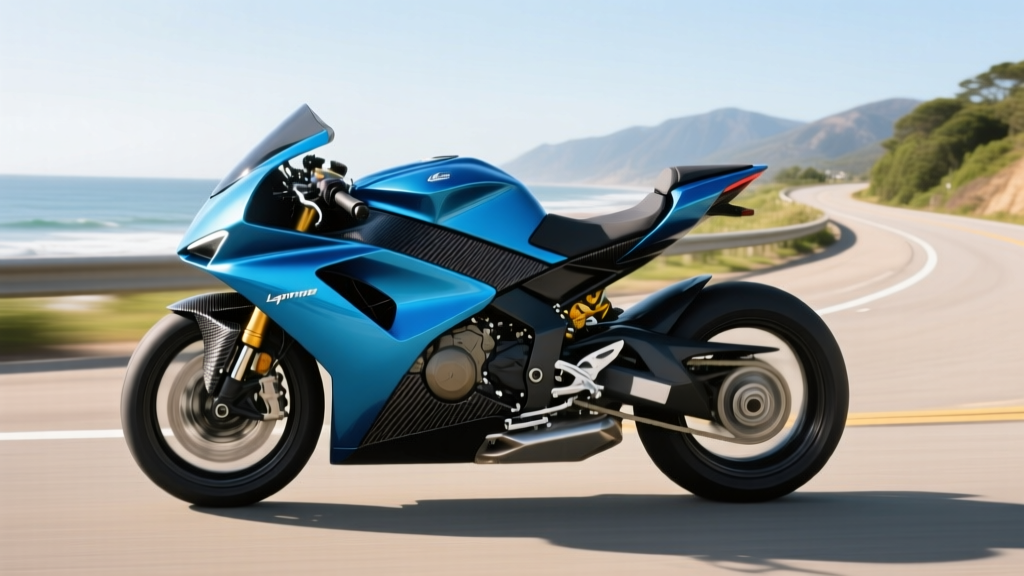
The Lightning LS-218 earned its name by topping 218 mph at Bonneville, and it remains the fastest street-legal production electric motorcycle ever built. For 2026, the LS-218 continues as a low-volume, hand-built machine from Lightning Motorcycles in San Carlos, California — part superbike, part rolling technology showcase. If you're searching for the electric Lightning LS-218 and wondering whether this record-setting two-wheeler is a practical purchase or a collector's dream, this review breaks down the real-world numbers that matter: range, charging logistics, cost, and how it stacks up against the electric motorcycle competition.
Let's be direct: this is not a commuter vehicle. It's a $38,998–$60,000+ hyper-motorcycle built in small batches for riders who want record-breaking performance and don't mind the practical trade-offs that come with it. No cargo space. Minimal weather protection. Limited dealer support. And range that, in real-world aggressive riding, can drop well below 100 miles.
Lightning LS-218 Full Specifications
| Specification | Value |
|---|---|
| Top Speed | 218+ mph (351 km/h) |
| 0–60 mph | ~2.2 seconds (est.) |
| Motor Type | Liquid-cooled IPM (Interior Permanent Magnet) motor |
| Peak Power | 200+ hp / 150+ kW |
| Peak Torque | 168 lb-ft (228 Nm) at the motor |
| Drivetrain | Chain final drive (single-speed) |
| Battery Options | 12 kWh / 15 kWh / 20 kWh (lithium-ion, NMC chemistry) |
| EPA-Estimated Range | Not formally EPA-rated; manufacturer claims ~100–180 mi depending on pack |
| Real-World Range (mixed riding) | ~70–150 mi depending on pack size and riding style |
| DC Fast Charge (optional) | CHAdeMO-compatible, up to ~20 kW |
| Level 2 Charge Rate | ~3.3 kW onboard charger (J1772 adapter) |
| Level 2 Charge Time (12 kWh pack) | ~3.5–4 hours (0–100%) |
| DC Fast Charge Time (10–80%) | ~30 minutes (20 kWh pack, 20 kW peak) |
| Curb Weight | ~495–530 lbs depending on pack |
| Base MSRP | $38,998 (12 kWh pack) |
| As-Tested / Top Trim | $46,888 (15 kWh) / $60,000+ (20 kWh, carbon body) |
| Warranty (powertrain) | 1 year, limited (manufacturer) |
| Production | Limited / built-to-order |
Real-World Range: What the Sticker Doesn't Tell You
Manufacturer claim: 100–180 miles (depending on 12/15/20 kWh pack)
Real-world mixed riding: ~70–150 miles
Aggressive sport riding: As low as 50–70 miles on the 12 kWh pack
Cold-weather impact: Expect 15–25% range loss below 40°F due to reduced battery efficiency and no waste-heat cabin to leverage
The Lightning LS-218 does not carry an official EPA range sticker the way a Tesla or Ford does. The EPA's fueleconomy.gov database primarily covers four-wheeled passenger vehicles, and low-volume motorcycles — especially hand-built electric ones — often fall outside standardized testing. Lightning Motorcycles publishes range estimates based on internal testing, and those numbers assume moderate riding at legal highway speeds.
Here's the physics: a 200-horsepower motorcycle ridden aggressively will drain a 20 kWh battery remarkably fast. Energy consumption at wide-open throttle can exceed 200 Wh/mile, meaning the largest 20 kWh pack delivers roughly 100 miles before you're searching for an outlet. At a steady 55 mph cruise, consumption drops to roughly 80–100 Wh/mile, stretching that same pack to 150+ miles. The smaller 12 kWh pack, which keeps the price and weight down, realistically gives you 70–100 miles in mixed riding.
For context, that range is comparable to a gas sportbike's tank range under hard riding — but with far fewer refueling (recharging) options available. If your rides routinely exceed 100 miles between stops, the LS-218 requires careful planning or acceptance of its limitations.
Charging: How Fast and Where
| Charging Level | Power (kW) | Connector | Time (0–100%, 20 kWh pack) | Miles Added per Hour |
|---|---|---|---|---|
| Level 1 (120V household) | ~1.4 kW | Standard outlet | ~14+ hours | ~8–10 mi/hr |
| Level 2 (240V) | ~3.3 kW | J1772 (with adapter) | ~6 hours | ~25–35 mi/hr |
| DC Fast Charge (optional) | ~20 kW peak | CHAdeMO | ~1 hour (0–100%) | ~100–150 mi/hr |
Charging the LS-218 is where the motorcycle's niche status becomes very apparent. The onboard AC charger maxes out at roughly 3.3 kW, meaning a full Level 2 charge from empty takes about 6 hours on the 20 kWh pack. That's overnight territory — perfectly fine for home charging, but it means you cannot top up quickly at a public Level 2 station during a lunch stop.
The optional DC fast-charging capability uses the CHAdeMO connector, which is significant because CHAdeMO infrastructure has been declining in the United States in favor of CCS and the Tesla NACS standard. While some Electrify America and legacy stations still carry CHAdeMO plugs, availability is spotty and shrinking. Lightning has discussed CCS adapter options, but as of 2026, CHAdeMO remains the primary DC fast-charge interface.
At ~20 kW peak DC charge rate, the 20 kWh pack reaches 80% in roughly 30 minutes. That's far slower than a modern electric car pulling 150–350 kW at a DC fast charger, but it's roughly in line with what electric motorcycles currently offer. The charge curve tapers significantly above 80% State of Charge (SoC), so the final 20% can take nearly as long as the first 80%.
Practical charging tip: Most LS-218 owners charge at home overnight on Level 2 and plan rides around the bike's realistic range. For longer rides, carrying a portable Level 1 charger provides emergency trickle-charging from any 120V outlet — at roughly 8–10 miles of range per hour of charging.
Performance: 218 MPH Is Not a Typo
The LS-218's liquid-cooled IPM motor produces over 200 horsepower and 168 lb-ft of torque available instantly from zero RPM. That torque figure is the headline experience: twist the throttle at any speed and the acceleration is immediate, linear, and violent. The claimed 0–60 mph time of approximately 2.2 seconds puts it in hypercar territory — comparable to a Bugatti Chiron or the fastest Tesla Model S Plaid launches, on two wheels.
Top speed of 218+ mph was validated at the Bonneville Salt Flats and remains the benchmark for production electric motorcycles. For reference, the gasoline-powered Kawasaki Ninja H2R (a track-only hyperbike) tops out around 249 mph, making the LS-218 competitive with the most extreme internal-combustion motorcycles ever built — while producing zero tailpipe emissions.
The single-speed chain-drive transmission means there are no gears to shift. Power delivery is seamless and uninterrupted, which is both an advantage (no shift shock, no missed gears) and a subjective drawback for riders who enjoy the engagement of a manual gearbox. The motor's liquid cooling system manages thermal loads during sustained high-speed runs, though extended track use will still push battery temperatures upward.
Pricing, Tax Credits, and Ownership Cost
| Configuration | MSRP | Federal §30D Tax Credit | Effective Price |
|---|---|---|---|
| 12 kWh (Standard) | $38,998 | Not eligible | $38,998 |
| 15 kWh (Mid-Range) | $46,888 | Not eligible | $46,888 |
| 20 kWh (Race / Carbon) | $60,000+ | Not eligible | $60,000+ |
The Lightning LS-218 does not qualify for the federal §30D Clean Vehicle tax credit. Under current IRS rules, the §30D credit applies to new qualified plug-in electric drive motor vehicles — specifically four-wheeled vehicles with a gross vehicle weight rating (GVWR) of 14,000 lbs or less, manufactured by an eligible manufacturer meeting battery sourcing and critical minerals requirements. Motorcycles are excluded from §30D.
There is a separate federal credit for qualified two-wheeled plug-in electric vehicles (historically under IRC §30D(f) / §25(e)), but this credit has lapsed and been reinstated intermittently. As of 2026, riders should consult a tax professional and check the latest IRS guidance before counting on any federal incentive for an electric motorcycle purchase. Some states — notably California, through programs like the Clean Cars 4 All or local air district incentives — offer rebates for electric motorcycles, but these vary by jurisdiction and income eligibility.
At $38,998 to $60,000+, the LS-218 is firmly in exotic motorcycle territory. For comparison, a new Ducati Panigale V4 starts around $28,000, and a Zero SR/F (the most direct electric competitor) starts around $19,995. The LS-218's price reflects its hand-built, low-volume production, carbon fiber bodywork options, and the engineering cost of a 218-mph electric drivetrain.
Who Should (and Shouldn't) Buy the LS-218
- You want the fastest production electric motorcycle ever built and value exclusivity
- Your rides are typically under 100 miles and you can charge at home overnight
- You're a collector or enthusiast who appreciates hand-built, low-volume engineering
- You want instant electric torque with zero emissions on canyon roads or track days
- You need daily commuter practicality, passenger accommodation, or cargo capacity
- You regularly ride 150+ miles and need reliable fast-charging infrastructure
- You want mainstream dealer support, a multi-year warranty, or easy service access
- Budget is a primary concern — the Zero SR/F or SR/S offers strong performance at half the price
The LS-218 is a motorcycle for a very specific buyer: someone who already has a practical vehicle (or several), wants an electric statement piece, and rides primarily on roads where the bike's range and charging limitations won't strand them. It's a garage queen that can also destroy nearly anything at a stoplight — not a daily driver.
Lightning LS-218 vs. Zero SR/F: The Key Competitor
| Spec | Lightning LS-218 (20 kWh) | Zero SR/F (ZF17.3) |
|---|---|---|
| Base MSRP | $60,000+ | ~$19,995 |
| Peak Power | 200+ hp | 110 hp (Peak Performance: 140 hp) |
| 0–60 mph | ~2.2 sec | ~3.3 sec |
| Top Speed | 218+ mph | 124 mph |
| Battery | 20 kWh (NMC) | 17.3 kWh (NMC) |
| Real-World Range (mixed) | ~100–150 mi | ~100–130 mi (city) / ~70–85 mi (highway) |
| DC Fast Charge | CHAdeMO ~20 kW (optional) | CHAdeMO ~6 kW (optional, Rapid Charge) |
| Production | Limited / built-to-order | Volume production, dealer network |
| Warranty | 1 year limited | 2 years motorcycle / 5 years battery (unlimited miles) |
The Zero SR/F is the LS-218's most relevant comparison, and it highlights the Lightning's positioning problem. The Zero costs roughly one-third the price, offers competitive range, has an established dealer network, comes with a 5-year battery warranty, and is supported by a company that's been building electric motorcycles since 2006. The LS-218 wins on raw performance — 200+ hp and 218 mph are in a different universe — but for riders who don't need to break land-speed records, the Zero is the rational choice.
Pros and Cons
- Fastest production electric motorcycle ever built (218+ mph)
- Instant 168 lb-ft torque, 200+ hp — supercar acceleration on two wheels
- Exotic, hand-built exclusivity with carbon fiber options
- Zero tailpipe emissions with superbike performance
- Single-speed simplicity — no clutch, no gear shifts
- Liquid-cooled motor manages sustained high-speed thermal loads
- Very expensive: $38,998–$60,000+ with no federal tax credit
- Limited real-world range, especially under aggressive riding (50–100 mi on smaller packs)
- CHAdeMO-only DC fast charging — a declining connector standard
- Low-volume, built-to-order production means long wait times and limited dealer support
- Only a 1-year limited warranty — far below Zero's 5-year battery coverage
- No EPA range certification or standardized efficiency testing
- No passenger seat, minimal storage, not practical for commuting
Frequently Asked Questions
What is the real-world range of the Lightning LS-218?
With the 20 kWh battery pack, expect approximately 100–150 miles in mixed riding at legal speeds. Aggressive riding can drop range to 70 miles or less. The smaller 12 kWh pack realistically delivers 50–100 miles. Cold weather (below 40°F) reduces range by an additional 15–25%.
How fast does the Lightning LS-218 charge?
On a Level 2 (240V) home charger at 3.3 kW, a full charge takes about 6 hours for the 20 kWh pack. The optional DC fast charger (CHAdeMO, ~20 kW) reaches 80% in roughly 30 minutes. Level 1 (120V) trickle charging takes 14+ hours.
Does the Lightning LS-218 qualify for the federal EV tax credit?
No. The IRS §30D Clean Vehicle tax credit applies to four-wheeled plug-in electric vehicles. Motorcycles, including the LS-218, are not eligible. Some state and local incentives for electric motorcycles may apply — check with your state's clean energy office and consult a tax professional.
Is the Lightning LS-218 street legal?
Yes. The LS-218 is DOT-compliant and street-legal in the United States. It comes equipped with required lighting, mirrors, and safety equipment. However, its 218+ mph top speed far exceeds any public road speed limit — this capability is intended for closed-course and sanctioned events.
How does the LS-218 compare to a gas superbike?
The LS-218 matches or exceeds the 0–60 acceleration of most gasoline superbikes (Ducati Panigale V4, BMW S1000RR) thanks to instant electric torque. However, gas superbikes offer 150–200+ mile range with a 5-minute refuel, established dealer networks, and far lower purchase prices. The LS-218 trades convenience and range for acceleration and exclusivity.
Can I buy a Lightning LS-218 at a dealership?
The LS-218 is built to order directly through Lightning Motorcycles. There is no traditional dealership network. Buyers typically place a deposit and wait for their custom-configured motorcycle to be hand-built. Lead times can extend several months.
Sources: Lightning Motorcycles official specifications; IRS Clean Vehicle Tax Credit guidance; U.S. EPA fueleconomy.gov. Pricing and specifications reflect manufacturer data available as of 2026 and are subject to change. Always confirm current pricing and tax credit eligibility with the manufacturer and a qualified tax professional.