The Truth About a Light Pink Tesla
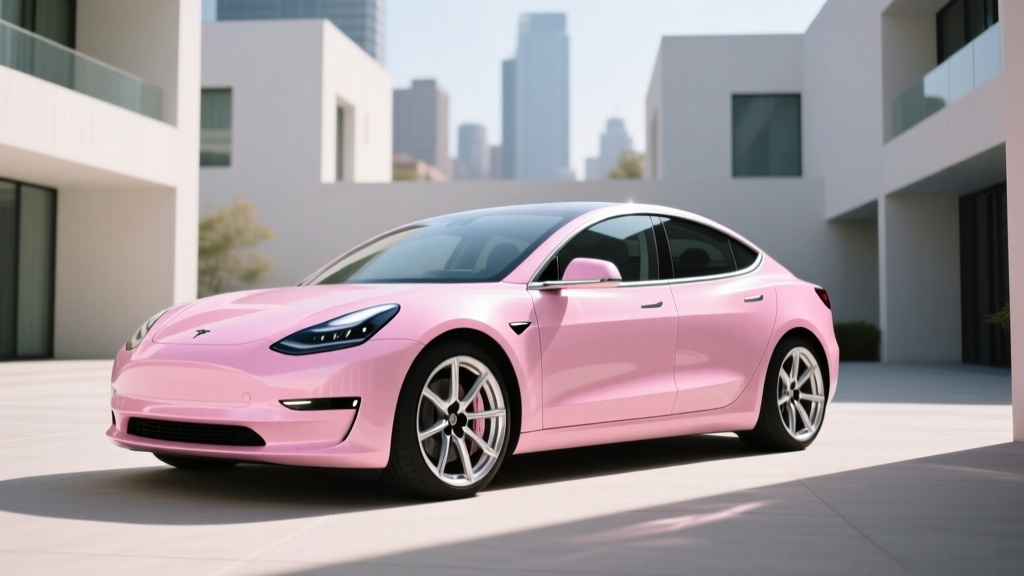
If you've been searching for a light pink Tesla, you've likely discovered that Tesla does not offer pink as a factory paint option — not in 2026, and not in any prior model year. The company's current palette for the Model 3 includes Pearl White, Solid Black, Deep Blue, Ultra Red, Quicksilver, and Stealth Grey. Yet light pink Teslas are everywhere on social media, car meets, and city streets. The explanation is simple: owners are achieving the look through vinyl wraps and, less commonly, aftermarket paint jobs.
This guide covers everything you need to know about getting a light pink Tesla Model 3 in 2026 — from wrap costs and durability to the full spec breakdown of the car underneath. We'll also address whether a color change affects your warranty, resale value, and federal tax credit eligibility.
2026 Tesla Model 3: Full Spec Breakdown
Before wrapping anything, you're buying one of the most efficient sedans on the market. Here's what the 2026 Model 3 lineup delivers across its three trims.
| Spec | Long Range RWD | Long Range AWD | Performance |
|---|---|---|---|
| EPA Range | 363 mi | 341 mi | 315 mi |
| Battery (usable) | ~79 kWh (NMC) | ~79 kWh (NMC) | ~79 kWh (NMC) |
| 0-60 mph | 4.9 sec | 4.2 sec | 2.9 sec |
| Horsepower | ~271 hp | ~346 hp | ~510 hp |
| Drivetrain | Rear-Wheel Drive | Dual-Motor AWD | Dual-Motor AWD |
| MPGe (combined) | 132 MPGe | 125 MPGe | 113 MPGe |
| kWh/100 mi | 25 kWh | 27 kWh | 30 kWh |
| Base MSRP | $44,130 | $47,130 | $54,630 |
| Max DC Fast Charge | 250 kW | 250 kW | 250 kW |
| 10-80% DC Time | ~25 min | ~25 min | ~25 min |
| Level 2 Home Rate | 11.5 kW (~44 mi/hr) | 11.5 kW (~44 mi/hr) | 11.5 kW (~44 mi/hr) |
| Battery Warranty | 8 yr / 120,000 mi | 8 yr / 120,000 mi | 8 yr / 120,000 mi |
Source: EPA fueleconomy.gov, Tesla.com. Specs reflect 2026 model year data and may vary by production batch.
Real-World Range: What to Actually Expect
The Model 3's NMC (nickel manganese cobalt) chemistry provides strong energy density, which is why Tesla achieves over 360 miles from a ~79 kWh usable pack. However, NMC batteries are more sensitive to sustained 100% charges than LFP (lithium iron phosphate) packs. Tesla recommends daily charging to 80–90% for longevity, reserving 100% for road trips. This means your practical daily range is closer to 260–290 miles at 80% state of charge — still excellent for nearly all commutes.
Efficiency is where the Model 3 continues to lead the segment. At 25 kWh per 100 miles (Long Range RWD), it sips electrons compared to rivals like the BMW i4 eDrive40 (28 kWh/100 mi) and Hyundai Ioniq 6 (27 kWh/100 mi). That efficiency translates directly to lower charging costs and longer intervals between stops on road trips.
Charging Speed: Home and DC Fast Charging
Charging speed is one of the Model 3's strongest attributes. Tesla's Supercharger network remains the most reliable public charging infrastructure in the U.S., and the Model 3 takes full advantage.
| Charging Level | Power | Miles Added per Hour | Notes |
|---|---|---|---|
| Level 1 (120V household) | ~1.4 kW | ~4–5 mi/hr | Emergency/trickle only |
| Level 2 (240V home, Wall Connector) | 11.5 kW | ~44 mi/hr | Full charge in ~7 hours |
| DC Fast (Supercharger V3/V4) | Up to 250 kW | ~175 mi in 15 min | 10-80% in ~25 minutes |
A critical detail for new EV owners: peak charge rate (250 kW) is not sustained across the entire session. The Model 3 hits peak speed between roughly 10–40% state of charge, then tapers progressively. By 80%, you're typically at 40–60 kW. This is why the 10-80% metric matters more than peak kW — it reflects the usable portion of the charging curve. Tesla's thermal management system preconditions the battery when you navigate to a Supercharger, ensuring you hit peak speeds upon arrival.
For home charging, a Tesla Wall Connector on a 60-amp circuit delivers 11.5 kW — enough to replenish a fully depleted battery overnight. Most owners who drive 30–50 miles daily only need to plug in every few days. Installation costs for a Level 2 home setup typically range from $500 to $2,000 depending on panel capacity and conduit run length. If your home has a 200-amp electrical panel with spare capacity, expect the lower end; older homes with 100-amp service may need a panel upgrade ($1,500–$3,000 additional).
Getting the Light Pink Look: Wraps vs. Paint
Since Tesla doesn't sell a pink Model 3 from the factory, you have two paths to a light pink Tesla:
Vinyl Wrap (Most Popular)
- Cost: $2,500–$5,000 for a full-body wrap in a satin, gloss, or matte light pink (brands like 3M, Avery Dennison, KPMF)
- Durability: 5–7 years with proper care; UV-resistant top coats prevent fading
- Reversibility: Fully removable — preserves original paint underneath, which can help resale value
- Protection: Acts as a sacrificial layer against rock chips, minor scratches, and bird droppings
- Timeline: 2–4 days for a professional installation
Aftermarket Paint
- Cost: $5,000–$10,000+ for a quality respray at a reputable body shop
- Durability: Permanent; lasts as long as factory paint if done correctly
- Reversibility: None — original color is gone
- Resale impact: Non-factory colors can reduce resale value by $1,000–$3,000 unless the buyer specifically wants pink
For most buyers, a vinyl wrap is the smarter choice. It's cheaper, reversible, and adds paint protection. Popular light pink shades in the EV community include "Millennial Pink," "Sakura Pink," and "Rose Quartz" — all available in gloss, satin, and matte finishes.
Does a Wrap Affect the Tesla Warranty?
A vinyl wrap does not void Tesla's vehicle or battery warranty. However, if a wrap installation causes damage (e.g., adhesive residue on sensors, trim damage during removal), those specific repairs won't be covered. Choose an installer experienced with Tesla vehicles — the flush door handles, camera housings, and sensor areas require careful technique.
Pricing and Federal Tax Credit Eligibility
Here's what the 2026 Model 3 costs before and after wrapping, and how the federal EV tax credit factors in.
| Item | Long Range RWD | Long Range AWD | Performance |
|---|---|---|---|
| Base MSRP | $44,130 | $47,130 | $54,630 |
| Destination Fee | $1,390 | $1,390 | $1,390 |
| Typical Options (FSD, wheels) | +$8,000 | +$8,000 | +$0 |
| Light Pink Wrap | +$3,500 | +$3,500 | +$3,500 |
| Estimated Total | ~$57,020 | ~$60,020 | ~$59,520 |
| Federal Tax Credit (§30D) | Up to $7,500 | Up to $7,500 | Up to $7,500 |
| Effective Price After Credit | ~$49,520 | ~$52,520 | ~$52,020 |
Federal EV Tax Credit Rules (§30D) — Key Caveats
The Model 3 qualifies for up to $7,500 under the IRS §30D clean vehicle credit, but eligibility depends on several factors that change annually:
- MSRP Cap: Sedans must be under $55,000 MSRP. The Long Range RWD ($44,130) and Long Range AWD ($47,130) qualify. The Performance trim ($54,630) is below the cap but close — options could push it over.
- Buyer Income Limits: Modified AGI must not exceed $150,000 (single), $225,000 (head of household), or $300,000 (married filing jointly).
- Battery Sourcing: Critical minerals and battery components must meet phased-in domestic-content thresholds. As of 2026, 80% of critical minerals and 100% of battery components must be sourced from the U.S. or FTA partners. Tesla's supply chain has largely adapted, but verify current eligibility at the point of sale.
- Point-of-Sale Transfer: Since 2024, you can transfer the credit to the dealer at purchase, reducing your out-of-pocket cost immediately rather than waiting for tax filing.
Important: The wrap cost ($2,500–$5,000) is an aftermarket expense and does not count toward the MSRP for tax credit purposes. Always confirm eligibility with your tax professional and the IRS guidelines before purchase.
Interior, Tech, and Daily Usability
The refreshed Model 3 (introduced for 2024, continuing through 2026) brought meaningful interior upgrades over the pre-2024 version:
Cargo and Passenger Space
- Rear legroom: 35.3 inches — adequate for adults on shorter trips, tight for tall passengers on long drives
- Front headroom: 40.3 inches
- Cargo volume: 23 cu ft (rear trunk) + 3.1 cu ft (frunk) = 26.1 cu ft total
- With rear seats folded: ~56 cu ft — enough for camping gear or a week's groceries for a family
Technology and Driver Assistance
- Infotainment: 15.4-inch center touchscreen, 8-inch rear passenger display, 17-speaker audio system, ventilated front seats, ambient lighting
- Autopilot (standard): SAE Level 2 driver assistance — adaptive cruise control, lane centering, automatic emergency braking. The driver must remain fully engaged at all times.
- FSD Supervised ($8,000 option): Enhanced Level 2 system with city street navigation, traffic light recognition, and lane-change assistance. Still requires active driver supervision — this is not autonomous driving.
- Camera system: 8 exterior cameras providing 360-degree visibility and dashcam recording
- Over-the-air updates: Regular feature additions and performance improvements delivered wirelessly
Notable Drawbacks
- No physical instrument cluster — all information is on the center screen, which some drivers find distracting
- Turn signal stalks removed in the refresh — signals are now on the steering wheel rim, a learning curve for new owners
- No Apple CarPlay or Android Auto — Tesla's proprietary system is the only option
- Rear visibility is limited due to the sloping roofline; rely on cameras when reversing
- Ride quality on 19-inch wheels can be firm on rough pavement
Pros, Cons, and Who Should Buy a Light Pink Tesla Model 3
Pros
- Best-in-class efficiency (25 kWh/100 mi)
- 363-mile EPA range (Long Range RWD)
- Access to Tesla Supercharger network — the most reliable DC fast-charging network in the U.S.
- Strong performance even in base trim (4.9 sec 0-60)
- Excellent over-the-air update cadence
- High safety ratings (IIHS Top Safety Pick+, NHTSA 5-star)
- Wrap is fully reversible — personalize without permanent commitment
Cons
- No factory pink paint option — wrap adds $2,500–$5,000
- Turn signal buttons on steering wheel take adjustment
- No Apple CarPlay / Android Auto
- Rear seat space is tighter than competitors (Hyundai Ioniq 6, BMW i4)
- Performance trim may exceed $55K MSRP cap with options, losing tax credit
- Insurance costs can be 15–25% higher than comparable gas sedans
- FSD ($8,000) remains Level 2 despite the "Full Self-Driving" name
Who This EV Suits Best
- Commuters: Ideal. 363 miles of range means charging once or twice a week for a 40-mile round-trip commute. Low operating cost (~$0.04–$0.06/mile on residential electricity).
- Tech-forward buyers: The minimalist interior, OTA updates, and app integration appeal to those who want a connected vehicle.
- Style-conscious owners: A light pink wrap makes a bold statement and differentiates from the sea of white and black Teslas.
- Road trippers: Supercharger access makes long-distance travel straightforward. Plan for 20–25 minute stops every 200–250 miles.
- Not ideal for: Families needing spacious rear seats (consider Model Y), those who prefer physical buttons, or buyers in areas with limited home charging access.
Frequently Asked Questions
Does Tesla sell a light pink Model 3 from the factory?
No. Tesla's 2026 Model 3 color options are Pearl White, Solid Black, Deep Blue, Ultra Red, Quicksilver, and Stealth Grey. A light pink finish requires an aftermarket vinyl wrap ($2,500–$5,000) or custom paint ($5,000–$10,000+).
How much does a light pink Tesla wrap cost?
A professional full-body vinyl wrap in light pink typically costs $2,500–$5,000 depending on the vinyl brand, finish (gloss, satin, matte), and installer. The wrap lasts 5–7 years and is fully removable.
Does wrapping my Tesla void the warranty?
No. A vinyl wrap does not void Tesla's vehicle, battery, or powertrain warranty. However, any damage caused during wrap installation or removal is not covered. Use an installer experienced with Tesla's flush handles and camera housings.
What is the real-world range of the 2026 Model 3 Long Range?
The EPA rates the Long Range RWD at 363 miles. In real-world mixed driving, expect 310–330 miles. Highway driving at 75+ mph reduces this to ~280–300 miles. In freezing weather, plan for 250–275 miles due to battery chemistry and cabin heating demands.
How fast does the Model 3 charge at home and on road trips?
At home on a Level 2 (240V) Tesla Wall Connector, the Model 3 charges at 11.5 kW, adding roughly 44 miles per hour — a full charge takes about 7 hours. On DC fast chargers (Tesla Superchargers), it peaks at 250 kW and charges from 10–80% in approximately 25 minutes.
Does the 2026 Model 3 qualify for the $7,500 federal tax credit?
The Long Range RWD ($44,130 MSRP) and Long Range AWD ($47,130) fall under the $55,000 sedan MSRP cap and typically qualify, subject to buyer income limits ($150K single / $300K joint) and battery-sourcing requirements. The Performance trim ($54,630) is near the cap — adding options could push it above $55,000 and disqualify it. Always verify at IRS.gov and with your tax professional.
Is a light pink Tesla Model 3 worth it vs. competitors?
If you want a personalized, efficient sedan with the best charging network access, yes. The Model 3 Long Range at ~$49,520 after the federal credit (before wrap) undercuts the BMW i4 eDrive40 (~$57,000) and Hyundai Ioniq 6 Limited (~$47,000 but with shorter range and less charging infrastructure). The wrap adds personality without permanent modification. However, if rear-seat space or physical controls are priorities, the Ioniq 6 or Polestar 2 may be better fits.
Can I get a factory pink Tesla in the future?
Tesla has not announced any plans for a factory pink option. The company occasionally offers limited-edition colors in specific markets (e.g., Midnight Cherry Red in China), but a production light pink remains unlikely. A wrap is your best and most flexible option for 2026 and beyond.