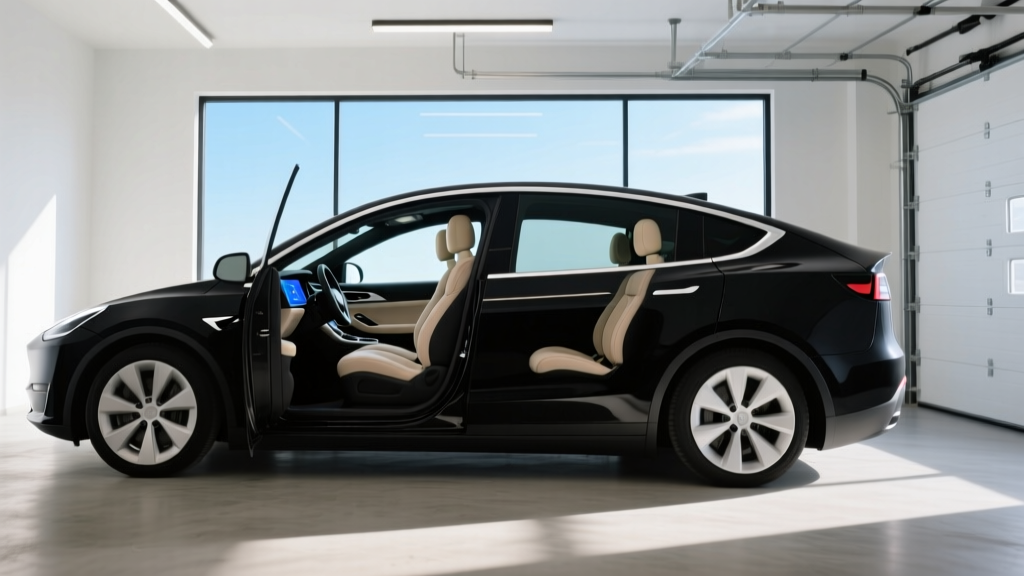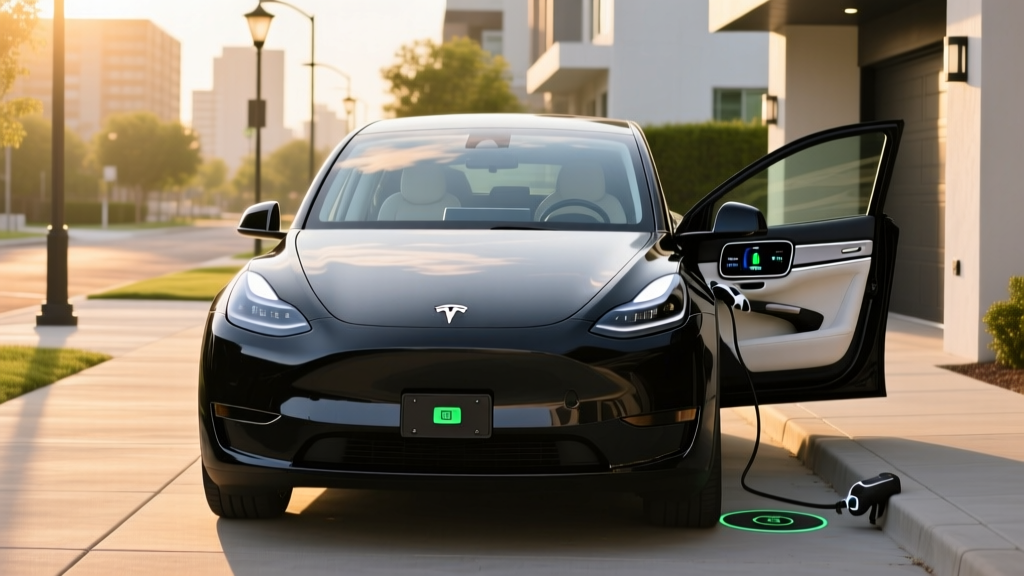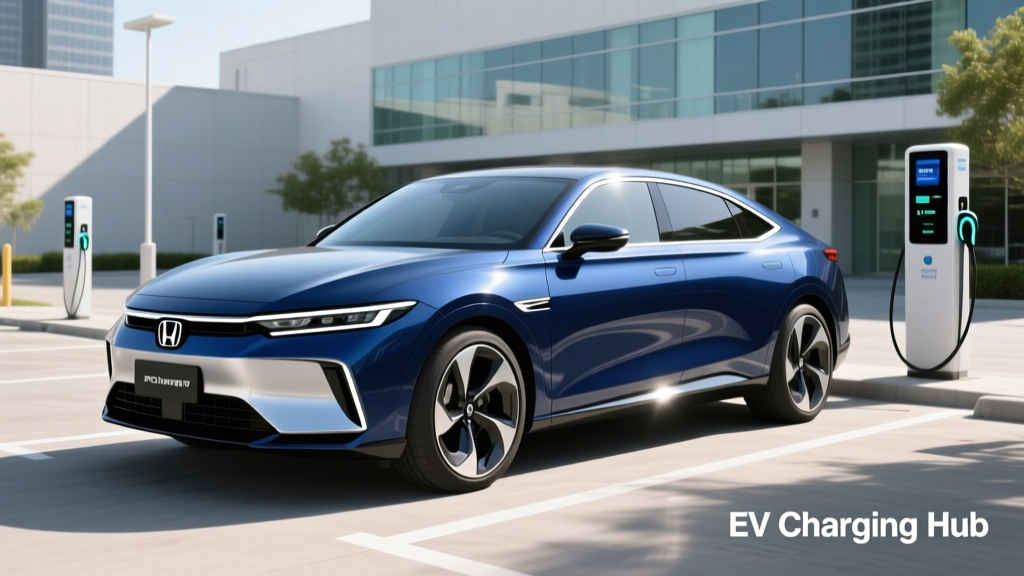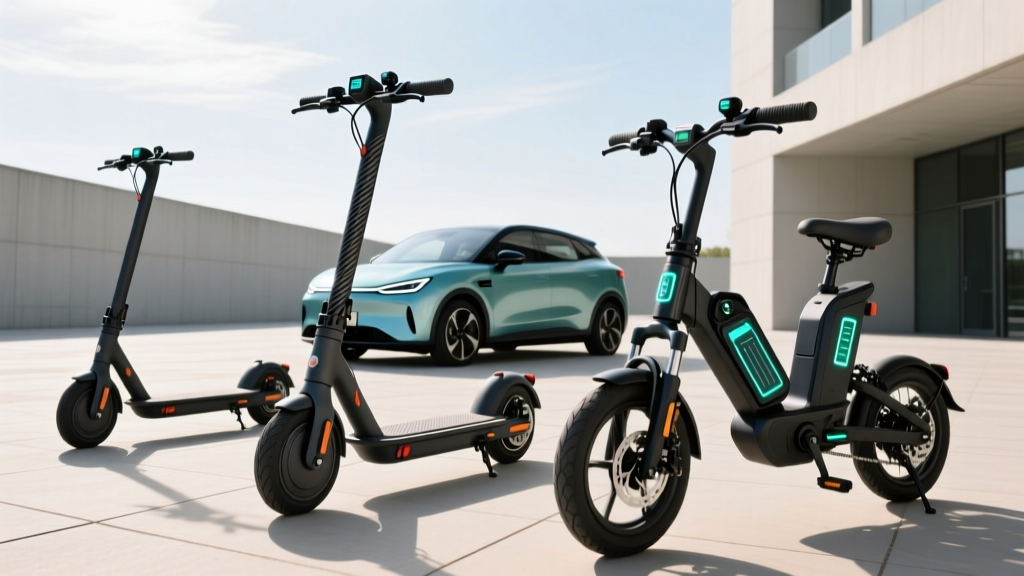
Quick Answer: Is Now the Right Time to Buy from the Light Electric Vehicle Market?
The light electric vehicle market in 2026 offers more sub-$40,000 models than ever — including the Chevrolet Equinox EV (EPA 319 mi, ~$33,000), Hyundai Ioniq 5 (EPA 303 mi, ~$42,000), and Tesla Model 3 (EPA 363 mi, ~$39,000). Federal §30D tax credits of up to $7,500 (subject to income, MSRP caps, and battery-sourcing rules) can bring effective prices below comparable gas vehicles. However, buyers without home Level 2 charging access, those in extreme cold climates, or drivers covering more than 300 miles daily should weigh PHEVs or HEVs instead. The decision hinges on three factors: your daily mileage, charging access, and upfront budget.
What the Light Electric Vehicle Market Looks Like in 2026
The term "light electric vehicle" encompasses battery-electric cars, crossovers, and SUVs under 10,000 lbs GVWR — essentially every consumer EV you can buy today. The 2026 light electric vehicle market has expanded to over 60 distinct models available in the US, spanning from the Nissan Leaf (EPA 212 mi, starting ~$28,000) to the Rivian R1S (EPA 400+ mi, starting ~$80,000).
Three trends define this market right now:
- Price compression: Average transaction prices for new EVs dropped below $47,000 in late 2025 (per Kelley Blue Book data), narrowing the gap with gas-powered equivalents.
- NACS standardization: Ford, GM, Rivian, Volvo, and others have adopted Tesla's North American Charging Standard (NACS), granting access to the Supercharger network — the most reliable DC fast-charging ecosystem in the country.
- LFP battery adoption: More base trims now use lithium iron phosphate (LFP) chemistry, which trades some energy density for longer cycle life and lower cost. Tesla's Model 3 Standard Range and the base Chevrolet Equinox EV both use LFP packs.
EV vs Gas vs Hybrid: A Data-Driven Comparison
The most common question from first-time EV buyers: how does a battery-electric vehicle stack up against a gas car or hybrid in real ownership costs? Let's compare three popular choices in the compact crossover segment — the Hyundai Ioniq 5 (BEV), Toyota RAV4 Hybrid (HEV), and Toyota RAV4 (gas AWD) — over 5 years and 75,000 miles.
| Category | Hyundai Ioniq 5 SEL (BEV) | Toyota RAV4 Hybrid AWD | Toyota RAV4 AWD (Gas) |
|---|---|---|---|
| MSRP (2026) | ~$44,000 | ~$33,000 | ~$30,000 |
| Federal Tax Credit (§30D) | Up to $7,500* | $0 | $0 |
| Effective Purchase Price | ~$36,500 | $33,000 | $30,000 |
| Energy/Fuel Cost (5 yr) | ~$3,750 (home L2 @ $0.14/kWh) | ~$7,500 (39 MPG combined) | ~$10,500 (28 MPG combined) |
| Maintenance (5 yr) | ~$1,500 | ~$3,200 | ~$3,800 |
| Insurance (5 yr avg) | ~$10,500 | ~$8,500 | ~$8,200 |
| Depreciation (est. 5 yr) | ~$16,000 | ~$12,000 | ~$13,000 |
| Total 5-Year Cost | ~$68,250 | ~$64,200 | ~$65,500 |
*§30D eligibility depends on buyer income (≤$150k single / ≤$300k joint), vehicle MSRP caps ($55k cars / $80k SUVs/trucks), and battery component/mineral sourcing. Verify at IRS.gov and consult a tax professional.
The BEV's energy savings are substantial — roughly $6,750 less than gas over 5 years with home charging. But higher insurance premiums (EVs average 15-25% more to insure per IIHS industry data) and steeper depreciation partially offset those gains. The hybrid often represents the financial sweet spot for buyers who can't charge at home.
Real Costs: Charging, Maintenance, and What Dealerships Won't Tell You
Understanding the economics of EV ownership requires breaking down each cost category with precision.
Charging Costs: Home vs. Public
The single biggest financial variable in EV ownership is where you charge.
| Charging Method | Rate | Cost per 60 kWh | Cost per Mile (3.5 mi/kWh) |
|---|---|---|---|
| Home Level 1 (120V, 1.4 kW) | ~$0.14/kWh (avg US residential) | $8.40 | $0.024 |
| Home Level 2 (240V, 7.7-11.5 kW) | ~$0.14/kWh | $8.40 | $0.024 |
| Public Level 2 (ChargePoint, etc.) | ~$0.25-$0.49/kWh | $15-$29 | $0.043-$0.083 |
| DC Fast Charging (Electrify America, EVgo) | ~$0.35-$0.55/kWh | $21-$33 | $0.060-$0.094 |
| Tesla Supercharger (V3/V4) | ~$0.25-$0.35/kWh | $15-$21 | $0.043-$0.060 |
At $3.50/gallon gas and 28 MPG, a gas car costs ~$0.125/mile in fuel. Home-charged EVs cost roughly one-fifth of that. But if you rely exclusively on DC fast charging at $0.48/kWh, your per-mile cost rises to ~$0.082 — still cheaper than gas, but the gap narrows dramatically.
Critical nuance: DC fast charging follows a charge curve. A vehicle rated at "peak 250 kW" only sustains that rate briefly — typically between 10-30% State of Charge. Above 60% SoC, the rate tapers significantly. A "10-80% in 18 minutes" claim assumes ideal battery preconditioning and ambient temperatures above 60°F. In winter, expect 25-40% longer charging sessions.
Maintenance Savings
BEVs eliminate oil changes, spark plugs, timing belts, and exhaust-system repairs. Regenerative braking reduces brake-pad wear — many EV owners report original brake pads at 80,000+ miles. Typical BEV maintenance runs $0.03-$0.05/mile versus $0.06-$0.10/mile for gas vehicles.
However, EVs are heavier (battery mass), which accelerates tire wear. Budget for tire replacement every 30,000-40,000 miles on a BEV versus 45,000-55,000 on a comparable gas car. EV-specific tires (lower rolling resistance, foam-lined for noise) cost $200-$350 per corner.
First-Time Buyer's Checklist: What to Know Before You Sign
If you're entering the light electric vehicle market for the first time, these practical considerations will determine whether your EV experience is seamless or frustrating.
Home Charging: The Make-or-Break Factor
Over 80% of EV charging happens at home. Before buying, assess your electrical situation:
- Panel capacity: Most homes need a 200-amp panel for a 48-amp Level 2 charger (like the ChargePoint Home Flex or Tesla Wall Connector). Older homes with 100-amp panels may require a $1,500-$3,000 upgrade.
- Outlet vs. hardwired: A NEMA 14-50 outlet (~$300-$600 install if near the panel) offers flexibility. Hardwired installations (~$500-$1,200) deliver slightly faster charging and avoid the NEC 80% derating rule on plug-in circuits.
- Apartment/condo reality: If you can't install a Level 2 charger, assess public charging density within 2 miles of your home. Relying solely on DC fast charging adds cost, time, and accelerates battery degradation.
Climate and Real-World Range
EPA range estimates are measured at ~72°F on mixed driving cycles. Real-world conditions change the picture:
- Highway driving (75+ mph): Expect 80-88% of EPA range due to aerodynamic drag. A 300-mile EPA vehicle delivers ~250-265 highway miles.
- Cold weather (below 30°F): Battery chemistry slows, cabin heating draws 3-6 kW, and range drops 20-40%. An EV with a heat pump (standard on Hyundai Ioniq 5, Tesla Model 3/Y) loses ~20-25% in cold; without one, expect 30-40% loss.
- Towing/hauling: Towing a 2,500-lb trailer can cut range by 40-50%.
Common EV Misconceptions — Addressed with Data
| Myth | Fact |
|---|---|
| "EV batteries need replacing every 5 years." | Federal law mandates 8-year/100,000-mile battery warranties (10 years in CARB states). Average degradation is 8-12% over 100,000 miles (data from fueleconomy.gov and Recurrent Auto). Most batteries outlast the vehicle. |
| "The grid can't handle EVs." | Most charging occurs overnight during off-peak hours. A single EV charging at 7.7 kW draws roughly the same as an electric dryer. Utilities offer time-of-use rates incentivizing off-peak charging. |
| "EVs are worse for the environment because of battery mining." | MIT and ICCT lifecycle analyses show EVs produce 50-70% fewer lifetime emissions than gas cars in the US grid mix — even accounting for battery production. The gap widens as the grid decarbonizes. |
| "You can't take road trips in an EV." | With the NACS Supercharger network (20,000+ stalls) and Electrify America's CCS network (4,000+ stalls), most interstate routes have charging every 50-80 miles. Plan 20-30 minute stops every 200-250 miles. |
| "EVs are slow." | Even mainstream EVs deliver instant torque. The base Tesla Model 3 hits 0-60 in 5.8 seconds; the Ioniq 5 AWD in 5.0 seconds. Performance EVs (Lucid Air Sapphire, Tesla Model S Plaid) run sub-2-second 0-60 times. |
Decision Framework: Which Electrified Vehicle Is Right for You?
If-Then EV Buying Guide
- IF you have home Level 2 charging access AND drive <200 miles/day AND live in a moderate climate → THEN a BEV maximizes your savings. Look at: Hyundai Ioniq 5, Tesla Model 3, Chevrolet Equinox EV.
- IF you lack home charging BUT have reliable public Level 2 within walking distance → THEN a BEV is viable but budget ~$0.05-$0.08/mile for energy. Consider models with NACS access (Ford Mustang Mach-E, F-150 Lightning) for Supercharger reliability.
- IF you have no home charging AND limited public infrastructure → THEN choose a PHEV (Toyota RAV4 Prime, 42 mi electric range) or HEV. You'll charge opportunistically and burn gas without anxiety.
- IF you regularly drive 300+ miles in cold weather or tow frequently → THEN a PHEV or high-range BEV (350+ mi EPA, like the Lucid Air Pure or Tesla Model S) is essential. Budget for 30% cold-weather range loss.
- IF your budget is under $30,000 → THEN consider a used EV (eligible for up to $4,000 under IRC §25E) or the new Nissan Leaf. The used-EV credit has its own income and MSRP caps — verify at IRS.gov.
Tax Credits and Incentives: What's Actually Available
The federal §30D clean vehicle credit remains the most impactful incentive, but eligibility has tightened significantly since the Inflation Reduction Act's sourcing requirements took full effect. Here's the 2026 framework:
- Maximum credit: $7,500 (split: $3,750 for battery components manufactured in North America + $3,750 for critical minerals sourced from the US or FTA partners)
- Buyer income caps: ≤$150,000 (single), ≤$225,000 (head of household), ≤$300,000 (joint)
- Vehicle MSRP caps: ≤$55,000 for sedans/wagons; ≤$80,000 for SUVs, trucks, vans
- Battery sourcing: Increasingly strict percentages of critical minerals and battery components must originate from the US or trade-agreement countries. Chinese-sourced components disqualify vehicles.
- Point-of-sale transfer: You can transfer the credit to the dealer at purchase, reducing your out-of-pocket cost immediately (rather than waiting for a tax refund)
- Commercial-vehicle loophole (IRC §45W): Vehicles that don't qualify under §30D (due to sourcing) may be leased and pass through a $7,500 commercial credit to the lessee — ask your dealer about lease-specific incentives
Rules change frequently. Always verify current eligibility at fueleconomy.gov and consult a tax professional before relying on credit assumptions.
Frequently Asked Questions
How long do EV batteries actually last?
Modern lithium-ion EV batteries (both NMC and LFP chemistries) are designed for 1,500-3,000 full charge cycles before reaching 70-80% capacity. At 3-4 miles per kWh and a 75 kWh battery, that translates to 330,000-660,000 miles before significant degradation. Real-world data from Recurrent Auto shows most EVs retain 90-92% capacity at 100,000 miles. Federal warranty mandates cover 8 years/100,000 miles minimum (capacity above 70%).
Is it cheaper to charge at home or use public chargers?
Home charging at the US average of $0.14/kWh costs roughly $0.04/mile. Public DC fast charging at $0.40-$0.55/kWh costs $0.11-$0.16/mile — still cheaper than gas at ~$0.125/mile (28 MPG, $3.50/gal), but the savings shrink by 50-70%. Home Level 2 installation ($500-$2,000 for most homes) pays for itself within 12-24 months of regular use.
Do EVs cost more to insure?
Yes, typically 15-25% more than equivalent gas vehicles, according to industry analyses. Higher repair costs (specialized parts, battery-safe procedures) and total-loss thresholds drive premiums. Shop quotes from EV-friendly insurers (Geico, Progressive, and Tesla Insurance for Tesla owners) — the gap varies by model, state, and driving record.
What's the difference between kW and kWh?
kW (kilowatts) measures power — the rate of energy delivery, like water flow from a hose. kWh (kilowatt-hours) measures energy — the total amount stored or consumed, like gallons in a bucket. A 75 kWh battery stores 75 kilowatt-hours of energy. A 150 kW charger delivers energy at 150 kilowatts. Charging a 75 kWh battery from 0-100% at a sustained 150 kW would take 30 minutes — but charge-curve tapering means actual 10-80% times are typically 18-25 minutes on modern EVs.
Should I buy or lease an EV in 2026?
Leasing makes sense if: (1) the vehicle doesn't qualify for §30D purchase credit but the dealer passes through the §45W commercial lease credit; (2) you want to hedge against rapid depreciation and technology obsolescence; (3) you drive under 12,000 miles/year (lease mileage limits). Buying makes sense if: (1) you qualify for the full $7,500 point-of-sale credit; (2) you plan to keep the vehicle 5+ years; (3) you want to avoid lease-end disposition fees and mileage penalties.