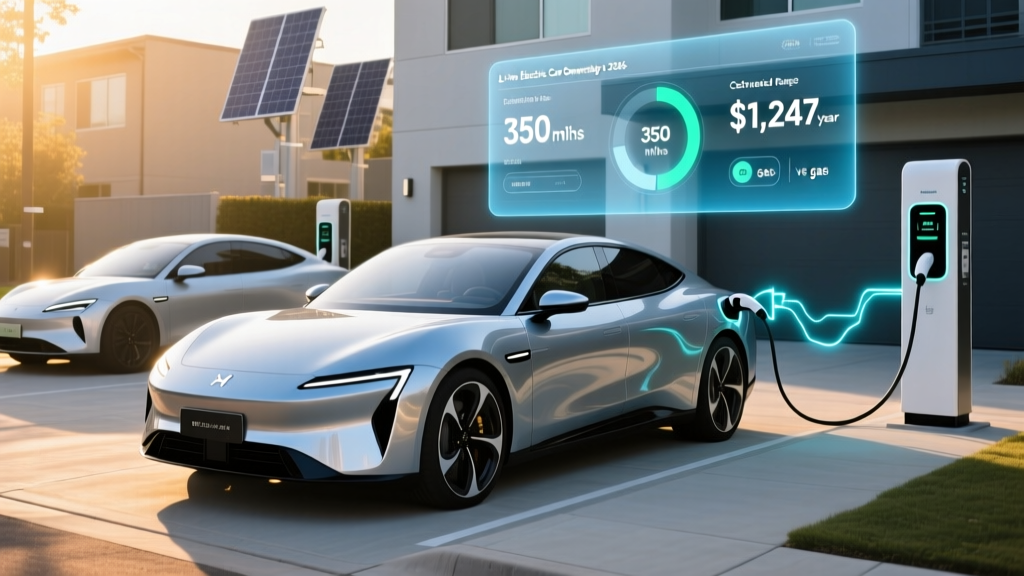
The short answer: A li-ion electric car in 2026 typically costs $30,000–$65,000 before incentives, delivers 250–370 miles of EPA-rated range, and saves most owners $600–$1,200 annually on fuel and maintenance compared to a gas vehicle. However, your actual savings depend on three factors: whether you can charge at home, your local electricity rate, and whether you qualify for the federal §30D tax credit (up to $7,500 at point of sale). Buyers without home charging access or those in extreme cold climates should weigh hybrid alternatives carefully before committing.
What Is a Li-Ion Electric Car—and Why It Dominates in 2026
Every mainstream battery-electric vehicle sold in the U.S. today uses a lithium-ion (li-ion) battery pack. Whether you're looking at a Chevrolet Equinox EV, Tesla Model 3, Hyundai Ioniq 5, or Ford F-150 Lightning, the energy storage system is li-ion chemistry—either NMC (nickel manganese cobalt) or LFP (lithium iron phosphate). These packs store between 50 kWh and 130 kWh of usable energy, translating to the 250–370 mile EPA range window most buyers encounter.
The li-ion battery isn't new technology—it's the same chemistry class that powers your phone—but automotive-grade packs have improved dramatically in energy density, cost per kWh, and longevity over the last decade. In 2026, battery pack costs hover around $100–$130/kWh at the cell level, which is why a 75 kWh pack in a mid-range EV adds roughly $8,000–$10,000 to the vehicle's manufacturing cost. That's down from over $200/kWh just five years ago, and it's the primary reason EVs are finally reaching price parity with gas vehicles in several segments.
Li-Ion Electric Car vs Gas Car: The Numbers That Matter
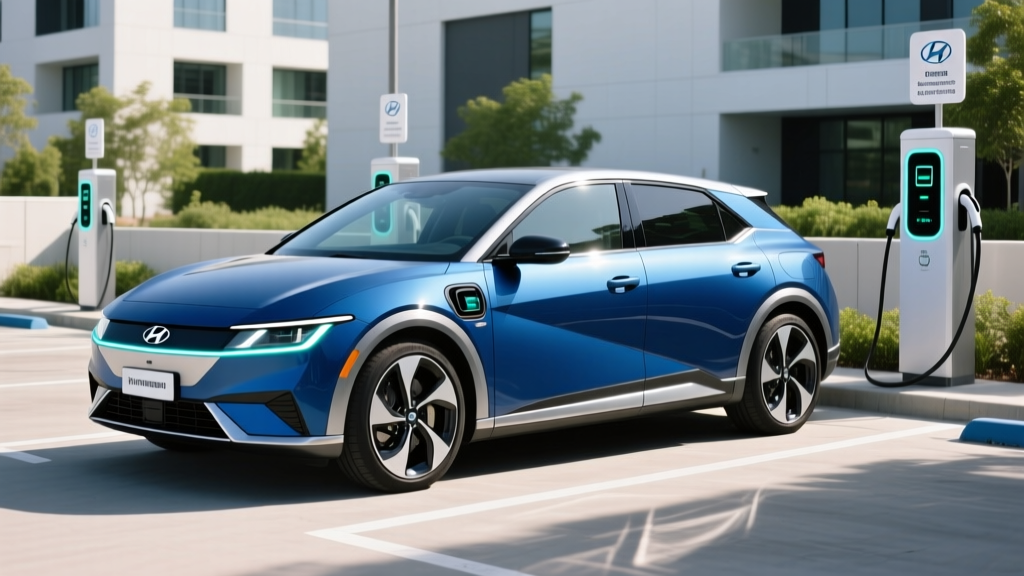
Let's compare a popular li-ion electric car against its closest gas-powered equivalent using current 2026 data. We'll use the Hyundai Ioniq 5 (Long Range RWD) versus the Hyundai Tucson (2.5L AWD gas) as a representative crossover matchup:
| Metric | 2026 Ioniq 5 Long Range RWD (EV) | 2026 Tucson 2.5L AWD (Gas) |
|---|---|---|
| MSRP (base trim) | $44,200 | $33,550 |
| EPA Efficiency | 117 MPGe combined (29 kWh/100 mi) | 26 MPG combined |
| EPA Range / Tank | 303 miles | 390 miles (14.8 gal tank) |
| Fuel/Energy Cost per Mile | $0.041 (at $0.14/kWh national avg) | $0.127 (at $3.30/gal) |
| Annual Fuel/Energy (12,000 mi) | $492 | $1,524 |
| Annual Maintenance | ~$300 | ~$650 |
| Federal Tax Credit (§30D) | Up to $7,500 (if eligible) | $0 |
| 0–60 mph | 7.2 seconds | 8.6 seconds |
| Battery/Powertrain Warranty | 10 yr / 100,000 mi | 5 yr / 60,000 mi (powertrain) |
Sources: fueleconomy.gov, Hyundai USA spec sheets (2026 model year).
The EV carries a roughly $10,650 higher sticker price, but after a $7,500 point-of-sale credit (for eligible buyers—more on that below), the effective gap shrinks to about $3,150. Annual operating savings of roughly $1,382 (fuel + maintenance) pay back that difference in approximately 2.3 years. Over a 5-year ownership period, the Ioniq 5 nets an estimated $3,760 in total savings after accounting for the price premium.
Real-World Range: What the EPA Sticker Doesn't Tell You
The EPA range figure on a li-ion electric car is a laboratory-derived estimate. In practice, several variables compress that number:
EPA vs. Reality for a 303-mile rated EV:
- Ideal conditions (city, 65°F, flat terrain): 290–320 miles (can exceed EPA)
- Highway cruising (70–75 mph, 75°F): 250–275 miles (~10–15% below EPA)
- Cold weather (20°F, heater on): 195–240 miles (~20–35% loss)
- Cold + highway combined (worst case): 170–210 miles
The biggest range killers are cold temperatures and sustained highway speeds. Li-ion batteries lose efficiency in cold weather because the electrolyte becomes more viscous, increasing internal resistance. Heat pumps—now standard on many 2026 models including the Ioniq 5, Tesla Model 3, and BMW i4—recover some of this loss by scavenging waste heat from the drivetrain, but they can't eliminate it entirely.
If your daily round-trip commute is under 60 miles, even worst-case range still leaves substantial buffer. If you regularly drive 200+ miles one-way, you'll need to plan DC fast charging stops.
Charging a Li-Ion Electric Car: Speeds, Costs, and Home Setup
Understanding charging requires knowing the difference between kW (power—how fast energy flows) and kWh (energy—how much the battery holds). A 75 kWh battery charged at 7.5 kW takes roughly 10 hours from empty to full. Here's how each level breaks down:
| Charging Level | Power (kW) | Miles Added per Hour | Best For |
|---|---|---|---|
| Level 1 (120V household) | 1.0–1.4 kW | 3–5 mi/hr | Overnight top-ups, PHEVs |
| Level 2 (240V home/public) | 7.2–11.5 kW | 25–44 mi/hr | Daily home charging |
| DC Fast Charge (public) | 50–350 kW | 150–1,000+ mi/hr (peak) | Road trips |
Most li-ion electric cars in 2026 support DC fast charging at 150–250 kW peak. The Ioniq 5, for instance, peaks at 240 kW on a 350 kW charger and reaches 10–80% in approximately 18 minutes under ideal conditions. However, charging follows a taper curve: you'll see peak speed only between roughly 10–40% state of charge. Above 80%, the rate drops sharply to protect battery longevity—going from 80–100% can take as long as 10–80%.
Home Charging Installation Costs
| Item | Typical Cost Range |
|---|---|
| Level 2 charger hardware (40A–48A) | $350–$700 |
| Electrician labor (240V/50A circuit) | $500–$1,500 |
| Permit & inspection | $50–$200 |
| Electrical panel upgrade (if needed, 200A) | $1,500–$3,500 |
| Total (no panel upgrade) | $900–$2,400 |
| Total (with panel upgrade) | $2,400–$5,900 |
Home charging access is the single biggest factor in EV satisfaction. If you have a garage or driveway with a nearby 240V outlet (or can install one), Level 2 charging at home covers 90%+ of driving needs. If you live in an apartment without charging infrastructure, you'll rely on public Level 2 or DC fast chargers, which cost $0.25–$0.50/kWh—significantly more than the $0.10–$0.16/kWh residential rate in most states.
Battery Longevity: How Long Will a Li-Ion Pack Last?
This is the most common concern among first-time EV buyers, and it's the area with the most misinformation. Here's what the data shows:
Modern li-ion electric car batteries are engineered to retain 70–80% of their original capacity after 150,000–200,000 miles. Federal law mandates a minimum warranty of 8 years/100,000 miles for battery capacity retention (typically guaranteed above 60–70% of original capacity). Most manufacturers exceed this: Hyundai, Kia, and Genesis offer 10 years/100,000 miles; Tesla provides 8 years/100,000–120,000 miles depending on model.
Real-world degradation data from fleet studies and owner tracking shows an average loss of 1.5–2.5% per year for liquid-cooled NMC packs, and slightly less for LFP chemistry. After 5 years and 60,000 miles, most owners see 90–93% of original range remaining. That 303-mile Ioniq 5? Expect roughly 275–285 miles of real range at year five under normal use.
LFP vs NMC—what to know: LFP (lithium iron phosphate) batteries, used in the Tesla Model 3 RWD and standard-range vehicles from several brands, offer longer cycle life and can be safely charged to 100% daily. They're heavier and slightly less energy-dense, which means slightly lower range for a given pack size, but for most buyers the longevity advantage outweighs that trade-off. NMC packs deliver more range per pound but benefit from being kept between 20–80% for daily use.
The Federal Tax Credit: What You Actually Qualify For
The §30D federal tax credit offers up to $7,500 for eligible new EV purchases, available as a point-of-sale rebate at the dealer starting in 2024 and continuing through 2026. However, eligibility has multiple layers, and many buyers are surprised to learn their chosen vehicle or income level disqualifies them. Here's the checklist:
- Income caps (modified AGI): $150,000 single / $225,000 head of household / $300,000 joint filers
- MSRP caps: $55,000 for sedans, wagons, hatchbacks / $80,000 for SUVs, trucks, vans
- Battery sourcing: Increasing percentages of critical minerals and battery components must be sourced from the U.S. or free-trade-agreement countries—this requirement tightens annually and disqualifies some models
- Final assembly: Vehicle must be assembled in North America
- Transferability: You can transfer the credit to the dealer for an upfront price reduction, even if you owe less than $7,500 in taxes
The battery sourcing and critical mineral requirements are the most volatile part of eligibility—models that qualify in January may not in July as supply chains shift. Always verify current eligibility at IRS.gov or fueleconomy.gov before committing to a purchase.
5-Year Cost of Ownership Breakdown
| Cost Category | Li-Ion EV (e.g., Ioniq 5) | Gas Equivalent (e.g., Tucson) |
|---|---|---|
| Purchase price (after tax credit) | $36,700 | $33,550 |
| Fuel/energy (5 yr, 60,000 mi) | $2,460 | $7,620 |
| Maintenance (5 yr) | $1,500 | $3,250 |
| Insurance (5 yr avg) | $8,500 | $6,800 |
| Depreciation (est. 5 yr) | $14,200 | $12,500 |
| Total 5-Year Cost | $63,360 | $63,720 |
Assumptions: $0.14/kWh home charging, $3.30/gal gas, 12,000 mi/yr, national avg insurance. Insurance premiums for EVs run 15–25% higher on average due to higher repair costs and parts pricing. Source: IIHS industry data.
The takeaway: a li-ion electric car is roughly cost-neutral to slightly cheaper over five years for eligible buyers, with the advantage growing in years six through ten as the gas car's maintenance costs accelerate and the EV's operating savings compound. If you don't qualify for the tax credit, the EV costs roughly $7,500 more over five years—making a PHEV or efficient hybrid a stronger financial case.
Common Misconceptions About Li-Ion Electric Cars
| Myth | Fact |
|---|---|
| "The battery will need replacing in 5 years for $20,000." | Modern li-ion packs routinely last 150,000+ miles with <20% degradation. Full replacements are rare and covered under warranty within 8–10 years. |
| "EVs are worse for the environment because of battery mining." | Even on the dirtiest U.S. grids, lifecycle emissions are 50–70% lower than gas cars over 150,000 miles (Union of Concerned Scientists data). The gap widens as grids decarbonize. |
| "You can't road-trip in an EV." | The Tesla Supercharger network (now open to NACS-equipped vehicles from Ford, GM, Rivian, and others) and growing CCS infrastructure make 300+ mile trips routine with one 20-minute stop. |
| "EVs are slow and boring to drive." | Electric motors deliver instant torque. Even mainstream EVs like the Ioniq 5 hit 0–60 in 5.0–7.2 seconds; performance models do it in under 3.5 seconds. |
| "Charging takes too long." | Home charging is overnight (8–10 hours on Level 2). DC fast charging adds 150–200 miles in 15–20 minutes at modern stations. |
Decision Framework: Is a Li-Ion Electric Car Right for You?
Choose a battery-electric li-ion EV if:
- You have access to Level 2 home or workplace charging
- Your daily driving is under 80 miles round-trip
- You qualify for the §30D tax credit (check income and vehicle eligibility)
- You live in a moderate climate or your EV has a heat pump
- You want the lowest per-mile operating cost and minimal maintenance
Choose a PHEV (plug-in hybrid) instead if:
- You lack reliable home or workplace charging
- You frequently drive 300+ miles without stopping
- You live in an area with extreme cold and limited charging infrastructure
- You don't qualify for the federal tax credit and need to minimize upfront cost
Choose a conventional hybrid (HEV) if:
- You have no charging access whatsoever
- Your budget is under $30,000 and you need maximum fuel efficiency
- You drive in a region with very high electricity rates (> $0.30/kWh)
First-Time EV Buyer: What to Know Before You Sign
If you've never owned a li-ion electric car, here are the practical realities no brochure mentions:
- Preconditioning matters. Most EVs let you warm the battery before fast charging via the app or navigation system. Skipping this in cold weather can cut your DC charge speed in half.
- Tire wear increases. EVs are heavier (due to the battery pack) and deliver instant torque, which wears tires 15–30% faster than gas equivalents. Budget for replacement tires 1–2 years sooner.
- Insurance is higher. Get quotes before purchasing. EV insurance premiums average 15–25% more than comparable gas vehicles due to specialized repair requirements.
- Regen braking changes driving habits. Most li-ion electric cars offer adjustable regenerative braking. In its strongest setting, you can drive with one pedal—lifting off the accelerator slows the car significantly. It takes a week to adjust but reduces brake wear to near zero.
- Charging apps are essential. Download PlugShare, ChargePoint, and your vehicle's native app before delivery. Public charger reliability varies—having backup options mapped reduces stress.
Frequently Asked Questions
How much does it cost to charge a li-ion electric car at home?
At the U.S. national average of $0.14/kWh, fully charging a 75 kWh battery costs about $10.50, giving you roughly 270–300 miles of range. That's equivalent to $3.50 per gallon of gas—significantly cheaper than the $3.30/gallon national gas average when adjusted for efficiency. Monthly home charging for a 12,000-mile/year driver typically runs $35–$50.
Can I charge a li-ion electric car on a regular 120V outlet?
Yes, but slowly. Level 1 (120V) charging adds about 3–5 miles of range per hour. For a driver covering 30–40 miles daily, overnight Level 1 charging can be sufficient if you start each morning with a full battery. For higher-mileage drivers, a 240V Level 2 installation is strongly recommended.
What happens if the battery degrades significantly?
If your battery drops below the warranty threshold (typically 60–70% of original capacity within 8–10 years or 100,000 miles), the manufacturer replaces or refurbishes it at no cost. Out-of-warranty replacements currently range from $8,000 to $18,000 depending on pack size, but are rarely needed—fleet data shows most packs outlast the vehicle itself.
Are li-ion electric cars safe in crashes?
EVs undergo the same NHTSA and IIHS crash testing as gas vehicles. Battery packs are housed in reinforced enclosures beneath the floor, contributing to a low center of gravity that reduces rollover risk. Fire risk from li-ion batteries is statistically lower than gasoline fires in conventional vehicles per NHTSA incident data, though battery fires are harder to extinguish when they do occur.
Do li-ion electric cars work in cold climates?
They do, but expect 20–35% range loss at temperatures below 30°F. A heat pump (standard on most 2026 EVs) mitigates some of this. Cold-weather owners should precondition the battery before driving and budget for one extra charging stop on long winter trips. States like Norway, where EVs represent over 80% of new car sales, demonstrate that EVs function well in cold climates with proper planning.