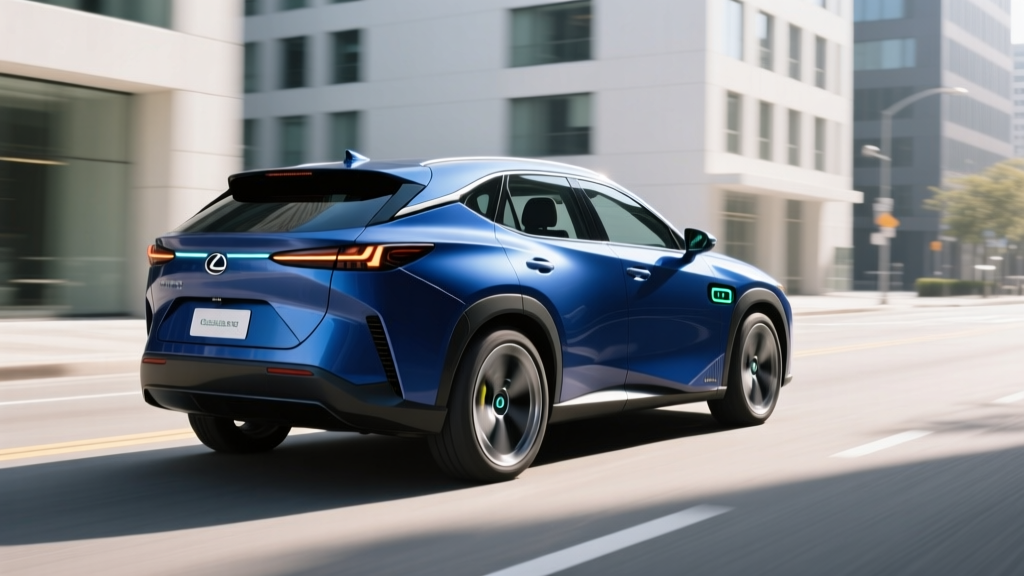
The Lexus TZ electric three-row SUV has been spied testing ahead of its official debut, and the camouflaged prototypes reveal a vehicle sized to compete directly with the Rivian R1S, Kia EV9, and the upcoming electric Grand Highlander. If you're researching whether to wait for the TZ or buy a three-row electric SUV available today, here's the practical answer: expect the Lexus TZ to arrive as a 2027 model with an estimated 300–330 miles of EPA range, a starting MSRP around $65,000–$72,000, and DC fast charging in the 200–250 kW range based on the platform it shares with the Toyota bZ5x concept. These are preliminary estimates — Lexus has not confirmed final specifications — but the spy shots, combined with Toyota's published EV roadmap, give us enough data to build a realistic buyer's framework.
Quick Verdict: Should You Wait for the Lexus TZ?
Wait if: You want Lexus build quality, a proven dealer network, and can delay purchase until late 2026 or 2027. Buy now if: You need three rows today — the Kia EV9 (304 mi EPA, from ~$54,900) and Rivian R1S (352 mi EPA, from ~$79,900) are already delivering.
What the Spy Shots Reveal About the Lexus TZ
Camouflaged prototypes photographed testing in Northern Europe and Japan show a boxy, upright SUV with a wheelbase stretching approximately 118–122 inches — putting it firmly in full-size three-row territory. The silhouette closely mirrors the Toyota bZ5x concept revealed in 2024, which Toyota confirmed would spawn a Lexus-badged variant. Key observations from the test mules:
- Proportions: Short front overhang, long wheelbase, near-vertical tailgate — optimized for interior volume and battery packaging.
- Charging port location: Rear quarter-panel placement on the driver's side, consistent with NACS (Tesla-style) connector adoption that Toyota/Lexus committed to for the North American market.
- Wheel options: Test vehicles wore 20- and 22-inch wheels, suggesting multiple trims with efficiency vs. appearance trade-offs.
- Roof rails and tow hitch receiver: Visible on multiple prototypes, indicating Lexus is targeting the family-adventure buyer with towing capability — likely 3,500–5,000 lbs based on platform limits.
Because the TZ rides on a stretched version of Toyota's e-TNGA architecture (or potentially the newer dedicated EV platform Toyota has been developing for 2026–2027 models), we can cross-reference battery and powertrain data from Toyota's existing EV lineup to project realistic specs.
Estimated Specs: Range, Battery, and Charging
No official numbers exist yet, but combining Toyota's announced battery technology roadmap with spy-shot proportions and competitive positioning, here's what the data suggests:
| Specification | Estimated (Lexus TZ) | Kia EV9 (GT-Line AWD) | Rivian R1S (Dual-Motor Max) |
|---|---|---|---|
| EPA Range | 300–330 mi (est.) | 270–304 mi | 352 mi |
| Battery Capacity (usable) | ~95–110 kWh (est.) | 99.8 kWh | 149 kWh |
| Battery Chemistry | NMC (likely), LFP on base trim possible | NMC | NMC (LFP on Standard) |
| Peak DC Fast Charge | 200–250 kW (est.) | 236 kW | 220 kW |
| 10–80% DC Charge Time | ~22–28 min (est.) | ~24 min | ~25 min |
| Level 2 (240V) Charge Rate | ~11 kW (est.) | 10.9 kW | 11.5 kW |
| Horsepower | 380–450 hp (est., AWD) | 379 hp | 665 hp |
| 0–60 mph | ~5.0–5.8 sec (est.) | 5.0 sec | 3.5 sec |
| Seating | 6 or 7 passengers | 6 or 7 | 7 |
Real-World Range Reality Check
If the TZ achieves a 320-mile EPA sticker, expect approximately 250–270 miles at sustained 75 mph highway speeds and as low as 220–240 miles in sub-freezing winter conditions based on typical NMC battery behavior in vehicles of this mass. Cold-weather range loss of 20–30% is well-documented for three-row electric SUVs; a heat pump (likely standard on the TZ) mitigates but doesn't eliminate this.
The charging curve matters as much as the peak kW number. Most NMC batteries in this class sustain peak charge rates only between roughly 10–40% state of charge (SoC), then taper progressively. A "250 kW peak" typically means an average of 150–180 kW across the 10–80% session. Plan real road-trip stops around 25–30 minutes per charge, not the 15-minute marketing ideal.
Projected Pricing and Federal Tax Credit Eligibility
Lexus positions itself as a premium brand, and the TZ will slot above the Toyota bZ5x in price and materials. Based on current Lexus pricing structures (the 2026 RZ 450e starts at ~$55,000 for a smaller two-row SUV) and competitive three-row positioning:
| Estimated Trim | Projected MSRP | §30D Credit Eligible? |
|---|---|---|
| TZ 450 (base AWD) | $65,000–$68,000 | Likely — under $80K SUV cap |
| TZ 500 (Premium) | $72,000–$76,000 | Likely — under $80K SUV cap |
| TZ 550 F Sport / Executive | $78,000–$85,000 | At risk — may exceed $80K SUV cap |
The IRS §30D clean vehicle credit offers up to $7,500, but eligibility depends on multiple factors that shift frequently:
- MSRP cap: SUVs must not exceed $80,000 manufacturer's suggested retail price.
- Buyer income cap: Modified adjusted gross income must not exceed $150,000 (single), $225,000 (head of household), or $300,000 (joint filing).
- Battery sourcing: A percentage of critical minerals and battery components must be sourced from the U.S. or free-trade-agreement countries — thresholds increase annually.
- Final assembly: Vehicle must be assembled in North America. Toyota's EV plants in Japan could disqualify the TZ unless production shifts to a U.S. facility (Kentucky or Texas are possibilities).
- Point-of-sale transfer: Eligible buyers can apply the credit toward the down payment at the dealer rather than waiting for tax filing.
Critical caveat: If the TZ is built in Japan (as the current RZ is), it will not qualify for the §30D federal credit regardless of price. Toyota may localize production to address this, but nothing is confirmed. Consult a tax professional before relying on credit eligibility for your purchase decision.
Lexus TZ vs. Gas and Hybrid Three-Row SUVs: Cost Comparison
Most three-row SUV buyers cross-shop the Lexus TX (gas), Toyota Grand Highlander Hybrid, and similar vehicles. Here's how a TZ would compare on five-year operating costs, using estimated figures and current national averages:
| Cost Factor (5-Year) | Lexus TZ (est. EV) | Lexus TX 500h (Hybrid) | Lexus TX 350 (Gas) |
|---|---|---|---|
| Purchase Price (MSRP) | ~$70,000 | ~$65,000 | ~$58,000 |
| Federal Tax Credit | Up to $7,500* | $0 | $0 |
| Fuel/Energy (60K miles) | ~$3,600 (home L2) | ~$5,400 (36 MPG) | ~$8,100 (22 MPG) |
| Maintenance | ~$1,200 | ~$2,800 | ~$3,200 |
| Insurance (avg.) | ~$9,500 | ~$8,200 | ~$7,800 |
| Estimated 5-Year Total | ~$76,800 | ~$81,400 | ~$77,100 |
* Assumes §30D eligibility; if assembled outside North America, add $7,500 to the EV total. Fuel costs based on $3.40/gallon gas, $0.14/kWh home electricity. Insurance estimates reflect the EV premium documented by IIHS and industry data — EVs typically cost 15–25% more to insure than comparable gas vehicles due to higher repair costs and parts pricing.
The math shows a narrow advantage for the TZ over five years, primarily if you qualify for the tax credit and charge mostly at home. Public DC fast charging at $0.35–$0.50/kWh erodes the energy savings substantially — a road-trip-heavy driver using only public chargers could see fuel costs approach $7,000+ over 60,000 miles.
Real-World Ownership Considerations Before You Wait
The decision to wait for an unreleased vehicle involves more than spec-sheet comparison. Consider these ownership realities that apply to any three-row electric SUV in 2026–2027:
Home Charging Is Non-Negotiable for Most Buyers
A three-row electric SUV with a ~100 kWh battery requires approximately 10–12 hours on a Level 2 (240V, 48A) home charger to go from 20% to full. Without home charging, you're dependent on public DC fast chargers, which cost 2–4× more per mile and add 25–35 minutes per session. A Level 2 home installation typically costs $800–$2,500 (charger + electrician + permit) if your panel has capacity, or $3,000–$5,000+ if you need a 200A panel upgrade. Budget this before committing to any EV purchase.
Three Rows and Efficiency Don't Always Mix
Every three-row electric SUV tested to date loses 10–15% of its efficiency when the third row is occupied and cargo is loaded. The added 600–900 lbs of passengers and gear, combined with increased aerodynamic drag from roof boxes or bike racks common on family haulers, compresses real-world range. If your typical drive includes a full cabin, subtract another 30–40 miles from the EPA sticker on long trips.
Towing Range Reduction
If the TZ offers a 3,500–5,000 lb tow rating, expect range to drop by 40–55% when towing near maximum capacity. This is consistent across every electric SUV tested — physics doesn't negotiate. A 320-mile EPA range becomes roughly 150–180 miles while towing a 4,000 lb trailer at highway speeds.
Charging Infrastructure on Family Road Trips
NACS adoption means the TZ will access the Tesla Supercharger network (now open to non-Tesla EVs via adapter or native NACS port). This is a significant advantage over CCS-only vehicles, as Superchargers have the highest reliability rates among public networks. However, popular family-travel corridors (national parks, rural beach routes, mountain passes) still have charging gaps that require planning.
Common Misconceptions About the Lexus TZ and Electric SUVs
| Myth | Fact |
|---|---|
| "The TZ will have 400+ miles of range." | No three-row electric SUV currently achieves this. Battery weight and aerodynamic drag limit realistic range to 270–352 mi EPA. Expect the TZ in the 300–330 mi range. |
| "It'll qualify for the full $7,500 tax credit." | Only if assembled in North America and meeting battery-sourcing thresholds. Japanese-built Lexus EVs currently do not qualify. |
| "Fast charging takes 15 minutes." | Peak kW rates apply only briefly. A full 10–80% session takes 22–28 minutes in this class, plus time to plug in, authenticate, and walk to facilities. |
| "Electric SUVs cost less to own than hybrids." | Depends entirely on charging access, electricity rates, insurance, and whether you qualify for incentives. Hybrids like the Grand Highlander (36 MPG combined) have lower upfront cost and no charging dependency. |
| "The battery will need expensive replacement in 5 years." | Modern NMC and LFP batteries are warranted for 8 years/100,000 miles (federally mandated minimum). Data from fueleconomy.gov and fleet studies show typical degradation of 8–15% over 8 years, not catastrophic failure. |
Decision Framework: Wait for the TZ or Buy Now?
If-Then Buyer Guide
- If you need three rows within 6 months → Buy a Kia EV9 (best value, 304 mi, available now) or Rivian R1S (best range/performance, from $79,900). The TZ is 12–18 months from delivery at earliest.
- If you want Lexus specifically and can wait → Place a reservation when they open (likely late 2026). Early reservation holders get first trim/color priority and the best chance at §30D credit before battery-sourcing rules tighten further.
- If you have reliable home charging and drive <40 miles/day → The TZ (or any three-row EV) will serve you well. You'll charge overnight 2–3× per week and rarely visit a public charger.
- If you live in an apartment or lack home charging → A three-row PHEV like the Toyota Grand Highlander Hybrid or a conventional hybrid is a more practical choice until public charging infrastructure matures in your area.
- If you regularly tow >3,000 lbs → No electric three-row SUV is ideal for frequent towing. Consider a diesel or heavy-duty gas SUV, or accept the 40–55% range penalty and plan charging stops every 150 miles.
- If total cost of ownership is your top priority → Run the numbers for your specific electricity rate, annual mileage, and insurance quotes. In many cases, a 36-MPG hybrid costs less over 5 years than an EV when the tax credit is unavailable.
What First-Time EV Buyers Should Know Before Reserving
If the Lexus TZ would be your first electric vehicle, these fundamentals apply regardless of the specific model:
- kW vs. kWh: kW (kilowatts) measures charge speed — like the flow rate of a gas pump. kWh (kilowatt-hours) measures battery capacity — like the size of a fuel tank. A 100 kWh battery charged at 250 kW (peak) does not fill in 24 minutes; the charge curve tapers significantly above 50% SoC.
- Preconditioning matters: Cold batteries charge slowly. The TZ will likely include battery preconditioning — a feature that warms the battery before you arrive at a DC fast charger. Use it every time in cold weather, or your 250 kW charger might deliver only 50–80 kW for the first several minutes.
- The 80% rule: Charging from 80–100% on DC fast chargers takes nearly as long as 10–80%. On road trips, charge to 80% and drive — it's faster overall. Save 100% charges for home Level 2 sessions before long trips.
- Regenerative braking changes driving habits: Most EVs offer one-pedal driving modes where lifting the accelerator slows the car significantly. In a heavy three-row SUV, this reduces brake wear dramatically — expect brake pads to last 100,000+ miles.
- Tire costs are higher: EV-specific tires (low rolling resistance, high load rating for battery weight) cost $250–$400 per tire and may wear faster due to instant torque. Budget $1,200–$1,800 for a tire replacement at 30,000–40,000 miles.
Frequently Asked Questions
When will the Lexus TZ go on sale?
Based on the testing timeline visible in spy shots and Toyota's announced EV rollout schedule, the TZ is expected to debut officially in late 2026 or early 2027, with customer deliveries beginning in the second half of 2027 as a 2027 or 2028 model year vehicle.
Will the Lexus TZ have a NACS or CCS charging port?
Lexus (via Toyota) has committed to the NACS (Tesla-style) connector for North American vehicles. The TZ should feature a native NACS port, enabling direct access to Tesla Superchargers without an adapter.
How does the TZ compare to the current Lexus RZ?
The RZ is a two-row, compact luxury EV with ~220 miles of EPA range and a ~$55,000 starting price. The TZ will be significantly larger (three rows), offer more range (~300–330 mi estimated), and carry a higher price ($65,000+). They serve different buyer needs — the RZ for couples and small families, the TZ for larger households.
Is a hybrid three-row SUV a better choice than waiting for the TZ?
If you lack home charging, drive in extreme cold regularly, or tow frequently, a hybrid like the Toyota Grand Highlander Hybrid (36 MPG combined, ~$48,000) is the more practical choice today. If you have home charging, moderate climate, and want lower operating costs with zero tailpipe emissions, the TZ will be worth the wait — provided the tax credit applies.
What battery warranty should I expect?
Federal law mandates a minimum of 8 years/100,000 miles for EV battery warranties. Lexus typically offers 8 years/100,000 miles on hybrid batteries and is expected to match or exceed this for the TZ, with a capacity retention threshold of 70% — meaning Lexus would replace or repair the battery if it degrades below 70% of original capacity within the warranty period.
Will the TZ offer a plug-in hybrid version?
Toyota's announced strategy separates its BEV (battery electric) and PHEV (plug-in hybrid) lineups. The TZ appears to be a dedicated BEV. If you want a three-row Lexus PHEV, the TX 550h+ (currently available) fills that role with ~33 miles of electric-only range and ~$72,000 MSRP.
All specifications for the Lexus TZ are estimates based on spy photography, Toyota's published EV platform data, and competitive analysis. Final specs, pricing, and availability will be confirmed by Lexus at the vehicle's official debut. Check lexus.com and fueleconomy.gov for updates.