Quick Answer: Is the Lexus TZ Electric Worth Considering?
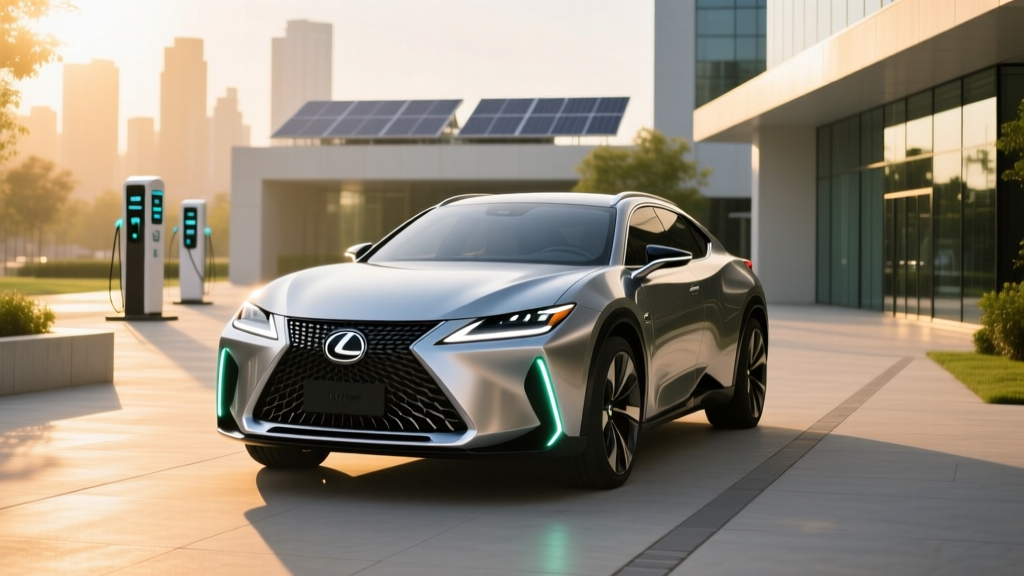
The Lexus TZ Electric is Lexus's first purpose-built battery-electric SUV, positioned between the RZ 450e and the flagship Electrified GV70-size segment. For 2026, the TZ targets an EPA-estimated 300+ miles of range (depending on trim and wheel size), DC fast charging at up to ~150 kW (10–80% in approximately 30 minutes), and a starting MSRP expected in the $55,000–$60,000 range before incentives. It's best suited for luxury SUV buyers who prioritize refinement, reliability reputation, and dealer service over cutting-edge performance or maximum charging speed. If you want the fastest-charging or longest-range luxury EV, competitors like the Hyundai Ioniq 5 or BMW iX may serve you better. If Lexus ownership experience and build quality are your top priorities, the TZ is worth a serious look.
What Is the Lexus TZ Electric?
The Lexus TZ Electric is an upcoming midsize luxury electric crossover built on Toyota's modular EV platform. Unlike the earlier RZ 450e — which drew criticism for its relatively modest 220-mile EPA range — the TZ is engineered to address the core complaint of luxury EV buyers: range adequacy for road trips. Lexus has signaled a larger battery pack, improved aerodynamics, and a more efficient drivetrain for the TZ line.
Based on preliminary specifications and industry reporting, here's what we know heading into the 2026 model year:
| Specification | Lexus TZ Electric (Estimated) |
|---|---|
| EPA Range | ~300–315 miles (varies by trim/wheels) |
| Battery Capacity | ~90–96 kWh usable (NMC chemistry expected) |
| Drivetrain | Dual-motor AWD standard; single-motor RWD possible |
| Horsepower | ~340–380 hp (AWD) |
| 0–60 mph | ~5.0–5.5 seconds (AWD) |
| Max DC Fast Charge | ~150 kW peak |
| 10–80% DC Charge Time | ~30 minutes (estimated) |
| Level 2 Charging (AC) | ~11 kW onboard charger |
| Starting MSRP | $55,000–$60,000 (estimated, before destination) |
| Battery Warranty | 8 years / 100,000 miles (Lexus standard) |
| ADAS | Lexus Safety System+ 3.0 (SAE Level 2) |
Note: These figures are based on preliminary announcements and industry analysis as of early 2026. Final EPA certification and MSRP will be confirmed closer to the on-sale date. Check Lexus.com for updates.
Real-World Range Expectations
The EPA sticker may say ~310 miles, but plan for reality:
- Highway driving (70–75 mph): Expect ~250–275 miles
- Cold weather (below 32°F): Expect 15–25% reduction (~230–260 miles)
- Combined mixed driving: ~275–295 miles is realistic
This is normal for all EVs — the EPA test cycle includes low-speed city driving that favors range. For road-trip planning, budget ~250 miles between stops to keep a safety margin.
How Does the Lexus TZ Compare to Gas and Hybrid Alternatives?
Many Lexus buyers cross-shop the TX (three-row gas/hybrid) or the RX 350h hybrid. Here's how the TZ Electric stacks up on key ownership metrics:
| Metric | Lexus TZ Electric (AWD) | Lexus RX 350h (Hybrid) | Lexus RX 350 (Gas) |
|---|---|---|---|
| Base MSRP | ~$57,000 (est.) | $53,295 | $49,850 |
| Range / Tank | ~300 mi (EPA) | ~550 mi (EPA combined) | ~440 mi |
| Fuel/Energy Cost per Mile | ~$0.04–$0.06 (home charging) | ~$0.11 (36 MPG, $3.80/gal) | ~$0.15 (25 MPG, $3.80/gal) |
| Annual Fuel/Energy (12k mi) | $480–$720 | $1,320 | $1,800 |
| Annual Maintenance | ~$300–$400 | ~$600–$800 | ~$700–$900 |
| Federal Tax Credit (§30D) | Up to $7,500 (eligibility varies) | Up to $3,750 (HEV not eligible; PHEV may qualify) | Not eligible |
| Refuel/Recharge Time | ~30 min (DC fast), 8–10 hr (L2 home) | ~5 min (gas station) | ~5 min (gas station) |
Key takeaway: The TZ Electric costs more upfront but saves $600–$1,100 per year on energy and maintenance compared to the gas RX 350. Over a 5-year ownership period, that's $3,000–$5,500 in savings — which, combined with a potential $7,500 federal tax credit, can offset much of the price premium. However, the RX 350h hybrid remains the better pick for drivers who regularly exceed 400 miles between stops or lack home charging access.
Charging the Lexus TZ: Home, Public, and Road Trips
Charging infrastructure is the single biggest variable in EV satisfaction. Here's what TZ ownership actually looks like:
Home Charging (Where 80%+ of Charging Happens)
With an 11 kW onboard charger, the TZ can accept a full Level 2 charge in approximately 9–10 hours from empty. In practice, most owners plug in nightly and wake up to a full battery. A Level 2 home charger (240V, 48-amp circuit) typically costs:
| Item | Cost Range |
|---|---|
| Level 2 Charger (hardware) | $400–$700 |
| Electrician (240V/50A circuit install) | $800–$2,000 |
| Permit & inspection | $100–$300 |
| Electrical panel upgrade (if needed) | $1,500–$3,500 |
| Total (no panel upgrade) | $1,300–$3,000 |
| Total (with panel upgrade) | $2,800–$6,500 |
Home charging at the national average electricity rate of ~$0.16/kWh means filling the TZ's ~93 kWh battery costs roughly $15 — the equivalent of 4 gallons of gas for 300 miles of range.
DC Fast Charging (Road Trips)
At ~150 kW peak, the TZ is adequate but not class-leading. Competitors like the Hyundai Ioniq 5 (peak 240 kW on 800V architecture) or the Porsche Macan EV (up to 270 kW) charge significantly faster. On a road trip, expect:
- 10–80% in ~30 minutes at a compatible 150+ kW station
- Charging curve taper: Speed drops significantly above 80% SoC — charging 80–100% can take as long as 10–80%. Plan stops around 80% for efficiency.
- Network compatibility: Lexus has adopted the NACS (Tesla-style) connector for its newer EVs, granting access to Tesla Superchargers via adapter or native port, plus Electrify America, EVgo, and other CCS networks with an adapter.
Preconditioning Matters
The TZ's thermal management system can precondition the battery before a fast-charge stop (typically when you navigate to a charger in the infotainment system). This warms the battery to optimal temperature, enabling peak charge rates. Skipping preconditioning — especially in cold weather — can reduce charge speed by 30–50%.
Tax Credits, Incentives, and True Purchase Cost
The federal EV tax credit under IRS §30D offers up to $7,500 for qualifying new EVs, but eligibility depends on several factors that change frequently:
§30D Federal Tax Credit Requirements (2026)
- MSRP cap: SUVs must have an MSRP of $80,000 or less (the TZ should qualify)
- Buyer income cap: AGI must not exceed $150,000 (single), $225,000 (head of household), or $300,000 (joint)
- Battery sourcing: A percentage of critical minerals and battery components must be sourced from the U.S. or FTA partners — this requirement tightens annually
- Point-of-sale transfer: As of 2024+, you can transfer the credit to the dealer at purchase for an immediate price reduction, rather than waiting for a tax refund
- Final assembly: Vehicle must be assembled in North America
Consult a tax professional and check fueleconomy.gov for the latest qualifying vehicle list before purchasing. Rules are subject to change.
5-Year Total Cost of Ownership Estimate
| Cost Category | Lexus TZ Electric | Lexus RX 350 (Gas) |
|---|---|---|
| Purchase Price (after est. credit) | $49,500–$52,500 | $49,850 |
| Energy/Fuel (5 years, 60k miles) | $2,400–$3,600 | $9,000 |
| Maintenance (5 years) | $1,500–$2,000 | $3,500–$4,500 |
| Insurance (5 years, est.) | $8,000–$10,000 | $6,500–$8,000 |
| Depreciation (est. 5yr) | $18,000–$22,000 | $15,000–$18,000 |
| Estimated 5-Year Total | $79,400–$90,100 | $83,850–$89,350 |
The TZ's higher insurance premiums (common for EVs due to repair costs and battery replacement risk) and steeper depreciation partially offset energy and maintenance savings. The total cost gap narrows considerably — and the TZ can win — if you qualify for the full $7,500 credit, charge primarily at home, and drive 12,000+ miles per year.
Common Misconceptions About the Lexus TZ Electric
| Myth | Fact |
|---|---|
| "The battery will need replacing in 5–8 years" | Modern NMC batteries degrade ~10–15% over 100,000 miles. Lexus warranties the battery for 8 years/100,000 miles with a 70% capacity retention guarantee. Most EV batteries outlast the vehicle. |
| "300 miles of range isn't enough for road trips" | With DC fast charging every 200–250 miles, a 600-mile trip requires one 30-minute stop — roughly the same time as a lunch break. Planning apps like A Better Routeplanner handle this automatically. |
| "EVs are worse in cold weather" | Range drops 15–25% in freezing temps — real, but manageable. The TZ's heat pump (expected standard) recovers waste heat to warm the cabin efficiently, reducing the range penalty compared to resistive heating. |
| "I need a special electrical setup" | Most homes with a 200-amp electrical panel can support a 48-amp Level 2 charger without an upgrade. A licensed electrician can assess this in a 15-minute consultation. |
| "Lexus reliability doesn't apply to EVs" | EVs have far fewer moving parts than gas cars (no transmission, no oil changes, no exhaust). Toyota/Lexus's manufacturing discipline and the TZ's 8-year battery warranty provide strong long-term confidence. |
Decision Framework: Is the Lexus TZ Electric Right for You?
Choose the Lexus TZ Electric if:
- You have access to home charging (garage or driveway with 240V outlet capability)
- Your daily commute is under 80 miles round-trip (you'll rarely need public charging)
- You value Lexus dealer service, build quality, and cabin quietness
- You take 2–4 road trips per year of 300–600 miles (manageable with one or two DC fast-charge stops)
- You qualify for the federal tax credit (check income and sourcing requirements)
- You want to reduce fuel and maintenance costs without switching to a non-luxury brand
Consider a Hybrid (RX 350h) or Gas Alternative if:
- You live in an apartment or lack home charging access and rely entirely on public infrastructure
- You regularly drive 500+ miles in a single day through areas with sparse charging (rural Mountain West, for example)
- You live in extreme cold (consistently below 0°F) where range loss compounds
- You want maximum cargo space — the TZ's battery pack may reduce under-floor storage vs. the gas RX
- Upfront budget is tight and you don't qualify for the federal credit
Consider a Competing EV if:
- You prioritize the fastest charging speeds → Hyundai Ioniq 5 (240 kW peak, 10–80% in ~18 min)
- You want maximum range → BMW iX xDrive50 (EPA ~324 miles)
- You want a lower price point → Tesla Model Y Long Range (~$48,000, EPA 320+ miles)
- You want three rows → Kia EV9 or wait for the three-row Lexus TX Electric variant
What First-Time EV Buyers Should Know Before Purchasing the TZ
1. Home Charging Is Non-Negotiable for Most Owners
Public charging works for road trips, but daily life on an EV requires home charging. If you can't install a Level 2 charger at home, a PHEV (like the RX 450h+) may be a better bridge technology. Level 1 charging (standard 120V outlet) adds only ~3–4 miles per hour — insufficient for daily needs unless your commute is under 20 miles.
2. Insurance Costs Are Higher — Shop Early
EV insurance premiums run 15–25% higher than equivalent gas vehicles, driven by higher repair costs (specialized body shops, battery protection protocols) and total-loss thresholds. Get quotes from GEICO, Progressive, and State Farm before purchasing to budget accurately.
3. Learn the Charging Networks
Download apps for Tesla Supercharger (accessible to NACS-equipped Lexus vehicles), Electrify America, EVgo, and ChargePoint. Reliability varies — Electrify America stations average ~85–90% uptime, while Tesla Superchargers consistently exceed 99%. For road trips, Tesla's network remains the gold standard.
4. Tire Wear Increases
EVs are heavier (the TZ will likely weigh 4,800–5,200 lbs) and deliver instant torque, which accelerates tire wear by 15–25% compared to gas equivalents. Budget for replacement tires every 30,000–40,000 miles instead of the 50,000+ miles typical on a gas RX. EV-specific tires (like Michelin Pilot Sport EV or Hankook iON) offer lower rolling resistance and noise.
5. The Driving Experience Is Different — In a Good Way
One-pedal driving via regenerative braking takes 1–2 weeks to master but dramatically reduces brake wear (many EV owners report 80,000+ miles on original brake pads). The TZ's low center of gravity (battery pack under the floor) provides car-like handling unusual for an SUV of its size.
Frequently Asked Questions
When will the Lexus TZ Electric be available to buy?
Lexus has announced the TZ as part of its expanded EV lineup, with availability expected in late 2026 as a 2027 model year vehicle in the U.S. market. Exact timing depends on production ramp-up at Toyota's EV plant. Check your local Lexus dealer for reservation availability.
Will the Lexus TZ Electric qualify for the $7,500 federal tax credit?
Preliminary indications suggest the TZ should qualify — its MSRP will fall under the $80,000 SUV cap, and final assembly is expected in North America. However, battery-sourcing requirements tighten each year. Confirm eligibility on fueleconomy.gov close to your purchase date, as the qualifying list updates regularly.
Can I charge the Lexus TZ at Tesla Superchargers?
Yes. Lexus has adopted the NACS connector for its newer EV models. Depending on the TZ's production date, it will either ship with a native NACS port or include a CCS-to-NACS adapter for Supercharger access. Tesla's Supercharger network adds 17,000+ fast-charging stalls to your road-trip options.
How does the TZ's range compare to the Lexus RZ 450e?
The RZ 450e's EPA range tops out at approximately 220 miles (with 18-inch wheels) — a frequent criticism. The TZ targets 300+ miles, representing a ~35–40% improvement thanks to a larger battery pack and improved efficiency. This puts the TZ in competitive territory with rivals like the BMW iX and Audi Q8 e-tron.
What happens if the battery degrades significantly?
Lexus warranties the high-voltage battery for 8 years or 100,000 miles (whichever comes first) with a capacity retention threshold of 70%. If your battery drops below 70% of original capacity within the warranty period, Lexus will repair or replace it at no cost. Real-world data from Toyota/Lexus hybrids suggests their battery management systems are conservative and effective — most packs retain 85–90% capacity at 100,000 miles.
Is the Lexus TZ Electric self-driving?
No. The TZ comes equipped with Lexus Safety System+ 3.0, which includes adaptive cruise control, lane-centering, and automated emergency braking. This is an SAE Level 2 driver-assistance system — you must keep your hands on the wheel and eyes on the road at all times. It is not autonomous driving. No consumer vehicle currently sold in the U.S. offers Level 3 or higher self-driving capability.