The Real Numbers Behind Lexus Electric Vehicle Finance in 2026
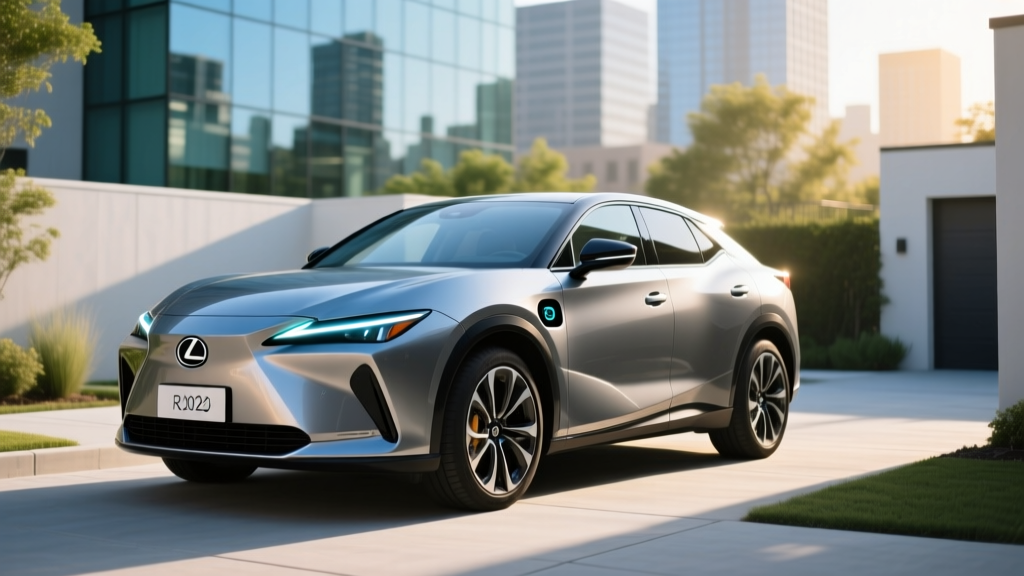
Financing a Lexus RZ 450e or the newly expanded RZ 300e isn't just about the sticker price and a monthly payment. The true cost of ownership folds in federal tax credit eligibility, state rebates, home charging infrastructure, insurance premiums that run 15-25% higher than gas equivalents, and depreciation curves that have reshaped the luxury EV segment since 2024. Buyers searching for Lexus electric vehicle finance options need a calculator, not a brochure.
This guide runs the numbers on the 2026 Lexus RZ lineup — the dual-motor RZ 450e and the single-motor RZ 300e — against a comparable gas-powered Lexus NX 350 to show where you save, where you pay more, and whether the §30D federal tax credit actually applies to your situation.
| Spec | RZ 300e (FWD) | RZ 450e (AWD) | NX 350 (Gas AWD) |
|---|---|---|---|
| Base MSRP | $55,850 | $59,850 | $46,515 |
| Battery (usable) | 72.8 kWh (NMC) | 72.8 kWh (NMC) | N/A |
| EPA Range | 266 mi | 220 mi (20" wheels) | 425 mi (14.5-gal tank) |
| Real-World Range* | ~225-240 mi | ~185-200 mi | ~380 mi |
| Efficiency | 114 MPGe (30 kWh/100mi) | 102 MPGe (33 kWh/100mi) | 25 MPG combined |
| Peak DC Charge | 150 kW | 150 kW | N/A |
| 10-80% DCFC Time | ~30 min | ~30 min | N/A |
| Level 2 (240V) Rate | 7.7 kW | 7.7 kW | N/A |
| 0-60 mph | 7.4 sec | 5.0 sec | 6.6 sec |
| Horsepower | 201 hp | 308 hp | 275 hp |
| Battery Warranty | 8 yr / 100,000 mi | 8 yr / 100,000 mi | N/A |
*Real-world range assumes mixed highway/city driving at 70°F. Expect 15-25% loss in sub-freezing temperatures and sustained highway speeds above 75 mph.
5-Year Total Cost of Ownership: RZ 450e vs NX 350
The monthly payment is only the beginning. Below is a 5-year / 75,000-mile ownership projection that captures the full financial picture of Lexus electric vehicle finance versus a gas alternative. Assumptions: 15,000 miles/year, $0.14/kWh home charging average, $3.65/gallon regular unleaded, 6.5% APR on a 60-month loan with 10% down.
| Category | RZ 450e (AWD) | NX 350 (Gas AWD) | Difference |
|---|---|---|---|
| Purchase Price (base + dest.) | $61,175 | $47,840 | +$13,335 EV |
| Federal Tax Credit (§30D) | -$3,750* | $0 | -$3,750 EV |
| State/Utility Rebates (avg.) | -$1,500 | $0 | -$1,500 EV |
| Home Charger Install (L2) | $1,200 | $0 | +$1,200 EV |
| Fuel/Energy (75k miles) | $3,465 | $7,884 | -$4,419 EV |
| Maintenance | $1,800 | $4,200 | -$2,400 EV |
| Insurance (5 years) | $14,500 | $11,250 | +$3,250 EV |
| Depreciation (est. 5-yr) | $28,500 | $19,800 | +$8,700 EV |
| Total 5-Year Cost | $55,390 | $51,374 | +$4,016 EV |
*The RZ 450e qualifies for $3,750 under §30D (critical minerals met, battery component sourcing not fully met as of 2026). See eligibility section below. Source: IRS §30D.
The RZ 450e costs roughly $4,000 more over five years in this scenario, driven primarily by steeper depreciation and higher insurance. However, if you qualify for the full $7,500 credit (possible if battery-sourcing rules shift or you lease through a §45W-eligible structure), the gap narrows to nearly zero. The RZ 300e, with its lower MSRP, can tip the math in the EV's favor.
Federal Tax Credit: Do You Qualify for §30D?
The federal EV tax credit under IRS §30D offers up to $7,500 for new plug-in vehicles, but eligibility for the Lexus RZ depends on four intersecting rules that change periodically. As of 2026, the RZ 450e typically qualifies for $3,750 (half-credit) because it meets the critical minerals requirement but does not fully satisfy the battery component sourcing threshold. Always verify current status on fueleconomy.gov before purchasing.
§30D Eligibility Checklist for the Lexus RZ
- MSRP Cap: Vehicle base price must not exceed $80,000 for SUVs/crossovers (the RZ qualifies — base is $55,850-$65,000 depending on trim).
- Buyer Income Cap: Modified AGI must be ≤ $150,000 (single), ≤ $225,000 (head of household), or ≤ $300,000 (joint). Exceed these and you get $0 credit.
- Battery Sourcing — Critical Minerals: Must meet escalating percentage thresholds of US/free-trade-partner sourcing. RZ currently meets this half ($3,750).
- Battery Sourcing — Components: Must meet escalating percentage of US-manufactured battery components. RZ currently does not meet this half.
- Foreign Entity of Concern (FEOC): No battery components or critical minerals from prohibited entities. Lexus/Toyota supply chain currently compliant.
- Point-of-Sale Transfer: As of 2024+, you can transfer the credit to the dealer at purchase, reducing your out-of-pocket cost immediately rather than waiting for tax filing. This effectively lowers your financed amount.
- Final Assembly: Must occur in North America. The RZ is assembled in Japan — this is a key disqualifier for some model years. Verify current assembly location on the VIN decoder at NHTSA.gov.
Critical caveat: The RZ's Japanese assembly location has been a persistent issue for §30D eligibility. Toyota has worked to restructure supply chains, and some 2026 model-year RZ units may qualify differently than 2024-2025 versions. Always confirm the specific VIN's eligibility before signing. If you lease rather than buy, the lessor may capture a commercial credit under §45W and pass savings to you as a lower lease payment — a common workaround.
Charging vs Gas: The Per-Mile Math
The single largest operational savings in Lexus electric vehicle finance comes from energy cost. Here's the direct comparison using national averages:
| Scenario | RZ 450e | NX 350 |
|---|---|---|
| Home Charging (L2, $0.14/kWh) | $0.046/mi | N/A |
| Public DCFC ($0.40/kWh avg) | $0.132/mi | N/A |
| Gas ($3.65/gal, 25 MPG combined) | N/A | $0.146/mi |
| Annual cost (15,000 mi, 80% home / 20% DCFC) | $957 | $2,190 |
At an 80/20 home-to-public charging split, the RZ 450e saves roughly $1,233 per year on energy — or about $6,165 over five years. This is where EV ownership economics shine, but only if you have reliable home charging access. If you rely exclusively on public DCFC networks at $0.40-$0.55/kWh, your per-mile cost equals or exceeds gasoline, eliminating the fuel savings entirely.
Home charging infrastructure is a non-negotiable variable. A Level 2 (240V) home charger installation typically runs $800-$2,000 depending on panel capacity and conduit distance. The RZ's 7.7 kW onboard charger adds roughly 25-28 miles of range per hour of Level 2 charging — sufficient for overnight replenishment of daily driving.
Maintenance Savings: Where EVs Genuinely Cost Less
EV powertrains eliminate the most common recurring maintenance items of internal combustion engines. The RZ's electric motors have no oil, no spark plugs, no timing belts, and no multi-speed transmission fluid. Regenerative braking significantly extends pad and rotor life.
| Service Item | RZ 450e Cost | NX 350 Cost |
|---|---|---|
| Oil Changes (5 years) | $0 | $750 |
| Brake Pads/Rotors | $400 (regen extends life 2-3x) | $1,200 |
| Transmission Fluid | $0 (single-speed reduction gear) | $350 |
| Coolant / Filters | $300 | $600 |
| Tire Rotation/Replacement | $1,600 (heavier vehicle, more wear) | $1,200 |
| Cabin Air / Wipers / Misc. | $500 | $500 |
| Total (5 yr / 75k mi) | $2,800 | $4,600 |
Net maintenance savings of roughly $1,800 over five years are realistic, though EV tire costs partially offset the gains. The RZ 450e weighs approximately 4,600 lbs — about 800 lbs more than the NX 350 — and instant torque accelerates tread wear, particularly on the front axle. Budget for a tire replacement around year 3-4.
Insurance: The Cost Most Buyers Overlook
EV insurance premiums run 15-25% higher than equivalent gas vehicles, and the Lexus RZ is no exception. The reasons are structural, not anecdotal:
- Higher repair costs: Battery pack damage from collision often triggers total-loss thresholds. Aluminum and mixed-material body panels require specialized body shops.
- Parts scarcity: EV-specific components (power electronics, charge port assemblies) have longer lead times and higher unit costs.
- Vehicle price: The RZ's higher MSRP means higher comprehensive/collision payouts.
- Repair network: Fewer certified EV collision centers mean more expensive tow-and-repair logistics.
Expect annual premiums of $2,600-$3,200 for the RZ 450e (depending on state, driving record, and coverage level) versus $2,000-$2,500 for the NX 350. That's $3,000-$3,500 additional over five years. Always get a quote from your insurer before finalizing Lexus electric vehicle finance terms — the premium difference can change your break-even calculation materially.
Depreciation and Resale Value Trends
This is where Lexus electric vehicle finance gets complicated. EV depreciation accelerated sharply in 2023-2025 due to Tesla-initiated price cuts, rapidly improving competing models, and buyer uncertainty over battery longevity. The RZ has not been immune.
Current 5-year depreciation projections for the RZ 450e sit at 45-55% of original MSRP, compared to 35-42% for the NX 350. In dollar terms, that's roughly $28,000-$32,000 in value loss for the RZ versus $18,000-$21,000 for the NX. This gap represents the single largest cost penalty of EV ownership in the luxury segment.
However, several factors may stabilize RZ resale values going forward:
- Toyota/Lexus brand loyalty and reliability reputation historically support stronger residual values.
- The 8-year/100,000-mile battery warranty provides downstream buyer confidence.
- As the EV market matures and price wars settle, depreciation curves are normalizing.
- NACS charging standard adoption (the RZ now ships with a NACS port for 2026) improves long-term usability perception.
If you plan to own the RZ for 8+ years, depreciation matters less — you'll ride the curve past the steepest drop. If you trade every 3 years, the depreciation penalty will dominate your cost of ownership.
State, Local, and Utility Incentives
Beyond the federal §30D credit, incentives vary dramatically by jurisdiction:
- California (CVRP): Up to $2,000 rebate for income-qualified buyers (program funding varies).
- Colorado: State tax credit up to $5,000 for EVs under $80,000 MSRP (2026 rules).
- New York (Drive Clean Rebate): Up to $2,000 point-of-sale rebate.
- Utility rebates: Many utilities offer $300-$1,000 for Level 2 charger purchase/install, plus off-peak charging rates as low as $0.06-$0.09/kWh. Check with your local provider.
- HVAC/panel upgrades: Some utilities and the IRA's §25C credit cover up to 30% of electrical panel upgrades needed for home charging (up to $600).
These programs change frequently. Verify current availability through your state energy office and utility provider before relying on them in your finance calculations.
Financing Structures: Loan, Lease, or Cash?
How you structure Lexus electric vehicle finance affects whether you capture tax incentives:
Purchase with loan: You claim the §30D credit on your tax return (or transfer it to the dealer at point of sale for immediate price reduction). You bear the depreciation risk but own the asset. Best if you plan to hold 5+ years and qualify for the full credit.
Lease: The leasing company (lessor) claims the commercial clean vehicle credit under §45W and typically passes some or all of the savings as a lower monthly payment. This circumvents the §30D income caps, MSRP caps, and battery-sourcing rules — a significant advantage if the RZ doesn't qualify for the full $7,500 under purchase rules. However, you build no equity and face mileage restrictions (typically 10,000-15,000 mi/yr).
Cash purchase: Maximizes incentive capture and eliminates interest costs, but ties up capital. Works best with the point-of-sale transfer option, which reduces the transaction price directly.
For most buyers in 2026, a 60-month loan at prevailing rates (approximately 5.9-7.5% for excellent credit) with point-of-sale credit transfer offers the best balance of monthly affordability and incentive capture. A typical RZ 450e Premium at $61,175 MSRP, minus $3,750 credit transfer and 10% down, finances at roughly $51,500 — yielding a monthly payment around $998 at 6.5% APR over 60 months.
Frequently Asked Questions
How much does it really cost to own a Lexus RZ 450e over 5 years?
Approximately $55,000-$58,000 all-in over 5 years and 75,000 miles, including purchase price (net of incentives), energy, insurance, maintenance, and depreciation. This is $3,000-$6,000 more than a gas NX 350 in most scenarios, with the gap narrowing if you qualify for the full $7,500 tax credit or lease under favorable terms.
Does the Lexus RZ qualify for the $7,500 federal tax credit?
As of 2026, the RZ typically qualifies for $3,750 (half-credit) under §30D, meeting critical-mineral sourcing but not battery-component sourcing thresholds. The Japanese assembly location has also been a variable. Always verify your specific VIN's eligibility on fueleconomy.gov and confirm with your tax professional before purchasing.
How much do I save on fuel and maintenance with the RZ?
Combined fuel and maintenance savings run approximately $1,800-$2,000 per year versus the NX 350, assuming 80% home charging at $0.14/kWh. Over five years, that's roughly $9,000-$10,000 in operational savings. These savings are real but do not fully offset the higher purchase price, insurance, and depreciation.
Are Lexus RZ insurance premiums higher than gas models?
Yes — typically 15-25% higher, or $600-$800 more per year. This is due to higher repair costs, specialized parts, and the vehicle's higher MSRP. Get a binding quote before finalizing your purchase.
How well does the Lexus RZ hold its value?
Current 5-year depreciation projections are 45-55% of MSRP — steeper than the gas NX 350 (35-42%). This is consistent with the broader luxury EV segment. Long-term ownership (7-8 years) reduces the per-year impact. Toyota/Lexus reliability reputation may support stronger residuals as the market matures.
Is leasing a better option for the Lexus RZ?
Leasing can be advantageous because the lessor captures the §45W commercial credit and passes savings through lower payments. This bypasses §30D income caps, MSRP caps, and battery-sourcing restrictions. It also shields you from depreciation risk. The trade-off is no equity buildup and mileage limits. Compare lease money factors against loan APRs to determine the better deal.
What home charging setup do I need for the RZ?
A 240V Level 2 circuit (NEMA 14-50 or hardwired) delivering 32-48 amps is ideal. The RZ's 7.7 kW onboard charger means a 40-amp circuit is sufficient. Installation costs range from $800-$2,000 depending on panel capacity and conduit run. A licensed electrician should evaluate your panel before purchase — a 200-amp service upgrade (if needed) adds $1,500-$3,000.
Lexus electric vehicle finance requires more homework than a traditional car loan. The savings on fuel and maintenance are genuine, but they interact with higher insurance, steeper depreciation, and complex incentive rules. Run your personal numbers — your electricity rate, commute distance, state incentives, and planned ownership duration — before committing. The RZ is a refined, quiet, well-built electric luxury crossover; the question is whether the math works for your specific situation.