Quick Answer: Is a 2026 Lexus EV Worth Buying?
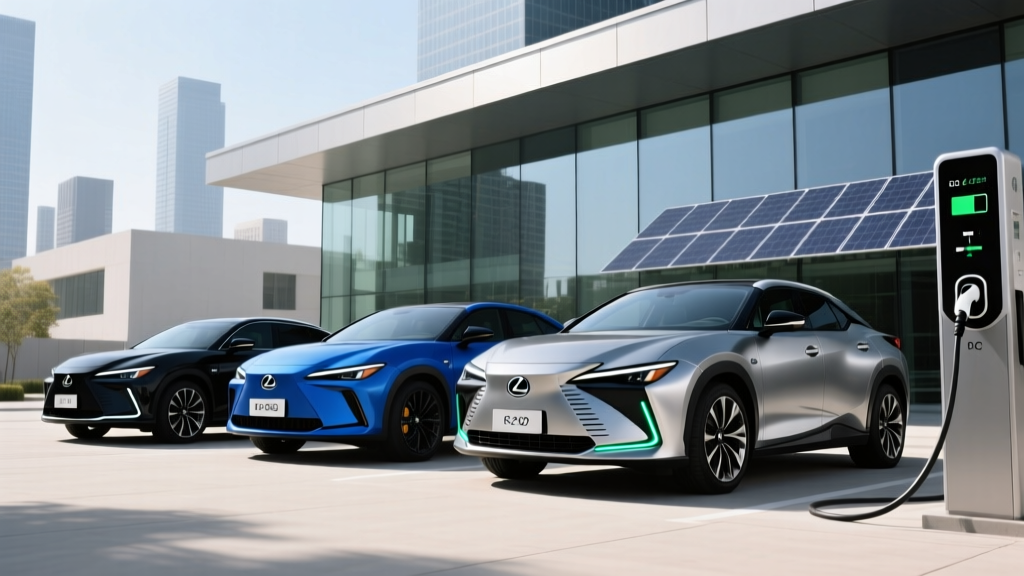
The 2026 Lexus EV lineup centers on the RZ crossover family: the RZ 300e (FWD, EPA 266 mi, starting ~$54,000), the RZ 450e (AWD, EPA 220 mi, starting ~$57,000), and the performance-oriented RZ 550e F Sport (AWD, EPA ~210 mi est., starting ~$65,000). All use a 72.8 kWh (usable) NMC lithium-ion battery. DC fast charging peaks at 150 kW, delivering a 10–80% charge in approximately 30 minutes. The RZ 300e may qualify for a partial or full §30D federal tax credit depending on battery-sourcing compliance; the AWD models face steeper critical-mineral thresholds. If you prioritize Lexus refinement, strong build quality, and dealer service over maximum range or the fastest charging in class, the RZ is compelling — but competitors like the Hyundai Ioniq 5 and Tesla Model Y offer more range and faster charging at similar or lower prices.
The 2026 Lexus RZ Lineup: Trims, Specs, and What's New
Lexus entered the battery-electric market cautiously with the RZ, and the 2026 model year brings incremental but meaningful updates. The RZ 300e single-motor variant continues as the volume leader with the longest EPA-rated range in the lineup. The RZ 450e dual-motor AWD provides all-weather traction and 308 horsepower, while the RZ 550e F Sport — introduced for the prior model year — adds a more aggressive tune, adaptive suspension, and distinctive styling. All three share the e-TNGA platform co-developed with Toyota and Subaru.
| Specification | RZ 300e | RZ 450e | RZ 550e F Sport |
|---|---|---|---|
| Drivetrain | FWD (single motor) | AWD (dual motor) | AWD (dual motor, performance tune) |
| Horsepower | 201 hp | 308 hp | ~360 hp (est.) |
| 0–60 mph | 7.4 sec | 5.0 sec | ~4.4 sec (est.) |
| Battery (usable) | 72.8 kWh NMC | 72.8 kWh NMC | 72.8 kWh NMC |
| EPA Range | 266 mi (18" wheels) | 220 mi (20" wheels) | ~210 mi (est.) |
| MPGe (combined) | 112 MPGe | 102 MPGe | ~97 MPGe (est.) |
| Peak DC Fast Charge | 150 kW | 150 kW | 150 kW |
| 10–80% DC Charge Time | ~30 min | ~30 min | ~30 min |
| Level 2 Charge Rate | 7.2 kW | 7.2 kW | 7.2 kW |
| Level 2 Full Charge | ~10 hrs | ~10 hrs | ~10 hrs |
| Base MSRP | $54,050 | $57,050 | $65,000 |
| Battery Warranty | 8 yr / 100,000 mi | 8 yr / 100,000 mi | 8 yr / 100,000 mi |
Important note on range: The EPA figures above assume 18-inch wheels on the RZ 300e. Upgrading to 20-inch wheels on any trim reduces range by approximately 15–25 miles. In real-world highway driving at 70–75 mph, expect roughly 10–15% below the EPA sticker — so a real-world highway range of ~225–235 miles for the RZ 300e and ~185–200 miles for the RZ 450e. In freezing temperatures (below 30°F), NMC batteries without aggressive preconditioning can lose an additional 15–25% of range. The RZ includes a battery preconditioning feature for DC fast charging, but cold-weather range loss remains a reality for all EVs in this segment.
Charging Speed and Infrastructure: Where the RZ Stands
The RZ's 150 kW peak DC fast-charging rate is its most debated specification. While competitors like the Hyundai Ioniq 5 (800V architecture, peak ~240 kW) and the Tesla Model Y (peak ~250 kW on V3 Superchargers) can add range significantly faster, the RZ's charge curve is relatively flat — meaning it sustains a respectable rate deeper into the session rather than peaking briefly and tapering hard.
| Charge Level | Power | Miles of Range Added per Hour | Typical Use Case |
|---|---|---|---|
| Level 1 (120V household) | ~1.4 kW | ~4–5 mi/hr | Emergency/overnight trickle |
| Level 2 (240V home/work) | 7.2 kW | ~22–25 mi/hr | Daily home charging |
| DC Fast Charge (public) | Up to 150 kW peak | ~170–190 mi in 30 min (10–80%) | Road trips |
kW vs kWh reminder: kW (kilowatts) measures charging power — how fast energy flows into the battery. kWh (kilowatt-hours) measures battery capacity — how much total energy the battery stores. The RZ's 72.8 kWh battery charged at 150 kW will theoretically fill in about 30 minutes, but charging slows above 80% State of Charge to protect battery health. This taper is why manufacturers quote 10–80% times rather than 0–100%.
The RZ uses the CCS1 connector standard for DC fast charging and the J1772 connector for Level 2. As of 2026, Lexus has not yet transitioned to the NACS (Tesla) connector on the RZ, though adapters are available for Supercharger access. For home charging, a 32-amp Level 2 wallbox (such as the ChargePoint Home Flex or Emporia Vue) installed on a 240V/40A circuit will fully recharge the RZ overnight in approximately 10 hours — ample for daily driving needs.
2026 Lexus RZ vs Gas and Hybrid Alternatives
Many Lexus shoppers cross-shop the RZ against the gasoline NX and the NX 450h+ plug-in hybrid. Here's how the numbers compare for a buyer driving 12,000 miles per year with electricity at $0.14/kWh and premium gasoline at $4.20/gallon:
| Model | Powertrain | Efficiency | Annual Energy Cost | 5-Year Energy Cost |
|---|---|---|---|---|
| Lexus RZ 300e | BEV | 112 MPGe / 30 kWh/100mi | $504 | $2,520 |
| Lexus NX 350h | Hybrid (HEV) | 39 MPG combined | $1,292 | $6,460 |
| Lexus NX 350 (turbo) | Gasoline | 25 MPG combined | $2,016 | $10,080 |
| Lexus NX 450h+ | PHEV | 84 MPGe / 37 mi EV range | ~$680* | ~$3,400* |
*PHEV cost assumes 60% of miles driven on electricity, 40% on gasoline. Actual costs vary based on commute length and charging habits.
The RZ 300e saves approximately $788 per year versus the NX 350h hybrid and $1,512 per year versus the turbo NX 350 in energy costs alone. Over five years, that's $3,940–$7,560 in fuel savings. However, the RZ carries a higher purchase price, and insurance premiums for EVs run 10–20% higher on average than their gas counterparts, according to industry data. Maintenance savings (no oil changes, reduced brake wear from regenerative braking) add roughly $300–$500 per year in the RZ's favor.
Federal Tax Credit and Incentive Eligibility
The IRS §30D Clean Vehicle Credit remains a key purchase factor for the 2026 RZ. Here's the current eligibility framework:
- MSRP cap: SUVs must be priced at or below $80,000. All RZ trims qualify.
- Buyer income cap: Adjusted gross income must not exceed $150,000 (single), $225,000 (head of household), or $300,000 (joint filers).
- Battery sourcing: Increasing percentages of critical minerals and battery components must be sourced from the U.S. or free-trade-agreement partners. The RZ's battery, manufactured in Japan, faces evolving compliance thresholds for 2026.
- Point-of-sale transfer: Eligible buyers can transfer the credit to the dealer at purchase, reducing the out-of-pocket price immediately rather than waiting for tax filing.
- Assembly requirement: Final assembly must occur in North America. The RZ is assembled in Japan, which disqualifies it from the §30D new-vehicle credit as of current rules.
This last point is critical: because the RZ is built in Japan (at the Motomachi plant), it does not qualify for the $7,500 new-vehicle federal tax credit under current §30D rules. This is a significant disadvantage versus U.S.-assembled competitors like the Tesla Model Y, Ford Mustang Mach-E, and Cadillac Lyriq. However, leasing an RZ may allow the buyer to benefit from the commercial clean vehicle credit (§45W), which the leasing company can pass through as a reduced monthly payment. Always confirm current rules with a tax professional and check the fueleconomy.gov tax credit database before purchasing.
Real-World Ownership: What First-Time Lexus EV Buyers Need to Know
Home Charging Is Almost Mandatory
Public DC fast charging at 150 kW works for road trips, but daily EV ownership is built on Level 2 home charging. A typical home Level 2 installation (240V, 40-amp circuit with a hardwired wallbox) costs between $800 and $2,500 depending on panel proximity and local permitting. If your electrical panel requires a 200A upgrade, add $1,500–$3,000. Relying exclusively on public charging is both more expensive ($0.30–$0.48/kWh at most DC fast stations vs. $0.14/kWh residential average) and less convenient.
Cold Climate? Plan for Range Loss
NMC battery chemistry in the RZ performs well in moderate temperatures but, like all lithium-ion cells, loses efficiency in cold weather. Owners in northern climates (Minnesota, New England, mountain states) should budget for 20–30% range reduction in sustained sub-freezing conditions. The RZ's heat pump helps mitigate cabin-heating energy draw, but battery preconditioning for fast charging adds its own energy cost. If your real-world commute is already close to the RZ's range limit, a PHEV like the NX 450h+ may be a safer choice.
Insurance Costs More
EV insurance premiums run 10–20% higher than comparable gas vehicles due to higher repair costs (specialized high-voltage components, aluminum body panels) and elevated vehicle values. Expect to pay roughly $1,800–$2,400/year for the RZ depending on your state, driving record, and coverage level. Get quotes before committing to the purchase.
Depreciation Is Steeper (For Now)
EV resale values have declined faster than gas or hybrid vehicles over the 2023–2025 period, driven by aggressive price cuts from Tesla and rapid technology improvements. The RZ may depreciate 45–55% over three years versus 35–40% for the NX hybrid. Leasing transfers this risk to the lessor.
Decision Framework: Which Lexus Electrified Vehicle Is Right for You?
Choose Based on Your Situation
Choose the RZ 300e if:
- You have home Level 2 charging access
- Your daily driving is under 150 miles
- You value Lexus interior quality and dealer service
- You live in a moderate climate or accept cold-weather range loss
- You're leasing (to avoid the §30D assembly disqualification)
Choose the RZ 450e if:
- You need AWD for snow, rain, or mountain driving
- You want 308 hp and a 5.0-second 0–60 time
- You accept the ~46-mile range penalty versus the 300e for dual-motor traction
Choose the NX 450h+ (PHEV) instead if:
- You lack reliable home charging
- You take frequent long road trips where 220 miles of EV range creates stress
- You want the option of gas-only driving without planning charging stops
- You live in an extreme cold climate where EV range loss is a real problem
Choose a competitor (Model Y, Ioniq 5, EV6) if:
- Maximum range (300+ miles) or fastest charging (under 20 min 10–80%) is your priority
- You want full §30D tax credit eligibility on a purchase (not lease)
- You prefer access to the Tesla Supercharger network natively (NACS connector)
Common Misconceptions About the Lexus RZ
| Myth | Fact |
|---|---|
| "The RZ gets the $7,500 federal tax credit." | The RZ is assembled in Japan, which disqualifies it from the §30D new-vehicle credit. Leasing may unlock a pass-through benefit via §45W. |
| "150 kW charging is too slow for road trips." | 10–80% in ~30 minutes is sufficient for a meal/rest stop. The RZ's flat charge curve means less time wasted waiting for taper. It's slower than 800V competitors but not impractical. |
| "The battery will need replacing in a few years." | Lexus warranties the battery for 8 years/100,000 miles with a minimum 70% capacity retention threshold. Real-world NMC degradation data from similar Toyota/Lexus packs suggests 85–90% capacity at 100,000 miles under normal use. |
| "The RZ is just a rebadged Toyota bZ4X." | They share the e-TNGA platform and battery, but the RZ has distinct suspension tuning, interior materials, sound insulation, and Lexus Safety System+ 3.0 calibration. The driving experience is meaningfully different. |
| "I can charge on any Tesla Supercharger." | As of 2026, the RZ uses CCS1. You'll need a NACS adapter (often sold separately, ~$200–$250) to access Tesla Superchargers, and not all stations support non-Tesla vehicles yet. |
5-Year Total Cost of Ownership Estimate
| Cost Category | RZ 300e (BEV) | NX 350h (HEV) |
|---|---|---|
| Purchase Price (base MSRP) | $54,050 | $43,965 |
| Federal Tax Credit (purchase) | $0 (Japan assembly) | $0 (hybrid, ineligible) |
| Lease Credit Pass-Through (est.) | –$3,000 to –$7,500* | N/A |
| Energy (5 years) | $2,520 | $6,460 |
| Maintenance (5 years) | ~$1,500 | ~$3,200 |
| Insurance (5 years, est.) | ~$10,500 | ~$8,500 |
| Estimated Depreciation (5 yr) | ~$27,000 | ~$18,000 |
| 5-Year TCO (purchase, no credit) | ~$95,570 | ~$80,125 |
| 5-Year TCO (lease w/ credit) | ~$88,070–$92,570 | ~$80,125 |
*Lease credit pass-through depends on lessor participation and current §45W rules. Confirm with dealer. Depreciation estimates based on 2023–2025 EV resale trends from iSeeCars data. Insurance varies significantly by driver profile and state.
The numbers show a clear pattern: the RZ costs more upfront and depreciates faster, but saves meaningfully on energy and maintenance. For buyers who lease and negotiate aggressively, the gap narrows to roughly $8,000–$12,000 over five years. For those who can secure a used-EV credit on a pre-owned RZ (the §25E credit offers up to $4,000 on qualifying used EVs priced under $25,000), the economics improve further as the model ages.
Frequently Asked Questions
What is the real-world range of the 2026 Lexus RZ 300e?
The EPA rates the RZ 300e at 266 miles on 18-inch wheels. In mixed real-world driving (combination of city and highway at moderate temperatures), expect 240–255 miles. On sustained highway driving at 70+ mph, expect 225–235 miles. In freezing weather with cabin heating, expect 195–215 miles. These figures assume you're driving to near-depletion; most owners charge to 80–90% daily, yielding a practical daily range of about 190–230 miles.
Does the 2026 Lexus RZ qualify for any federal tax incentives?
For a purchase, no — the RZ is assembled in Japan, which disqualifies it from the §30D new clean vehicle credit. For a lease, the commercial clean vehicle credit (§45W) may allow the leasing company to pass through up to $7,500 as a capitalized-cost reduction. Always verify current eligibility on irs.gov and with your tax professional before committing.
How does the RZ compare to the Toyota bZ4X?
Mechanically, they're siblings — same 72.8 kWh battery, same e-TNGA platform, similar power outputs. The RZ adds Lexus-grade sound insulation, higher-quality interior materials, a more refined suspension tune, and Lexus Safety System+ 3.0. The bZ4X is priced approximately $8,000–$10,000 lower and is also assembled in Japan (same tax-credit limitation). Choose the RZ for luxury; choose the bZ4X for value.
Is the RZ's 150 kW charging fast enough for road trips?
It's adequate but not class-leading. A 10–80% charge in ~30 minutes aligns well with a typical rest stop. Competitors with 800V architecture (Hyundai Ioniq 5, Kia EV6) achieve 10–80% in approximately 18 minutes. If you road-trip frequently and value minimal charging downtime, the RZ's charging speed is a legitimate compromise. For 90%+ of owners who charge at home overnight and only DC fast-charge a few times a year, it's a non-issue.
What happens if the RZ battery degrades significantly?
Lexus covers the high-voltage battery for 8 years or 100,000 miles, guaranteeing at least 70% of original capacity. If capacity falls below this threshold within the warranty period, Lexus will repair or replace the battery at no cost. Out-of-warranty replacement costs are estimated at $8,000–$12,000 based on current Toyota/Lexus battery pricing, though costs are expected to decline as battery manufacturing scales. Real-world data from similar NMC packs suggests most will retain 85–90% capacity at the 100,000-mile mark under normal charging habits (avoiding frequent 100% charges and DC fast-charging in extreme heat).
Should I buy or lease the 2026 Lexus RZ?
Given the Japan-assembly tax-credit disqualification for purchases and the steeper EV depreciation curve, leasing is the financially stronger option for most RZ buyers in 2026. A lease allows potential pass-through of the §45W commercial credit, eliminates resale-value risk, and lets you upgrade to a next-generation model with potentially better range and charging in 3–4 years. If you prefer to buy and hold for 8+ years, the RZ's Lexus reliability record and 8-year battery warranty provide long-term confidence — but the upfront cost premium over a hybrid alternative is real.