The Short Answer
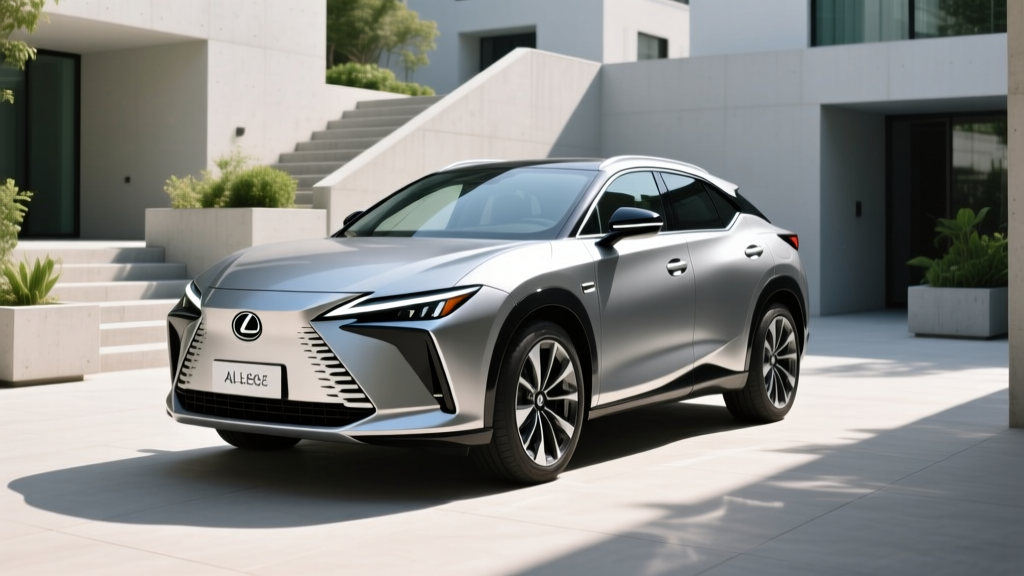
The Lexus all electric SUV lineup for 2026 centers on the RZ series. The single-motor RZ 300e delivers an EPA-estimated 266 miles of range starting around $54,000, while the dual-motor RZ 450e offers 220 miles (with 20-inch wheels) or 260 miles (with 18-inch wheels) starting near $58,500. Both use a 72.8 kWh (usable) lithium-ion battery and support up to 150 kW DC fast charging. If you drive under 250 miles daily and have access to Level 2 home charging, the RZ is a refined luxury EV SUV. If you regularly road-trip 400+ miles or live in a charging desert, Lexus's strong hybrid lineup (RX 350h, TX 500h) may serve you better.
Lexus RZ Lineup: What's Available in 2026
Lexus entered the EV market with the RZ 450e for the 2023 model year and expanded the range with the single-motor RZ 300e for 2024. For 2026, both models continue with incremental updates. Unlike the broader Toyota bZ4X (which shares the e-TNGA platform), the Lexus RZ emphasizes cabin quietness, ride refinement, and Lexus Safety System+ 3.0 — the brand's latest Level 2 driver-assist suite.
| Spec | 2026 RZ 300e | 2026 RZ 450e (18" wheels) | 2026 RZ 450e (20" wheels) |
|---|---|---|---|
| Drivetrain | FWD, single motor | AWD, dual motor (DIRECT4) | AWD, dual motor (DIRECT4) |
| Horsepower | 201 hp | 308 hp | 308 hp |
| 0-60 mph | ~7.4 sec | ~5.0 sec | ~5.0 sec |
| Battery (usable) | 72.8 kWh | 72.8 kWh | 72.8 kWh |
| EPA Range | 266 mi | 260 mi | 220 mi |
| MPGe (combined) | 115 MPGe | 102 MPGe | 95 MPGe |
| Max DC Fast Charge | 150 kW | 150 kW | 150 kW |
| 10-80% DCFC Time | ~30 min | ~30 min | ~30 min |
| Level 2 Rate | ~7.7 kW | ~7.7 kW | ~7.7 kW |
| Starting MSRP | ~$54,000 | ~$58,500 | ~$59,500 (Luxury trim) |
| Battery Warranty | 8 yr / 100,000 mi | 8 yr / 100,000 mi | 8 yr / 100,000 mi |
Real-World Range Reality Check
EPA sticker: 266 miles (RZ 300e) / 260 miles (RZ 450e w/ 18") / 220 miles (RZ 450e w/ 20")
Expect in practice: Around 220-240 miles at sustained 70+ mph highway speeds. In cold weather (below 32°F), plan for 175-200 miles from the RZ 300e and 150-180 miles from the RZ 450e on 20s. The RZ lacks a heat pump (resistance heating only), which means cold-climate range loss is more pronounced than competitors like the Hyundai Ioniq 5 or BMW iX that use heat pump systems. Preconditioning the battery while plugged in helps mitigate charging-speed loss in winter.
Charging the Lexus RZ: Speed, Connectors, and Home Setup
The RZ uses a CCS1 connector for DC fast charging (NACS adapter availability is expanding through Toyota/Lexus partnerships with the Tesla Supercharger network — check current adapter compatibility before relying on it). Here's what charging looks like across levels:
| Level | Power | Miles Added Per Hour | Use Case |
|---|---|---|---|
| Level 1 (120V household) | ~1.4 kW | ~4-5 mi/hr | Emergency / trickle top-up |
| Level 2 (240V home) | ~7.7 kW | ~25-28 mi/hr | Overnight home charging (~10 hrs empty to full) |
| DC Fast Charge | Peak 150 kW | ~150 mi in 30 min (10-80%) | Road trips, public stations |
kW vs kWh reminder: kW measures charging power (how fast energy flows in). kWh measures battery energy capacity (how much the tank holds). The RZ's 72.8 kWh battery charges at up to 150 kW — but only at peak. The charge curve tapers significantly above 80% state of charge, which is why 10-80% takes ~30 minutes but 80-100% can add another 25-30 minutes.
Home charging cost estimate: A Level 2 home charger installation (240V, 40-amp circuit) typically runs $800-$2,500 including equipment and electrician labor, assuming your electrical panel has capacity. A panel upgrade (to 200A) adds $1,500-$3,000 if needed. At the US average electricity rate of ~$0.17/kWh, fully charging the RZ's 72.8 kWh battery at home costs roughly $12.38 — versus about $55-$65 to fill a comparable gas SUV's tank at $3.50/gallon.
Lexus Electric SUV vs Hybrid vs Gas: Cost Comparison
Lexus buyers cross-shop heavily between the RZ (EV), RX 350h (hybrid), and RX 350 (gas). Here's a concrete 5-year ownership comparison using the RX 350 as a gas baseline:
| Cost Factor (5 yr / 75,000 mi) | RZ 300e (EV) | RX 350h (Hybrid) | RX 350 (Gas) |
|---|---|---|---|
| Starting MSRP | ~$54,000 | ~$52,000 | ~$49,000 |
| Fed. Tax Credit (§30D)* | Up to $3,750-$7,500 | $0 | $0 |
| Fuel / Energy Cost | ~$2,800 | ~$6,750 | ~$9,400 |
| Maintenance | ~$1,200 | ~$2,800 | ~$3,500 |
| Insurance (est. avg) | ~$9,500 | ~$8,500 | ~$8,200 |
| Est. Depreciation | ~$22,000 | ~$18,000 | ~$19,000 |
| 5-Year Total (est.) | ~$87,700 - $94,200 | ~$88,050 | ~$89,100 |
*Federal §30D credit eligibility depends on MSRP caps (SUVs: $80,000), buyer income limits ($150K single / $300K joint AGI), battery sourcing requirements, and point-of-sale transfer. Check current rules at IRS.gov. Credit amounts for the RZ vary by model year and sourcing compliance — verify before purchase.
Key takeaway: The RZ's higher upfront cost and steeper depreciation (EVs currently depreciate faster than Lexus hybrids, per industry data) partially offset the fuel and maintenance savings. The total cost of ownership is competitive but not dramatically cheaper than the RX 350h over 5 years. The hybrid wins for buyers who can't charge at home or who drive in extreme cold frequently.
Real-World Ownership: Who Should (and Shouldn't) Buy
Not every luxury SUV buyer is ready for an EV. Here's an honest assessment of the RZ's ownership fit:
The RZ Works Well If:
- You have Level 2 home charging — a garage or driveway with 240V access. Overnight charging at 7.7 kW adds ~250+ miles in 10 hours, covering virtually all daily needs.
- Your daily driving is under 200 miles — even with cold-weather degradation, the RZ handles typical commutes and errands with range to spare.
- You value cabin quietness and smoothness — the RZ's electric powertrain is exceptionally quiet, and Lexus's sound insulation is a step above the bZ4X.
- You live in a mild climate — the lack of a heat pump matters less in southern and coastal states.
- You want Lexus reliability and dealer service — Toyota/Lexus's service network is among the largest in the US, which matters for warranty work.
Look Elsewhere If:
- No home charging access — apartment/condo dwellers without charging infrastructure will find 150 kW public DCFC sessions (30+ min) tedious as a daily routine. Consider the RX 350h instead.
- Frequent 400+ mile road trips — with real-world highway range of ~220-240 miles, you'll stop every 2-2.5 hours. Competitors like the Tesla Model Y (320 mi EPA) or Rivian R1S (352 mi) offer more buffer.
- Extreme cold-climate driving — without a heat pump, winter range loss in the RZ is significant. Northern-tier buyers should budget for 25-35% range reduction.
- You need three rows — the RZ seats five. The Lexus TX (available as a hybrid) offers three rows but is not yet available as an EV.
Federal Tax Credit Eligibility: What You Actually Get
The §30D clean vehicle credit is not a guaranteed $7,500. For the Lexus RZ, eligibility is complex and changes as battery sourcing requirements tighten:
§30D Credit Requirements (2026 Rules)
- MSRP cap: Vehicle must be under $80,000 (SUV classification) — all RZ trims qualify on price.
- Buyer income cap: Modified AGI must not exceed $150,000 (single) / $225,000 (head of household) / $300,000 (married filing jointly).
- Battery sourcing: Critical minerals and battery components must meet escalating percentage thresholds from US or FTA-partner countries. This can reduce the credit from $7,500 to $3,750 or disqualify the vehicle entirely depending on the model year's sourcing compliance.
- Point-of-sale transfer: You can transfer the credit to the dealer at purchase to reduce the purchase price directly — you don't have to wait until tax filing.
- One vehicle per VIN: The credit is available once per vehicle, not per buyer. Used RZ vehicles may qualify for a separate used-EV credit (up to $4,000).
Always verify current eligibility at fueleconomy.gov and consult a tax professional before relying on the credit in your purchase decision.
Common Misconceptions About the Lexus RZ
| Myth | Fact |
|---|---|
| "The RZ charges as fast as a Tesla or Ioniq 5." | The RZ peaks at 150 kW — well below the Ioniq 5's 240 kW (800V architecture) or Tesla Model Y's ~250 kW. Expect 10-80% in ~30 min vs ~18 min for the Ioniq 5. |
| "Lexus Safety System+ 3.0 is self-driving." | It's SAE Level 2 — the driver must remain fully engaged, hands on wheel, eyes on road. It does not navigate autonomously. See NHTSA guidance on automation levels. |
| "The battery will need expensive replacement in 5 years." | Lexus warranties the battery for 8 years / 100,000 miles against capacity loss below 70%. Industry data shows most EV batteries lose 8-15% capacity over 8 years. A full replacement, if ever needed out of warranty, currently runs $12,000-$18,000. |
| "I'll save $10,000+ over gas in 5 years." | Fuel savings are real (~$6,600 over 5 years at 15K mi/yr), but higher insurance premiums (+$1,300 est.) and steeper depreciation partially offset gains. Net savings are modest. |
| "It uses NACS (Tesla) connectors natively." | The RZ ships with CCS1. Adapter access to Tesla Superchargers may be available — confirm current compatibility with your dealer before assuming access. |
Decision Framework: Should You Buy the Lexus RZ?
Choose the RZ 300e (FWD) If:
- You prioritize maximum range (266 mi EPA) over acceleration.
- Your budget is around $54,000-$58,000 before incentives.
- You live in a mild climate and drive mostly city/suburban routes.
- You want the lowest cost-per-mile EV in the Lexus lineup.
Choose the RZ 450e (AWD) If:
- You need all-wheel drive for snow, rain, or light off-pavement use.
- You want 308 hp and a 5.0-second 0-60 time.
- You opt for 18-inch wheels to retain the 260-mile EPA range (20-inch wheels drop it to 220).
- Budget allows $58,500+ before incentives.
Choose the RX 350h (Hybrid) Instead If:
- You cannot install home Level 2 charging.
- You frequently drive 300+ miles between stops in rural areas or charging deserts.
- You live in a sub-freezing climate where 25-35% EV range loss would be disruptive.
- You want proven long-term resale value with zero charging lifestyle changes.
Frequently Asked Questions
Does the Lexus RZ qualify for the $7,500 federal tax credit?
Potentially, but not guaranteed. The credit depends on battery-sourcing compliance (which changes annually), your income, and the vehicle's MSRP. The RZ's MSRP is under the $80,000 SUV cap, but the actual credit may be $3,750 or $7,500 depending on critical-mineral and component sourcing thresholds. Verify at IRS.gov and with your dealer at time of purchase.
How long does it take to charge the Lexus RZ at home?
On a Level 2 (240V) charger at ~7.7 kW, a full charge from empty takes approximately 10 hours. In practice, most owners plug in nightly and charge from 30-80% in about 5-6 hours, which is more than sufficient for daily driving.
What is the real highway range of the RZ 450e?
At sustained 70-75 mph on the highway, expect ~200-220 miles from the RZ 450e with 18-inch wheels (EPA 260 mi) and ~170-190 miles with 20-inch wheels (EPA 220 mi). Add headroom for hills, headwind, and air conditioning load.
Is the Lexus RZ the same as the Toyota bZ4X?
They share the e-TNGA platform and 72.8 kWh battery, but the RZ has a distinct Lexus-tuned suspension, more sound insulation, higher-grade interior materials, Lexus Safety System+ 3.0, and different exterior styling. The RZ is a premium step up in refinement, reflected in its ~$12,000-$15,000 higher starting price.
Will Lexus release a larger electric SUV or a three-row EV?
Lexus has announced plans for a next-generation electric SUV (potentially using a new dedicated EV platform) expected later this decade, but as of 2026, the RZ remains the only all-electric Lexus SUV available. Three-row seekers should look at the Lexus TX hybrid for now.
How does the RZ compare to the BMW iX or Genesis Electrified GV70?
The BMW iX xDrive50 offers significantly more range (~324 mi EPA) and faster 200 kW charging, but starts around $87,000. The Genesis Electrified GV70 delivers ~236 mi EPA with 350 kW DCFC capability and starts near $66,000. The RZ is the most affordable luxury EV SUV in this segment but trades range and charging speed for the lower entry price.