Lexus EV in 60 Seconds
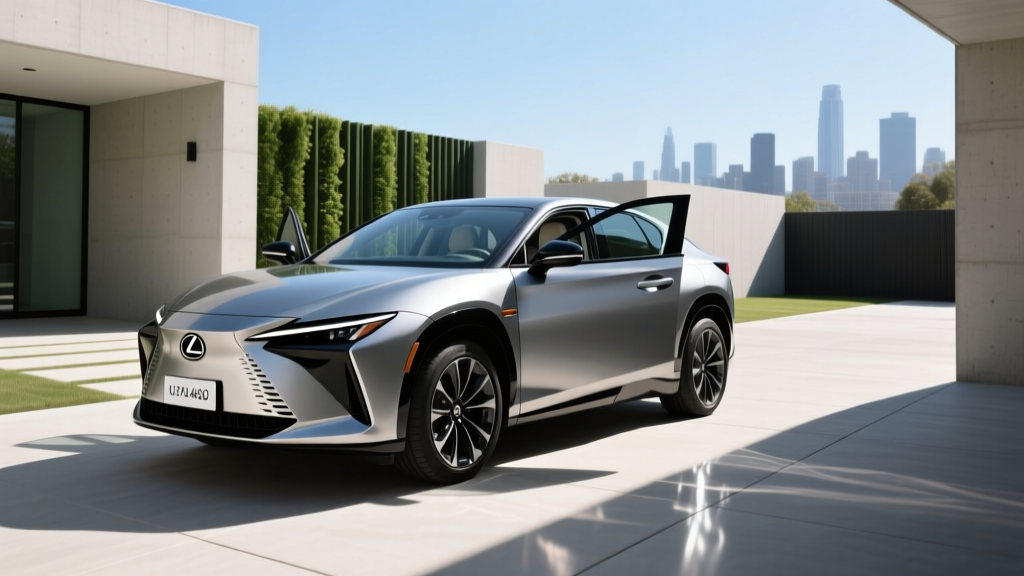
Lexus currently sells one fully electric model in the US: the RZ 450e, a luxury crossover SUV. For 2026, it starts at $52,900 (Premium FWD) and delivers an EPA-estimated 220 miles of range (FWD) or 196 miles (AWD). It charges at up to 150 kW DC (10–80% in roughly 30 minutes) and uses a 72.8 kWh lithium-ion battery. It qualifies for the $7,500 federal §30D tax credit if you meet income, MSRP, and battery-sourcing requirements. If 220 miles covers your daily driving and you have home charging, the RZ 450e is a refined, quiet luxury EV. If you regularly drive 300+ miles between charges or live in a charging desert, Lexus's hybrid lineup (RX, NX, TX) is a more practical fit right now.
The 2026 Lexus RZ 450e: Specs That Matter
| Spec | RZ 450e FWD (Premium) | RZ 450e AWD (Luxury) |
|---|---|---|
| Base MSRP | $52,900 | $59,900 |
| EPA Range | 220 miles | 196 miles |
| Battery (usable) | 72.8 kWh | 72.8 kWh |
| Horsepower | 201 hp | 308 hp (DIRECT4) |
| 0–60 mph | ~7.4 sec | ~5.0 sec |
| Max DC Charge Rate | 150 kW | 150 kW |
| 10–80% DC Time | ~30 min | ~30 min |
| Level 2 (240V, 48A) | ~9.5 hours | ~9.5 hours |
| Combined MPGe | 114 MPGe | 102 MPGe |
| Battery Warranty | 8 yr / 100,000 mi | 8 yr / 100,000 mi |
The RZ 450e shares its e-TNGA platform with the Toyota bZ4X and Subaru Solterra, but Lexus tunes the suspension, sound insulation, and interior materials for a noticeably more premium experience. The AWD model uses Lexus's DIRECT4 system, which continuously shifts torque between the front and rear motors for traction and stability.
Sources: EPA fueleconomy.gov, Lexus official specs.
Real-World Range: What the EPA Sticker Doesn't Tell You
EPA vs Reality
EPA (FWD): 220 miles
Real-world highway (70 mph, 75°F): ~185–200 miles
Cold-weather highway (30°F, cabin heat): ~150–170 miles
The RZ 450e's efficiency is respectable for a luxury crossover — it consumes roughly 29 kWh per 100 miles in combined driving. But like all EVs, range drops under specific conditions:
- Highway speeds: Aerodynamic drag rises with the square of speed. Sustained 75–80 mph driving typically costs 10–15% of EPA range.
- Cold weather: Lithium-ion batteries lose efficiency below 40°F, and cabin heating draws significant power. Expect 20–30% range loss in sub-freezing conditions. The RZ uses a heat pump (standard), which mitigates this compared to resistive heating, but the physics still apply.
- Elevation and terrain: Mountain passes with sustained climbing can temporarily reduce range by 15–20%, though regenerative braking recovers some energy on descents.
Bottom line: If your round-trip commute is under 160 miles and you charge at home nightly, the FWD model's real-world range is comfortable. If you're planning 250-mile highway stretches between chargers, you'll want to plan stops carefully — especially in winter.
Charging the RZ 450e: Home and Public
| Charging Level | Power | Miles Added per Hour | Use Case |
|---|---|---|---|
| Level 1 (120V, 12A) | ~1.4 kW | ~4–5 mi/hr | Overnight trickle, emergencies |
| Level 2 (240V, 48A) | ~11.5 kW | ~33–38 mi/hr | Daily home charging (full charge ~9.5 hrs) |
| DC Fast Charge | Peak 150 kW | ~150+ mi in 15 min | Road trips (10–80% in ~30 min) |
The RZ 450e uses a CCS1 connector for DC fast charging and a J1772 connector for Level 1/2 AC charging. It does not have a NACS (Tesla-style) port, though CCS-to-NACS adapters are increasingly available for accessing Tesla Superchargers.
Charging curve reality: The 150 kW peak only holds for a portion of the session. From roughly 10–50% state of charge, you'll see sustained rates around 120–140 kW. Above 80%, the rate tapers significantly to protect the battery — the last 20% can take as long as the first 60%. This is normal lithium-ion behavior, not a defect.
Home charging cost: A Level 2 home charger (like a ChargePoint Home Flex or Emporia Vue) costs $500–$700 for the unit. Professional installation by a licensed electrician runs $600–$2,000 depending on panel capacity and wiring distance. If your panel needs a 200A upgrade, add $1,500–$3,000. Total first-year home charging setup: $1,100–$5,700.
Lexus EV vs Lexus Hybrid vs Gas: The Cost Comparison
| Factor | RZ 450e FWD (EV) | RX 350h AWD (Hybrid) | RX 350 AWD (Gas) |
|---|---|---|---|
| Base MSRP | $52,900 | $53,900 | $51,400 |
| Est. Federal Tax Credit | Up to $7,500* | $0 | $0 |
| Effective Price (after credit) | ~$45,400 | $53,900 | $51,400 |
| Annual Fuel/Energy Cost** | ~$650 | ~$1,500 | ~$2,100 |
| 5-Year Fuel/Energy Cost | ~$3,250 | ~$7,500 | ~$10,500 |
| Annual Maintenance | ~$300 | ~$500 | ~$600 |
| 5-Year Total (purchase + fuel + maint) | ~$48,150 | ~$56,400 | ~$54,400 |
*§30D credit eligibility depends on buyer AGI, vehicle MSRP cap (SUVs: $80,000), and battery critical-mineral/component sourcing. Verify at IRS.gov. Credit can be transferred at point of sale as an instant rebate.
**Based on 15,000 miles/year, $0.14/kWh (home), $3.50/gallon, EPA combined figures.
The RZ 450e wins on 5-year total cost if you qualify for the full federal credit and charge primarily at home. The RX 350h hybrid is the pragmatic middle ground — no charging infrastructure needed, 36 MPG combined, and no range planning. The gas RX 350 is the cheapest to buy but the most expensive to operate long-term.
Tax Credit Eligibility: Do You Qualify?
§30D New Clean Vehicle Credit Requirements (2026)
- Income cap: Buyer AGI must not exceed $150,000 (single), $225,000 (head of household), or $300,000 (married filing jointly)
- MSRP cap: Vehicle MSRP must be ≤ $80,000 for SUVs (RZ 450e qualifies)
- Battery sourcing: Minimum percentages of critical minerals and battery components must be sourced from the US or free-trade-agreement countries (these thresholds increase annually)
- Point-of-sale transfer: You can apply the credit as an instant dealer discount rather than waiting for tax filing
- One-time use: You can claim one new EV credit per year (not per vehicle — per taxpayer)
Important: Battery-sourcing rules are complex and change yearly. Confirm the RZ 450e's current eligibility on fueleconomy.gov's credit lookup before purchasing. A tax professional can verify your personal eligibility.
Common Misconceptions About the Lexus EV
| Myth | Fact |
|---|---|
| "The battery will need replacing in 5 years" | Lexus warrants the battery for 8 years / 100,000 miles with a minimum 70% capacity retention. Modern lithium-ion EV batteries typically degrade 1–2% per year, retaining ~85–90% after 8 years under normal use. |
| "EVs are more expensive to insure" | Often true by 10–20% due to higher repair costs. Expect RZ 450e premiums around $180–$240/month (varies by state, age, driving record). Get quotes before buying. |
| "I can't charge in the rain" | EV chargers and connectors are weather-sealed (IP55 or better). Charging in rain, snow, or car washes is safe per SAE J1772 standards. |
| "220 miles of range isn't enough" | The average American drives 37 miles per day (FHWA data). If you charge at home overnight, 220 miles covers weeks of normal driving. Road trips require planning, not a bigger battery. |
| "The RZ is just a fancy Toyota bZ4X" | They share the e-TNGA platform, but Lexus uses different suspension tuning, sound-deadening materials, interior finishes, and the available DIRECT4 AWD system. The driving experience is meaningfully different. |
Who Should (and Shouldn't) Buy the Lexus RZ 450e
Decision Framework
Choose the RZ 450e if:
- You have access to Level 2 home charging (garage or driveway with 240V outlet)
- Your daily driving is under 150 miles round-trip
- You qualify for the §30D federal tax credit (brings effective price to ~$45,400)
- You value cabin quietness, ride comfort, and Lexus dealer service
- You're replacing a gas SUV and want to eliminate fuel stops
Choose a Lexus hybrid (RX 350h, NX 350h, TX 500h) instead if:
- You live in an apartment without charging access
- You regularly drive 300+ miles without stopping
- You live in a region with sparse public DC charging infrastructure
- You frequently tow (the RZ is rated for 2,000 lbs; RX 350 tows up to 3,500 lbs)
- You want AWD capability without the range penalty
Wait or look elsewhere if:
- You need 300+ miles of EPA range (consider Tesla Model Y, Hyundai Ioniq 5, or Rivian R1S)
- You want ultra-fast charging under 20 minutes (the RZ's 150 kW peak is slower than 800V competitors like the Ioniq 5 at 240 kW or the Lucid Air at 300+ kW)
- You need three rows of seating (the RZ seats five; the TX hybrid seats six or seven)
First-Time EV Buyer Checklist
If the RZ 450e is your first EV, here's what to prepare before delivery day:
- Confirm home charging: Do you have a 240V outlet (NEMA 14-50 or hardwired) within reach of your parking spot? If not, budget for electrician installation.
- Check your electrical panel: Most Level 2 chargers draw 40–48 amps, requiring a 50–60A breaker. If your panel is near capacity, a 200A service upgrade may be needed ($1,500–$3,000).
- Download charging apps: PlugShare, ChargePoint, EVgo, and Electrify America. Map out DC fast chargers along your common routes.
- Verify tax credit eligibility: Check your AGI, confirm the RZ's current §30D status on fueleconomy.gov, and discuss point-of-sale transfer with your dealer.
- Get an insurance quote: Do this before signing. EV premiums can be 10–20% higher than equivalent gas models.
- Understand preconditioning: The RZ can precondition its battery before a DC fast-charge stop (via navigation). This warms the battery to optimal temperature and improves charge speed — especially important in cold weather.
- Plan your first road trip: Use A Better Routeplanner (ABRP) or PlugShare to identify chargers. Aim to arrive at each stop with 15–20% battery, not near zero.
Frequently Asked Questions
Does Lexus make any other fully electric vehicles?
As of 2026, the RZ 450e is Lexus's only fully electric (BEV) model sold in the US. Lexus has announced plans for additional EVs by 2030, but no other battery-electric models are currently available. The UX 300e was sold in limited markets but was discontinued in the US. Lexus's broader electrified lineup includes several hybrids (RX, NX, TX, ES, LC) and plug-in hybrids (NX 450h+, RX 450h+).
How does the RZ 450e compare to the Tesla Model Y?
The Model Y Long Range AWD offers 310 miles EPA range, 250 kW peak DC charging, and a starting price around $44,990. It's faster to charge, has more range, and costs less. The RZ 450e counters with a quieter cabin, more traditional luxury interior materials, Lexus dealer service network, and a more conservative, driver-focused interface (no giant screen-only controls). If range and charging speed are your priorities, the Model Y wins. If interior refinement and dealer experience matter more, the RZ is compelling.
What happens if the RZ 450e battery degrades?
Lexus's battery warranty guarantees at least 70% capacity retention for 8 years or 100,000 miles. If the battery falls below that threshold within the warranty period, Lexus will repair or replace it at no cost. Out of warranty, a full battery replacement could cost $15,000–$22,000 (parts and labor), though this is rare. Most EV batteries lose 1–2% capacity per year under normal use, meaning you'd likely still have ~85% capacity after 100,000 miles.
Can I charge the RZ 450e at a Tesla Supercharger?
Not natively — the RZ uses a CCS1 connector, while Tesla Superchargers use NACS. However, Tesla has opened many Supercharger stations to non-Tesla EVs via built-in CCS cables (at select locations) or via CCS-to-NACS adapters. Check the Tesla app or PlugShare for Supercharger stations in your area that support non-Tesla vehicles. ChargePoint, Electrify America, and EVgo networks are natively CCS-compatible.
Is the RZ 450e a good EV for cold climates?
It's adequate but not class-leading. The heat pump helps preserve range in cold weather (compared to resistive heating), but you should still expect 20–30% range loss below freezing. With 220 miles EPA (FWD), your real winter range could be 150–170 miles on the highway. If you live in Minnesota, Montana, or northern New England and regularly drive long distances in winter, a longer-range EV (300+ miles EPA) or a hybrid is a safer bet. For city commuting in cold weather with home charging, the RZ is fine.