The Short Answer on the Lexus LFA EV
As of early 2026, no production Lexus LFA EV exists for sale. Toyota unveiled the Electrified Sport Concept in 2022 and later hinted at a next-generation LFA successor with electric or hybrid powertrain elements, but no official production model, pricing, EPA range, or on-sale date has been confirmed. What follows is a data-grounded analysis of what Toyota has publicly stated, what the concept suggests, and what realistic buyers and enthusiasts should expect if a production version eventually arrives.
Where the Lexus LFA EV Stands Today
The original Lexus LFA — a 553-hp, 4.8-liter V10 supercar produced from 2010 to 2012 in a run of just 500 units — remains one of the most celebrated analog driver's cars ever built. Its replacement has been the subject of intense speculation for years.
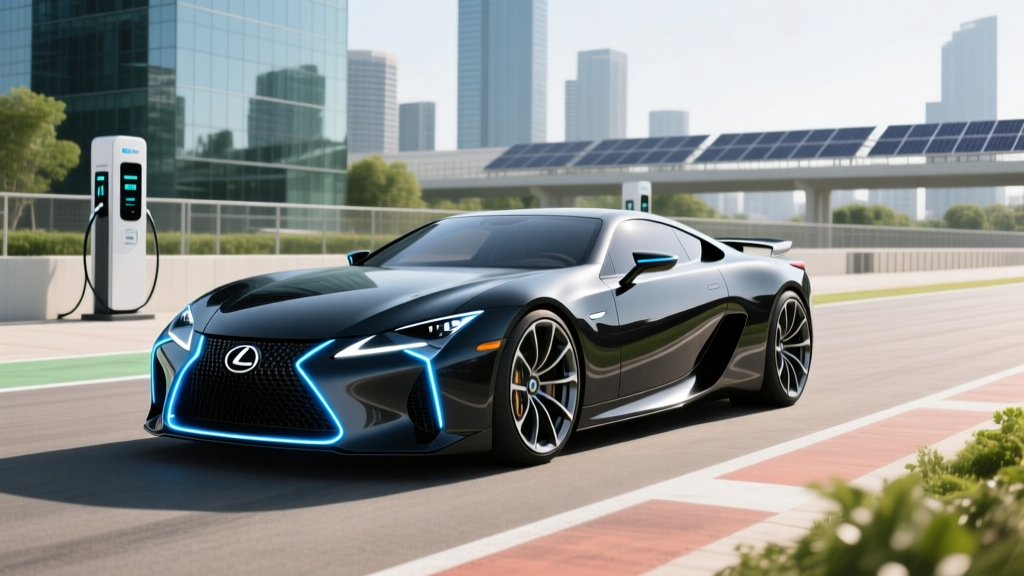
At the 2022 Tokyo Auto Salon, Toyota's Gazoo Racing division revealed the Electrified Sport Concept, a low-slung, battery-electric coupe that many interpreted as a spiritual LFA successor. Toyota has since confirmed that a next-generation sports car is in development under the GR (Gazoo Racing) umbrella, though executives have alternately described it as potentially electric, hybrid, or hydrogen-powered depending on the forum.
What we can say with certainty:
- No VIN-assignable, EPA-certified Lexus LFA EV is listed on fueleconomy.gov as of 2026.
- No MSRP, configurator, or reservation system exists on Lexus USA's website.
- Toyota has not filed a trademark or production announcement specifically using "LFA EV" as a model name.
Any article, listing, or social post claiming definitive specs or pricing for a "2026 Lexus LFA EV" is speculating or fabricating. Here's what we can piece together from credible signals.
Concept Clues: What the Electrified Sport Suggests
While concept cars rarely translate directly to production, the Electrified Sport Concept provides directional data points that inform what a production Lexus electric supercar might look like:
| Attribute | Electrified Sport Concept (2022) | Production Estimate (Speculative) |
|---|---|---|
| Powertrain | Battery electric, dual motor | BEV or series hybrid |
| Estimated Power | Not disclosed (concept) | 700–1,000+ hp (class-competitive) |
| 0–60 mph | Not disclosed | Sub-3.0 seconds (estimated) |
| Battery Chemistry | Not disclosed | Likely NMC for energy density; possible solid-state |
| EPA Range | Not disclosed | 200–280 mi (supercar duty cycle) |
| Charging Architecture | Not disclosed | 800V likely for fast DC charging |
| Price Point | Not disclosed | $150,000–$300,000+ (LFA successor positioning) |
Toyota has also invested heavily in solid-state battery research, with limited commercialization targeted for the mid-to-late 2020s. If a production electric supercar arrives before 2030, it could be one of the first vehicles to showcase Toyota's next-gen battery technology — offering faster charging and higher energy density than current lithium-ion cells.
How a Lexus LFA EV Would Compare to Electric Supercar Rivals
If Toyota greenlights a production Lexus LFA EV, it will enter a small but growing segment of electric and electrified hypercars and supercars. Here's how the likely competitive landscape looks based on currently announced or available models:
| Vehicle | Powertrain | Horsepower | 0–60 mph | EPA Range | Base Price (USD) |
|---|---|---|---|---|---|
| Lotus Evija | BEV (quad motor) | 1,972 hp | ~2.0 sec | ~160 mi (est.) | $2,100,000+ |
| Rimac Nevera | BEV (quad motor) | 1,914 hp | 1.85 sec | ~300 mi (WLTP) | $2,200,000+ |
| Porsche Taycan Turbo GT | BEV (dual motor) | 1,092 hp | 2.1 sec | 269 mi (EPA) | $230,000 |
| Ferrari SF90 Stradale | PHEV (V8 + 3 e-motors) | 986 hp | 2.5 sec | 15 mi EV / N/A combined | $524,000+ |
| Lexus LFA (2012, original) | Gas V10 | 553 hp | 3.6 sec | ~14 mpg combined | $375,000 (original MSRP) |
| Lexus LFA EV (speculative) | BEV (est.) | 700–1,000+ hp | <3.0 sec | 200–280 mi | $150,000–$300,000+ |
A few things stand out. First, the electric supercar space is dominated by seven-figure hypercars (Evija, Nevera) that are essentially unobtainable for most enthusiasts. Second, the Porsche Taycan Turbo GT proves that a production BEV can deliver supercar performance at a "mere" $230,000 — a price point Toyota/Lexus could plausibly target for an LFA successor. Third, the original LFA was a $375,000 car at launch; adjusting for inflation, a $200,000–$300,000 successor would actually be more accessible in real terms.
Real Costs: What Owning a $200K+ Electric Supercar Actually Means
Let's assume a production Lexus LFA EV eventually arrives at approximately $200,000. Here's what ownership economics look like for a limited-use supercar compared to a gas equivalent:
| Cost Category (Annual, Est.) | Lexus LFA EV (Speculative BEV) | Gas Supercar Equivalent (~$200K) |
|---|---|---|
| Purchase price | $200,000 | $200,000 |
| Fuel / electricity (3,000 mi/yr) | ~$360 (at $0.15/kWh, 2.5 kWh/mi) | ~$1,500 (at $4.00/gal, 12 mpg) |
| Insurance | $4,000–$7,000 (specialty) | $4,000–$7,000 (specialty) |
| Maintenance | $500–$1,000 (tires, cabin filter, fluid top-offs) | $2,000–$4,000 (oil, brakes, belts, specialty service) |
| Federal §30D tax credit | $0 (exceeds MSRP cap of $55,000 for sedans / $80,000 for SUVs/trucks per IRS rules) | $0 (not eligible) |
| Depreciation (Year 1, est.) | 15–25% ($30,000–$50,000) | 15–25% ($30,000–$50,000) |
Key takeaways for prospective buyers of any future Lexus LFA EV:
- No federal tax credit. The §30D credit caps MSRP eligibility at $55,000 for sedans and $80,000 for SUVs, vans, and trucks. A $200,000+ supercar will not qualify, regardless of battery sourcing or buyer income.
- Fuel savings are real but modest in context. Saving ~$1,100/year on electricity vs. gasoline matters less when you're spending $200,000 on a weekend car driven 3,000 miles annually.
- Insurance will be the wildcard. Specialty supercar insurance (Hagerty, Grundy) typically prices based on agreed value, driving history, and annual mileage. EV-specific considerations like battery replacement cost could push premiums higher than gas equivalents until claims data matures.
- Maintenance is genuinely lower for EVs — no oil changes, fewer brake replacements (regen braking saves pads), no timing belts. But tire costs on a high-torque EV supercar will be substantial; expect $2,000+ per set of high-performance rubber.
Charging Reality for a Supercar: What You'd Need at Home
Any production Lexus LFA EV would almost certainly feature an 800-volt architecture (like the Porsche Taycan and Hyundai Ioniq 5) to enable DC fast charging at 250+ kW. But for a supercar that lives in a garage 95% of the time, home charging setup matters more than public infrastructure:
- Level 2 home charging (240V, 48A circuit): A high-quality Level 2 station like the ChargePoint Home Flex or Emporia Vue delivering 11.5 kW would replenish a ~90 kWh battery from 10% to 100% in roughly 8 hours — overnight, which is all a weekend supercar needs.
- Installation cost: Expect $1,200–$3,500 for a dedicated 60A circuit with a hardwired Level 2 charger, assuming your electrical panel has capacity. A panel upgrade to 200A service adds $1,500–$4,000 if needed.
- DC fast charging on road trips: At a 350 kW Electrify America or Tesla Supercharger (with NACS adapter, depending on Lexus's connector choice), a 10–80% charge in 18–22 minutes is achievable with an 800V architecture. But a supercar owner taking a track-day road trip will want to plan charging stops carefully — high-performance driving depletes batteries far faster than EPA efficiency ratings suggest.
Common Misconceptions About a Lexus LFA EV
| Myth | Fact |
|---|---|
| "The Lexus LFA EV is available to order now." | False. No production model exists. Only the 2022 Electrified Sport Concept has been shown. Toyota has not opened reservations or confirmed a production timeline. |
| "An electric LFA will be heavier and less engaging than the V10 original." | Partially true on weight — batteries add mass. But torque vectoring, a low center of gravity, and instant torque delivery create a different but not inferior driving experience. The Porsche Taycan Turbo GT and Lotus Emeya demonstrate that heavy EVs can be dynamically excellent. |
| "It will qualify for the $7,500 federal EV tax credit." | No. The §30D credit has strict MSRP caps ($55K sedans / $80K SUVs per IRS guidelines). A supercar priced at $150K+ will not qualify. |
| "Toyota will use solid-state batteries in the first production version." | Unconfirmed. Toyota has announced solid-state battery plans for the late 2020s, but initial production volumes will be extremely limited. A supercar could be an early adopter, but conventional NMC lithium-ion is more likely for an initial production run. |
| "It will have 400+ miles of range." | Unlikely for a supercar form factor. Low, aerodynamic bodies with massive motors and performance-tuned battery management typically deliver 200–300 miles. The Lotus Evija targets ~160 miles; the Rimac Nevera achieves ~300 miles (WLTP, which is more generous than EPA). |
Should You Wait for a Lexus LFA EV or Buy Something Now?
This is the practical question for enthusiasts who loved the original LFA and want to know where to put their money. Here's a decision framework:
Choose to wait for a Lexus LFA EV if:
- You already own a satisfying performance car and this would be a future addition, not a replacement.
- You're specifically invested in the LFA lineage and brand story — no substitute will satisfy.
- You have a $200,000+ budget that isn't time-sensitive and you're comfortable with a 2028–2030+ timeline (if it happens at all).
- You want to see whether Toyota commits to solid-state battery tech in a flagship application.
Choose to buy now if:
- You want a usable electric performance car today — the Porsche Taycan Turbo GT ($230,000, 1,092 hp, 269 mi EPA range, 2.1-sec 0–60) is the closest analog to what an LFA EV might become.
- You prefer a proven analog experience — a used original LFA (now trading at $700,000–$1,000,000+ at auction) or a Porsche 911 GT3 offers driving engagement that no EV currently replicates at the same emotional level.
- You want something electric and exotic now — the Lotus Emeya (905 hp, ~310 mi range, ~$107,000) or Lucid Air Sapphire (1,234 hp, 427 mi EPA, ~$250,000) deliver supercar performance with real-world usability.
- Waiting 3–5 years for an unconfirmed model carries the risk that Toyota pivots to hybrid, hydrogen, or cancels the project entirely.
What First-Time EV Buyers Should Know (Even If You're Not Buying a Supercar)
The Lexus LFA EV conversation attracts enthusiasts who may be considering their first electric vehicle in any segment. Whether you're eyeing a future supercar or a more practical EV today, these fundamentals apply:
- kW vs. kWh: Kilowatts (kW) measure power — how fast you charge or how hard the motors push. Kilowatt-hours (kWh) measure energy — the battery's total capacity, analogous to gallons in a gas tank. A 90 kWh battery charged at 11.5 kW takes roughly 8 hours from empty.
- EPA range vs. real-world: EPA estimates assume mixed driving. Highway-only driving at 75+ mph typically yields 15–25% less range than the sticker. Cold weather (below freezing) can reduce range by 20–40%, especially without a heat pump. For a supercar driven hard, expect even greater reduction.
- Charging curves matter: DC fast chargers advertise peak kW (e.g., 350 kW), but no EV sustains that rate for the full session. Charging slows significantly above 80% state of charge to protect the battery. The "10–80% in X minutes" figure is the meaningful one.
- Home charging is the foundation: Over 80% of EV charging happens at home. If you can install a Level 2 charger, daily EV ownership is effortless. If you rely solely on public charging, costs and convenience shift dramatically — plan accordingly.
Frequently Asked Questions
Is the Lexus LFA EV officially confirmed by Toyota?
No. Toyota has shown the Electrified Sport Concept and confirmed that a next-generation GR sports car is in development, but has not confirmed a production model named "LFA EV," nor provided official specs, pricing, or a release date. All details discussed here are estimates based on concept signals and industry analysis.
How much would a Lexus LFA EV cost?
There is no official pricing. Based on the original LFA's $375,000 MSRP (2010–2012) and current electric supercar pricing (Porsche Taycan Turbo GT at $230,000, Lotus Emeya at ~$107,000), a reasonable estimate for a production LFA successor would fall between $150,000 and $300,000, depending on whether Toyota positions it as a premium grand tourer or a limited-run exotic.
Will the Lexus LFA EV use solid-state batteries?
Toyota has publicly stated plans to commercialize solid-state batteries in the late 2020s, and a flagship sports car could be an early showcase. However, initial solid-state production volumes will be very small, and it's equally possible that a first-generation electric LFA successor uses advanced NMC lithium-ion cells. Toyota has not confirmed battery chemistry for any upcoming sports car.
Can I put a deposit down on a Lexus LFA EV?
No. Lexus has not opened any reservation system, waitlist, or deposit program for an electric LFA successor. Any third party claiming to accept deposits for this vehicle is not authorized by Toyota/Lexus.
What's the best electric performance car I can actually buy right now?
As of 2026, the Porsche Taycan Turbo GT ($230,000, 1,092 hp, 269 mi EPA range) is the closest production equivalent to an electric supercar from an established luxury brand. The Lucid Air Sapphire ($250,000, 1,234 hp, 427 mi EPA range) offers sedan practicality with hypercar acceleration. For something more accessible, the Tesla Model S Plaid ($89,990, 1,020 hp, 396 mi EPA) delivers extraordinary performance at a fraction of the cost.