The Quick Answer: Is There a Lexus LFA Electric?
As of early 2026, there is no production Lexus LFA electric supercar available for purchase. Lexus unveiled an electrified LFA concept in December 2021 and has since referenced a solid-state battery-powered successor, but no production model has been confirmed for sale. The original LFA (2010–2012) was a V10 gas-powered halo car limited to 500 units. Any future electric LFA would likely be a low-volume, high-price flagship—potentially exceeding $500,000—rather than a mainstream EV. Buyers searching for a "Lexus LFA electric" today are looking at a vehicle that does not yet exist in showrooms.
What Lexus Has Actually Announced About an Electric LFA
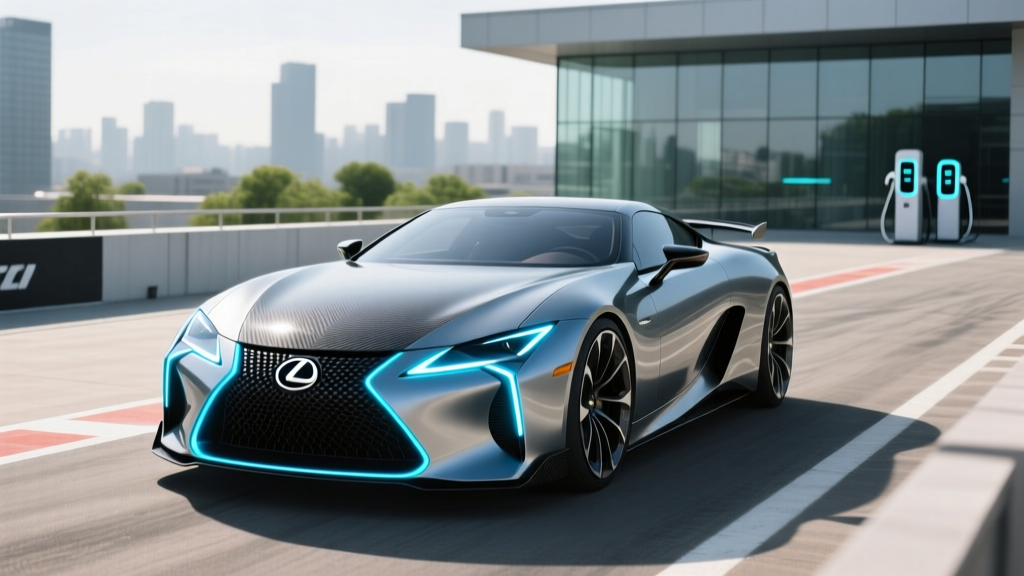
Lexus first showed an electrified LFA concept alongside its broader EV roadmap announcement in December 2021. The concept featured a solid-state battery pack and all-electric powertrain. Since then, Lexus executives have periodically referenced the LFA nameplate in connection with future high-performance EVs, particularly as Toyota continues to develop solid-state battery technology targeted for limited production around 2027–2028.
Key points from Lexus and Toyota's public statements:
- The LFA concept uses a solid-state battery, which Toyota claims could deliver roughly double the energy density of current lithium-ion cells
- Targeted range figures cited in Toyota presentations have suggested 700+ km (approximately 435+ miles), though these are laboratory estimates, not EPA-certified figures
- No MSRP, production timeline, or unit volume has been confirmed
- Lexus has confirmed that the next-generation LFA, if produced, would feature a direct-drive EV powertrain with torque vectoring
Toyota's official solid-state battery timeline places initial commercial deployment in hybrid vehicles first, with full BEV applications following. This means an electric LFA, if it arrives, would likely be among the later vehicles to receive the technology—not the first.
Projected Specs vs. Today's EV Supercars
While Lexus has not released official production specifications, we can contextualize what an electric LFA might offer by comparing Toyota's solid-state battery claims against current high-performance EVs on the market.
| Specification | Lexus LFA Electric (Projected/Concept) | Rimac Nevera | Lotus Evija | Original LFA (V10 Gas) |
|---|---|---|---|---|
| Powertrain | Tri-motor AWD (est.) | Quad-motor AWD | Quad-motor AWD | 4.8L V10, RWD |
| Horsepower | Not confirmed (est. 1,000+ hp) | 1,914 hp | 1,972 hp | 553 hp |
| 0-60 mph | Claimed under 2.0 sec (concept) | 1.85 sec | <3.0 sec | 3.6 sec |
| Battery Chemistry | Solid-state (targeted) | NMC Lithium-ion, 120 kWh | NMC Lithium-ion, 70 kWh | N/A (gas) |
| EPA Range | Not certified (concept claim: ~435 mi / 700 km) | ~300 mi (WLTP) | ~250 mi (WLTP) | ~275 mi (17.1 gal tank) |
| DC Fast Charge (Peak) | Not confirmed (solid-state may support 350+ kW) | 500 kW | 800 kW | N/A |
| Estimated Price | $500,000+ (speculative) | $2,400,000 | $2,600,000 | $375,000 (2011 MSRP) |
| Production Volume | Unconfirmed | 150 units | 130 units | 500 units |
Several observations matter for anyone tracking this vehicle:
- Solid-state batteries remain unproven at scale. Toyota has demonstrated prototype cells but has not yet produced them commercially in any vehicle. Energy density claims are lab results, not real-world validated data.
- The "under 2-second" 0-60 claim from the concept stage would place it alongside the Rimac Nevera, but achieving this in a production vehicle with road-legal weight, safety equipment, and thermal management is a different engineering challenge entirely.
- Range claims of 700 km (435 miles) are likely based on Japan's JC08 or WLTP cycles, which are more generous than the US EPA test. Expect EPA-certified range to be 15–25% lower if the vehicle reaches production.
Real-World Ownership: What an Electric LFA Would Actually Cost
Even though the vehicle doesn't exist yet, projecting ownership economics helps set realistic expectations. Here's how a hypothetical $500,000 electric supercar compares to the original gas LFA and a current high-performance EV benchmark.
| Cost Category | Lexus LFA Electric (Est. $500K) | Original LFA V10 (Used ~$800K) | Tesla Model S Plaid ($89,990) |
|---|---|---|---|
| Purchase Price | $500,000 (est.) | $800,000 (collector market) | $89,990 |
| Fuel/Energy (5 yr, 50K mi) | $4,500 (est. $0.13/kWh home) | $12,500 (premium gas, 16 mpg) | $4,050 (est. $0.13/kWh home) |
| Insurance (5 yr est.) | $75,000+ (collector/supercar rates) | $60,000+ | $22,500 |
| Maintenance (5 yr) | $5,000–$10,000 (EV, low moving parts) | $25,000+ (V10 service, carbon fiber) | $3,500 |
| Federal Tax Credit (§30D) | $0 (MSRP cap: $55K for sedans) | $0 (used credit cap: $25K MSRP) | $0 (exceeds MSRP cap) |
| Estimated Depreciation (5 yr) | Highly uncertain (collector potential) | Appreciating (collector asset) | ~40% ($36,000) |
| Total 5-Year Cost (excl. depreciation) | $584,500–$589,500 | $897,500+ | $119,040 |
Critical takeaways for ownership planning:
- No federal tax credit applies. The IRS §30D credit caps eligible sedans at $55,000 MSRP. Any electric LFA would far exceed this limit.
- Insurance will dominate recurring costs. Supercar insurance for a $500K+ limited-production EV will likely require specialty carriers (Hagerty, Chubb) and could exceed $15,000/year.
- Home charging is a prerequisite. A vehicle with a 100+ kWh solid-state pack would need a dedicated Level 2 circuit (48A–80A, 11.5–19.2 kW) for overnight charging. Relying solely on public DC fast charging for a supercar is impractical and expensive.
- Depreciation is the wildcard. The original LFA famously depreciated initially, then appreciated past $800,000 on the collector market. An electric LFA could follow a similar trajectory—but only if production volumes are extremely limited (under 500 units).
Solid-State Battery Reality Check: What Buyers Should Know
The electric LFA's most touted feature—solid-state battery technology—deserves scrutiny before any purchase decision.
| Claim | Reality (as of 2026) |
|---|---|
| "Solid-state doubles the range" | Energy density gains of 30–50% are realistic for first-generation cells; "double" is a long-term target, not a 2027 guarantee |
| "Charges in 10 minutes" | Toyota has demonstrated 10-minute 10–80% charges in lab conditions; real-world thermal management and charger availability will affect this |
| "No degradation" | Solid-state cells degrade more slowly than NMC, but they still degrade. Cycle-life data at production scale is not yet public |
| "Safer than lithium-ion" | Solid electrolytes reduce thermal runaway risk, but full pack-level safety validation for crash scenarios is still in testing |
| "Available now" | No mass-market vehicle uses solid-state batteries as of 2026. Toyota targets limited deployment in 2027–2028, initially in hybrids |
For a buyer considering a future electric LFA, the battery technology is both the vehicle's greatest promise and its greatest risk. First-generation solid-state packs may face:
- Limited production yields, driving up replacement costs potentially above $80,000–$100,000
- Unknown long-term degradation curves (no 8-year/100,000-mile track record yet)
- Charging infrastructure compatibility—350+ kW chargers needed to exploit fast-charge capability are still sparse outside major metro areas
What to Buy Instead: Current Options for the Lexus LFA Electric Shopper
If you're drawn to the idea of a high-performance Lexus EV or an exotic electric supercar, here are vehicles that actually exist today with confirmed specs and pricing.
Decision Framework: What to Buy While You Wait
Choose the Lotus Eletre R if: You want a luxury performance EV from a brand with exotic-car DNA. 905 hp, 0-60 in 2.95 sec, EPA range ~304 mi, starting at $120,000. It charges at up to 350 kW DC (10-80% in ~20 min).
Choose the Tesla Model S Plaid if: You want sub-2-second 0-60 performance today at a fraction of supercar pricing. 1,020 hp, 0-60 in 1.99 sec, EPA range 396 mi, $89,990. The most accessible way to experience supercar acceleration in a daily-driver package.
Choose the Porsche Taycan Turbo GT if: You prioritize track capability and sustained performance over straight-line numbers. 1,092 hp (launch control), 0-60 in 2.1 sec, EPA range ~269 mi, $230,000. Its 800V architecture delivers repeatable 270 kW charging.
Choose to wait (and reserve) if: You specifically want the LFA badge, solid-state battery technology, and are prepared to spend $500,000+ on a low-volume collector vehicle with unproven technology. Understand that delivery could be 2028 or later, and specs may change significantly from concept claims.
Common Misconceptions About the Lexus LFA Electric
| Misconception | Fact |
|---|---|
| "You can order one now" | No order books are open. The vehicle remains a concept with no confirmed production date. |
| "It will qualify for EV tax credits" | The §30D credit has a $55,000 MSRP cap for sedans and $80,000 for SUVs/trucks. An electric LFA will exceed both limits by a wide margin. |
| "Solid-state means no battery replacement" | All batteries degrade. Solid-state may slow the rate, but replacement will still be necessary eventually—and likely more expensive than current NMC packs due to low production volume. |
| "It's a hybrid like the LC 500h" | Lexus has positioned the electric LFA concept as a full BEV, not a hybrid. The LC 500h uses a multi-stage hybrid system with a 3.5L V6—completely different architecture. |
| "700 km range means 435 real-world miles" | 700 km is likely a WLTP or JC08 figure. US EPA testing is more stringent. Expect 15–25% less in real-world highway driving, and 30–40% less in cold weather. |
First-Time EV Buyer Considerations for a Supercar Purchase
If an electric LFA would be your first EV (or your first supercar), these ownership realities apply regardless of the badge on the hood:
- Home charging is non-negotiable for supercars. Public DC fast charging a $500K vehicle regularly is both inconvenient (charger reliability issues, broken stalls) and expensive ($0.35–$0.50/kWh at Electrify America or EVgo). Budget $1,500–$3,000 for a dedicated 60A Level 2 home charger installation, including potential panel upgrades.
- Cold weather affects all EVs. Solid-state batteries may handle temperature extremes better than NMC, but range loss of 20–30% in sub-freezing conditions is still expected based on current chemistry projections. If you live in Minnesota or Montana, plan accordingly.
- Tire costs are extreme on performance EVs. EVs are heavier than gas equivalents, and high-torque instant delivery wears tires faster. Expect $2,000–$4,000 per set of Michelin Pilot Sport 4S or equivalent, replaced every 10,000–15,000 miles under spirited driving.
- Service infrastructure is limited. Unlike a Tesla Model S with 200+ service centers, a limited-production Lexus supercar may have fewer than 20 dealerships nationwide qualified to service its solid-state battery pack and carbon-fiber chassis.
Frequently Asked Questions
When will the Lexus LFA electric be available to buy?
Lexus has not confirmed a production date. Toyota's solid-state battery timeline targets limited commercial deployment in 2027–2028, with full EV applications likely following. A realistic estimate for customer deliveries—if the vehicle is greenlit—is 2028–2030 at the earliest.
How much will the Lexus LFA electric cost?
No pricing has been announced. Given the original LFA's $375,000 MSRP (2011), inflation, solid-state battery costs, and the current supercar EV market (Rimac Nevera at $2.4M, Lotus Evija at $2.6M), a price between $400,000 and $700,000 is plausible. Lexus could also position it more aggressively at $250,000–$350,000 to undercut European rivals.
Will it use solid-state batteries?
The concept was presented with solid-state battery technology, and Toyota has been the most aggressive automaker in solid-state R&D. However, production decisions depend on manufacturing readiness. Lexus could pivot to advanced NMC or semi-solid-state cells if solid-state yields don't meet cost targets by the production decision date.
Can I put down a deposit or reservation?
Not currently. Lexus has not opened any reservation or waitlist program for an electric LFA. Any third-party site claiming to accept deposits is not affiliated with Lexus or Toyota.
How does it compare to the Rimac Nevera or Lotus Evija?
On paper, the concept claims are competitive—sub-2-second 0-60 and 400+ mile range would match or exceed both. However, Rimac and Lotus are delivering production vehicles now with proven (if limited) service networks. An electric LFA would need to demonstrate real-world reliability, charging performance, and build quality to justify a comparable price.
Will it be a two-seater like the original LFA?
Lexus has not confirmed the body style. The concept images suggest a low-slung, two-door coupe profile consistent with the original LFA's proportions. A two-seat layout is likely given the performance positioning, but a 2+2 configuration hasn't been ruled out.