The Quick Answer: Should You Wait for the Lexus IS Electric Sedan?
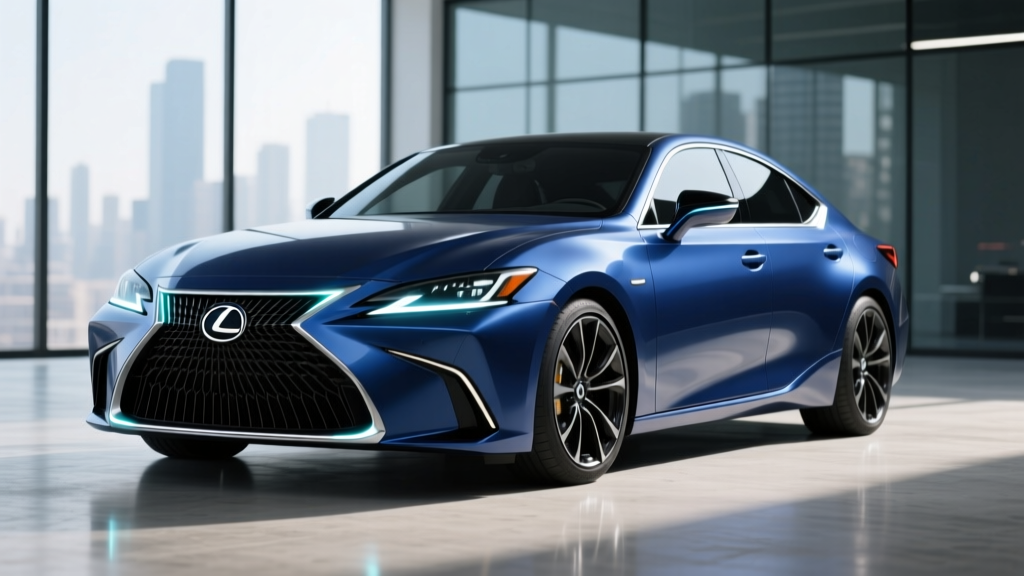
The Lexus IS electric sedan rendering images circulating since late 2024 showcase a sleek, low-slung sport sedan built on Toyota's next-generation EV platform with an expected EPA range of 300–350 miles, a starting MSRP near $55,000, and a likely debut in late 2026 as a 2027 model. However, Lexus has not officially confirmed an electric IS. The renderings are speculative — some from independent designers, others reportedly tied to Lexus's "BEV Factory" concept previews. If you need an electric luxury sedan today, the Tesla Model 3 Performance ($52,990), BMW i4 eDrive40 ($57,900), or Hyundai Ioniq 6 ($42,450) are real, buyable alternatives with proven specs. If you can wait 18–24 months and want Lexus reliability with electric propulsion, holding off is reasonable — but do not delay a purchase you need now based on unofficial renders.
What the Lexus IS Electric Sedan Rendering Actually Shows
The most widely shared Lexus IS electric sedan renderings depict a four-door sport sedan that retains the IS lineage's aggressive stance while adopting EV-specific design cues: a sealed spindle grille (or "spindle body" as Lexus calls it on the RZ 450e), flush door handles, an extended wheelbase for battery packaging, and a fastback roofline reminiscent of the Ioniq 6. Several renderings align with Lexus's LF-Z Electrified concept proportions — long hood-to-dash ratio, short overhangs, and a full-width rear light bar.
What matters more than styling is the platform underneath. Toyota's BEV Factory, announced in 2023 and operational in planning through 2026, is developing a dedicated EV architecture with gigacasting (mega-casting of front and rear body sections), a structural battery pack, and a target of 466 miles (750 km) of range on its top-tier next-gen platform by 2027–2028. A compact sport sedan like an electric IS would likely use a shorter-range variant of this platform.
Expected Specifications (Preliminary — Not Confirmed)
| Specification | Estimated (Based on Toyota BEV Factory Targets) |
|---|---|
| Platform | Next-gen dedicated BEV (not e-TNGA) |
| Battery Capacity (Usable) | ~75–85 kWh |
| Battery Chemistry | NMC (bipolar prismatic); possible LFP base trim |
| EPA Range (Est.) | 300–350 miles |
| Peak DC Fast Charge | ~200–250 kW (estimated) |
| 10–80% DC Charge Time | ~20–25 minutes (projected) |
| Drivetrain | RWD standard; AWD optional (DIRECT4) |
| Horsepower | 300–400 hp (depending on motor config) |
| 0–60 mph | 4.5–5.5 seconds (est.) |
| Starting MSRP (Est.) | $52,000–$58,000 |
| Availability | Late 2026 announcement; 2027 model year |
Important: These figures are extrapolated from Toyota's published BEV Factory roadmap, the existing RZ 450e specs (72.8 kWh battery, 220-mile EPA range, 150 kW peak charge), and industry analyst projections. They are not manufacturer-confirmed. Lexus has only confirmed it plans to offer a full EV lineup by 2030, with next-gen models beginning around 2026–2027.
How an Electric Lexus IS Would Compare to Gas and Hybrid Alternatives
The current Lexus IS 350 F Sport (gas) starts at approximately $44,500 with a 3.5L V6 producing 311 hp and delivering 20 city / 28 highway / 23 combined MPG per fueleconomy.gov. The IS 500 F Sport Performance with its 5.0L V8 pushes $62,000 and 472 hp but drops to 17/25/20 MPG.
An electric IS would trade some of that V8 punch for instant torque, a lower center of gravity, and dramatically reduced fuel costs — but likely at a higher purchase price. Here's how the numbers stack up over five years and 75,000 miles:
5-Year Ownership Cost Comparison (75,000 Miles)
| Cost Category | Lexus IS 350 F Sport (Gas) | Est. Lexus IS Electric | Tesla Model 3 Performance |
|---|---|---|---|
| Purchase Price (MSRP) | $44,500 | $55,000 (est.) | $52,990 |
| Federal Tax Credit (§30D) | $0 | $0–$7,500 (depends on sourcing) | $7,500 (if eligible) |
| Effective Purchase Price | $44,500 | $47,500–$55,000 | $45,490 |
| Fuel/Energy (75k mi) | $9,375 (at $3.50/gal, 23 MPG) | $2,813 (at $0.13/kWh, 3.5 mi/kWh) | $2,700 (at $0.13/kWh, 3.7 mi/kWh) |
| Maintenance (5 yr) | $3,500 (oil, filters, brakes) | $1,200 (cabin filter, tires, wipers) | $1,100 |
| Insurance (5 yr avg) | $8,500 | $10,000 (est. EV premium) | $9,800 |
| Total 5-Year Cost | $65,875 | $61,513–$69,013 | $59,090 |
Assumptions: $3.50/gal gas, $0.13/kWh home charging, no public DC fast charging premium. Insurance varies significantly by state, age, and driving record. Tax credit eligibility subject to IRS §30D income, MSRP, and battery-sourcing rules. Source: IRS §30D.
The electric IS breaks even against the gas IS 350 around year four if you qualify for the full tax credit and charge primarily at home. Without the credit — which is uncertain for a future Lexus given Japan-based battery sourcing challenges — the payback extends to year six or seven.
Real-World Ownership: What the Renderings Don't Tell You
Range Reality Check
EPA Sticker vs. Real World: If the electric IS achieves a 330-mile EPA rating, expect approximately:
- Mixed driving (55 mph avg): ~300–310 miles
- Highway (75 mph sustained): ~260–280 miles
- Cold weather (below 32°F): ~220–250 miles (LFP chemistry would lose more; NMC with heat pump performs better)
- Mountain/terrain-heavy routes: ~240–270 miles
These estimates are based on observed real-world testing patterns across similar-size EVs. Cold-weather losses are significant and non-negotiable physics — battery internal resistance increases and cabin heating draws from the traction battery.
Charging: The Make-or-Break Factor
Even if Lexus delivers a 250 kW peak charge rate, sustained charging matters more than peak numbers. Based on current Toyota/Lexus charging behavior (the RZ 450e peaks at just 150 kW and tapers aggressively above 70% SoC), an electric IS may charge as follows:
| Charging Level | Power | Miles Added per Hour | Use Case |
|---|---|---|---|
| Level 1 (120V household) | 1.4 kW | ~4–5 miles | Emergency / overnight trickle |
| Level 2 (240V home, 48A) | 11.5 kW | ~35–40 miles | Daily home charging (full overnight) |
| DC Fast Charge (est. peak) | 200–250 kW | ~180–220 miles (first 15 min) | Road trips; 10–80% in ~20–25 min |
Home charging access is the single biggest ownership variable. If you have a garage or driveway where a Level 2 charger (typically $500–$800 for equipment plus $800–$2,500 for electrician installation, depending on panel capacity and run length) can be installed, an EV becomes effortless for daily use. If you rely exclusively on public charging, expect to pay $0.30–$0.48/kWh at DC fast chargers — nearly tripling your per-mile energy cost and adding 20–30 minutes to road-trip stops.
Driving Patterns That Favor (or Hurt) EV Ownership
An electric Lexus IS makes strong sense if:
- Your daily commute is under 80 miles round-trip (easily covered overnight on Level 2)
- You have home or workplace charging access
- You live in a moderate climate or can precondition while plugged in
- You value smooth, quiet acceleration and low running costs
- You plan to keep the car 5+ years (amortizing the higher purchase price)
It becomes a harder sell if:
- You regularly drive 300+ miles between charging stops in rural areas
- You live in an apartment without charging access and your city has sparse public infrastructure
- You frequently tow (EV range drops 30–50% under towing load)
- You experience sustained sub-zero winters without garage parking
Tax Credit and Incentive Reality for a Future Lexus EV
The federal §30D clean vehicle credit offers up to $7,500, but eligibility for a future Lexus electric sedan is far from guaranteed. Current rules require:
- MSRP cap: Sedars must be priced at or below $55,000 (vans/SUVs/pickups: $80,000). If the electric IS starts above $55,000, it would not qualify.
- Buyer income cap: Modified AGI must not exceed $150,000 (single), $225,000 (head of household), or $300,000 (joint).
- Battery component sourcing: A percentage of battery components must be manufactured or assembled in North America (threshold increases annually — 100% by 2029).
- Critical minerals sourcing: A percentage of critical minerals must be sourced from the U.S. or FTA partners (80% by 2027).
- Foreign entity of concern (FEOC): Battery components or critical minerals from China, Russia, North Korea, or Iran disqualify the vehicle.
Given that Toyota/Lexus vehicles are manufactured primarily in Japan and that Japanese battery supply chains still source significant materials globally, a Lexus electric sedan may qualify for partial or zero federal credit at launch. Point-of-sale transfer of the credit (available since 2024) would apply if the vehicle qualifies. Always verify current eligibility at IRS.gov before purchasing.
Should You Buy Now or Wait? A Decision Framework
Choose to Buy an EV Now If:
- You need a vehicle within 6 months
- You qualify for the current §30D credit on an existing model (Tesla Model 3, Hyundai Ioniq 6, BMW i4)
- You have home charging access already installed or installable
- Your daily driving is under 150 miles and you take road trips fewer than 10 times per year
- You want proven reliability data, real-world range figures, and established service networks
Choose to Wait for the Lexus IS Electric If:
- Your current vehicle has 18–24+ months of life left
- Lexus brand loyalty and dealership experience are important to you
- You want Toyota/Lexus's historically strong long-term reliability applied to EV powertrains
- You're willing to be an early adopter of a new model (first-year production risks, limited initial trim availability)
- You expect Toyota's next-gen battery tech to deliver meaningfully better range or charge speed than current offerings
Choose a Hybrid (Lexus IS 350h or Similar) If:
- You lack reliable home or workplace charging
- You regularly drive in areas with sparse DC fast-charging infrastructure
- You want electrified efficiency without range anxiety or charging planning
- Your budget is under $50,000 and you want Lexus luxury today
Common Misconceptions About the Lexus IS Electric Sedan Rendering
| Myth | Fact |
|---|---|
| "The rendering means Lexus is definitely building an electric IS." | Renderings are often independent artist work or speculative media illustrations. Lexus has not confirmed an electric IS by name. |
| "It will have 400+ miles of range." | Toyota's 466-mile target applies to its top-tier next-gen platform (likely a larger or more expensive vehicle). A compact sport sedan will likely deliver 300–350 miles EPA. |
| "It will use the same platform as the RZ 450e." | The RZ uses the older e-TNGA platform. Next-gen Lexus EVs are expected to use the BEV Factory architecture with gigacasting and structural battery packs — a fundamentally different design. |
| "It will definitely qualify for the $7,500 tax credit." | Eligibility depends on MSRP (≤$55,000 for sedans), buyer income, and battery sourcing. Japanese-manufactured vehicles face sourcing challenges under current rules. |
| "EVs cost more to own in every scenario." | Over 5 years with home charging and tax credit eligibility, several EVs match or beat gas equivalents on total cost. Without the credit or with expensive public charging, the math shifts. |
| "Lexus EVs will be as reliable as their gas cars." | Lexus has strong reliability history, but the RZ 450e is their first dedicated EV and has limited long-term data. Early adoption carries unknowns. |
What First-Time EV Buyers Should Know Before Chasing Any Rendering
Renderings generate excitement, but ownership reality is defined by logistics. Before committing to any EV — whether it's a confirmed model or one you're waiting for — address these fundamentals:
- Audit your charging access. Can you install a 240V / 48A Level 2 circuit? Get a quote from a licensed electrician. If your panel is at capacity, a 200-amp upgrade adds $1,500–$3,500. If you're in a condo or apartment, check whether your HOA or building allows charger installation.
- Map your actual driving. Pull 30 days of mileage from your phone or odometer. What's your 95th-percentile daily distance? If it's under 100 miles, any 300+ mile EV handles your life effortlessly. If it's 200+, plan for mid-day charging or a larger battery.
- Calculate your real electricity cost. Check your utility's rate schedule. National average residential is ~$0.16/kWh in 2025–2026, but time-of-use plans can drop overnight rates to $0.08–$0.10/kWh — a massive savings multiplier.
- Research insurance before you buy. EVs often carry 15–25% higher insurance premiums due to repair costs and battery replacement risk. Get a quote on the specific model before signing.
- Understand battery warranty. Federal law mandates 8 years / 100,000 miles minimum for EV battery warranties. Lexus typically offers 8 years / 100,000 miles with a capacity retention threshold (often 70% of original capacity). Read the fine print — degradation below the threshold triggers a warranty claim, not normal gradual loss.
Frequently Asked Questions
Is Lexus actually making an electric IS sedan?
Lexus has not officially confirmed an electric IS sedan. Toyota's luxury division has stated plans for a full EV lineup by 2030 and has previewed next-gen EV concepts, but no production IS EV has been announced with a firm date. The renderings circulating online are largely speculative.
When would the Lexus IS electric sedan be available?
If Lexus follows its announced timeline for next-generation BEV Factory vehicles, an electric sport sedan could debut in late 2026 or 2027 as a 2027 or 2028 model year vehicle. This is a projection, not a confirmed schedule.
How much will the Lexus IS electric sedan cost?
Based on current Lexus pricing (IS 350 starts ~$44,500) and EV premiums across the industry ($8,000–$15,000 above gas equivalents), an electric IS would likely start between $52,000 and $58,000. This places it near the federal §30D sedan MSRP cap of $55,000, meaning only base trims might qualify for the credit.
Would the electric Lexus IS be better than a Tesla Model 3?
It depends on your priorities. The Model 3 offers proven range (EPA 341 miles for Long Range AWD), access to the Supercharger network, and over-the-air updates. A Lexus electric IS would compete on build quality, dealership service, ride refinement, and brand cachet — areas where Lexus traditionally excels. Charging network access is the key question: Lexus would likely rely on third-party networks (Electrify America, EVgo) unless Toyota negotiates Supercharger access beyond what's already available via NACS adapters.
Should I buy a Lexus RZ 450e instead of waiting?
The RZ 450e is a compact luxury crossover, not a sport sedan, and its 220-mile EPA range is below class average for 2026. If you need a Lexus EV today and a crossover works for your lifestyle, it's a solid choice — but expect to charge more frequently on road trips. If a sedan form factor and 300+ mile range are priorities, waiting for a dedicated electric IS (or choosing a non-Lexus EV sedan now) makes more sense.
Will the Lexus IS electric sedan have NACS or CCS charging?
Toyota has announced it will adopt the North American Charging Standard (NACS) connector on future EVs in North America. An electric IS arriving in 2027 or later would very likely ship with a native NACS port, granting direct access to Tesla Superchargers without an adapter. This is a significant advantage over current CCS-equipped vehicles.
Disclaimer: This article references speculative renderings and projected specifications for an unannounced vehicle. All estimated figures are based on available industry data, Toyota's public roadmap, and comparable EV benchmarks. Confirm all specifications, pricing, and tax credit eligibility with Lexus and the IRS before making purchase decisions. Real-world range, charging speed, and costs vary based on climate, driving style, and infrastructure.