The Short Answer on Lexus EVs
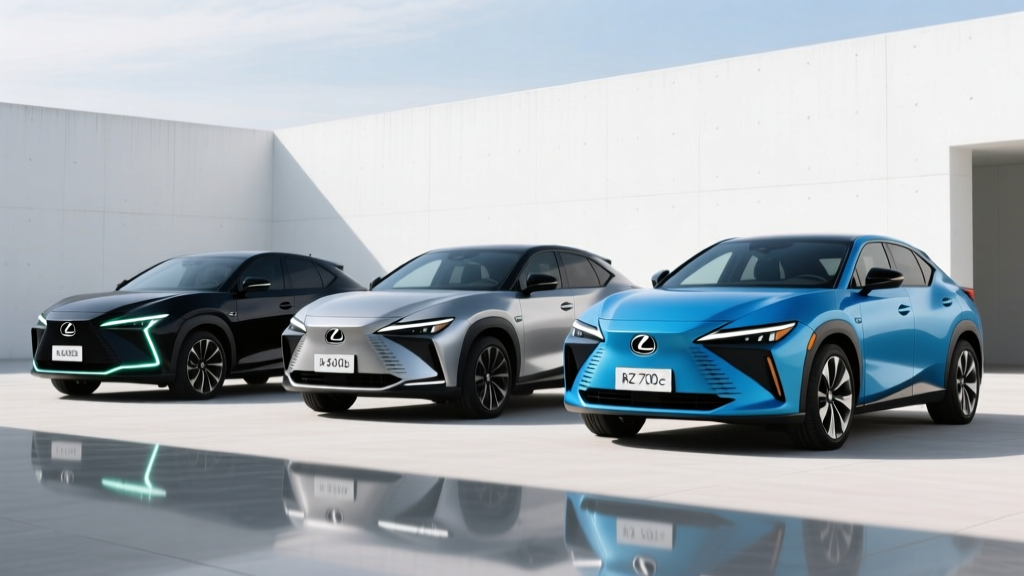
Lexus currently sells two fully electric models in the U.S.: the RZ 450e (dual-motor AWD, 222–260 miles EPA range, starting ~$55,850) and the RZ 300e (single-motor FWD, up to 302 miles EPA, starting ~$50,050). Both share an 84.4 kWh usable lithium-ion battery on Toyota's e-TNGA platform. For luxury buyers who prioritize cabin refinement, reliability reputation, and dealer service over maximum range or fastest charging, the RZ line delivers. But if you need 300+ miles of real-world highway range, DC fast charging under 20 minutes, or federal tax credit eligibility, rival EVs from Hyundai, BMW, and Tesla outperform on paper. The RZ makes most sense for existing Lexus loyalists with home Level 2 charging who drive under 200 miles daily.
The 2026 Lexus EV Lineup: What's Actually Available
Lexus has been cautious in its battery-electric rollout compared to competitors. As of the 2026 model year, the RZ crossover remains the brand's sole dedicated EV offering in the United States. The lineup splits into two powertrains:
| Spec | 2026 RZ 450e AWD | 2026 RZ 300e FWD |
|---|---|---|
| Drivetrain | Dual-motor AWD | Single-motor FWD |
| Horsepower | 308 hp | 201 hp |
| 0–60 mph | 5.0 sec | 7.4 sec |
| Battery (usable) | 84.4 kWh (NMC) | 84.4 kWh (NMC) |
| EPA Range | 222 mi (20" wheels) / 260 mi (18") | 266 mi (20") / 302 mi (18") |
| MPGe (combined) | 102 MPGe | 116 MPGe |
| Peak DC Charge Rate | 150 kW | 150 kW |
| 10–80% DCFC Time | ~30 min | ~30 min |
| Level 2 Charge Rate | ~11.5 kW | ~11.5 kW |
| Connector | J1772 / CCS1 | J1772 / CCS1 |
| Base MSRP | ~$55,850 | ~$50,050 |
| Battery Warranty | 8 yr / 100,000 mi | 8 yr / 100,000 mi |
Source: EPA fueleconomy.gov and Lexus.com official specs. Figures reflect 2026 model-year data; always verify with your dealer as mid-year adjustments occur.
Real-World Range vs. EPA Sticker
EPA sticker: Up to 302 miles (RZ 300e with 18" wheels).
Expect in practice: ~240–265 miles on a highway road trip at 70–75 mph in moderate temperatures. In cold weather (below 32°F), plan for 180–210 miles due to battery resistance and cabin heating load. The RZ 450e on 20-inch wheels drops to roughly 175–195 miles in winter highway driving. The RZ's heat pump helps mitigate cold-weather losses, but physics still applies — NMC chemistry loses efficiency when cold.
How Lexus EVs Compare to Gas and Hybrid Alternatives
Most Lexus cross-shoppers are deciding between the RZ, a gas-powered Lexus RX, or the RX hybrid. Here's how the numbers stack up against the segment benchmark:
| Metric | RZ 450e AWD | RX 350 AWD (Gas) | RX 350h AWD (Hybrid) |
|---|---|---|---|
| Base MSRP | ~$55,850 | ~$51,400 | ~$53,100 |
| EPA Range / Tank | 222–260 mi | ~370 mi | ~430 mi |
| Fuel/Energy Cost per Mile | ~$0.04 (home) / ~$0.12 (DCFC) | ~$0.15 | ~$0.11 |
| Annual Fuel/Energy (15k mi) | $600–$1,800 | $2,250 | $1,650 |
| Maintenance (5-yr est.) | ~$1,800 | ~$3,500 | ~$3,200 |
| 0–60 mph | 5.0 sec | 7.2 sec | 7.4 sec |
| Refuel/Recharge Time | 8–10 hr (L2) / 30 min (DCFC) | 5 min | 5 min |
The RZ 450e's energy cost advantage is significant — but only if you charge primarily at home on residential electricity rates (~$0.14/kWh national average). Public DC fast charging at $0.35–$0.50/kWh erases most of the savings versus a hybrid. Over five years and 75,000 miles, home-charging an RZ saves roughly $4,000–$7,000 in fuel and maintenance compared to the RX 350 gas model, but the RZ's higher purchase price and potentially steeper insurance premiums ($200–$400/year more for EVs) narrow that gap.
The Tax Credit Situation: What You Actually Qualify For
Under current IRS §30D rules, the federal EV tax credit provides up to $7,500, but eligibility depends on three gates: buyer income, vehicle MSRP, and battery component/mineral sourcing. Here's the 2026 framework:
- MSRP cap: SUVs must be under $80,000 — the RZ qualifies at all trims.
- Income cap: $150,000 single / $300,000 married filing jointly modified AGI.
- Battery sourcing: Critical minerals and battery components must meet escalating domestic/free-trade-partner thresholds. As of 2026, vehicles with battery components from a "foreign entity of concern" (FEOC) are disqualified.
- Point-of-sale transfer: You can apply the credit at purchase to reduce your out-of-pocket cost, even if you have no tax liability — effectively a rebate.
Critical caveat: The RZ's battery sourcing has historically been a question mark for full credit qualification. Lexus has not consistently confirmed that all RZ variants meet the critical-mineral and component thresholds for the full $7,500. Before purchasing, verify current eligibility on fueleconomy.gov and confirm with your tax professional. Do not assume you'll receive $7,500 — many buyers qualify for $3,750 (half credit) or zero depending on sourcing compliance. Rules are subject to legislative change; always check IRS.gov for the latest guidance.
Charging the Lexus RZ: Speed, Connectors, and Reality
The RZ uses a CCS1 connector for DC fast charging and J1772 for Level 2. With the industry's shift toward NACS (Tesla's connector), Lexus has indicated future models will adopt NACS, but the 2026 RZ remains on CCS1. This matters for network access:
| Level | Power | Miles Added/Hour | Use Case |
|---|---|---|---|
| Level 1 (120V) | ~1.4 kW | ~4–5 mi/hr | Emergency / overnight top-up |
| Level 2 (240V) | ~11.5 kW | ~35–40 mi/hr | Home / workplace daily charging |
| DC Fast Charge | Peak 150 kW | ~200+ mi/hr (peak) | Road trips, 10–80% in ~30 min |
The RZ's 150 kW peak DC charge rate is the lineup's most criticized spec. Competitors like the Hyundai Ioniq 5 and Kia EV6 accept 235–240 kW (10–80% in ~18 minutes), while the BMW iX peaks at 150 kW but sustains higher average power. The RZ's charge curve tapers noticeably above 60% SoC, meaning the last 20% can take as long as the first 60%. On a road trip, plan charging stops around 10–80% to avoid the slow taper — and budget 30–35 minutes per stop, not the 25 minutes some marketing materials imply.
Home charging setup: A Level 2 home charger (48-amp circuit, hardwired) will replenish the RZ's 84.4 kWh battery from empty in roughly 8–9 hours. Installation costs range from $600 (simple outlet near panel) to $2,500+ (panel upgrade, long conduit run). Budget $1,200–$1,800 for a typical professional install with a quality smart charger like a ChargePoint Home Flex or Wallbox Pulsar Plus.
5-Year Ownership Cost Breakdown
| Cost Category | RZ 450e (Home Charge) | RX 350 Gas | RX 350h Hybrid |
|---|---|---|---|
| Purchase Price (base) | $55,850 | $51,400 | $53,100 |
| Est. Tax Credit | $0–$7,500* | $0 | $0 |
| Fuel/Energy (5 yr, 75k mi) | $3,000–$5,500 | $11,250 | $8,250 |
| Maintenance (5 yr) | $1,800 | $3,500 | $3,200 |
| Insurance (5 yr est.) | $10,500 | $8,500 | $9,000 |
| Home Charger Install | $1,500 | $0 | $0 |
| Estimated Depreciation | $22,000 | $18,000 | $17,000 |
| 5-Year Total | $65,150–$70,650 | $74,650 | $73,550 |
*Tax credit eligibility varies — consult IRS rules and a tax professional. Depreciation estimates based on current EV resale trends; EV depreciation has been steeper than ICE in recent years but is stabilizing. Insurance costs are estimates and vary significantly by state, driver profile, and carrier.
The RZ wins on operating costs but loses ground on depreciation and insurance. If you qualify for the full $7,500 credit and charge at home, the 5-year total cost becomes competitive with or cheaper than the gas RX. Without the credit and relying on public charging, the RZ is the most expensive option.
Common Misconceptions About Lexus EVs
| Myth | Fact |
|---|---|
| "The RZ has the same reliability as a gas Lexus." | Lexus's EV reliability track record is short — only since 2023. Early RZ models had software and 12V battery complaints. The drivetrain is simpler, but EV-specific issues (thermal management, charge-port electronics) are new territory for Lexus service departments. |
| "I don't need home charging — public stations are everywhere." | Public DCFC reliability averages ~80% uptime nationally, and CCS1 networks (Electrify America, EVgo) have historically been less reliable than Tesla's Supercharger network. Without home charging, the RZ's 30-minute charge stops and 222-mile AWD range become a daily friction point. |
| "EV batteries need replacing every 5 years." | NMC batteries in modern EVs like the RZ are warrantied for 8 years/100,000 miles at 70% capacity retention. Real-world degradation data from similar Toyota/Lexus platforms shows ~8–12% capacity loss over 100,000 miles. Replacement cost, if needed out of warranty, runs $12,000–$18,000 — but most packs outlast the vehicle. |
| "The RZ is basically a Toyota bZ4X in a Lexus suit." | They share the e-TNGA platform and battery, but the RZ has distinct suspension tuning, interior materials, sound insulation, and the DIRECT4 torque-vectoring AWD system (on 450e). The overlap is real, but the driving and ownership experience are meaningfully different. |
Decision Framework: Is a Lexus EV Right for You?
Choose the Lexus RZ 300e if:
- You want maximum range from the RZ platform (302 mi EPA with 18" wheels)
- Your daily driving is under 120 miles round-trip
- You have Level 2 home charging and rarely road-trip over 200 miles
- You value Lexus dealer service and cabin quietness over performance
- You're cross-shopping luxury compact EVs but find the BMW iX or Audi Q8 e-tron too expensive
Choose the Lexus RZ 450e if:
- You need AWD for snow/rain climates and want the 5.0-second 0–60 pull
- DIRECT4 torque vectoring matters for your driving enjoyment
- You accept 222-mile range (20" wheels) as sufficient for your patterns
- You're upgrading from a gas RX or NX and want to stay in the Lexus ecosystem
Look elsewhere if:
- You need 300+ miles of real-world highway range — consider the Hyundai Ioniq 5 (305 mi), Tesla Model Y (320+ mi), or BMW iX xDrive50 (307 mi)
- Fast DC charging is a priority — the RZ's 150 kW peak / ~30-min 10–80% trails the Ioniq 5's ~18 minutes at 240 kW
- You don't have home charging access — the RZ's moderate range and CCS1 connector make public-only charging frustrating
- Federal tax credit qualification is essential to your budget — verify RZ eligibility before committing, as sourcing rules may limit the credit
- You want NACS/Supercharger access now — the RZ uses CCS1, and while adapters exist, native NACS is more seamless
What's Next: Upcoming Lexus EVs
Lexus has announced plans for a broader EV lineup, including a three-row electric SUV and a next-generation electric sedan, expected to roll out through 2027–2028. These upcoming models are anticipated to adopt NACS connectors and potentially higher charge rates. However, these remain announced/preliminary — no final specs, pricing, or delivery dates are confirmed. If you need an electric Lexus today, the RZ 300e and RZ 450e are your only options.
Does the Lexus RZ qualify for the $7,500 federal tax credit?
It depends on current battery sourcing compliance under IRS §30D rules, your income, and the vehicle's MSRP (the RZ is under the $80,000 SUV cap). Lexus has not consistently confirmed full credit qualification for all RZ variants. Check fueleconomy.gov and consult a tax professional before relying on the credit in your purchase budget.
How long does it take to charge the Lexus RZ at home?
On a Level 2 home charger (~11.5 kW), a full charge from empty takes approximately 8–9 hours. Most owners plug in overnight and wake up to a full battery. A standard 120V outlet (Level 1) adds only about 4–5 miles per hour — not practical as a primary charging method for an 84.4 kWh battery.
Is the Lexus RZ good in cold weather?
The RZ includes a heat pump for cabin heating, which helps preserve range in cold weather compared to resistive heaters. However, expect 25–35% range reduction in sustained sub-freezing temperatures. A 260-mile EPA RZ 300e may deliver 170–195 real-world miles in winter highway driving. Preconditioning the battery while plugged in mitigates some loss and improves charge speed.
Can I use Tesla Superchargers with the Lexus RZ?
The RZ uses a CCS1 connector. Tesla has opened some Supercharger stations to non-Tesla EVs via the built-in Magic Dock adapter, but availability is limited to select locations. CCS-to-NACS passive adapters exist for slower Level 2 charging but are not recommended for DC fast charging. If Supercharger access is a top priority, consider a native NACS vehicle.
What does Lexus EV maintenance cost compared to gas?
EVs eliminate oil changes, spark plugs, transmission fluid, and exhaust system maintenance. The RZ still requires tire rotation, cabin air filter replacement, brake fluid checks, and wiper/coolant service. Expect roughly 40–50% lower maintenance costs over five years compared to the gas RX — approximately $1,800 vs. $3,500 based on industry averages.