Quick Answer: Lexus EV Models in 2026
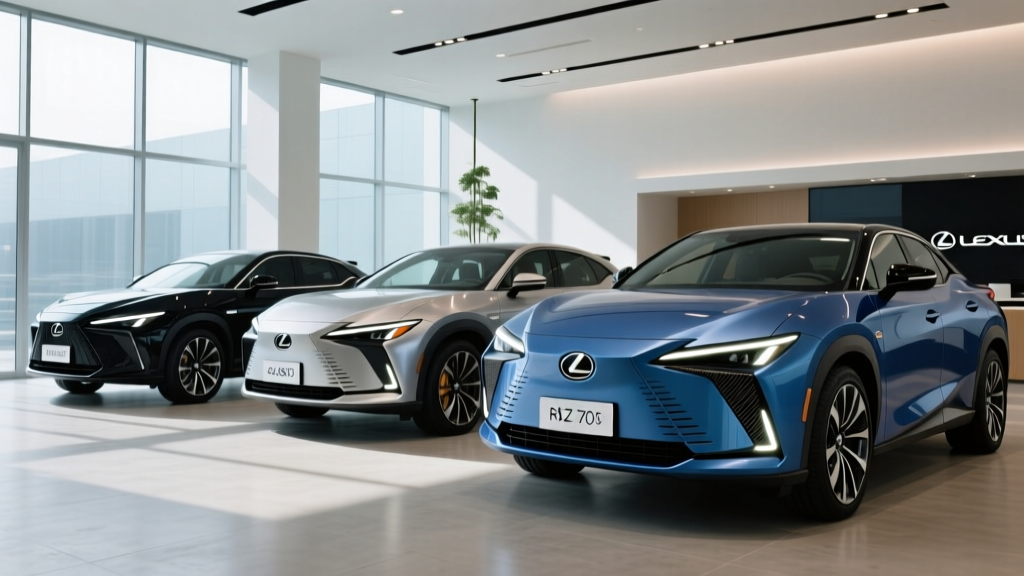
Lexus currently sells two battery-electric vehicles in the U.S.: the RZ 300e (single-motor, FWD, starting around $44,000) and the RZ 450e (dual-motor AWD, starting around $54,000). Both are built on Toyota's e-TNGA platform and share a 71.4 kWh (usable) battery pack. EPA range tops out at 266 miles for the RZ 300e with 18-inch wheels and drops to roughly 220 miles for the RZ 450e with 20-inch wheels. Neither currently qualifies for the full $7,500 federal §30D tax credit due to battery-sourcing requirements — always verify current eligibility at IRS.gov before purchasing.
The Current Lexus EV Lineup: RZ 300e and RZ 450e
Lexus entered the dedicated EV space later than German rivals, and the RZ line reflects a cautious, refinement-first philosophy. Rather than chasing maximum range or blistering acceleration, Lexus prioritized ride quality, cabin quietness, and build consistency — the same traits its hybrid buyers have expected for decades. For 2026, the lineup remains focused on two variants of the RZ compact luxury crossover.
| Spec | RZ 300e | RZ 450e |
|---|---|---|
| Drivetrain | FWD (single motor) | AWD (dual motor, DIRECT4) |
| Horsepower | 201 hp | 308 hp |
| 0–60 mph | ~7.4 sec | ~5.0 sec |
| Battery (usable) | 71.4 kWh, lithium-ion | 71.4 kWh, lithium-ion |
| EPA Range (max) | 266 mi (18" wheels) | 220 mi (20" wheels) |
| EPA Range (alt) | 224 mi (20" wheels) | — |
| Combined MPGe | 114 MPGe | 97 MPGe |
| Max DC Charge Rate | ~150 kW peak | ~150 kW peak |
| 10–80% DC Charge | ~30 min | ~30 min |
| Level 2 (240V) Rate | ~7.2 kW | ~7.2 kW |
| Base MSRP | ~$44,000 | ~$54,000 |
| Battery Warranty | 8 yr / 100,000 mi | 8 yr / 100,000 mi |
Real-World Range Reality
The EPA 266-mile sticker on the RZ 300e assumes mixed driving. Expect ~210–230 miles in sustained 75 mph highway driving, and ~175–200 miles in freezing temperatures with cabin heat engaged. The RZ 450e's 220-mile EPA figure often translates to ~175–190 miles on the highway. The RZ's battery thermal management is adequate but not class-leading — preconditioning before DC fast charging matters, especially below 40°F.
Lexus EV vs. Lexus Hybrid: The Cost and Capability Trade-Off
The most common cross-shopping dilemma for Lexus buyers isn't EV vs. Tesla — it's EV vs. Lexus hybrid. The NX 350h and RX 350h dominate Lexus sales for good reason: proven reliability, no charging dependency, and strong fuel economy. Here's how the numbers actually stack up.
| Metric | RZ 450e (EV) | NX 350h (Hybrid) |
|---|---|---|
| Base MSRP | ~$54,000 | ~$43,000 |
| EPA Combined | 97 MPGe | 39 MPG |
| Annual Fuel/Energy (12,000 mi) | ~$600–$850* | ~$1,100 |
| Annual Maintenance | ~$300–$400 | ~$500–$700 |
| 5-Year Energy + Maintenance | ~$4,500–$6,250 | ~$8,000–$10,000 |
| Federal Tax Credit | Check IRS eligibility† | None |
*Home charging at $0.14/kWh vs. public DC at $0.35–$0.50/kWh. Actual cost depends on your electricity rate and charging mix.
†Per IRS §30D rules, eligibility depends on battery critical-mineral sourcing, MSRP caps ($80,000 SUVs), and buyer income limits ($300K joint / $150K single). Verify before purchase.
The verdict: If you drive 12,000+ miles per year and have reliable home charging, the RZ recoups its price premium through energy savings within 5–7 years. If your mileage is low, you lack home charging, or you frequently drive in remote areas, the NX 350h remains the pragmatic choice.
Charging the Lexus RZ: What Owners Actually Experience
The RZ uses a CCS1 connector for DC fast charging (NACS adapter access to Tesla Superchargers is expanding but verify compatibility for your model year). Peak DC charging hits around 150 kW, but sustained rates tell a more useful story.
| Level | Power | Miles Added/Hour | Use Case |
|---|---|---|---|
| Level 1 (120V) | ~1.4 kW | ~4–5 mi/hr | Emergency top-up only |
| Level 2 (240V, 32A) | ~7.2 kW | ~25–28 mi/hr | Overnight home charging |
| DC Fast Charge | ~150 kW peak | — | 10–80% in ~30 min |
On a 150 kW DC charger, the RZ pulls peak power only between roughly 15–55% State of Charge. Above 60%, the charge curve tapers significantly — by 80%, you're often pulling under 50 kW. This means a 20–80% session takes about 30 minutes, but an 80–100% top-off can add another 25+ minutes. Plan road-trip stops accordingly: charge to 80% and move on.
Home charging reality: A full Level 2 home installation (240V/40A circuit) typically costs $1,200–$2,800 including a quality EVSE and electrician labor, assuming your electrical panel has capacity. Older homes with 100A service may need a panel upgrade ($1,500–$3,000+), which can push total cost above $5,000. Get a licensed electrician's assessment before committing to the car.
5-Year Ownership Cost Breakdown
| Category | RZ 450e | NX 350h |
|---|---|---|
| Purchase Price | $54,000 | $43,000 |
| Federal Tax Credit | $0–$7,500* | $0 |
| Energy (5 yr, 60K mi) | $3,000–$4,250 | $5,500 |
| Maintenance (5 yr) | $1,500–$2,000 | $2,500–$3,500 |
| Insurance (5 yr avg) | $9,000–$11,000 | $7,500–$9,000 |
| Depreciation (est. 5 yr) | $22,000–$27,000 | $16,000–$20,000 |
| Total 5-Year Cost | $62,000–$71,250 | $58,000–$66,500 |
*Tax credit eligibility varies. Insurance premiums on EVs tend to run 15–25% higher than equivalent hybrids due to repair costs and parts pricing. Depreciation on luxury EVs has been steeper than on Lexus hybrids — factor this into lease vs. buy decisions.
The data shows the RZ doesn't always win on total cost. Lexus hybrids hold resale value exceptionally well, and EV depreciation remains a wildcard. If the federal tax credit applies, the gap narrows substantially. If it doesn't, the hybrid often comes out ahead financially over five years.
Common Misconceptions About Lexus EVs
| Myth | Fact |
|---|---|
| "The RZ gets 300+ miles of range." | Max EPA is 266 mi (RZ 300e, 18" wheels). Most trims deliver 220–245 mi EPA. Real-world highway is less. |
| "Lexus EVs charge as fast as a Hyundai Ioniq 5 or Tesla Model Y." | The RZ peaks at ~150 kW. The Ioniq 5 hits 240+ kW on 800V architecture; Model Y sustains ~250 kW. The RZ is noticeably slower on road trips. |
| "Every Lexus EV qualifies for the $7,500 tax credit." | Credit eligibility depends on battery sourcing, MSRP caps, and buyer income. Check the IRS qualified vehicles list before assuming. |
| "I don't need home charging — public chargers are everywhere." | Public DC charging costs 2–4× more per kWh than home charging. Relying exclusively on public charging erases most fuel savings and adds significant time. |
| "The battery will need expensive replacement within a few years." | Lexus warranties the battery for 8 years/100,000 miles against dropping below 70% capacity. Modern lithium-ion packs typically retain 85–90% capacity at 100K miles based on industry data. |
Who Should Buy a Lexus EV — and Who Shouldn't
Decision Framework: Is a Lexus RZ Right for You?
Choose the RZ 300e if:
- You want the lowest-cost entry into a Lexus EV
- Your daily commute is under 60 miles round-trip
- You have Level 2 home charging or can install it
- You rarely take road trips over 200 miles
- You prioritize ride comfort and cabin silence over acceleration
Choose the RZ 450e if:
- You need AWD for snow/rain climates
- You want the 308 hp / 5.0-sec 0–60 performance bump
- You're willing to trade ~45 miles of range for dual-motor capability
- You value the DIRECT4 torque-vectoring system for confident handling
Choose a Lexus hybrid (NX 350h / RX 350h) instead if:
- You lack access to home or workplace charging
- You regularly drive 300+ miles between stops in rural areas
- You live in a region with extreme cold and unreliable public charging
- You want maximum resale value retention
- Your budget is closer to $40,000–$48,000
Look at competitors (Tesla Model Y, BMW iX, Genesis GV60) if:
- Range above 300 miles is a priority
- DC fast charging speed matters for frequent road trips
- You want access to the Tesla Supercharger network natively
What First-Time Lexus EV Buyers Need to Know
If you're coming from a Lexus hybrid or gas vehicle, the transition to the RZ involves a few non-obvious adjustments:
Regenerative braking feel: The RZ offers adjustable regen but doesn't provide true one-pedal driving to a complete stop like some competitors. Expect to use the brake pedal more than you might in a Nissan Leaf or Tesla on max regen.
Cabin preconditioning: Use the Lexus app to precondition the cabin while plugged in. This warms or cools the interior using grid power rather than battery power, preserving range — especially important in winter when resistive heating can consume 3–5 kW continuously.
Tire wear: EVs are heavier and deliver instant torque. Expect tire replacement at 25,000–35,000 miles rather than the 45,000+ you might get on a hybrid. Budget $800–$1,400 for a set of EV-rated touring tires.
Insurance shopping: Get quotes before purchasing. Some insurers charge 20%+ more for EVs; others offer specific EV discounts. The difference between your cheapest and most expensive quote can exceed $600/year.
Lexus EVs ahead: Lexus has announced plans to expand its EV lineup significantly by 2030, including a larger SUV and sedan. If range and charging speed are deal-breakers, the next-generation models on dedicated EV platforms may address current limitations. However, those models remain announced/preliminary — not yet available for purchase.
Frequently Asked Questions
Does any Lexus EV qualify for the federal tax credit in 2026?
Eligibility changes frequently based on battery-sourcing compliance. As of early 2026, most Lexus EVs face restrictions under the §30D critical-mineral and battery-component rules. Always check the current fueleconomy.gov qualified vehicle list and consult a tax professional before relying on the credit.
How long does it take to charge the Lexus RZ at home?
From 10% to 100% on a Level 2 (240V, 32A) home charger, expect roughly 9–10 hours. Most owners charge overnight and wake up to a full battery. On a standard 120V outlet (Level 1), a full charge takes 50+ hours — practical only for emergency trickle charging.
Is the Lexus RZ good in winter and snow?
The RZ 450e's DIRECT4 AWD system provides confident traction in snow and rain. However, expect 20–35% range loss in sustained sub-freezing temperatures due to cabin heating and battery thermal demands. If your winter commute is close to the RZ's reduced range, a hybrid may be more practical.
How does Lexus EV reliability compare to its hybrids?
Lexus hybrids have decades of proven reliability data. The RZ is newer, but early reliability indicators from owner surveys and the shared e-TNGA platform with the Toyota bZ4X suggest solid build quality. The 8-year/100,000-mile battery warranty provides additional peace of mind. Long-term data (100K+ miles) is still accumulating.
Can I use Tesla Superchargers with a Lexus RZ?
Tesla has been opening Supercharger access to non-Tesla EVs via the built-in Magic Dock (CCS1) at select locations, and NACS adapters are becoming available for more models. Check Tesla's Supercharger network page and your Lexus dealer for current adapter compatibility and station availability in your area.
What happens if the RZ battery degrades significantly?
Lexus warranties the traction battery for 8 years or 100,000 miles against capacity loss below 70%. If your battery drops below that threshold within the warranty period, Lexus will repair or replace it at no cost. Outside of warranty, a full battery replacement currently runs $12,000–$18,000+ depending on labor — though industry data shows most packs retain 85%+ capacity well past 100,000 miles.