Quick Answer: Is There a Lexus ES Electric?
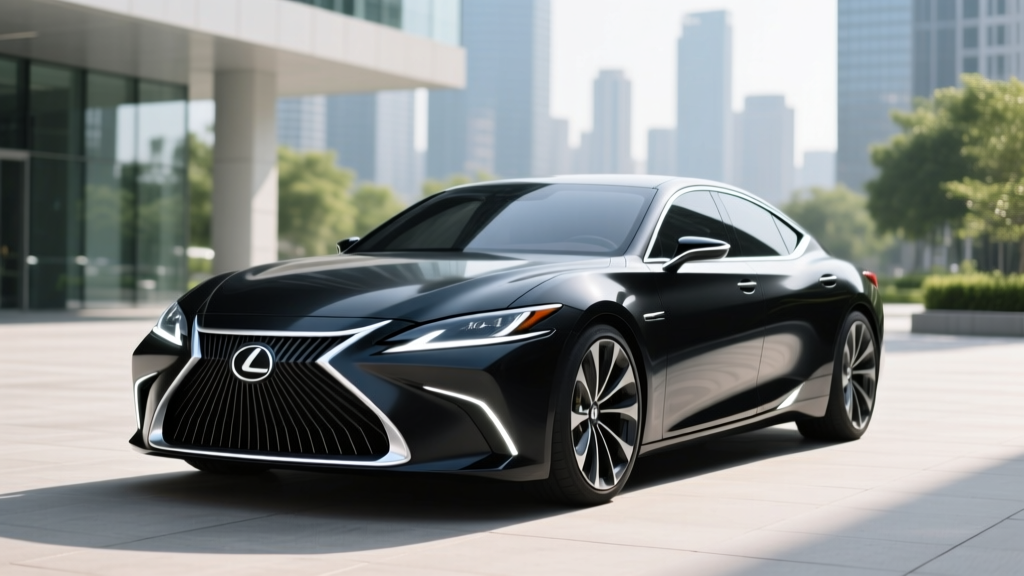
As of early 2026, Lexus has not officially announced a battery-electric version of the ES sedan for the U.S. market. The current ES lineup includes the gas-powered ES 350 (3.5L V6) and the hybrid ES 300h (2.5L four-cylinder hybrid). However, Lexus parent company Toyota has committed to a broad EV rollout under its "BEV Factory" initiative, and an electrified ES successor built on a dedicated EV platform is widely expected by the 2027–2028 model year. If you're searching for a "Lexus ES electric," here's what the data tells us so far — and what your best alternatives are today.
Why the Lexus ES Electric Matters to Buyers
The Lexus ES has been one of America's best-selling luxury sedans for over a decade, consistently moving 40,000–50,000 units annually. Its appeal is straightforward: a quiet, comfortable cabin, strong reliability ratings, and fuel economy that undercuts German rivals. For buyers transitioning from a gas ES 350 or hybrid ES 300h to an EV, a battery-electric ES would represent the path of least resistance — same dealership network, same Lexus ownership experience, zero tailpipe emissions.
The challenge is timing. Toyota's EV strategy has been cautious compared to Hyundai/Kia and Tesla. While the Lexus RZ 450e (the brand's first dedicated EV, launched for 2023) exists, it's a compact crossover — not a sedan replacement for the ES. Buyers specifically seeking a Lexus luxury electric sedan are currently left without a direct option.
What We Know: Platform, Range Estimates, and Charging
Based on Toyota's public roadmap and the upcoming "next-generation BEV" platform announced in 2023, here's what industry analysts project for a future Lexus ES electric sedan:
| Specification | Estimated Figure | Basis |
|---|---|---|
| Platform | Next-gen BEV (dedicated EV) | Toyota BEV Factory announcements |
| Battery Chemistry | NMC (bipolar prismatic) | Toyota's stated chemistry roadmap |
| Usable Battery Capacity | ~80–100 kWh | Comparable to BMW i5, Mercedes EQE |
| EPA Range (est.) | 300–370 miles | Based on platform efficiency targets |
| DC Fast Charge Rate (peak) | ~200–250 kW | 800V architecture expected |
| 10–80% Charge Time (est.) | ~20–25 minutes | Comparable segment benchmarks |
| Level 2 AC Charging | 11–22 kW onboard charger | Segment standard |
| Drivetrain | RWD standard / AWD optional | Next-gen BEV platform flexibility |
| Estimated Base MSRP | $55,000–$62,000 | Current ES 350 pricing + EV premium |
Critical caveat: These are projected figures based on Toyota's technology roadmap and competitive positioning — not confirmed specifications. Toyota has a history of conservative range estimates, so real-world EPA numbers could differ. We'll update this article when official specs are released.
Current ES Lineup vs. EV Alternatives: The Numbers
While waiting for a Lexus ES electric, buyers have two paths: purchase the current ES (gas or hybrid) or cross-shop existing electric sedans from competitors. Here's how the math works out.
| Model | Powertrain | EPA Range / MPG | 0–60 mph | Base MSRP | Est. Annual Fuel/Energy Cost |
|---|---|---|---|---|---|
| Lexus ES 350 | 3.5L V6 Gas | 25 MPG combined | 6.6 sec | $43,490 | ~$2,400 (gas) |
| Lexus ES 300h | 2.5L Hybrid | 44 MPG combined | 7.7 sec | $44,590 | ~$1,370 (gas) |
| BMW i5 eDrive40 | BEV (84.3 kWh) | 295 mi / 105 MPGe | 5.7 sec | $57,900 | ~$720 (electric) |
| Mercedes EQE 350+ | BEV (90.6 kWh) | 305 mi / 96 MPGe | 6.2 sec | $74,900 | ~$780 (electric) |
| Tesla Model S LR | BEV (100 kWh) | 402 mi / 124 MPGe | 3.1 sec | $74,990 | ~$650 (electric) |
| Hyundai Ioniq 6 LR | BEV (77.4 kWh) | 361 mi / 140 MPGe | 5.1 sec | $42,750 | ~$540 (electric) |
Source: fueleconomy.gov (EPA estimates). Annual energy costs based on 15,000 miles/year, $3.50/gallon gas and $0.16/kWh national average electricity.
The ES 300h hybrid is remarkably efficient — 44 MPG combined translates to roughly $1,370/year in fuel, which narrows the operating-cost gap with EVs considerably. An EV like the BMW i5 saves approximately $650/year in energy costs versus the ES 300h, but costs $13,000+ more upfront. The payback period on energy savings alone exceeds 15 years, meaning the EV purchase only makes financial sense if you value the driving experience, performance, or environmental benefit — or if you qualify for incentives.
Real Costs: Purchase, Charging, Insurance, and Maintenance
Let's break down a realistic 5-year ownership scenario comparing the Lexus ES 300h hybrid against a comparable electric luxury sedan (using the BMW i5 as a stand-in for what a Lexus ES electric might cost).
| Cost Category | Lexus ES 300h | BMW i5 eDrive40 (EV Proxy) |
|---|---|---|
| Purchase Price (MSRP) | $44,590 | $57,900 |
| Federal Tax Credit (§30D) | $0 (hybrid ineligible) | Up to $7,500 (if eligible)* |
| Effective Purchase Price | $44,590 | $50,400 |
| 5-Year Fuel/Energy (75,000 mi) | $6,850 | $3,600 |
| 5-Year Maintenance | $3,200 | $1,800 |
| 5-Year Insurance (avg.) | $9,500 | $11,200 |
| Estimated Depreciation (5 yr) | $18,000 | $24,500 |
| Total 5-Year Cost | $82,140 | $91,500 |
*Federal §30D tax credit eligibility depends on MSRP caps (sedans: ≤$55,000), buyer income limits (≤$150,000 single / ≤$300,000 joint), and battery critical-mineral and component sourcing requirements. The BMW i5 currently qualifies partially or fully depending on model year and sourcing updates — verify at IRS.gov before purchasing. Rules are subject to change.
Key takeaway: Even with the tax credit, the EV costs roughly $9,000 more over five years, driven primarily by higher depreciation (luxury EVs currently depreciate faster than Lexus hybrids) and higher insurance premiums. The energy and maintenance savings ($4,650 combined over 5 years) don't fully close the gap. This is the honest math that EV marketing rarely shows.
Real-World Ownership: What First-Time EV Buyers Should Know
If a Lexus ES electric arrives and you're considering it as your first EV, these practical factors will determine whether it works for your lifestyle:
Home Charging Access Is Non-Negotiable
Over 80% of EV charging happens at home. Without access to a Level 2 (240V) home charger — either in your garage or via a workplace charger — EV ownership becomes significantly more inconvenient and expensive. A Level 2 home installation typically costs $500–$2,000 depending on your electrical panel capacity, with the charger unit itself running $400–$700. If you live in an apartment or condo without dedicated parking and charging access, a hybrid like the ES 300h remains the more practical choice.
Real-World Range vs. EPA Stickers
EPA range estimates are tested under moderate conditions. Expect real-world variance:
- Highway driving (70+ mph): Subtract 10–15% from EPA range due to aerodynamic drag
- Cold weather (below 30°F): Subtract 20–30% due to battery chemistry and cabin heating demands
- Combined cold + highway: Subtract up to 35–40%
A future Lexus ES electric with a 340-mile EPA estimate might realistically deliver 250–270 miles on a cold winter highway trip. Plan road trips around this reality, not the sticker number.
Charging Speed: Peak kW Is Not Sustained kW
When manufacturers advertise "250 kW DC fast charging," that's the peak rate — typically achieved only between 10–30% State of Charge (SoC). Above 80%, the charge curve tapers dramatically to protect battery health. A realistic 10–80% session at a 250 kW-capable vehicle on a 350 kW charger takes 20–25 minutes. On older 50–150 kW public chargers (still common in many areas), expect 40–60 minutes for the same session.
Insurance Costs Are Higher for EVs
EV insurance premiums run 15–25% higher than comparable gas vehicles, driven by higher repair costs (specialized labor, expensive battery packs) and higher vehicle values. Budget an extra $300–$500/year versus a gas ES 350.
Common Misconceptions About the Lexus ES and EVs
| Myth | Fact |
|---|---|
| "The Lexus ES already has an electric version" | No. The current ES is available only as a gas V6 (ES 350) or hybrid (ES 300h). The Lexus RZ 450e is a crossover, not an ES equivalent. |
| "EVs always save money vs. hybrids" | Not necessarily. The ES 300h at 44 MPG has lower 5-year ownership costs than most luxury EVs when accounting for depreciation and insurance. |
| "All EVs qualify for the $7,500 tax credit" | Federal §30D credits require meeting MSRP caps ($55,000 for sedans), buyer income limits, and battery sourcing rules. Many luxury EVs exceed the MSRP cap. |
| "EV batteries need replacement every few years" | Modern EV batteries are warrantied for 8 years/100,000 miles (federally mandated minimum). Data shows most retain 85–90% capacity at 100,000 miles. |
| "Home charging requires a full panel upgrade" | Most homes with a 200-amp panel can support a Level 2 charger (drawing 32–48 amps) without an upgrade. A licensed electrician can confirm in a site visit. |
Decision Framework: Should You Wait or Buy Now?
Choose the Lexus ES 300h Hybrid Now If:
- You need a vehicle within the next 6 months
- You lack reliable home charging access
- You drive in extreme cold climates regularly (below 10°F)
- You want Lexus's proven reliability and resale value today
- Your annual mileage is under 12,000 miles (hybrid savings are sufficient)
- You want to stay under $50,000 purchase price
Wait for a Lexus ES Electric (or Buy a Competitor EV) If:
- You have home Level 2 charging access or can install it
- Your commute is under 80 miles round-trip (easily covered by any modern EV)
- You want lower per-mile energy costs and zero tailpipe emissions
- You can wait until 2027–2028 for an official Lexus EV sedan
- You're open to cross-shopping the BMW i5, Mercedes EQE, or Hyundai Ioniq 6 today
- You qualify for the §30D federal tax credit (income under $150K single / $300K joint)
Frequently Asked Questions
Is Lexus discontinuing the ES sedan?
No. The current-generation ES continues through at least the 2026 model year. Lexus has not announced an end date for the ES nameplate, and an electric successor would likely carry the ES branding forward rather than replace it with a new name.
Is the Lexus RZ 450e the electric equivalent of the ES?
No. The RZ 450e is a compact luxury crossover (similar in size to the Lexus NX) with 220 miles of EPA range and a starting price around $54,000. The ES is a midsize sedan with more rear legroom, a softer ride, and a different buyer profile. They serve different segments.
Will a Lexus ES electric qualify for the federal tax credit?
It depends on final pricing and battery sourcing. The §30D credit caps sedan MSRP at $55,000 and requires battery components and critical minerals to meet phased domestic-sourcing thresholds. If the ES electric starts above $55,000 (likely, given its luxury positioning), it would not qualify for the federal credit regardless of sourcing. State-level incentives may still apply — check your state's energy office for current programs.
What's the best electric alternative to the Lexus ES today?
The BMW i5 eDrive40 comes closest in spirit: a midsize luxury sedan with ~295 miles of range, a comfortable ride, and strong build quality. The Hyundai Ioniq 6 offers more range (361 mi) and efficiency (140 MPGe) at a lower price but lacks the Lexus/BMW luxury cachet. The Tesla Model S offers the most range (402 mi) and performance but has a very different interior aesthetic.
How long do Lexus hybrid batteries last compared to EV batteries?
Lexus hybrid batteries (like the ES 300h's ~1.6 kWh NiMH pack) are warrantied for 10 years/150,000 miles in most states and routinely last 150,000–200,000+ miles based on fleet data. EV traction batteries are larger (80–100 kWh) and warrantied for 8 years/100,000 miles minimum. Both chemistries have proven durable, but hybrid battery replacement costs $3,000–$5,000 versus $10,000–$20,000+ for an EV battery — though EV battery replacements are rarely needed within the warranty period.