The Short Answer on Lexus Electric Vehicles in 2026
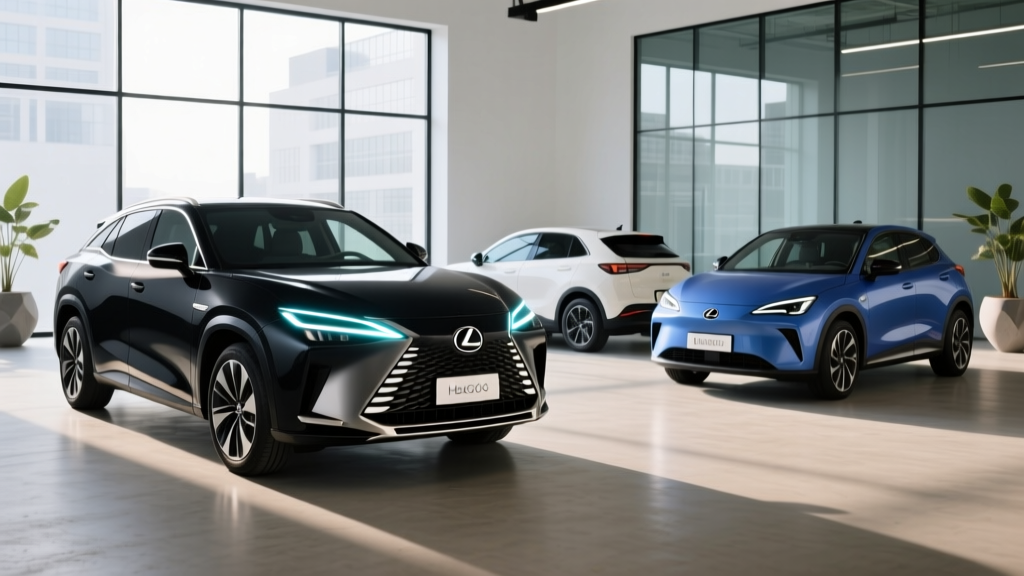
Lexus currently sells two fully electric models in the U.S. for the 2026 model year: the RZ 450e (dual-motor AWD, 220–271 miles EPA, starting around $55,150) and the RZ 300e (single-motor FWD, up to 301 miles EPA, starting around $49,950). Both ride on the e-TNGA platform shared with the Toyota bZ4X and Subaru Solterra. If you want a luxury-badge EV with a quiet cabin, strong build quality, and access to the growing NACS/Supercharger network (via adapter), the RZ line is viable — but its 288 miles max real-world highway range and lack of a front trunk (frunk) mean you should cross-shop the Genesis GV60, BMW iX, and Tesla Model Y before committing. Federal §30D tax-credit eligibility is not guaranteed on every trim due to battery-sourcing rules, so verify with your dealer and a tax professional before assuming $7,500 off.
2026 Lexus EV Lineup at a Glance
Unlike rivals such as BMW or Mercedes that field half a dozen EVs, Lexus has kept its BEV portfolio tight. Here are the hard numbers you need before stepping into a dealership:
| Model | Drivetrain | Battery (kWh usable) | EPA Range | Peak DC Charge | 10–80% Time | 0–60 mph | Starting MSRP |
|---|---|---|---|---|---|---|---|
| RZ 300e | FWD, 201 hp | 72.8 (NMC) | 301 mi (18" wheels) | ~150 kW | ~30 min | 7.0 sec | $49,950 |
| RZ 450e | AWD, 308 hp | 72.8 (NMC) | 220 mi (20") / 271 mi (18") | ~150 kW | ~30 min | 4.9 sec | $55,150 |
Source: fueleconomy.gov and Lexus USA. Note that the 20-inch wheel option on the RZ 450e costs you 51 miles of EPA range — one of the steepest wheel-size penalties in the segment, driven by higher rolling resistance and added unsprung mass.
Real-World Range vs. the EPA Sticker
EPA 301 miles (RZ 300e) — expect roughly 250–270 miles at sustained 70–75 mph highway speeds in moderate weather. In sub-freezing temperatures (below 32°F), plan on 190–220 miles due to cabin heating load and reduced battery chemistry efficiency. The RZ 450e on 20-inch wheels is the most range-sensitive: ~180 miles is realistic on a cold-weather road trip.
Lexus uses an NMC (nickel-manganese-cobalt) lithium-ion pack rather than LFP. NMC delivers better energy density and cold-weather performance than LFP, but it's also more sensitive to being held at 100% state of charge for long periods. Daily charging to 80% is the recommended practice to preserve long-term State of Health (SoH); save 100% for road-trip mornings.
Unlike Hyundai's E-GMP vehicles (Ioniq 5, EV6) which use an 800V architecture enabling 350 kW peak charging, the RZ's 400V-class system tops out near 150 kW. That means a 10–80% session takes about 30 minutes on a capable DC fast charger — perfectly acceptable for a lunch stop, but noticeably slower than the 18-minute benchmarks set by Kia and Hyundai.
Lexus EV vs. Gas and Hybrid: Cost Reality Check
The most common question from prospective Lexus EV buyers is whether going electric actually saves money versus a gas NX or an RX hybrid. Let's run a 5-year, 60,000-mile comparison using national averages.
| Cost Category (5 yr / 60k mi) | RZ 450e AWD | NX 350 AWD (gas) | RX 350h AWD (hybrid) |
|---|---|---|---|
| Purchase price (base MSRP) | $55,150 | $44,350 | $53,200 |
| Fed. §30D credit (if eligible) | −$3,750 to $7,500 | $0 | $0 |
| Fuel / electricity | $3,400 (home L2, $0.16/kWh) | $7,900 ($3.40/gal, 26 mpg) | $5,500 ($3.40/gal, 36 mpg) |
| Maintenance (est.) | $1,200 | $3,100 | $2,800 |
| Insurance (est. avg) | $9,800 | $7,500 | $8,100 |
| 5-Year Total (pre-credit) | $69,550 | $62,850 | $69,600 |
Key takeaways:
- Energy savings are real. Home charging the RZ costs roughly half what fueling the NX 350 does over five years — and the gap widens if you have solar or time-of-use rates.
- Insurance is the hidden cost. EV insurance premiums run 15–30% higher than ICE equivalents due to battery replacement exposure and specialized repair networks. Get quotes before signing.
- Tax credit is not a given. Under current IRS §30D rules, the RZ's credit amount depends on critical-mineral and battery-component sourcing thresholds, which phase stricter each year. Check the latest list at fueleconomy.gov/tax and confirm with a tax professional.
- Point-of-sale transfer is available at participating dealers — you can apply the credit as a down-payment reduction rather than waiting until tax filing.
Charging the RZ at Home and on the Road
First-time EV buyers often underestimate the infrastructure piece. Here's what ownership actually looks like.
Home Charging (Level 2)
The RZ accepts up to 11 kW on Level 2 AC (48A circuit). A full 0–100% home charge takes about 8.5 hours — easily done overnight. Expect to spend:
- Level 2 hardware: $400–$800 (ChargePoint Home Flex, Emporia, Wallbox)
- Electrician install (240V/60A circuit): $800–$2,500, assuming your panel has capacity
- Panel upgrade (if needed): $2,000–$4,500 for older homes with 100A service
Without home charging, EV ownership becomes meaningfully less convenient and more expensive per mile. If you live in an apartment or lack a dedicated parking spot with outlet access, seriously consider the RX hybrid instead.
Public DC Fast Charging
As of the 2026 model year, the RZ ships with the NACS (Tesla-style) charge port, giving native access to Tesla Superchargers — a major advantage over CCS-only rivals still reliant on Electrify America or EVgo. You can still use CCS stations via a $200–$300 adapter if needed.
| Level | Power | Miles Added per Hour | Use Case |
|---|---|---|---|
| Level 1 (120V) | ~1.4 kW | ~4 mi/hr | Emergency / trickle |
| Level 2 (240V) | up to 11 kW | ~30 mi/hr | Daily home / workplace |
| DC Fast (NACS/CCS) | up to 150 kW | ~250 mi/hr (peak) | Road trips |
The Charge-Curve Reality
Peak 150 kW only holds between roughly 10% and 45% SoC. From 45–80%, the rate tapers to 60–90 kW; above 80%, it drops further to protect the pack. Plan road-trip stops around the 10–80% window — charging from 80–100% can take as long as the 10–80% portion.
Common Misconceptions About Lexus EVs
| Myth | Fact |
|---|---|
| "The RZ gets the full $7,500 federal credit." | Credit amount depends on critical-mineral and battery-component sourcing rules under §30D; it has ranged from $3,750 to $7,500 depending on the model year and rule phase. Always verify on IRS.gov. |
| "EV batteries need replacement every 5 years." | Lexus warranties the RZ battery for 8 years / 100,000 miles against falling below 70% capacity. Real-world degradation data from the bZ4X/Solterra platform shows roughly 5–8% loss over 100k miles under normal use. |
| "Level 2 driver assist means self-driving." | Lexus Safety System+ 3.0 is SAE Level 2 — you must remain attentive, hands on or near the wheel. It does not navigate autonomously. |
| "Cold weather makes EVs unusable." | Cold reduces range 20–35%, but preconditioning the battery (via the app while plugged in) recovers much of that. Owners in MN, MT, and New England drive RZs year-round. |
| "Charging takes hours on road trips." | 10–80% in ~30 minutes on a 150 kW+ charger — roughly a meal break. Plan stops at Superchargers or 350 kW-capable stations. |
SAE Automation Level reminder: The RZ's Lexus Safety System+ 3.0 (adaptive cruise, lane centering, emergency braking) is SAE Level 2. The driver must supervise at all times. Only Waymo- and Zoox-class robotaxis operating in geofenced zones qualify as Level 4.
Who Should Buy a 2026 Lexus EV — and Who Shouldn't
Choose the RZ 300e if:
- You want maximum range (301 mi EPA) and lowest entry price.
- Your driving is mostly city/suburban with occasional road trips under 250 miles.
- You value cabin quietness and Lexus dealer service over outright performance.
Choose the RZ 450e if:
- You need AWD for snow, mountain passes, or towing (1,500-lb capacity).
- You want 308 hp and sub-5-second 0–60 times.
- You can accept the 271-mile EPA range with 18-inch wheels.
Look elsewhere if:
- You regularly drive 300+ miles between charging stops — consider the BMW iX xDrive50 (324 mi) or Rivian R1S.
- You need a third row or serious cargo volume — the RZ's 35 cu-ft rear space trails larger SUVs.
- You don't have reliable home or workplace charging — an RX 350h hybrid (36 mpg combined) will be far less stressful.
- Fastest DC charging is a priority — Hyundai Ioniq 5 and Kia EV6 recharge 10–80% in ~18 minutes.
Ownership Considerations Most Buyers Overlook
- Tires wear faster. EVs are heavier and deliver instant torque; expect 30,000–40,000 miles on OEM tires versus 50,000+ on an NX. Budget $1,200–$1,800 for a replacement set.
- Regenerative braking reduces brake pad wear dramatically — many EV owners see 80,000+ miles on original pads.
- Software updates are OTA (over-the-air), but major firmware recalls still require dealer visits.
- Resale value for luxury EVs has been volatile. Lease protection (Lexus often offers strong lease residuals) can shield you from depreciation swings.
- No frunk. The e-TNGA platform uses the front bay for power electronics, so all cargo goes in the rear — unlike the Tesla Model Y's 4.1 cu-ft frunk.
Frequently Asked Questions
Is Lexus releasing more electric vehicles after 2026?
Lexus has announced plans for a full EV lineup by 2030, including a next-generation flagship sedan (previewed by the LF-ZC concept) and larger SUVs. As of early 2026, only the RZ 300e and RZ 450e are on sale. Treat any "2027 model" specs you see online as preliminary.
Can I use Tesla Superchargers with a Lexus RZ?
Yes. The 2026 RZ uses the NACS connector natively, giving direct access to the Supercharger network — currently the most reliable public fast-charging infrastructure in North America.
How long will the RZ battery last?
Lexus warranties the traction battery for 8 years / 100,000 miles against capacity dropping below 70%. Based on data from the shared e-TNGA platform, real-world degradation averages 5–8% over 100,000 miles with proper charging habits (avoiding prolonged 100% SoC and frequent DC fast charging to full).
Does the RZ qualify for the $7,500 federal tax credit?
It depends on your income (AGI caps: $150k single / $300k joint), the vehicle's MSRP (SUV cap is $80,000 — RZ qualifies), and battery-sourcing requirements that tighten annually. Check the current status at fueleconomy.gov and consult a tax professional.
EV or hybrid: which Lexus makes more sense for me?
If you have home charging, a mostly predictable commute, and road trips under 250 miles — the RZ EV will be cheaper to fuel and smoother to drive. If you lack home charging, frequently drive 400+ miles between stops, or live in a region with sparse DC fast chargers — the RX 350h hybrid delivers 36 mpg with zero range anxiety.
What's the real cost to charge at home vs. public chargers?
Home Level 2 at $0.16/kWh costs roughly $11.50 for a full 72.8 kWh pack (~300 miles). Public DC fast charging averages $0.35–$0.55/kWh, or $25–$40 for the same fill. Road-trip fueling is more expensive than home charging but still typically undercuts gasoline per mile.
Bottom Line
The 2026 Lexus RZ 300e and RZ 450e are competent, refined luxury EVs — not segment leaders on range or charging speed, but strong on build quality, cabin isolation, and NACS network access. They're best suited to buyers with home charging, mostly regional driving patterns, and a preference for Lexus dealer relationships over tech-first EV brands. Cross-shop carefully, verify tax-credit eligibility before signing, and get an insurance quote early — those three steps will determine whether your RZ ownership experience is genuinely cheaper than the hybrid alternative.