Quick Answer: Which Lexus Electric SUV Should You Consider?
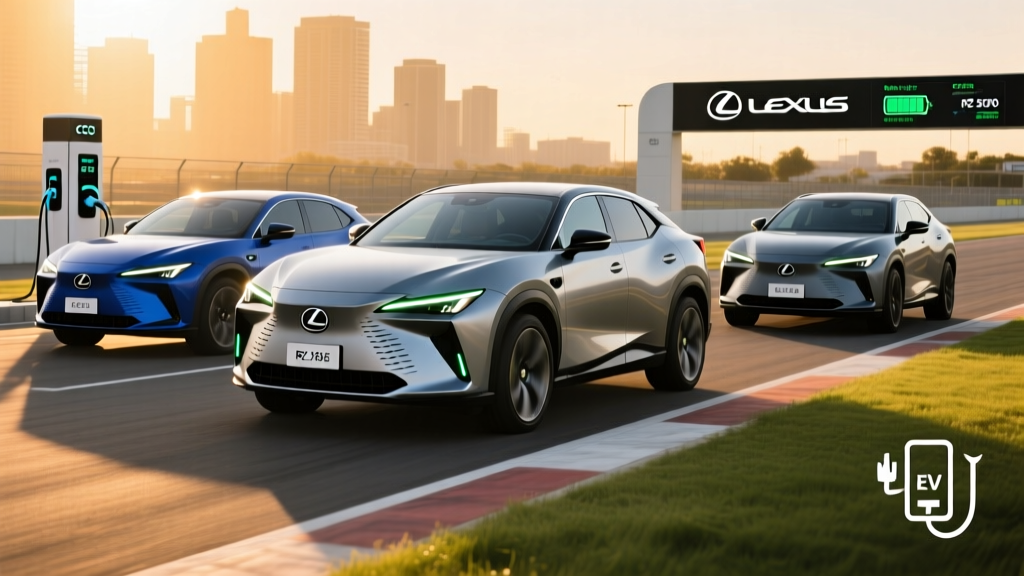
Lexus currently offers two battery-electric SUVs for 2026: the single-motor RZ 300e (EPA-estimated 266 miles of range, starting around $44,900) and the dual-motor RZ 450e (EPA-estimated 220–271 miles depending on wheel size, starting around $53,900). Both share a 71.4 kWh (usable) battery and DC fast-charge at up to 150 kW. The RZ 450e qualifies for the full $7,500 federal tax credit under current §30D rules when leased; purchase eligibility depends on battery-sourcing requirements that shift frequently. If you want maximum range and don't need AWD, the RZ 300e is the value pick. If you want all-weather traction and stronger acceleration (0–60 in ~5.0 seconds), the RZ 450e is the better choice — just spec the 18-inch wheels for optimal range.
2026 Lexus Electric SUV Lineup at a Glance
Lexus has staked its EV strategy on the RZ, a dedicated battery-electric platform shared with the Toyota bZ4X and Subaru Solterra. Unlike some rivals that stuff massive batteries into their SUVs to chase 350+ mile EPA numbers, Lexus has prioritized ride quality, cabin refinement, and build consistency over headline range. That's a deliberate trade-off — and one that either works for your driving pattern or doesn't.
| Spec | 2026 RZ 300e | 2026 RZ 450e (18" wheels) | 2026 RZ 450e (20" wheels) |
|---|---|---|---|
| Drivetrain | FWD, single motor | AWD, dual motor (DIRECT4) | AWD, dual motor (DIRECT4) |
| Horsepower | 201 hp | 308 hp | 308 hp |
| 0–60 mph | ~7.4 sec | ~5.0 sec | ~5.0 sec |
| Battery (usable) | 71.4 kWh (NMC) | 71.4 kWh (NMC) | 71.4 kWh (NMC) |
| EPA Range | 266 mi | 271 mi | 220 mi |
| Combined MPGe | 118 MPGe | 107 MPGe | 102 MPGe |
| Peak DC Fast Charge | 150 kW | 150 kW | 150 kW |
| 10–80% DC Charge | ~30 min | ~30 min | ~30 min |
| Level 2 Charge Rate | 7.4 kW | 7.4 kW | 7.4 kW |
| Base MSRP | ~$44,900 | ~$53,900 | ~$55,900 |
| Battery Warranty | 8 yr / 100,000 mi | 8 yr / 100,000 mi | 8 yr / 100,000 mi |
Sources: fueleconomy.gov, Lexus USA press specifications. MSRP figures are approximate base prices before destination; actual pricing may vary by model year and trim.
Real-World Range Reality Check
The RZ 450e's EPA sticker reads 271 miles on 18-inch wheels — but real-world results depend heavily on conditions. In highway driving at 70–75 mph, expect roughly 230–245 miles in mild weather. In sub-freezing temperatures (below 32°F), NMC batteries lose 20–30% of range, dropping effective range to 180–210 miles. The RZ does include a heat pump (standard on most trims), which mitigates cold-weather cabin heating losses, but battery chemistry still imposes a winter penalty. If your daily commute is under 60 miles round-trip, this is academic. If you regularly drive 200+ miles in winter, the margin gets tight.
Lexus RZ vs. Gas and Hybrid Alternatives
The most common cross-shopping question: why buy an RZ when Lexus makes excellent hybrid SUVs like the RX 350h (36 MPG combined) or NX 350h (39 MPG combined)? And how does the RZ compare to the gas-only RX 350 (26 MPG combined)? Let's run the numbers.
| Metric | RZ 450e (AWD) | RX 350h (AWD Hybrid) | RX 350 (AWD Gas) |
|---|---|---|---|
| EPA Economy | 107 MPGe | 36 MPG combined | 26 MPG combined |
| Base MSRP | ~$53,900 | ~$53,500 | ~$51,000 |
| Fed. Tax Credit (purchase) | Up to $7,500* | None | None |
| Effective Price (after credit) | ~$46,400 | ~$53,500 | ~$51,000 |
| Fuel/Energy Cost (15,000 mi/yr) | ~$660** | ~$1,460 | ~$2,020 |
| Annual Maintenance Est. | ~$300 | ~$550 | ~$650 |
| 5-Year Fuel + Maint. Cost | ~$4,800 | ~$10,050 | ~$13,350 |
| CO₂ Tailpipe Emissions | Zero | Low | Standard |
*Federal §30D credit eligibility depends on battery sourcing, buyer income caps ($150K single / $300K joint), and MSRP caps ($80K for SUVs). Credit can be transferred to the dealer as a point-of-sale rebate. Verify current rules at IRS.gov.
**Based on $0.16/kWh national average for home charging. Public DC fast charging costs significantly more ($0.30–$0.50/kWh).
The math is clear: if you qualify for the full credit and charge primarily at home, the RZ 450e undercuts both the hybrid and gas RX on total 5-year cost — by roughly $5,200 versus the hybrid and $8,500 versus the gas model. But those savings assume home charging access and credit eligibility. Remove either, and the hybrid RX 350h becomes the lower-risk financial play.
Charging the Lexus RZ: What You Actually Need
The RZ's 150 kW peak DC fast-charge rate is adequate but not class-leading. Competitors like the Hyundai Ioniq 5 (peak 240 kW on 800V architecture) and Tesla Model Y (peak ~250 kW at V3 Superchargers) charge meaningfully faster. Here's what RZ charging looks like in practice:
| Charging Level | Power | Speed (mi/hr added) | Typical Use Case |
|---|---|---|---|
| Level 1 (120V household) | ~1.4 kW | ~3–4 mi/hr | Emergency / overnight trickle |
| Level 2 (240V home) | 7.4 kW | ~22–25 mi/hr | Daily home charging (full charge ~10 hr) |
| DC Fast Charge | Up to 150 kW | ~150+ mi/hr (peak) | Road trips, 10–80% in ~30 min |
The Charge Curve Matters More Than Peak kW
The RZ peaks at 150 kW only in the 10–30% state-of-charge window. From 30–60%, it sustains roughly 100–120 kW. Above 80%, it tapers sharply to ~40 kW to protect the NMC cells. This means a 10–80% session takes about 30 minutes, but pushing from 80–100% adds another 25+ minutes. On road trips, plan to charge to 80% and go — it's faster than waiting for a full battery.
Home Charging Setup Costs
If you're buying an RZ, budget for a Level 2 home charger installation. Here's what to expect:
| Item | Typical Cost Range |
|---|---|
| Level 2 charger (hardware, 32–48A) | $350–$700 |
| Electrician labor (240V circuit, 50–60A breaker) | $500–$1,500 |
| Permit & inspection | $50–$200 |
| Electrical panel upgrade (if needed, 200A service) | $1,500–$3,500 |
| Total (no panel upgrade) | $900–$2,400 |
The RZ uses a J1772 connector for Level 1/2 charging and a CCS1 connector for DC fast charging. It does not natively support Tesla's NACS connector, though adapters are becoming available. You can charge at Electrify America, EVgo, ChargePoint, and most non-Tesla networks without issue. For Tesla Supercharger access, a NACS-to-CCS adapter is required — check Lexus's official guidance for approved adapters.
Ownership Costs: The Full 5-Year Picture
Let's break down what owning an RZ 450e actually costs over five years and 75,000 miles, compared to the closest gas alternative.
| Cost Category | RZ 450e (AWD, Premium) | RX 350 (AWD, Premium) |
|---|---|---|
| Purchase Price (MSRP) | $53,900 | $51,000 |
| Federal Tax Credit | –$7,500 (if eligible) | $0 |
| State/Local Incentives | Varies (check DSIRE) | $0 |
| Home Charger Install | $1,500 | $0 |
| Fuel/Energy (75,000 mi) | $3,300 | $10,100 |
| Maintenance (75,000 mi) | $1,500 | $3,250 |
| Insurance (5-yr est.) | $9,500 | $7,800 |
| Estimated Depreciation | $22,000 | $18,500 |
| Total 5-Year Cost | ~$84,200 | ~$90,650 |
Insurance estimates are national averages; EV premiums run 15–25% higher than gas equivalents due to repair costs and battery replacement risk. Depreciation figures are estimates based on current EV resale trends — check Kelley Blue Book for real-time projections.
The RZ wins on operating costs but loses ground on insurance and depreciation. Net result: roughly $6,400 in savings over 5 years if you qualify for the federal credit. If you don't qualify (income too high, or battery sourcing fails the §30D test), the cost advantage shrinks or disappears entirely.
Common Misconceptions About Lexus Electric SUVs
| Myth | Fact |
|---|---|
| "The RZ is just a rebadged Toyota bZ4X." | While they share the e-TNGA platform and battery, the RZ has different suspension tuning, interior materials, sound insulation, and Lexus's DIRECT4 torque-vectoring AWD on the 450e. The driving experience and cabin quality are meaningfully different. |
| "EV batteries need replacing every few years." | Lexus warranties the RZ battery for 8 years/100,000 miles against capacity loss below 70%. Real-world NMC degradation data from similar Toyota/Lexus platforms shows roughly 10–12% capacity loss at 100,000 miles with normal use. Full battery replacement (if ever needed) runs $12,000–$18,000 out of warranty. |
| "You can't road-trip an RZ." | You can, with planning. The CCS network (Electrify America, EVgo) covers major US highways. A 300-mile trip requires one ~25-minute charging stop. The limitation is rural routes with sparse CCS infrastructure — check PlugShare before committing to remote road trips. |
| "Leasing avoids the tax credit hassle." | True. Under the commercial vehicle loophole, leased EVs can pass through a $7,500 credit regardless of sourcing or income caps — the lessor claims it and typically applies it as a lease cap-cost reduction. Many RZ buyers find leasing the simplest path to the incentive. |
| "The RZ can't tow anything." | The RZ 450e is rated for up to 2,000 lbs of towing capacity — enough for a small utility trailer or a pair of dirt bikes, but not a boat or camper. The RZ 300e is not rated for towing. |
Decision Framework: Is a Lexus Electric SUV Right for You?
Choose the Lexus RZ 300e if:
- Your daily driving is under 80 miles round-trip
- You live in a mild climate (rare sub-20°F winters)
- You have reliable Level 2 home charging
- You want the lowest entry price in the Lexus EV lineup
- You don't need AWD
Choose the Lexus RZ 450e if:
- You need AWD for snow, rain, or mountain driving
- You want stronger acceleration (5.0 sec 0–60 vs. 7.4 sec)
- You regularly carry passengers and cargo (DIRECT4 improves traction under load)
- You can spec 18-inch wheels (271 mi range) over 20-inch (220 mi range)
Choose the RX 350h Hybrid Instead if:
- You lack home charging access and rely on street parking
- You regularly drive 300+ miles in remote areas with sparse charging
- You live in a region with extreme winters and can't tolerate range loss
- You don't qualify for the federal tax credit and want lower upfront cost
- You want the longest possible range without planning charging stops (400+ mi)
What First-Time EV Buyers Should Know Before Purchasing an RZ
If this is your first electric vehicle, a few ownership realities are worth internalizing before you sign:
1. Home charging is non-negotiable for most owners. Public DC fast charging at $0.35–$0.50/kWh costs nearly as much per mile as gasoline. The economic case for the RZ collapses if you can't install a Level 2 charger at home (or at work). Before purchasing, get a quote from a licensed electrician for a 240V/50A circuit near your parking spot.
2. Preconditioning matters. The RZ lets you precondition the battery via the Lexus app before arriving at a DC fast charger. This warms the cells to optimal temperature and can shave 5–8 minutes off your 10–80% charge time, especially in cold weather. Use it every time.
3. The Lexus Safety System+ 3.0 is Level 2, not self-driving. The RZ comes with adaptive cruise, lane-centering, and automatic emergency braking. This is a driver-assist system — you must keep your hands on the wheel and eyes on the road at all times. It does not navigate autonomously.
4. Check your tax credit eligibility before committing. The §30D credit has three moving targets: buyer income caps ($150K single / $300K joint AGI), MSRP caps ($80K for SUVs), and battery component/critical mineral sourcing requirements that change annually. Use the IRS's clean vehicle credit tool at fueleconomy.gov to verify eligibility for the specific VIN you're considering.
5. Plan for insurance costs. EV insurance premiums average 15–25% higher than comparable gas vehicles. Get a quote from your insurer before purchasing — the $6,400 five-year savings we calculated above assumes average EV premiums; your actual rate could narrow the gap.
Frequently Asked Questions
Does the Lexus RZ qualify for the $7,500 federal tax credit?
It depends on how you acquire it and current sourcing rules. If you purchase, eligibility hinges on battery component and critical mineral sourcing requirements under §30D, plus your income and the MSRP cap. These sourcing rules have been in flux — always verify on the IRS clean vehicle portal before buying. If you lease, the dealer/lessor can typically pass through the $7,500 credit as a cap-cost reduction regardless of sourcing or income limits, making leasing the most reliable path to the incentive.
What is the real-world range of the Lexus RZ 450e?
The EPA rates the RZ 450e at 271 miles on 18-inch wheels and 220 miles on 20-inch wheels. In real-world mixed driving at moderate speeds, expect 240–260 miles (18") or 195–215 miles (20"). In cold weather below freezing, subtract 20–30%. On sustained highway driving at 75+ mph, subtract 10–15%.
How long does it take to charge the Lexus RZ at home?
On a Level 2 home charger (240V, 32A/7.4 kW), a full 0–100% charge takes approximately 10–11 hours. Most owners plug in overnight and wake to a full battery. On a standard 120V outlet (Level 1), a full charge takes over 50 hours — only practical for emergency trickle charging or very low daily mileage.
Is the Lexus RZ good in snow and ice?
The RZ 450e with DIRECT4 AWD performs well in snow, with independent motors enabling precise front/rear torque distribution. Pair it with dedicated winter tires for best results. The RZ 300e is FWD only — adequate in light snow with good tires, but not ideal for heavy winter conditions. Cold weather will reduce range by 20–30%, so factor that into winter trip planning.
What is the battery replacement cost for the Lexus RZ?
Out-of-warranty battery replacement for the RZ is estimated at $12,000–$18,000 based on current pricing for similar 71–72 kWh NMC packs. However, the battery is warranted for 8 years/100,000 miles (capacity retention above 70%), and real-world data from Toyota/Lexus NMC platforms suggests most packs retain 85–90% capacity at 100,000 miles. Full replacement within the first decade of ownership is uncommon.
Can I charge a Lexus RZ at a Tesla Supercharger?
Not natively. The RZ uses a CCS1 port for DC fast charging. However, as Tesla opens its Supercharger network to non-Tesla vehicles, CCS-to-NACS adapters are becoming available. Lexus has not officially endorsed a specific adapter as of early 2026 — check with your dealer for the latest compatibility guidance before relying on Supercharger access.
How does the RZ compare to the Tesla Model Y?
The Model Y Long Range AWD offers significantly more range (EPA ~330 mi), faster DC charging (~250 kW peak), and access to the Supercharger network — all at a similar or lower price point. Where the RZ wins is cabin materials, ride comfort, and the Lexus dealer experience. If range and charging speed are your top priorities, the Model Y is the stronger EV. If build quality, quietness, and brand loyalty matter more, the RZ is competitive.