Quick Answer: What Is Level 2 Electric Charging?
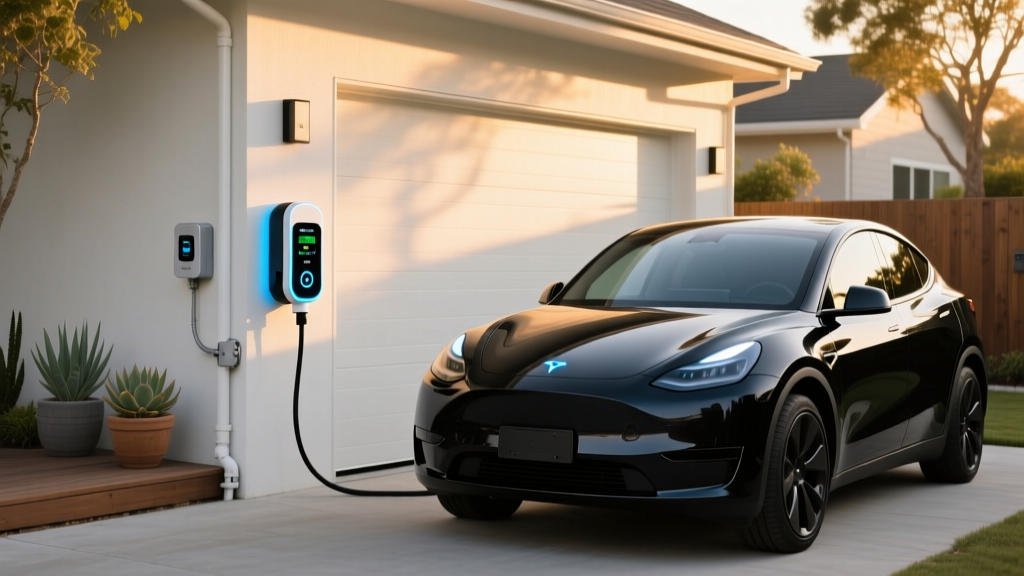
Level 2 electric charging uses a 240-volt circuit (the same as an electric dryer) to deliver between 6 kW and 19.2 kW of power to your EV. A typical 48-amp (11.5 kW) Level 2 charger adds roughly 35–45 miles of range per hour of charging, compared to just 3–5 miles per hour from a standard 120V Level 1 outlet. For most EV owners in 2026, a Level 2 home charger is the single most impactful ownership upgrade — it eliminates daily charging friction, preserves battery health through moderate-speed charging, and costs between $500 and $2,500 fully installed depending on your electrical panel's capacity and proximity to the charging location.
Level 2 Electric Charging: Speeds, Connectors, and What You Need
The phrase "electric 2" in the EV world almost always refers to Level 2 charging — the 240-volt AC charging standard that bridges the gap between slow Level 1 wall outlets and high-power DC fast charging stations. Understanding the distinction between kW (power, or how fast energy flows) and kWh (energy, or how much your battery stores) is essential here. A 48-amp Level 2 charger delivering 11.5 kW for 8 hours puts roughly 92 kWh into your vehicle — enough to fully replenish even the largest consumer EV batteries like the Ford F-150 Lightning's 131 kWh extended-range pack.
| Charging Level | Voltage | Max Power (kW) | Miles of Range Added Per Hour | Typical Use Case |
|---|---|---|---|---|
| Level 1 | 120V AC | 1.4 kW | 3–5 mi/hr | Overnight trickle; PHEVs or low-mileage drivers |
| Level 2 (16A) | 240V AC | 3.8 kW | 12–16 mi/hr | Basic home charging; smaller batteries |
| Level 2 (32A) | 240V AC | 7.7 kW | 25–32 mi/hr | Most common home setup |
| Level 2 (48A) | 240V AC | 11.5 kW | 35–45 mi/hr | Optimal for 300+ mi range EVs |
| Level 2 (80A) | 240V AC | 19.2 kW | 55–70 mi/hr | Heavy-duty / high-capacity batteries |
| DC Fast (150 kW) | 400–800V DC | 150 kW | ~500+ mi/hr (peak) | Road trips; 10–80% in 20–35 min |
The miles-per-hour figures above assume an average EV efficiency of 3–3.5 miles per kWh (roughly 100–110 MPGe combined). Vehicles like the Hyundai Ioniq 6 (4.1 mi/kWh) will see higher per-hour gains, while heavier trucks like the Rivian R1T (2.2–2.5 mi/kWh) will see lower ones.
Connector compatibility in 2026: The North American Charging Standard (NACS), developed by Tesla and now adopted by virtually every major automaker, has largely replaced CCS1 as the default connector. Ford, GM, Rivian, Hyundai/Kia, BMW, and others transitioned to NACS ports beginning in 2025. If you're buying a new EV in 2026, it almost certainly has a NACS port. If you own a 2023–2024 CCS-equipped vehicle, adapters are widely available. Most Level 2 home chargers now ship with NACS connectors or offer them as a swap option.
Level 2 Charger Installation Costs: What You'll Actually Pay
Home Level 2 installation costs vary dramatically based on your electrical panel's age, available amperage, and the distance from panel to charger location. Below is a realistic 2026 cost breakdown based on national electrician averages.
| Component | Low End | High End | Notes |
|---|---|---|---|
| Level 2 charging unit (hardwired, 48A) | $350 | $750 | Brands: ChargePoint Home Flex, Emporia Vue, Wallbox Pulsar Plus, Tesla Wall Connector |
| Electrician labor (standard install) | $400 | $1,200 | Varies by region; panel proximity matters most |
| Permit & inspection | $50 | $300 | Required in most jurisdictions |
| Electrical panel upgrade (if needed) | $1,500 | $4,000 | Older 100A panels may need upgrade to 200A |
| Conduit/wiring (long runs, 50+ ft) | $200 | $800 | Copper wire cost + labor for extended runs |
| Total (no panel upgrade) | $800 | $2,250 | Most common scenario for modern homes |
| Total (with panel upgrade) | $2,300 | $6,250 | Older homes with 100A service |
Critical panel consideration: A 48-amp continuous load requires a 60-amp breaker (NEC code mandates 125% derating for continuous loads). Your electrical panel needs at least 60 amps of unused capacity. A licensed electrician will perform a load calculation — if your panel is near capacity, you may need a panel upgrade, a load-management device (like the Emporia V2 with automatic derating), or to install a lower-amperage 32-amp charger on a 40-amp breaker instead.
Federal incentives: The Alternative Fuel Vehicle Refueling Property Credit (§30C) was extended and offers up to 30% of the cost of home charging equipment and installation, capped at $1,000 per year, through 2026. However, this credit is subject to census-tract eligibility requirements — you must live in a qualifying non-urban or low-income census tract. Check the IRS §30C page for current eligibility maps. Some states and utilities offer additional rebates of $200–$500 on top of federal incentives.
Level 2 Electric Charging vs. Gas Fueling: The Real Cost Comparison
The economic case for Level 2 home charging becomes clear when you compare per-mile energy costs against gasoline. Using national averages for 2026:
| Vehicle Type | Efficiency | Energy/Fuel Cost | Annual Cost | Cost Per Mile |
|---|---|---|---|---|
| EV — home Level 2 (national avg electricity) | 3.2 mi/kWh (31.25 kWh/100mi) | $0.16/kWh | $750 | $0.050 |
| EV — time-of-use off-peak rate | 3.2 mi/kWh | $0.09/kWh | $422 | $0.028 |
| EV — public DC fast charging only | 3.2 mi/kWh | $0.40/kWh | $1,875 | $0.125 |
| Gas sedan (30 MPG combined) | 30 MPG | $3.50/gal | $1,750 | $0.117 |
| Gas SUV (22 MPG combined) | 22 MPG | $3.50/gal | $2,386 | $0.159 |
| Hybrid (50 MPG combined) | 50 MPG | $3.50/gal | $1,050 | $0.070 |
Source: Electricity rates from EIA monthly data; fuel economy from fueleconomy.gov.
The data is unambiguous: Level 2 home charging at residential rates saves $1,000–$1,600 per year versus a comparable gas vehicle. Over a 5-year ownership period, that's $5,000–$8,000 in energy savings alone — often enough to offset the higher purchase price of an EV and the charger installation cost combined. However, if you rely exclusively on public DC fast charging at $0.35–$0.48/kWh, your costs can actually exceed those of an efficient hybrid.
Maintenance savings add up too. EVs eliminate oil changes, transmission fluid, spark plugs, and exhaust system repairs. According to Consumer Reports' long-term data, EVs cost roughly 50% less to maintain over their lifetime compared to gas vehicles — approximately $0.061/mile vs. $0.101/mile for maintenance. That's another $600/year at 15,000 miles.
Real-World Ownership: What First-Time EV Buyers Must Know
Level 2 home charging transforms the EV ownership experience, but it isn't universally accessible. Here's what to evaluate honestly before committing:
Home Charging Access Assessment
- Garage or dedicated parking spot with panel access: Ideal scenario. A hardwired 48A charger in a garage offers weather protection, security, and convenience.
- Outdoor parking near electrical panel: Viable with a weather-rated (NEMA 4) charging unit and proper conduit. Adds $100–$300 for outdoor-rated components.
- Apartment/condo without dedicated parking: This is where Level 2 becomes challenging. You'll depend on building-installed shared chargers, workplace charging, or public infrastructure. Some states now have "right to charge" laws that prevent HOAs from blocking installation, but shared-circuit management in multi-unit buildings adds complexity.
- Street parking only: Level 2 home charging is not realistic. You'll need reliable public Level 2 or DC fast charging within a short walk. Factor in higher per-kWh costs and scheduling inconvenience.
Climate and Driving Pattern Realities
Cold-weather range loss is real. Lithium-ion batteries lose 20–40% of their EPA-rated range in sustained sub-freezing temperatures, primarily because energy is diverted to cabin heating and battery thermal management. A Level 2 charger at home mitigates this significantly: preconditioning your EV while plugged in warms the battery and cabin using grid power rather than battery power, preserving your range for actual driving.
For context: a Tesla Model Y Long Range with a 310-mile EPA rating might deliver only 195–230 miles in 15°F weather on the highway. But if you precondition on Level 2 power before departure, you recover much of that loss for the first 30–60 miles.
Driving pattern match: If your daily driving is under 60 miles round-trip (as it is for ~75% of American commuters), even a modest 32-amp Level 2 charger replenishes your daily usage in under 2 hours. The anxiety around range evaporates with consistent home charging.
EV vs. Gas vs. Hybrid: A Practical Decision Framework
The choice between a battery-electric vehicle (BEV), a plug-in hybrid (PHEV), a conventional hybrid (HEV), or a gas vehicle depends on your specific situation — not ideology.
| Factor | BEV (Full Electric) | PHEV (Plug-in Hybrid) | HEV (Hybrid) | Gas Vehicle |
|---|---|---|---|---|
| Example 2026 model | Chevrolet Equinox EV | Toyota RAV4 Prime | Toyota RAV4 Hybrid | Toyota RAV4 Gas |
| Base MSRP | $33,600 | $43,690 | $32,350 | $29,250 |
| EPA electric range | 315 mi | 42 mi | N/A | N/A |
| MPG / MPGe | 114 MPGe | 94 MPGe / 38 MPG | 39 MPG | 30 MPG |
| Home charging needed? | Essential | Recommended (Level 2) | No | No |
| Annual fuel cost (15k mi) | $750 (home L2) | $600–$1,100 | $1,350 | $1,750 |
| Federal tax credit (§30D) | Up to $7,500 | Up to $7,500 | $0 | $0 |
| Maintenance (annual) | ~$450 | ~$700 | ~$700 | ~$900 |
Decision Framework: Which Electrified Vehicle Is Right for You?
- Choose a BEV with Level 2 home charging if: You have garage/outdoor parking with panel access, drive under 250 miles daily, want the lowest per-mile operating cost, and your household has a second vehicle or reliable DC fast charging for road trips. Best for: suburban homeowners, commuters, two-car households.
- Choose a PHEV if: You want electric-only commuting (25–45 miles) but need gas-engine flexibility for long trips or lack consistent charging access. Best for: single-car households, apartment dwellers with workplace charging, frequent road-trippers.
- Choose an HEV (conventional hybrid) if: You have no home charging access, live in an apartment, frequently drive in extreme cold, or want zero behavioral change from gas ownership while still cutting fuel costs 25–40%. Best for: urban apartment dwellers, rideshare drivers, cold-climate drivers without garages.
- Stick with gas if: You drive under 8,000 miles/year (low fuel spend makes EV premium hard to justify), regularly tow heavy loads in remote areas, or your budget is under $25,000 and used EV options don't meet your needs.
Common Level 2 Charging Misconceptions — Fact vs. Fiction
| Myth | Fact (with data) |
|---|---|
| "Level 2 charging degrades the battery faster than Level 1" | Modern EVs manage charge rates through thermal systems. Level 2 at 7–11.5 kW is well within safe C-rates for all production EV batteries. Long-term degradation data from Recurrent Automotive shows negligible difference between L1 and L2 charging for battery health over 100,000+ miles. What matters more is avoiding prolonged 100% SoC storage and extreme heat. |
| "I need a Tesla-specific charger for a Tesla" | Since Tesla opened the NACS standard, any NACS-equipped Level 2 charger works with Tesla vehicles. The Tesla Wall Connector is excellent but not exclusive. ChargePoint, Emporia, and Wallbox all offer NACS-compatible units. |
| "Level 2 requires a 200-amp electrical panel" | A 48A charger requires a 60A breaker, which needs a panel with at least 60A of spare capacity. Many 100A panels can accommodate this if existing loads are low. A 32A charger on a 40A breaker works on even modest panels. An electrician's load calculation is the definitive answer. |
| "I should charge to 100% every night" | For NMC/NCA battery chemistry, daily charging to 80% is optimal for longevity. LFP batteries (found in base-model Tesla Model 3/Y, some Ford models) can be charged to 100% daily without concern. Check your specific battery chemistry — your vehicle's settings menu usually allows you to set a charge limit. |
| "Public Level 2 chargers are always reliable" | J.D. Power's 2025 EV Experience Index found public Level 2 satisfaction averaged 661/1,000, with common complaints including broken connectors, payment failures, and occupied spots. Home Level 2 charging eliminates all of these friction points. |
| "Level 2 is too expensive to install" | With equipment at $350–$750, installation at $400–$1,200, and a potential §30C federal credit of up to $1,000, many homeowners net under $500 for a complete Level 2 setup. The annual fuel savings of $1,000+ typically pay back the investment within the first year. |
Choosing the Right Level 2 Charger for Your EV in 2026
Not all Level 2 chargers are equal. Key specs to evaluate:
- Amperage: Match your charger to your panel capacity and your EV's onboard charger limit. Most 2026 EVs accept 11.5 kW (48A) on Level 2, but some (like the base Nissan Ariya) cap at 7.7 kW. Installing a 48A charger for a 32A-capable car is fine — the car draws only what it needs.
- Hardwired vs. plug-in (NEMA 14-50): Hardwired units deliver full 48A and are more reliable. Plug-in 14-50 outlets are limited to 40A continuous (NEC code) and have known reliability concerns if the receptacle quality is low. For maximum performance, hardwire.
- Cable length: 18–25 feet is standard. If your charge port location varies (e.g., Tesla rear-quarter vs. Ford front-fender), get at least 23 feet.
- Smart features: Wi-Fi connectivity enables scheduled charging (to exploit off-peak electricity rates), energy monitoring, and remote start/stop. Worth the $50–$100 premium over "dumb" chargers.
- Load sharing: If you have two EVs and one 60A circuit, chargers like the Emporia V2 or Tesla Wall Connector can dynamically split available amperage between two units — no panel upgrade needed.
Recommended Level 2 Chargers (2026)
- Emporia V2 (48A, hardwired): ~$399. Best value; excellent energy monitoring; load-sharing capable. Requires professional hardwiring.
- ChargePoint Home Flex (50A, plug-in or hardwired): ~$599. NACS and J1772 options; robust app; UL-listed. Flexible installation.
- Tesla Wall Connector (48A, hardwired): ~$475. NACS native; 24-foot cable; power-sharing with multiple units. Works with all NACS vehicles.
- Wallbox Pulsar Plus (48A, hardwired): ~$549. Compact form factor; solar-integration capable; good app ecosystem.
Frequently Asked Questions: Level 2 Electric Home Charging
Can I install a Level 2 charger myself?
The physical mounting and Wi-Fi setup, yes. The electrical work — running 6-gauge copper wire, installing a 60A breaker, pulling permits — should be done by a licensed electrician. DIY electrical work on 240V circuits carries fire and code-violation risk, and most jurisdictions require a permit and inspection for new circuits over 30 amps.
How long does Level 2 installation take?
A straightforward install (panel in the garage, charger on the adjacent wall) takes 2–4 hours. Longer wire runs, conduit through walls, or panel upgrades can extend this to a full day or two. Expect the electrician to schedule a separate inspection visit from your local building department.
Will a Level 2 charger increase my home's resale value?
Real estate data from Redfin and Zillow suggests homes with EV charging infrastructure sell for 1–3% more and attract more buyer interest in markets with high EV adoption (California, Pacific Northwest, Northeast corridor). A hardwired, permitted Level 2 installation is viewed as a modern amenity similar to a tankless water heater.
What if my electrical panel is full?
Options include: (1) a panel upgrade from 100A to 200A ($1,500–$4,000), (2) installing a load-management device that automatically reduces charger amperage when other circuits are in use, (3) consolidating circuits by replacing older appliances with more efficient models, or (4) installing a lower-amperage 16A or 24A charger that requires only a 20A or 30A breaker.
Do I need a smart charger, or is a basic one fine?
If your utility offers time-of-use rates (cheaper electricity between 10 PM and 6 AM), a smart charger with scheduling capability pays for its $50–$100 premium within months. If you're on a flat rate and just want to plug in, a basic "dumb" charger works perfectly. All Level 2 chargers communicate with the vehicle to manage the charge session safely.
What's the difference between kW and kWh?
kW (kilowatts) measures power — the rate at which energy flows. Think of it as the width of a hose. kWh (kilowatt-hours) measures energy — the total amount delivered over time. Think of it as gallons in a bucket. A 48A Level 2 charger delivers 11.5 kW of power. Running it for 5 hours puts 57.5 kWh of energy into your battery. Your EV's battery capacity is measured in kWh (e.g., 75 kWh, 82 kWh, 131 kWh).