Why Tesla Buyers Are Turning to Leases in 2026
If you have been watching the EV market closely, you already know that the federal tax credit landscape has grown complicated. Battery-sourcing rules, income caps, and MSRP limits under IRS §30D have made outright purchase credits harder to secure for many shoppers. That is exactly why the leasing Tesla tax credit strategy has become one of the smartest workarounds for getting into a Model Y or Model 3 at a lower effective cost in 2026.
Here is the mechanism: when you lease a Tesla through Tesla Financial Services, the lessor (Tesla) is the legal purchaser. Under the commercial clean vehicle credit (IRC §45W), Tesla can claim a credit and pass the savings directly into your monthly lease payment — often as a capitalized-cost reduction of up to $7,500. This sidesteps the buyer income caps and battery-sourcing restrictions that apply to personal purchases under §30D.
Before we break down the math, let us review what you are actually getting in the 2026 Tesla Model Y and Model 3 lineup — because the credit only matters if the vehicle itself fits your life.
2026 Tesla Model Y: Specs, Range, and Real-World Efficiency
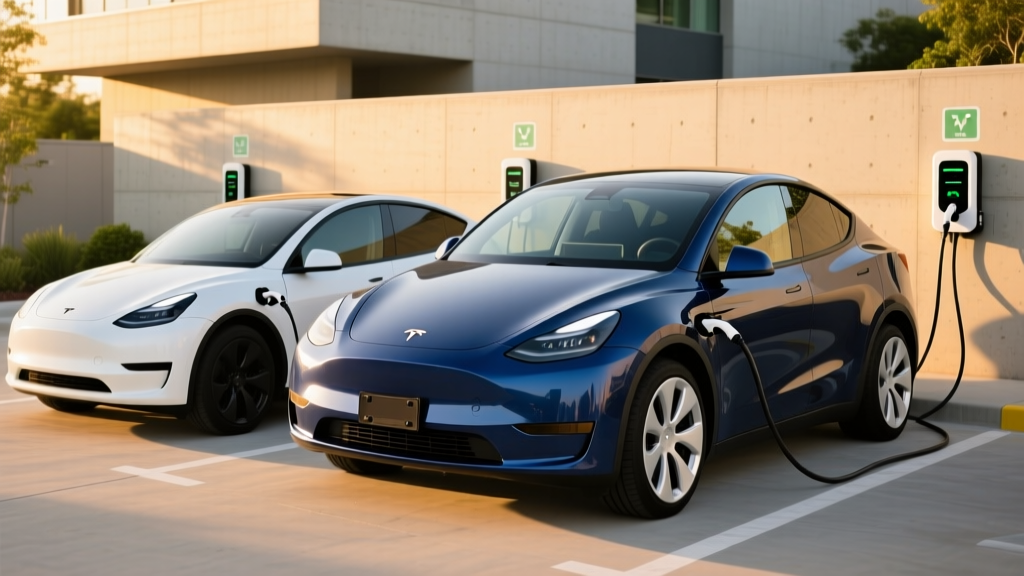
The Model Y remains Tesla's best-selling vehicle globally, and for good reason. It offers crossover utility with sedan-like efficiency. For 2026, Tesla continues to refine the Juniper-refreshed platform introduced in late 2024, with updated battery chemistry and thermal management.
| Specification | Model Y Long Range AWD | Model Y Performance |
|---|---|---|
| EPA Range | 320 miles | 295 miles |
| Battery (usable) | ~75 kWh (NMC) | ~75 kWh (NMC) |
| Drivetrain | Dual-Motor AWD | Dual-Motor AWD |
| Horsepower | 384 hp | 510 hp |
| 0–60 mph | 4.8 sec | 3.5 sec |
| Efficiency | 122 MPGe / 28 kWh/100mi | 111 MPGe / 30 kWh/100mi |
| Cargo (rear seats up) | 30.2 cu ft | 30.2 cu ft |
| Cargo (rear seats folded) | 72.1 cu ft | 72.1 cu ft |
| Base MSRP (2026) | $46,630 | $52,490 |
2026 Tesla Model 3: The Efficiency Champion
The Model 3 Highland refresh continues into 2026 with the same platform improvements: quieter cabin, ventilated front seats, rear touchscreen, and a more refined suspension. It remains the efficiency leader in Tesla's lineup.
| Specification | Model 3 Long Range AWD | Model 3 RWD |
|---|---|---|
| EPA Range | 346 miles | 272 miles |
| Battery (usable) | ~75 kWh (NMC) | ~57.5 kWh (LFP) |
| Drivetrain | Dual-Motor AWD | Single-Motor RWD |
| Horsepower | 346 hp | 271 hp |
| 0–60 mph | 4.2 sec | 5.8 sec |
| Efficiency | 132 MPGe / 26 kWh/100mi | 132 MPGe / 25 kWh/100mi |
| Cargo (trunk + frunk) | 23.1 cu ft | 23.1 cu ft |
| Base MSRP (2026) | $42,490 | $38,990 |
The RWD Model 3 uses an LFP (lithium iron phosphate) battery, which sacrifices some energy density for superior longevity and the ability to charge routinely to 100% without degradation concerns. If your commute is under 50 miles round-trip and you charge at home nightly, the LFP pack is arguably the better long-term bet.
Charging Speed: DC Fast Charge and Home Level 2
Charging infrastructure access is where Tesla still holds a significant advantage. The Supercharger network, now exceeding 25,000 stalls in North America, remains the most reliable DC fast-charging ecosystem available.
| Charging Level | Model Y Long Range | Model 3 Long Range | Model 3 RWD (LFP) |
|---|---|---|---|
| Level 1 (120V / 12A) | ~3 mi/hr | ~3 mi/hr | ~3 mi/hr |
| Level 2 (240V / 48A) | 11.5 kW / ~37 mi/hr | 11.5 kW / ~40 mi/hr | 7.6 kW / ~30 mi/hr |
| DC Fast Charge (peak) | 250 kW | 250 kW | 170 kW |
| 10–80% DC Fast Time | ~27 min | ~25 min | ~30 min |
A critical note on charging curves: Tesla's 250 kW peak is not sustained. The Model Y Long Range typically holds above 200 kW up to roughly 40% state of charge, then tapers progressively. By 70% SoC, you are typically at 80–100 kW. This is why the 10–80% metric matters more than peak kW numbers — it captures the taper reality.
For home charging, a NACS Wall Connector on a 60-amp circuit delivers the full 48A (11.5 kW), adding roughly 37–40 miles per hour of charging. An overnight session from 30% to 80% takes about 4–5 hours, which covers virtually any daily driving need.
The Leasing Tesla Tax Credit: How It Actually Works
This is where the financial engineering gets interesting. Under the Inflation Reduction Act, the personal EV credit (§30D) has strict eligibility requirements:
- MSRP Cap: SUVs/vans/pickups must be under $80,000; sedans under $55,000
- Income Cap: AGI must not exceed $150K (single), $225K (head of household), or $300K (joint)
- Battery Sourcing: Critical minerals and battery components must meet escalating domestic-content thresholds
- Point-of-Sale Transfer: As of 2024, credits can be transferred to the dealer at purchase
The Model 3 RWD at $38,990 clears the sedan MSRP cap. The Model Y Long Range at $46,630 clears the SUV cap. But battery-sourcing compliance has been the moving target — and this is where leasing shines.
| Cost Factor | Purchase (with §30D credit) | Lease (with §45W pass-through) |
|---|---|---|
| Vehicle MSRP | $46,630 | $46,630 |
| Credit Applied | $7,500 (if eligible) | $7,500 (cap cost reduction) |
| Effective Price | $39,130 | — |
| Est. Monthly Payment | ~$620/mo (72-mo loan at 6.5%) | ~$449/mo (36-mo lease) |
| Income Restriction | Yes (AGI caps apply) | No (lessor claims credit) |
| Battery Sourcing Hurdle | Must verify compliance | Lessor handles compliance |
The lease route eliminates two major barriers: the buyer income cap and the battery-sourcing verification burden. Tesla's lease payment reflects the $7,500 credit baked into the capitalized cost, so you benefit without filing IRS Form 8936. According to IRS guidance on clean vehicle credits, the commercial credit pathway through leasing remains fully legal and widely used by automakers.
Key Caveat: You Do Not Own the Vehicle
Leasing means no equity buildup. At the end of 36 months, you return the Model Y or Model 3, pay any disposition fee (~$395), and cover excess mileage or wear charges. Tesla does allow lease-end purchases, but the residual value is set at signing and the $7,500 credit has already been consumed — you will not get another credit for buying out the lease.
Warranty, Reliability, and Long-Term Battery Health
Tesla's warranty coverage remains competitive, though not class-leading:
- Basic Vehicle: 4 years / 50,000 miles
- Battery & Drive Unit (Long Range/Performance): 8 years / 120,000 miles (NMC packs retain ≥70% capacity)
- Battery & Drive Unit (Model 3 RWD / LFP): 8 years / 100,000 miles (≥70% retention)
Real-world degradation data from Tesla's fleet suggests NMC packs lose roughly 8–12% capacity over the first 100,000 miles, with the curve flattening significantly after year three. LFP packs show even slower degradation but start from a lower total capacity. For lessees returning the car at 36 months and ~30,000–36,000 miles, battery degradation is essentially a non-issue — you will likely see 3–5% loss at most.
Pros and Cons: 2026 Tesla Model Y & Model 3
Pros
- Supercharger network access — still the gold standard for road-trip reliability
- Class-leading efficiency (Model 3 at 132 MPGe combined)
- Over-the-air updates continuously add features
- Lease tax credit bypasses income and sourcing restrictions
- Strong residual values reduce lease payments
- Spacious cargo area (Model Y: 72.1 cu ft with seats folded)
Cons
- No traditional instrument cluster — all info on center screen
- Turn-signal stalks removed (steering-wheel buttons in refreshed models)
- Panel-gap quality still inconsistent vs. legacy luxury brands
- Insurance premiums run 15–25% above segment average
- Lease means no equity; mileage penalties apply
- FSD (Supervised) is SAE Level 2, not autonomous — requires full driver attention
Who Should Lease a Tesla in 2026?
Choose a Tesla lease if:
- Your household AGI exceeds §30D income caps but you still want the $7,500 benefit
- You drive 8,000–12,000 miles per year (within standard lease limits)
- You want the lowest monthly payment with zero down and plan to swap vehicles every 3 years
- You take regular road trips where Supercharger reliability matters
- You prefer not to deal with battery-sourcing verification paperwork
Choose to buy instead if:
- You plan to keep the vehicle 6+ years and want to build equity
- You drive over 15,000 miles per year (lease penalties add up fast)
- You qualify for the full §30D credit and your state offers additional purchase incentives
- You want to modify the vehicle (wraps, wheels, aftermarket) without lease restrictions
For families needing cargo space and all-weather capability, the Model Y Long Range AWD is the clear pick — 320 EPA miles, dual-motor traction, and 72 cubic feet of cargo room make it a legitimate SUV replacement. For commuters and efficiency-focused drivers, the Model 3 Long Range AWD at 346 EPA miles and 132 MPGe is the most efficient all-wheel-drive EV Tesla sells.
Competitive Comparison: Is Tesla Still Worth It?
The 2026 EV crossover and sedan segments are far more competitive than they were even two years ago. The Hyundai Ioniq 5 (310 miles, 800V architecture, 10–80% in 18 minutes) and the Chevrolet Equinox EV (319 miles, ~$35K base) both challenge the Model Y on value. The Hyundai Ioniq 6 (361 miles) rivals the Model 3 Long Range on range and beats it on charging speed.
Where Tesla still wins: the Supercharger network (even as it opens to NACS-equipped competitors, Tesla vehicles still enjoy the most seamless plug-and-charge experience), software integration, and strong resale values that keep lease residuals high — which in turn keeps monthly payments competitive.
Where competitors win: interior material quality (Hyundai, BMW), faster peak charging speeds (Hyundai/Kia 800V platforms), and in some cases, easier eligibility for the purchase tax credit without the lease workaround. Check fueleconomy.gov for the latest credit eligibility by VIN and model year.
Frequently Asked Questions
Does a Tesla lease qualify for the federal EV tax credit?
Yes, but indirectly. When you lease, Tesla (the lessor) claims the commercial clean vehicle credit under IRC §45W and typically passes the savings to you as a capitalized-cost reduction, lowering your monthly payment. You do not need to meet the personal-use income caps or battery-sourcing requirements that apply to §30D purchase credits.
Can I buy the Tesla at the end of my lease?
Tesla generally allows lease-end purchases. The buyout price is the residual value stated in your lease agreement. However, you cannot claim a second federal tax credit on the buyout — the credit was already applied at lease inception.
What is the real-world range of the 2026 Model Y Long Range?
EPA-rated at 320 miles, expect approximately 260–280 miles on highway road trips at 70–80 mph. In freezing temperatures, plan for 220–250 miles. City driving with regenerative braking can sometimes exceed the EPA estimate.
How fast does the Model 3 RWD charge on a DC fast charger?
The LFP-equipped Model 3 RWD peaks at 170 kW, reaching 10–80% in approximately 30 minutes. This is slower than the Long Range variants (250 kW peak, ~25 minutes 10–80%) due to LFP chemistry charge-rate limitations.
Is Tesla's Autopilot or FSD self-driving?
No. Both Autopilot and FSD (Supervised) are SAE Level 2 driver-assistance systems. They can manage steering, acceleration, and braking on highways, but the driver must remain fully engaged, hands on or near the wheel, and eyes on the road at all times. Tesla's cabin camera monitors attentiveness and will issue warnings or disengage the system if attention lapses.
How does the leasing Tesla tax credit compare to buying outright?
Leasing bypasses the §30D income caps ($150K single / $300K joint) and battery-sourcing verification. If you earn above these thresholds or your preferred Tesla configuration does not meet sourcing requirements, leasing is often the only path to the $7,500 credit. The tradeoff is no equity at lease end and mileage restrictions (typically 10K–15K mi/yr).
What are the biggest drawbacks of leasing a Tesla?
The three main drawbacks: (1) no ownership equity — you return the car or pay the residual, (2) mileage penalties of $0.20–$0.25 per mile over your limit, and (3) you cannot claim additional state purchase incentives that require titling the vehicle in your name (varies by state — check your local rules).
For the latest IRS rules on clean vehicle credits and commercial leasing provisions, consult IRS.gov guidance. Tesla's current lease offers and monthly payment estimates are available on Tesla's official configurator.