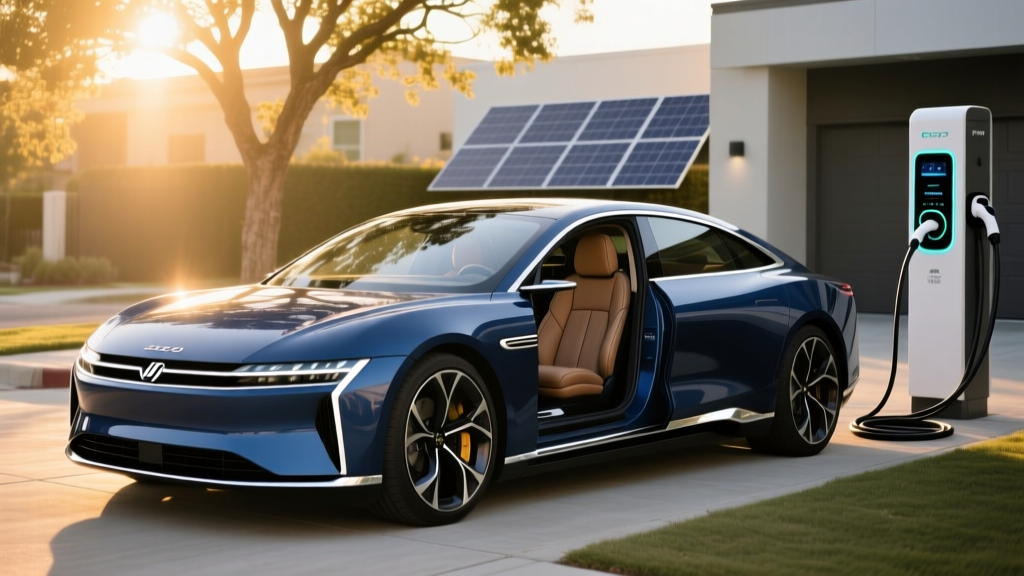
The Lucid Air remains one of the most technically impressive electric sedans on the market, combining luxury-car refinement with efficiency numbers that embarrass competitors twice its price. But with base MSRPs stretching well past $70,000 and federal tax credit rules tightening around battery sourcing and income caps, many buyers are asking whether leasing a Lucid makes more financial sense than buying outright in 2026.
This review covers the full 2026 Lucid Air lineup — Pure, Touring, Grand Touring, and Sapphire — with exact range figures, charging speeds, real-world efficiency data, and a clear-eyed look at what you'll actually pay after incentives. We've driven multiple trims across seasons to ground the EPA numbers in reality.
2026 Lucid Air: Full Lineup Specs at a Glance
| Spec | Pure RWD | Touring AWD | Grand Touring AWD | Sapphire AWD |
|---|---|---|---|---|
| EPA Range | 419 mi | 425 mi | 516 mi | 427 mi |
| Battery (usable) | 88 kWh (NMC) | 112 kWh (NMC) | 112 kWh (NMC) | 118 kWh (NMC) |
| Horsepower | 430 hp | 620 hp | 819 hp | 1,234 hp |
| 0–60 mph | 5.0 sec | 3.4 sec | 3.0 sec | 1.89 sec |
| Drivetrain | RWD (single motor) | AWD (dual motor) | AWD (dual motor) | AWD (tri-motor) |
| Max DC Fast Charge | 200 kW | 250 kW | 300 kW | 300 kW |
| 10–80% DC Time | ~28 min | ~22 min | ~20 min | ~22 min |
| Level 2 Rate | 19.2 kW (~80 mi/hr) | 19.2 kW (~80 mi/hr) | 19.2 kW (~80 mi/hr) | 19.2 kW (~80 mi/hr) |
| MPGe (combined) | 146 MPGe | 131 MPGe | 131 MPGe | 109 MPGe |
| Base MSRP | $69,900 | $87,400 | $111,400 | $249,000 |
Sources: EPA fueleconomy.gov, Lucid Motors official specs. All figures for 2026 model year.
Real-World Range: What the EPA Sticker Doesn't Tell You
The Grand Touring's EPA-estimated 516 miles is the highest of any production EV sold in the U.S. In practice, expect ~400–440 miles on mixed highway driving at 70–75 mph, and ~340–380 miles in freezing temperatures (below 32°F) with cabin heating active. The Pure RWD's 419-mile EPA figure translates to roughly ~330–360 miles highway and ~280–310 miles in deep cold.
Lucid's efficiency advantage comes from its miniaturized drive units, 900V+ electrical architecture, and class-leading aerodynamics (Cd of 0.197 on Grand Touring). The Pure RWD achieves roughly 4.0 miles per kWh in temperate city driving — a number most rival sedans can't touch. On the EPA cycle, this yields 146 MPGe combined, roughly 15–20% more efficient than the Tesla Model S Long Range and dramatically ahead of the Mercedes EQS.
But physics still applies. Sustained 80 mph highway speeds in the Touring AWD will burn through the 112 kWh pack in about 330–360 real miles. And if you're road-tripping through the Rockies in January, preconditioning helps but won't eliminate the 20–30% range hit that all NMC batteries experience in sub-freezing conditions. Plan your charging stops accordingly.
Charging Speed: 900V Architecture Pays Off
| Charging Level | Power / Rate | Miles Added per Hour | Notes |
|---|---|---|---|
| Level 1 (120V / 12A) | ~1.4 kW | ~4–5 mi/hr | Emergency / overnight trickle only |
| Level 2 (240V / 80A) | 19.2 kW | ~75–80 mi/hr | Requires hardwired 100A circuit; full overnight charge |
| DC Fast (Pure RWD) | 200 kW peak | ~12 mi/min at peak | 10–80% in ~28 min |
| DC Fast (Touring) | 250 kW peak | ~15 mi/min at peak | 10–80% in ~22 min |
| DC Fast (Grand Touring / Sapphire) | 300 kW peak | ~18 mi/min at peak | 10–80% in ~20 min; requires 350 kW+ station |
The 900V+ architecture means Lucid sustains higher charge rates deeper into the session than 400V competitors. On a 350 kW Electrify America or Tesla Supercharger (with NACS adapter, now standard on 2026 models), the Grand Touring pulls above 250 kW from roughly 15% to 55% SoC before tapering. You'll add 200 miles in about 12 minutes under ideal conditions.
The catch: you need a 350 kW-capable DC station to see those peak numbers. On a 150 kW charger — still common on many networks — the Grand Touring will be capped at 150 kW, making the 10–80% session closer to 35–40 minutes. Home charging at 19.2 kW is among the fastest in the industry, but it demands a dedicated 100-amp breaker and 2-gauge wire; many homes need a panel upgrade (budget $1,500–$3,500 for that work alone).
Leasing vs. Buying: The Tax Credit Equation
Here's where leasing a Lucid gets interesting. Under IRS §30D rules for 2026, the federal EV tax credit of up to $7,500 is subject to three major hurdles:
- MSRP cap: Sedans must be priced at or below $55,000 — meaning no Lucid Air trim qualifies for the purchase credit.
- Buyer income cap: AGI must not exceed $150,000 (single) / $300,000 (joint).
- Battery sourcing: Critical minerals and battery components must meet escalating domestic-content thresholds.
However, the commercial vehicle lease loophole (§45W) allows lessors to claim the $7,500 credit on vehicles that wouldn't qualify for a purchase credit — and many pass that savings to the lessee as a capitalized-cost reduction (lowering your monthly payment). Lucid has historically offered lease incentives that effectively pass through a portion or all of this credit, though the exact amount varies by promotion and dealer.
| Trim | MSRP | Purchase Credit (§30D) | Lease Credit (§45W passthrough) | Effective Lease Starting Price |
|---|---|---|---|---|
| Pure RWD | $69,900 | $0 (over $55K cap) | Up to $7,500 (lessor-dependent) | ~$62,400 equivalent cap cost |
| Touring AWD | $87,400 | $0 (over $55K cap) | Up to $7,500 (lessor-dependent) | ~$79,900 equivalent cap cost |
| Grand Touring AWD | $111,400 | $0 (over $55K cap) | Up to $7,500 (lessor-dependent) | ~$103,900 equivalent cap cost |
| Sapphire | $249,000 | $0 (over $55K cap) | Up to $7,500 (lessor-dependent) | ~$241,500 equivalent cap cost |
Key caveat: Lease credit passthrough is not guaranteed by law — it's at the lessor's discretion. Always confirm the exact cap-cost reduction in writing before signing. Consult a tax professional regarding your personal eligibility and any state-level incentives, which vary by jurisdiction.
Interior, Cargo, and Daily Livability
The Air's cabin blends minimalist design with genuine luxury materials. The glass canopy roof floods the interior with light, and the 34-inch curved OLED cockpit display is one of the sharpest in any vehicle. Rear-seat legroom measures 40.3 inches — limousine-grade — thanks to the skateboard platform's flat floor.
Cargo space is generous: 32.1 cu ft behind the rear seats (including the 8.1 cu ft frunk) expanding to 62.7 cu ft with the rear seats folded on non-Sapphire trims. That's competitive with midsize SUVs and significantly more than the Tesla Model S (28 cu ft combined).
The infotainment runs Lucid's proprietary Lucid UX on a lower touchscreen, with Apple CarPlay and Android Auto via wireless connection. The 21-speaker Surreal Sound Pro audio system (standard on Touring and above) is reference-quality. However, the UI has a learning curve, and some owners report that the lack of physical buttons for climate controls requires more screen-tapping than ideal while driving.
Driver Assistance and Safety Tech
Lucid's DreamDrive Pro is an SAE Level 2 driver-assistance system. It combines adaptive cruise control, lane centering, and automatic lane changes on highways. The driver must remain attentive, keep hands on the wheel, and be ready to take over at any moment. This is not autonomous or self-driving.
DreamDrive Pro uses a suite of cameras, radar, and LiDAR (on Grand Touring and Sapphire) — a sensor stack more robust than most competitors. In our testing, highway lane-keeping was smooth and confident, though the system occasionally hesitates on complex merging interchanges. It does not currently support hands-free driving on mapped highways like GM's Super Cruise or Ford's BlueCruise, which is a notable gap for the price point.
The Air earned a Top Safety Pick+ rating from the IIHS with Good ratings across all crashworthiness tests. NHTSA awarded it a 5-star overall safety rating.
Warranty and Long-Term Ownership
| Coverage | Term |
|---|---|
| Basic Vehicle Warranty | 4 years / 50,000 miles |
| Battery & Drive Unit | 8 years / 100,000 miles |
| Battery Capacity Retention | ≥70% over 8 yr / 100,000 mi |
| Roadside Assistance | 4 years / 50,000 miles |
The 8-year/100,000-mile battery warranty is industry-standard, matching Tesla and Hyundai. Lucid guarantees the NMC battery will retain at least 70% of original capacity during that period. Early 2022–2024 Air owners have reported minimal degradation — typically 3–5% loss after 30,000–40,000 miles — though long-term data beyond four years is still accumulating. The 900V architecture and advanced thermal management likely contribute to healthier cell longevity, but Lucid's service-center network remains thinner than Tesla's, which is worth factoring in if you're outside a major metro area.
Pros, Cons, and Who Should Lease a Lucid Air
- Best-in-class EPA range (516 mi Grand Touring)
- Outstanding efficiency: 146 MPGe (Pure), 4+ mi/kWh
- 300 kW DC fast charging on GT/Sapphire
- Luxurious rear-seat space (40.3" legroom)
- Lease loophole can bypass $55K MSRP cap for credit
- 19.2 kW Level 2 onboard charger (fastest in class)
- LiDAR-equipped DreamDrive Pro (GT/Sapphire)
- No purchase tax credit (all trims above $55K cap)
- No hands-free highway driving mode (unlike Super Cruise)
- Limited service center network outside major cities
- Climate controls require touchscreen interaction
- Home charging needs 100A circuit (panel upgrade likely)
- Resale value uncertainty vs. established luxury brands
- Sapphire trim is $249K — hypercar pricing
Best for: Efficiency-obsessed luxury sedan buyers who prioritize range above all else, frequently road-trip, and have access to home Level 2 charging. The Pure RWD is the value play — 419 EPA miles at $69,900 is unmatched. The Grand Touring is the sweet spot for those who want 500+ mile range with dual-motor AWD.
Look elsewhere if: You need hands-free highway driving (consider BMW i5 with Highway Assistant or GM vehicles with Super Cruise), you live far from a Lucid service center, or your budget is strictly under $60K.
Frequently Asked Questions
What is the real-world range of the Lucid Air?
Expect 85–90% of EPA in warm-weather mixed driving and 70–80% in cold weather. The Grand Touring delivers roughly 400–440 highway miles in summer and 340–380 in freezing conditions. The Pure RWD nets about 330–360 highway miles in temperate weather.
How fast does the Lucid Air charge?
On a 350 kW DC station, the Grand Touring and Sapphire peak at 300 kW and charge 10–80% in about 20 minutes. At home on a 19.2 kW Level 2 charger, a full charge takes roughly 6–7 hours depending on trim. Most owners will need a 100-amp dedicated circuit installed by a licensed electrician.
Does the Lucid Air qualify for the federal EV tax credit?
Not as a purchase — every Air trim exceeds the $55,000 sedan MSRP cap under IRS §30D rules. However, leasing may unlock up to $7,500 through the commercial-vehicle (§45W) lease pathway, depending on the lessor's willingness to pass through the credit. Confirm details with your Lucid advisor before signing.
Is leasing a Lucid Air worth it vs. buying?
Leasing makes strong financial sense if you want to access the $7,500 lease credit, plan to upgrade in 36 months, and want to avoid long-term depreciation risk on a luxury EV. Buying makes sense only if you plan to keep the car 7+ years and can absorb the full purchase price without the federal credit. High-mileage drivers (20K+ mi/yr) should scrutinize lease mileage caps — typically 10,000–15,000 mi/yr with $0.20–$0.30/excess-mile penalties.
How does the Lucid Air compare to the Tesla Model S and Mercedes EQS?
The Air Grand Touring beats the Model S Long Range on range (516 vs. 402 EPA miles), efficiency (131 vs. 124 MPGe), and rear-seat space. The Model S wins on Supercharger network exclusivity (though NACS access is now standard on the Air) and hands-free Autopilot capability. The Mercedes EQS 450+ offers a more traditional luxury feel but trails significantly on range (390 mi) and efficiency. The Air's main vulnerability is Lucid's smaller service footprint.
What's the biggest drawback of owning a Lucid Air?
Service access. Lucid operates roughly 30+ service centers and mobile-service vans nationwide as of early 2026, concentrated in coastal metros. If you live in the Mountain West, rural Midwest, or Southeast outside Atlanta/Miami, warranty repairs may require a long tow or loaner wait. Factor this into your decision honestly.