The Quick Answer: Should You Lease an EV?
Leasing an electric vehicle in 2026 makes the most sense if you want to capture the $7,500 federal tax credit as a lease bonus regardless of your income, drive fewer than 15,000 miles per year, and prefer swapping into newer battery tech every 36 months. A typical lease on a Hyundai Ioniq 6 SE (EPA 361 miles, $39,950 MSRP) can land around $349–$429/month with $3,000 due at signing — effectively $1,500–$2,500 cheaper per year than buying the same car after accounting for the passed-through credit. However, if you drive high annual miles, plan to keep the car 7+ years, or qualify for the §30D credit when purchasing outright, buying usually wins on long-term total cost of ownership.
Why 2026 Is a Unique Year for EV Leasing
The economics of leasing an electric vehicle shifted dramatically after the IRS clarified in late 2023 that the commercial clean-vehicle credit (§45W) applies to leased EVs — a provision often called the "lease loophole." Unlike the purchase credit under §30D, which enforces strict buyer income caps ($150K single / $300K joint), MSRP caps ($55K cars / $80K trucks and SUVs), and critical-mineral sourcing requirements, the lease credit flows to the leasing company (usually the automaker's captive finance arm). Many automakers then pass that $7,500 directly to the consumer as a lease cash incentive or capitalized-cost reduction.
For 2026 model-year vehicles, this means:
- High-income buyers who don't qualify for the purchase credit can still access $7,500 in savings by leasing.
- EVs that fail the battery-sourcing test for purchase credits (some Hyundai, Kia, and Genesis models with non-compliant mineral chains) often still qualify when leased.
- Higher-MSRP vehicles like the BMW iX ($87,000+) or Mercedes EQS that exceed the purchase-cap thresholds can still deliver $7,500 lease savings.
The trade-off? You don't own the vehicle at the end, and the leasing company — not you — technically claims the credit. You rely on the automaker choosing to pass it through. Always confirm in writing that the $7,500 is applied as a cap-cost reduction before signing.
EV Lease vs. Purchase: Real Cost Breakdown
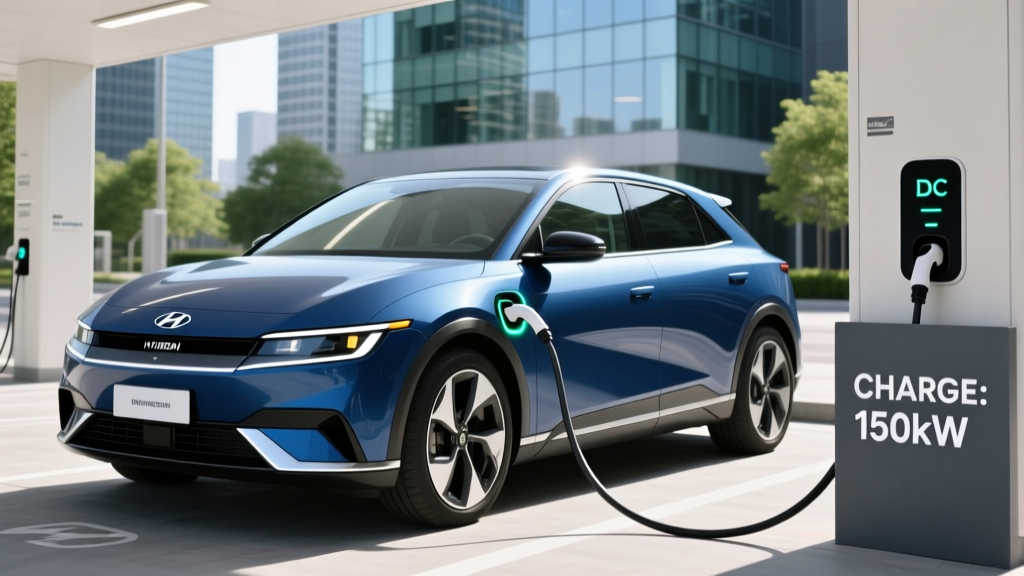
Let's compare the actual five-year cost of leasing versus buying a 2026 Hyundai Ioniq 6 SE — one of the most efficient long-range EVs on the market with a 77.4 kWh NMC battery, 361 miles EPA range, 225 kW peak DC fast charging (10–80% in ~18 minutes), and 320 horsepower.
| Cost Category | Lease (Two 36-Mo Terms) | Purchase (Financed 60 Mo) |
|---|---|---|
| Vehicle base MSRP | $39,950 | $39,950 |
| Federal credit applied | $7,500 (lease cash / cap-cost reduction) | $7,500 (§30D point-of-sale, if eligible) |
| Monthly payment (avg.) | $389 × 60 mo = $23,340 | $575 × 60 mo = $34,500 |
| Due at signing (total) | $3,000 (first term) + $2,500 (second term) = $5,500 | $4,000 down + taxes/fees |
| Charging cost (home L2, 15K mi/yr) | ~$540/yr × 5 = $2,700 | ~$540/yr × 5 = $2,700 |
| Maintenance | ~$300/yr (covered partially by warranty) = $1,500 | ~$300/yr = $1,500 |
| Insurance (avg.) | ~$2,100/yr × 5 = $10,500 | ~$1,950/yr × 5 = $9,750 |
| End-of-term / residual | $0 (return vehicle; disposition fee ~$400) | Vehicle equity: ~$14,000–$17,000 at year 5 |
| Net 5-Year Cost | ~$43,540 | ~$39,450 (minus equity: ~$22,450–$25,450 net) |
Key insight: On a cash-flow basis, leasing looks cheaper month-to-month ($389 vs. $575). But the buyer who keeps the car past year 5 and sells it at residual value comes out significantly ahead on net cost. Leasing wins only if you value always having a fresh warranty, the latest tech, and no resale hassle — or if you can't access the purchase credit due to income or sourcing restrictions.
Leasing an EV vs. Leasing a Gas Car: The Efficiency Gap
The strongest argument for leasing an electric vehicle over a gas-powered equivalent is the fuel-cost delta. Here's how a 2026 Ioniq 6 stacks up against a comparable 2026 Toyota Camry LE (gas, 32 MPG combined) over a typical 36-month lease at 15,000 miles/year:
| Metric | 2026 Hyundai Ioniq 6 SE (EV) | 2026 Toyota Camry LE (Gas) |
|---|---|---|
| EPA efficiency | 140 MPGe (24 kWh/100 mi) | 32 MPG combined |
| Annual miles | 15,000 | 15,000 |
| Fuel/energy cost (national avg.) | $0.15/kWh home charging | $3.35/gallon (2026 EIA est.) |
| Annual fueling cost | ~$540 | ~$1,570 |
| 36-month fueling total | ~$1,620 | ~$4,710 |
| Maintenance (36 mo) | ~$900 (no oil, fewer brake pads) | ~$1,800 (oil changes, filters, brakes) |
| Total operating cost (36 mo) | ~$2,520 | ~$6,510 |
Over a three-year lease, the Ioniq 6 saves roughly $3,990 in operating costs versus the Camry. That's approximately $111/month in real savings — which should be factored into your lease-vs-gas comparison alongside any monthly payment difference.
According to fueleconomy.gov, the Ioniq 6 SE achieves 140 MPGe combined, making it one of the most efficient EVs in its class. That efficiency directly translates to lower lease-period operating costs.
Real-World Considerations Before You Sign
Before committing to leasing an electric vehicle, honestly assess these practical factors:
Home Charging Access
Leasing an EV works best when you can charge at home on a Level 2 (240V) circuit. A typical Level 2 home charger delivers 7.4–11.5 kW, adding roughly 25–44 miles of range per hour — more than enough to replenish overnight. Expect $500–$1,500 for a quality Level 2 unit (ChargePoint Home Flex, Emporia Vue, Tesla Wall Connector) plus $800–$2,500 for professional installation by a licensed electrician, depending on panel capacity and run length. If your home has a 200-amp panel with spare capacity, installation stays on the lower end; a panel upgrade to 200A or 400A can add $2,000–$5,000.
If you live in an apartment or lack dedicated parking, your EV lease experience will depend heavily on public DC fast-charging access. Check whether your lease includes free charging credits — Hyundai, for example, has offered two years of complimentary Electrify America sessions on new Ioniq models.
Climate and Real-World Range
The Ioniq 6's EPA-rated 361 miles is achieved under controlled testing. In real-world highway driving at 70 mph in moderate temperatures, expect 280–310 miles. In sub-freezing winter conditions (below 32°F), lithium-ion batteries lose 20–30% of usable capacity due to increased internal resistance and cabin heating demands — so plan for 240–270 miles of actual range. The Ioniq 6 includes a heat pump (standard on most trims), which mitigates some cold-weather loss by efficiently extracting ambient heat rather than relying solely on resistive heating.
Annual Mileage Limits
Most EV leases cap mileage at 10,000, 12,000, or 15,000 miles per year. Excess-mile penalties typically run $0.15–$0.25 per mile. If you commute 40+ miles each way or take regular road trips, either negotiate a higher-mileage lease upfront (it's cheaper than paying penalties) or reconsider buying.
Common EV Leasing Misconceptions
| Myth | Fact |
|---|---|
| "I can't get the $7,500 tax credit if I lease." | The leasing company claims the §45W credit, but most major automakers pass it through as a cap-cost reduction. Always confirm in writing. |
| "Leasing an EV is always more expensive than buying." | On a monthly cash-flow basis, leasing is often cheaper. On net 7-year cost, buying wins — but only if you keep the car past the loan term. |
| "EV batteries won't last through a lease." | Modern NMC and LFP batteries retain 90–95% capacity at 100,000 miles. A 36-month lease at 15K miles/year covers only 45,000 miles — well within the battery's healthy life. Federal law mandates battery warranties of at least 8 years / 100,000 miles. |
| "I'll get stuck with a depreciating EV at lease-end." | That's exactly what leasing protects against. If EV residual values drop (as they did in 2023–2024 due to price wars), the leasing company absorbs the loss — not you. |
| "Charging takes too long for daily use." | Home Level 2 charging adds 25–44 miles per hour. Most EV owners charge overnight and start every morning with a full battery — no gas station visits needed. DC fast charging at 225 kW (Ioniq 6) adds 10–80% in ~18 minutes for road trips. |
Decision Framework: Should You Lease or Buy an EV?
Choose to LEASE an electric vehicle if:
- Your household income exceeds the §30D caps ($150K single / $300K joint) and you still want $7,500 in savings via the lease loophole.
- You drive fewer than 15,000 miles per year and can stay within lease mileage limits.
- You want to upgrade every 3 years to benefit from improving battery chemistry, faster charging, and better ADAS features.
- You're uncertain about long-term EV depreciation and want to transfer that risk to the leasing company.
- The EV you want fails the §30D critical-minerals or battery-sourcing test for purchase but qualifies under a lease structure.
- You prefer predictable monthly costs and warranty coverage for the entire ownership period.
Choose to BUY an electric vehicle if:
- You qualify for the full §30D purchase credit (income, MSRP, and sourcing requirements met) and plan to keep the car 5+ years.
- You drive more than 15,000 miles per year — high-mileage leases get expensive fast.
- You want to build equity and eventually own an asset you can sell or trade.
- You can charge at home and your daily driving is well within the vehicle's real-world range.
- You want the freedom to modify, wrap, or customize the vehicle without lease restrictions.
Tax Credit Rules to Know Before Signing
The federal incentive landscape for 2026 is nuanced. Here's what applies when leasing an electric vehicle:
- §45W Commercial Credit (Lease): Up to $7,500 flows to the lessor. No buyer income cap. No MSRP cap. Battery-sourcing requirements do not apply to the lessee. Confirm with the dealer that the credit is passed through as lease cash.
- §30D Clean Vehicle Credit (Purchase): Up to $7,500 as a point-of-sale reduction. Income caps apply. MSRP caps apply ($55K cars, $80K SUVs/trucks/vans). Battery must meet critical-mineral and component sourcing thresholds. Per IRS guidance, eligibility varies by model and build date.
- State incentives: Many states (California, Colorado, Massachusetts, New York) offer additional rebates of $1,000–$5,000 that may stack on top of federal credits. Check your state's energy office or DMV for current programs.
Always consult a tax professional for your specific situation. The rules around critical-mineral sourcing change annually, and automaker eligibility lists update frequently.
Frequently Asked Questions
Can I buy the EV at the end of my lease?
Yes, most EV leases include a purchase option at a predetermined residual value stated in your contract. For a 2026 Ioniq 6 SE leased at $39,950 MSRP with a 55% residual, the buyout would be approximately $21,973 at the end of 36 months. If the market value is higher than the residual, buying the car and immediately selling it can generate equity. If it's lower, return the car.
What happens if battery degradation is noticeable during my lease?
Battery degradation over 36 months and 45,000 miles is typically minimal — expect 2–5% capacity loss under normal conditions. The 8-year/100,000-mile battery warranty (federally mandated) covers defects and excessive degradation (usually defined as falling below 70% state of health). During a standard lease, you're extremely unlikely to hit that threshold. If you do, the manufacturer replaces or repairs the battery at no cost.
Do I need special insurance for a leased EV?
No special EV-specific policy is required, but leasing companies typically mandate higher coverage limits than state minimums — usually $100K/$300K bodily injury and comprehensive/collision with a deductible cap (often $1,000 max). EV insurance premiums run 10–20% higher than equivalent gas cars due to higher repair costs for battery and structural components. Average annual EV insurance: $1,900–$2,400 depending on model, state, and driving record.
Is leasing an electric vehicle a good idea if I can't charge at home?
It's viable but less ideal. Without home Level 2 charging, you'll rely on public DC fast chargers and workplace charging. At 225 kW peak rate, the Ioniq 6 can add 200 miles in ~18 minutes — but you'll spend 30–60 minutes per week at chargers instead of 5 minutes plugging in overnight. Public DCFC costs average $0.35–$0.50/kWh, roughly doubling your fueling cost versus home charging. Before leasing without home charging, map your local charging infrastructure and confirm reliable access within 5–10 minutes of your home or workplace.
What's the best time of year to lease an EV?
Model-year changeover (September–November) and end-of-quarter (March, June, September, December) typically yield the best lease deals as dealers push to hit volume targets. In 2025–2026, increasing EV inventory and competitive pressure from new entrants have pushed lease incentives higher — some automakers are offering $7,500–$10,000 in combined lease cash and loyalty bonuses on select models.