Leasing an electric car in 2026 is often the lowest-risk path into EV ownership — especially if you're uncertain about long-term battery health, want to ride out rapid tech improvements, or can't access the full $7,500 federal tax credit when buying. A lease lets you drive a new EV for $300–$550 per month with little or no down payment, and many leases pass through the commercial clean vehicle credit (§45W) as a lease bonus, sidestepping the income and battery-sourcing restrictions that block many buyers from the §30D purchase credit. The tradeoff: you won't build equity, you'll face mileage caps (typically 10,000–15,000 miles/year), and you'll return the car at term's end.
Quick Verdict: Should You Lease or Buy?
Lease if: You want the lowest monthly payment, can't qualify for the $7,500 purchase credit due to income or sourcing rules, drive under 15,000 miles/year, or want to upgrade every 2–3 years as battery tech improves.
Buy if: You drive 15,000+ miles/year, plan to keep the car 5+ years, qualify for the full purchase credit, and want to build equity or modify the vehicle.
The Real Math: Leasing vs Buying an EV in 2026
Let's compare apples to apples using a mainstream 2026 EV — the Hyundai Ioniq 5 SEL (RWD, 84.0 kWh usable battery, EPA-estimated 310 miles range, per fueleconomy.gov). We'll use a 36-month term, 12,000 miles/year, and a 7% auto loan rate for the purchase scenario.
| Cost Category | Lease (36 mo) | Buy (36 mo, financed) |
|---|---|---|
| MSRP / Capitalized Cost | $46,650 | $46,650 |
| Federal Tax Credit Applied | $7,500 (as lease bonus via §45W) | $7,500 (§30D, if eligible) |
| Down / Due at Signing | $2,500 | $5,000 |
| Monthly Payment | $389 | $682 (60-mo loan, 7% APR) |
| Total Payments (36 months) | $14,004 | $24,552 |
| Disposition / Residual Risk | $350 disposition fee at end | Equity in vehicle (est. $26,000–$28,000 resale) |
| Total Out-of-Pocket (36 mo) | ~$16,854 | ~$29,552 (net of equity: ~$1,552–$3,552) |
The key insight: Leasing dramatically reduces your cash outlay over 3 years — roughly $12,700 less out of pocket — but you walk away with nothing. Buying costs more month-to-month but can net you a vehicle worth $26,000+ at the end. Over a 3-year window, leasing wins on cash flow. Over 5–7 years, buying almost always wins on total cost of ownership because you stop making payments while the car still has utility.
How the Tax Credit Works When You Lease
This is where leasing an electric car gets genuinely interesting. Under the Inflation Reduction Act, the §30D clean vehicle credit (up to $7,500) has strict requirements for buyers: modified adjusted gross income caps ($150K single / $300K joint), MSRP caps ($55K for cars, $80K for SUVs/trucks), and battery component and critical mineral sourcing rules that disqualify several models.
However, when a vehicle is leased, it's technically purchased by the leasing company (the lessor), which qualifies for the §45W commercial clean vehicle credit instead. This credit has no income caps, no MSRP caps, and no battery sourcing restrictions. Most major lessors — Hyundai Motor Finance, BMW Financial, Ford Credit — pass this $7,500 to the consumer as a "lease bonus" or "capitalized cost reduction," effectively lowering your monthly payment. This means you can lease a $75,000 BMW iX or a $60,000 Mercedes EQB and still capture the full $7,500 benefit — something impossible when buying.
Common Leasing Misconceptions
| Myth | Fact |
|---|---|
| "I can't get any tax credit if I lease." | The lessor claims §45W, and most pass the $7,500 to you as a lease incentive. Confirm with the dealer. |
| "Leasing always costs more long-term." | True if you lease repeatedly forever. But a single 36-month lease while you install home charging or wait for better tech can be financially rational. |
| "EV leases have crazy mileage penalties." | Typical excess mileage is $0.15–$0.25/mile. If you drive 15,000 mi/yr on a 12K lease, that's ~$2,700 over 3 years — painful but not catastrophic. |
| "I can't buy the car at lease-end." | Most EV leases include a purchase option at the residual value. Some (like Tesla) don't — always check the contract. |
Leasing vs Gas: What You'll Actually Spend on Energy
Beyond the monthly payment, your fuel budget changes fundamentally. Here's a comparison using national averages: electricity at $0.16/kWh (home charging), DC fast charging at $0.40/kWh, and gasoline at $3.40/gallon (AAA 2026 average).
| Scenario | Hyundai Ioniq 5 (84 kWh, 3.5 mi/kWh) | Toyota RAV4 AWD (28 MPG combined) |
|---|---|---|
| 100% Home Charging (Level 2) | $549/year | $1,457/year |
| 70% Home / 30% DC Fast | $719/year | $1,457/year |
| 100% DC Fast Charging | $1,371/year | $1,457/year |
| Annual Maintenance | ~$200 (cabin filter, tire rotation) | ~$600 (oil, filters, brakes) |
| Combined Annual Energy + Maint. | $749–$1,571 | $2,057 |
If you charge at home — which roughly 80% of EV owners do for the majority of their charging — you'll save $800–$1,200 per year versus a comparable gas crossover. That savings partially offsets any lease premium. But if you rely entirely on DC fast charging (no home or workplace access), your "fuel" cost nearly equals gasoline. This is the single biggest variable in EV economics.
What First-Time EV Leasers Need to Know
Before you sign, understand these EV-specific realities that a gas-car lease never forces you to confront:
Range: EPA vs Reality
The Ioniq 5's EPA-estimated 310 miles is a laboratory composite. In real-world highway driving at 70+ mph, expect 250–270 miles. In cold weather (below 30°F), plan for a 20–30% reduction — so roughly 215–250 miles on a full charge. If your daily commute is under 60 miles round-trip, this is irrelevant. If you road-trip monthly, it matters enormously.
Charging Speed and the Curve Taper
The Ioniq 5 peaks at 240 kW on a DC fast charger, achieving 10–80% in approximately 18 minutes. But that's a peak, not a sustained rate. The charge curve tapers sharply above 80% — going from 80–100% can take another 20+ minutes. On road trips, plan stops around the 10–80% window for maximum efficiency.
Home Charging Is Non-Negotiable for Most Leases
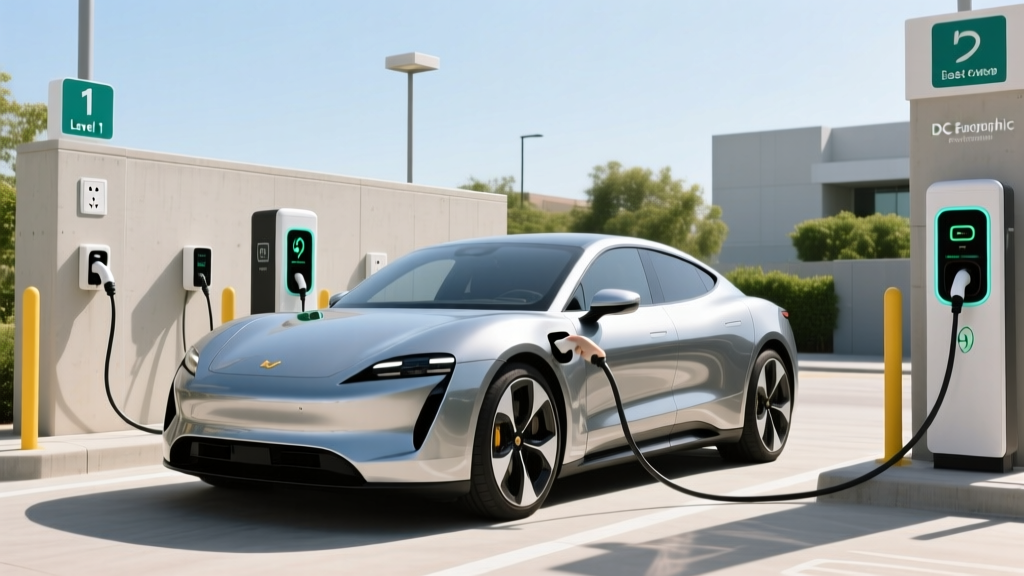
If you can't install a Level 2 (240V, 7–11 kW) home charger — whether due to apartment living, HOA restrictions, or an outdated electrical panel — leasing an EV becomes significantly less convenient and more expensive. A Level 2 installation typically costs $800–$2,500 including equipment and electrician labor, but may require a $2,000–$5,000 panel upgrade if your home has a 100-amp service. Confirm your charging plan before signing.
Insurance Costs More
EV insurance premiums run 15–25% higher than comparable gas vehicles due to repair costs and battery replacement risk. For the Ioniq 5, expect $1,800–$2,400/year depending on your state and driving record. Factor this into your monthly budget.
Decision Framework: Is Leasing Right for Your Situation?
Should You Lease an Electric Car?
→ Lease if you answer YES to 3+ of these:
- You drive fewer than 15,000 miles per year
- Your household MAGI exceeds §30D income limits ($150K single / $300K joint) and you want the tax credit anyway via §45W
- You have access to home or workplace Level 2 charging
- You want to upgrade in 2–3 years as solid-state batteries or NACS-native vehicles arrive
- You prefer a lower monthly payment over building equity
- You live in an area with reliable public charging (Electrify America, Tesla Supercharger network)
→ Buy (or consider a PHEV) if you answer YES to 3+ of these:
- You drive more than 15,000 miles per year (lease mileage penalties add up fast)
- You qualify for the full $7,500 §30D purchase credit (income, MSRP, and sourcing all check out)
- You plan to keep the vehicle 5–8 years
- You want to modify the vehicle (wraps, suspension, aftermarket wheels)
- You take road trips of 400+ miles frequently and want zero range-compromise flexibility
- You live in a rural charging desert where public DC fast charging is sparse
What to Negotiate in an EV Lease
EV leases have specific line items most buyers don't scrutinize. Here's what to focus on:
Money Factor (MF): This is the lease equivalent of an interest rate. Divide the MF by 2,400 to get the approximate APR. A MF of 0.00250 equals roughly 6% APR. Some automakers subsidize the MF on EVs to move inventory — Hyundai and Kia have offered subvented rates as low as 0.00125 (~3% APR equivalent) on select 2026 models.
Residual Value: This is the car's projected value at lease-end, expressed as a percentage of MSRP. EVs have seen volatile residual values due to rapid depreciation in 2023–2024 (Tesla price cuts cascaded across the used EV market). A higher residual means a lower lease payment. Typical 36-month EV residuals range from 48% to 58% of MSRP.
Acquisition Fee: Usually $650–$995, set by the leasing company. Non-negotiable, but confirm the amount.
Disposition Fee: Typically $300–$500 charged at lease-end if you don't buy or lease another vehicle from the same brand. Often waivable — ask upfront.
The Bottom Line on Leasing an EV
Leasing an electric car in 2026 makes financial sense for a specific buyer profile: someone who drives moderate miles, has home charging access, and values cash-flow flexibility over long-term equity. The §45W commercial credit loophole makes leasing especially attractive for high-income buyers or those eyeing models with non-compliant battery sourcing. But if you drive heavy miles, plan to keep the car long-term, or live without reliable charging infrastructure, buying — or choosing a plug-in hybrid like the Toyota RAV4 Prime (42 miles electric-only range, 38 MPG gas) — may serve you better.
Frequently Asked Questions
Can I get the $7,500 tax credit if I lease an EV?
Not directly. The leasing company claims the §45W commercial credit, and most pass it to you as a "lease bonus" reducing your monthly payment or due-at-signing amount. Always confirm in writing that the $7,500 is being applied to your specific lease — some dealers absorb it into pricing without transparency.
What happens if the EV battery degrades during my lease?
You're generally not responsible for battery degradation unless it falls below the warranty threshold (typically 70% capacity retention over 8 years/100,000 miles). Since most leases are 36 months, you'll return the car well within the warranty period. Excess wear-and-tear guidelines focus on tires, body damage, and interior condition — not battery state of health.
Can I install a home charger if I'm leasing the car but own my home?
Absolutely — the charger is yours regardless of whether you lease or own the vehicle. A Level 2 (240V, 40–48 amp) hardwired charger like the ChargePoint Home Flex or Emporia Vue costs $400–$700 for the unit plus $500–$1,800 for professional installation. If you rent, talk to your landlord — some will split the cost since it adds property value.
Is leasing an EV riskier than leasing a gas car?
The main added risk is excess mileage due to range limitations on road trips — but if you plan around DC fast charging corridors, this is manageable. The other risk is residual value uncertainty: if used EV prices drop further, your purchase option at lease-end might be above market value, making it unwise to buy out. Always compare the residual to current used-car pricing before exercising a purchase option.
Should I lease a Tesla?
Tesla leases (through Tesla Financial) are competitive but have a critical difference: no purchase option at lease-end on most Model 3 and Model Y leases. You must return the vehicle. If you think you might want to keep the car, leasing a Tesla is riskier than leasing from Hyundai, BMW, or Ford, which typically include buyout clauses.