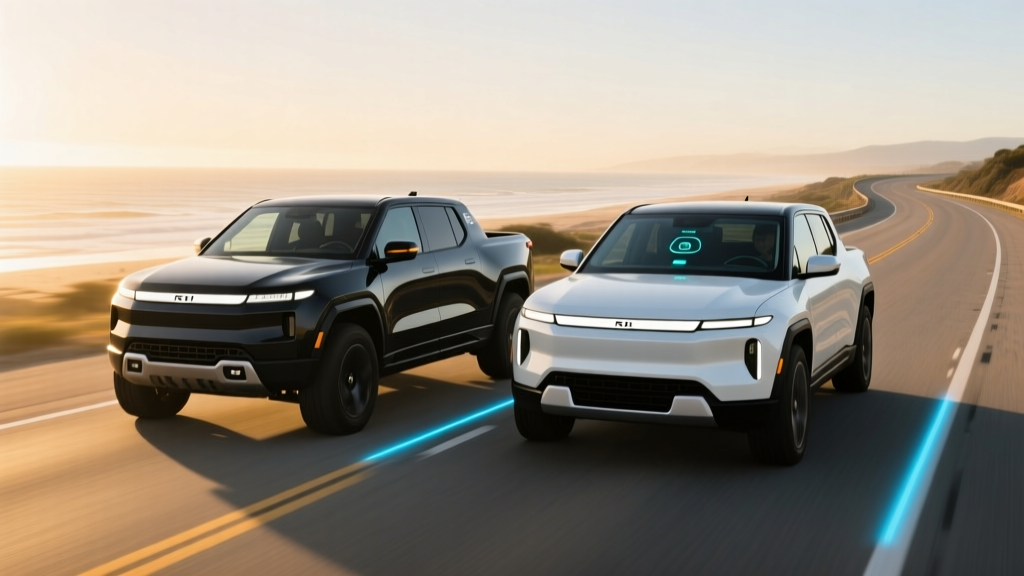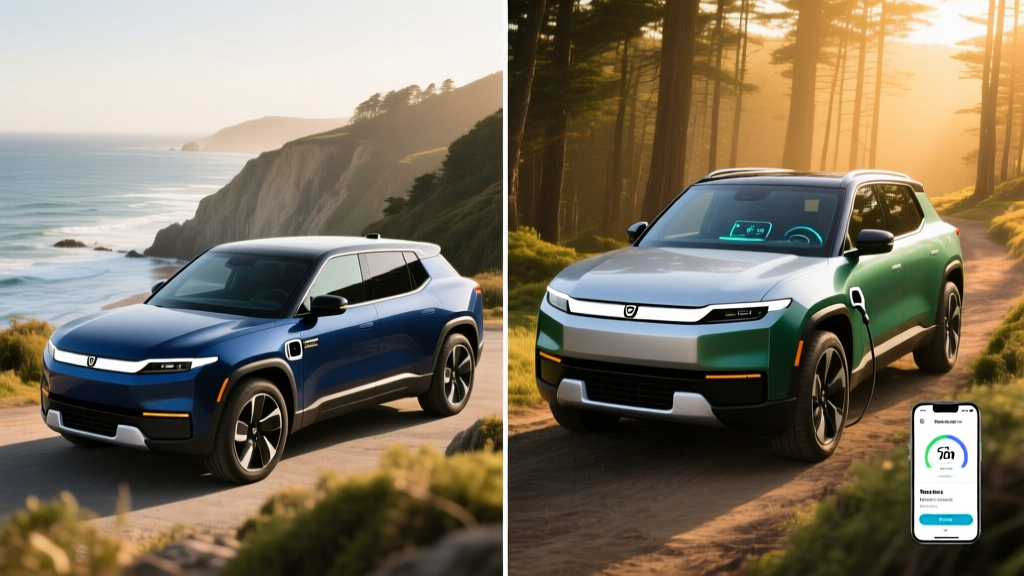
Rivian has carved out a unique position in the EV market: adventure-capable, tech-forward electric vehicles that also serve as daily drivers. If you're considering leasing a Rivian — whether the R1S SUV or the R1T pickup — the decision hinges on range realism, charging infrastructure, and how federal tax incentives interact with a lease structure. This guide breaks down the numbers that matter for 2026 model-year R1S and R1T configurations.
Rivian R1S and R1T at a Glance: 2026 Specs
Both the R1S (three-row SUV) and R1T (crew-cab pickup) share Rivian's second-generation skateboard platform, available in Dual-Motor and Quad-Motor powertrains with Standard, Large, and Max battery packs. Below are the core specifications for the most popular configurations.
| Spec | Dual-Motor (Large Pack) | Quad-Motor (Max Pack) |
|---|---|---|
| EPA Range (R1S) | 352 miles | 410 miles |
| EPA Range (R1T) | 342 miles | 390 miles |
| Battery Capacity (usable) | 109 kWh (NMC) | 141 kWh (NMC) |
| Battery Chemistry | NMC (nickel manganese cobalt) | NMC |
| Horsepower | 533 hp (Dual-Motor) | 1,025 hp (Quad-Motor) |
| 0-60 mph | 4.5 sec (R1S Dual) | 2.9 sec (R1T Quad) |
| Drivetrain | AWD (dual-motor) | AWD (quad-motor, individual wheel torque) |
| Max DC Fast Charge | 200 kW peak | 220 kW peak |
| 10-80% DC Fast Charge | ~28 minutes | ~36 minutes |
| Level 2 Home Charge Rate | 11.5 kW (~25 mi/hr) | 11.5 kW (~25 mi/hr) |
| Efficiency (R1S Dual) | 73 MPGe / 46 kWh/100mi | 70 MPGe / 48 kWh/100mi |
| Towing Capacity | 7,700 lbs (R1T) | 11,000 lbs (R1T) |
Source: fueleconomy.gov and Rivian official specifications.
Real-World Range: What the EPA Sticker Doesn't Tell You
EPA Estimate: 352 miles (R1S Dual-Motor Large Pack)
Expect in practice: ~280-310 miles on sustained highway driving at 70-75 mph; ~230-260 miles in sub-freezing winter conditions (20°F or below). City and mixed driving with regenerative braking recovers closer to the EPA figure, typically 320-340 miles.
The R1S and R1T are large, heavy vehicles — the R1S Dual-Motor weighs approximately 6,800 lbs, and the Quad-Motor variants push past 7,100 lbs. That mass, combined with a boxy aerodynamic profile, means highway efficiency drops noticeably above 65 mph. In our experience, maintaining 75 mph on a flat interstate in moderate temperatures yields roughly 2.0-2.2 kWh/mile, translating to about 290-310 miles from the Large Pack before you hit a comfortable 10% buffer.
Cold weather compounds this. Lithium-ion NMC chemistry sees increased internal resistance at low temperatures, and cabin heating in a vehicle this large is a significant energy draw. Expect a 20-30% range reduction in sustained sub-freezing conditions unless you precondition the battery while plugged in — a practice Rivian's app supports via scheduled departure times. If your commute is primarily city-based with frequent stops and regen opportunities, you'll land closer to the EPA number.
The Max Pack configurations (410 miles EPA for R1S, 390 for R1T) provide meaningful buffer for road trips and cold climates, but add roughly $6,000-$10,000 to the MSRP depending on the model year and trim. For most daily drivers, the Large Pack is the sweet spot.
Charging Speed: DC Fast Charging and Home Setup
Rivian's second-generation platform supports CCS1 (Combo) connectors natively, with access to the Rivian Adventure Network, Electrify America, EVgo, and — via adapter — the Tesla Supercharger network. Here's what charging looks like across levels:
| Charging Level | Power / Voltage | Miles Added per Hour | Use Case |
|---|---|---|---|
| Level 1 (120V outlet) | ~1.4 kW | ~3 mi/hr | Emergency / overnight trickle |
| Level 2 (240V home) | 11.5 kW (48A) | ~25 mi/hr | Daily home charging |
| DC Fast (50 kW station) | 50 kW | ~110 mi/hr | Older public chargers |
| DC Fast (150 kW station) | 150 kW sustained | ~330 mi/hr | Typical highway stop |
| DC Fast (350 kW station) | 200-220 kW peak | ~440 mi/hr (peak) | Fastest available; tapers above 80% |
A few practical notes on charging:
- Peak vs. sustained kW: The Dual-Motor peaks at ~200 kW but only holds that rate between roughly 15-45% state of charge (SoC). Above 60%, the charge curve tapers significantly, dropping below 80 kW past 80% SoC. This is why the 10-80% time of ~28 minutes is the relevant metric, not peak kW.
- Preconditioning matters: If you navigate to a DC fast charger using the Rivian infotainment system, the battery thermal management system will precondition the pack for optimal charge acceptance. Arriving at a 350 kW station cold (without preconditioning) can cut your peak charge rate by 30-40%.
- Home charging reality: At 11.5 kW Level 2, a full charge from 10% to 100% on the Large Pack takes roughly 10 hours. For most owners, plugging in overnight and charging to 80-90% daily (taking 6-7 hours) is the practical routine. A 48-amp Level 2 charger on a dedicated 60-amp circuit is the recommended home setup; expect $800-$2,500 for professional installation depending on panel proximity and local permit requirements.
- Tesla Supercharger access: Rivian owners can use Tesla's NACS-equipped Supercharger network with an approved adapter. Verify your adapter is rated for the full amperage and that your Rivian's software is updated to support Tesla station handshaking.
Pricing, Trims, and the Federal Tax Credit Question
Rivian's pricing structure is straightforward but positioned in the premium segment. Here's where the R1S and R1T land for 2026:
| Model / Config | Base MSRP | Typical As-Tested | §30D Credit Eligible? |
|---|---|---|---|
| R1S Dual-Motor Standard Pack | $75,900 | $79,000-$83,000 | Yes (MSRP under $80K cap) |
| R1S Dual-Motor Large Pack | $81,900 | $85,000-$92,000 | No (MSRP exceeds $80K SUV cap) |
| R1S Quad-Motor Max Pack | $99,000+ | $105,000+ | No |
| R1T Dual-Motor Standard Pack | $69,900 | $73,000-$78,000 | Yes (MSRP under $80K truck cap) |
| R1T Dual-Motor Large Pack | $75,900 | $79,000-$86,000 | Yes (under $80K truck cap) |
| R1T Quad-Motor Max Pack | $94,000+ | $100,000+ | No |
The §30D Federal Tax Credit — How It Works for Rivian:
- MSRP Cap: SUVs (R1S) must have an MSRP at or below $80,000; pickup trucks (R1T) also have an $80,000 cap. Only the Standard Pack R1S and Standard/Large Pack R1T configurations clear this threshold.
- Income Cap: Modified adjusted gross income (MAGI) must not exceed $150,000 (single), $225,000 (head of household), or $300,000 (joint filers).
- Battery Sourcing: The vehicle's battery components and critical minerals must meet escalating domestic-content and free-trade-agreement sourcing thresholds. Rivian's supply chain has been evolving; confirm current-year eligibility on irs.gov or with your tax professional before committing.
- Point-of-Sale Transfer: As of 2024, eligible buyers can transfer the credit to the dealer at point of sale, reducing the purchase price by up to $7,500 upfront rather than waiting for a tax refund. This applies to purchases; lease structures work differently (see below).
Leasing vs. Buying: The Tax Credit Workaround
Here's where leasing a Rivian gets interesting. Under current IRS rules, the §30D clean vehicle credit applies to purchases. However, a separate commercial clean vehicle credit (§45W) applies to vehicles acquired for business use — including by leasing companies. Many lessors pass a portion of this credit through as a "lease cash" incentive, effectively reducing your monthly payment or capitalized cost.
Rivian has periodically offered lease incentives structured this way, though availability and amounts vary by quarter and state. When leasing:
- The leasing company (not you) technically claims the commercial credit.
- Rivian or the lessor may pass savings to you as a cap cost reduction (typically $3,000-$7,500 depending on the program).
- You are not subject to the personal income cap or MSRP cap in the same way — the commercial credit has different rules.
- Mileage limits (typically 10,000-15,000 miles/year), disposition fees, and residual values all affect total lease cost.
Leasing a Rivian can also sidestep concerns about long-term battery degradation and resale value uncertainty, which is relevant for a relatively young brand. The tradeoff: you don't build equity, and you're locked into the lessor's maintenance and wear terms.
Interior Space, Tech, and Driver Assistance
Cargo and Passenger Dimensions:
- R1S cargo (behind 3rd row): 10.7 cu ft — tight for a three-row SUV; best for groceries or small bags with all seats up.
- R1S cargo (2nd row folded): 57.4 cu ft — competitive with midsize SUVs.
- R1S cargo (all rear seats folded): 104.7 cu ft.
- R1T bed length: 4.5 feet (standard) with a unique gear tunnel offering an additional 11.7 cu ft of lockable, pass-through storage between the cab and bed.
- R1T front trunk (frunk): 11.0 cu ft — one of the largest in the EV truck segment.
- Legroom (front/rear, R1S): 41.3 / 38.2 inches — generous for adults in all three rows on short trips; the third row is best for children or occasional use.
Tech and Infotainment:
Rivian runs a proprietary infotainment system on a 15.6-inch center touchscreen with a 12.3-inch driver display. The system is responsive, supports over-the-air updates, and integrates navigation with charging route planning (including automatic battery preconditioning for DC stops). Wireless Apple CarPlay and Android Auto are standard. A notable feature: the Rivian app allows remote climate control, charging management, and vehicle location with a level of polish that rivals Tesla's app ecosystem.
Driver Assistance (SAE Level 2):
Rivian's Driver+ system (adaptive cruise control + lane centering) is an SAE Level 2 driver-assist feature. It is NOT autonomous or self-driving. You must keep your hands on the wheel and eyes on the road at all times. The system will issue warnings and disengage if it detects inattention.
Driver+ performs competently on divided highways but is not as assertive as GM's Super Cruise or Ford's BlueCruise in hands-free zones. Rivian has been iterating on its ADAS stack via OTA updates, and real-world performance has improved, but this remains a hands-on system. For the current state of Rivian's driver assist capabilities, IIHS testing and evaluations provide independent assessments.
Standout Features:
- Quad-Motor torque vectoring: Independent motors at each wheel enable precise torque distribution, giving the R1T/R1S genuine off-road capability (up to 14.9 inches of ground clearance with available air suspension).
- Camp Kitchen (R1T): An available slide-out kitchen system integrated into the gear tunnel — niche but uniquely Rivian.
- Vehicle-to-Load (V2L): The R1T can output up to 3.5 kW of AC power from bed outlets, enough to run power tools, a campsite, or small appliances during an outage.
Notable Drawbacks:
- Third-row space in the R1S is cramped for adults on longer journeys.
- Efficiency (kWh/100mi) trails lighter, more aerodynamic competitors like the Tesla Model X or Hyundai Ioniq 9.
- Service center availability remains limited in rural and some metro areas — check Rivian's service map for your region before committing.
- Insurance costs tend to run 15-25% higher than comparable ICE vehicles in the same price bracket due to repair complexity and parts availability.
Pros, Cons, and Who Should Lease a Rivian
- Genuine off-road and towing capability in an EV package
- Class-leading frunk and gear tunnel storage (R1T)
- Strong OTA update track record; vehicle improves over time
- Distinctive design; not another crossover blob
- Quad-Motor performance is supercar-rivaling (2.9s 0-60 in a pickup)
- Leasing can bypass personal income/MSRP tax credit caps via §45W
- Highway efficiency and real-world range fall short of EPA estimates
- Premium pricing; most configs exceed §30D MSRP cap
- Service infrastructure still growing — not ideal if you're far from a center
- Third row (R1S) is best for kids, not adults
- Higher insurance premiums than comparable gas vehicles
- Charge curve tapers significantly above 80% SoC
- Choose Rivian if: You need a genuine truck or three-row SUV with off-road chops, value distinctive design, live near a Rivian service center, and want to hedge on long-term depreciation by leasing.
- Look elsewhere if: Maximum highway range and efficiency are your top priorities (consider Tesla Model X or Hyundai Ioniq 9), you live far from service infrastructure, or your budget is under $65,000.
- Lease specifically if: You want to avoid long-term battery degradation risk, plan to upgrade in 36 months, or can benefit from lease-cash incentives that bypass the personal §30D income and MSRP caps.
Warranty Coverage and Long-Term Ownership
Rivian's warranty structure is competitive with the EV segment:
- Battery & Drive Unit (Powertrain): 8 years / 175,000 miles — note this is higher mileage than the industry-standard 100,000-mile threshold, which benefits high-mileage drivers and lessees who push annual limits.
- Battery Capacity Retention: Rivian warrants the battery will retain at least 70% of its original capacity during the warranty period.
- Limited Vehicle Warranty: 5 years / 60,000 miles (bumper-to-bumper).
- Roadside Assistance: 5 years / 60,000 miles, including flat-bed towing to the nearest Rivian service center.
For lessees, the 36- or 48-month typical lease term falls well within both the bumper-to-bumper and powertrain coverage windows, meaning most repair scenarios are covered. The 175,000-mile battery warranty is a strong signal of confidence in Rivian's NMC pack durability, though long-term degradation data (5+ years) is still being accumulated as the brand launched its Gen 2 platform in 2022-2023.
Frequently Asked Questions
What is the real-world range of a Rivian R1S or R1T?
Expect 280-310 miles on the highway and 320-340 miles in mixed city driving for the Dual-Motor Large Pack (EPA 352/342 mi). Cold weather (below 20°F) can drop this to 230-260 miles. The Max Pack extends these figures by roughly 15-18%.
How fast does a Rivian charge at home and on the road?
At home on a Level 2 (240V, 48A) charger, you'll add about 25 miles of range per hour — a full overnight session covers daily needs. On a DC fast charger, the Dual-Motor peaks at ~200 kW and charges 10-80% in about 28 minutes; the Quad-Motor/Max Pack takes ~36 minutes due to the larger battery. Charging slows significantly above 80% SoC.
Does leasing a Rivian qualify for the federal EV tax credit?
The personal §30D credit applies to purchases, not leases directly. However, the leasing company may claim the §45W commercial clean vehicle credit and pass savings to you as a cap cost reduction. Additionally, only certain Rivian configurations (Standard Pack R1S, Standard/Large Pack R1T) meet the §30D MSRP cap of $80,000 for purchase. Check current eligibility on irs.gov and consult a tax professional.
Is a Rivian worth it compared to a Tesla Model X or Ford F-150 Lightning?
The R1S offers more off-road capability and a more distinctive design than the Model X, but the Tesla wins on charging network reliability, efficiency, and third-row usability. The R1T competes with the F-150 Lightning on utility; the Rivian has a more premium interior and the gear tunnel, while the Lightning offers a larger bed and broader Ford dealer service network. Your priority — adventure capability vs. charging convenience vs. service access — should drive the choice.
What are the biggest drawbacks of owning or leasing a Rivian?
Highway range falls meaningfully short of EPA estimates due to the vehicle's weight and aerodynamics. Service center availability is still limited in many regions. Insurance costs run higher than comparable gas vehicles. And the premium price means most configurations don't qualify for the full §30D purchase credit.
How does Rivian's battery warranty compare?
Rivian offers 8 years / 175,000 miles on the battery and drive units with a 70% capacity retention guarantee. This is more generous on mileage than the industry standard (typically 8yr/100,000mi) and provides solid coverage through a typical lease term and beyond.