Why a Used Tesla Model 3 Lease Deserves a Hard Look in 2026
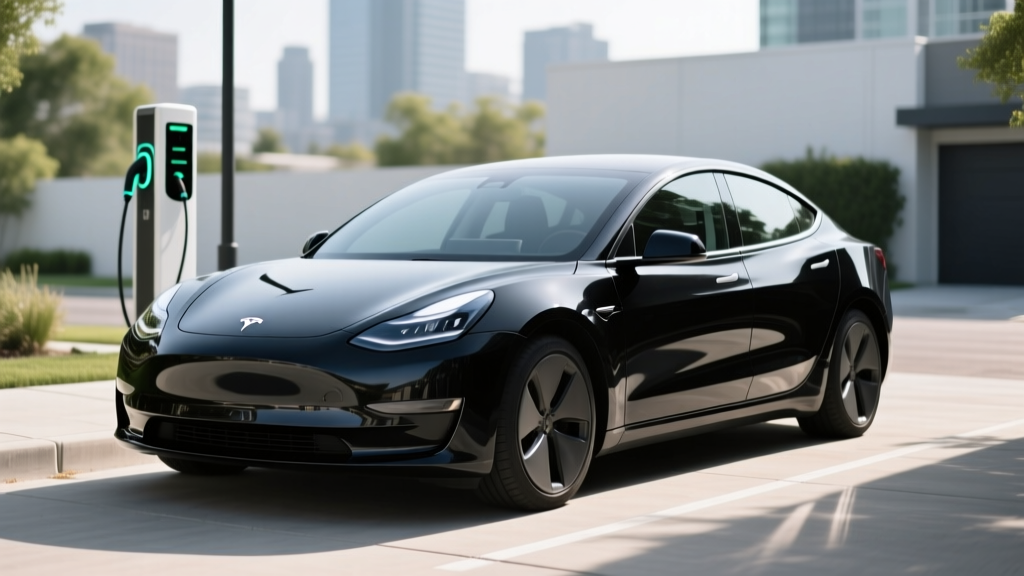
The Tesla Model 3 remains one of the most accessible entry points into the EV market, and a wave of off-lease 2022–2024 units has made the used Model 3 one of the most-searched pre-owned EVs this year. If you've been typing "lease used Tesla Model 3" into search engines, you're not alone — but the financial and technical picture for a pre-owned EV lease is fundamentally different from a new one. This guide covers exactly what you're getting: real-world range, charging behavior, battery chemistry, ownership economics, and the tax-credit nuances that trip up most used-EV buyers.
We focus primarily on the 2022–2024 Tesla Model 3 Long Range AWD and Rear-Wheel Drive (RWD) trims, as these dominate the used-lease market. The refreshed "Highland" Model 3 (introduced for 2024) is also appearing on certified pre-owned lots, and we'll note where its specs diverge.
Spec Table: Used Model 3 at a Glance
| Spec | 2022–2023 RWD | 2022–2023 Long Range AWD | 2024 Highland RWD | 2024 Highland LR AWD |
|---|---|---|---|---|
| EPA Range | 272 mi | 358 mi | 272 mi | 341 mi |
| Battery (usable) | ~57.5 kWh (LFP) | ~75 kWh (NMC) | ~57.5 kWh (LFP) | ~75 kWh (NMC) |
| Max DC Fast Charge | 170 kW | 250 kW | 170 kW | 250 kW |
| 10–80% DCFC Time | ~28 min | ~30 min | ~28 min | ~30 min |
| Level 2 Home Charge | 11.5 kW (~44 mi/hr) | 11.5 kW (~44 mi/hr) | 11.5 kW (~44 mi/hr) | 11.5 kW (~44 mi/hr) |
| 0–60 mph | 5.8 sec | 4.2 sec | 5.8 sec | 4.2 sec |
| Horsepower | 283 hp | 346 hp | 283 hp | 346 hp |
| Drivetrain | RWD (single motor) | AWD (dual motor) | RWD (single motor) | AWD (dual motor) |
| EPA Efficiency | 132 MPGe / 25 kWh/100mi | 131 MPGe / 26 kWh/100mi | 132 MPGe / 25 kWh/100mi | 131 MPGe / 26 kWh/100mi |
| Cargo Volume | 23 cu ft (trunk + frunk) | 23 cu ft | 23 cu ft | 23 cu ft |
| Rear Legroom | 35.2 in | 35.2 in | 36.1 in (Highland) | 36.1 in (Highland) |
| Battery Warranty | 8 yr / 100,000 mi | 8 yr / 120,000 mi | 8 yr / 100,000 mi | 8 yr / 120,000 mi |
| Original MSRP (new) | ~$40,240–$43,990 | ~$49,990–$53,990 | ~$38,990 | ~$47,740 |
Sources: EPA fueleconomy.gov, Tesla owner's manuals. Model-year specs vary; verify VIN-specific data on the window sticker.
Real-World Range: What the EPA Sticker Doesn't Tell You
EPA sticker: 358 miles
Real-world highway (70–75 mph, 65°F): ~290–310 miles
Cold weather (30°F, mixed driving): ~240–270 miles
City/regenerative driving (60°F): ~330–350 miles
The EPA range figure is a blended estimate that assumes a mix of city and highway driving at moderate temperatures. In practice, sustained highway speeds above 70 mph reduce range by roughly 15–20% because EVs lack a multi-speed transmission and aerodynamic drag scales with the square of velocity. Cold weather compounds this: the battery management system draws energy to keep the pack warm, and cabin heating (even with a heat pump on 2022+ models) adds a 10–20% energy penalty.
For the RWD model with its ~57.5 kWh LFP battery, expect real-world highway range closer to 210–230 miles in fair weather and 175–200 miles in winter. That's adequate for most commutes but demands planning on road trips exceeding 200 miles between chargers.
Battery health matters on a used EV. Before signing any used Model 3 lease, pull up the car's energy screen and check the projected range at 100% state of charge. Compare that to the original EPA figure. Tesla's battery management system includes a top and bottom buffer (roughly 2–3 kWh hidden from the user), so a 2022 Long Range showing 330 miles at 100% has experienced roughly 7–8% degradation — well within normal parameters for a 30,000–40,000-mile vehicle.
Charging Speed: DC Fast Charge and Home Level 2
Understanding charging requires separating kW (power — how fast energy flows) from kWh (energy — how much the battery holds). A 250 kW peak doesn't mean you get 250 kW for the entire session. Like all lithium-ion packs, the Model 3 follows a charge curve: power peaks at a low state of charge and tapers as the battery fills to protect cell longevity.
| Charging Level | Power | Miles Added per Hour | Typical Use Case |
|---|---|---|---|
| Level 1 (120V outlet) | ~1.4 kW | ~5 mi/hr | Emergency/trickle only |
| Level 2 (240V, 48A) | 11.5 kW | ~44 mi/hr | Home overnight charging |
| DC Fast Charge (RWD) | Peak 170 kW | ~600 mi/hr (peak) | Road trips; 10–80% in ~28 min |
| DC Fast Charge (Long Range) | Peak 250 kW | ~1,000 mi/hr (peak) | Road trips; 10–80% in ~30 min |
On a Tesla Supercharger V3 (250 kW capable), the Long Range AWD will typically sustain 200+ kW from roughly 10% to 35% SoC, then taper to ~150 kW through 55%, and drop further to ~75 kW by 75%. The advertised "10–80% in 30 minutes" is accurate in moderate temperatures with battery preconditioning active — meaning you navigated to the Supercharger in the car so it warmed the pack en route. Skip preconditioning on a cold day and that 30-minute session can stretch to 45+ minutes.
For home charging, a Level 2 wall connector on a 60A circuit (48A continuous) replenishes roughly 44 miles of range per hour. A full overnight session from 20% to 80% takes about 5–6 hours. Installation cost for a 240V/60A circuit typically runs $800–$2,000 depending on panel proximity and local permit fees; a panel upgrade from 100A to 200A service can add $1,500–$3,500.
Battery Chemistry: LFP vs. NMC and What It Means for a Used Lease
This is where most used Model 3 buyers get tripped up. Tesla quietly shifted the standard-range/RWD Model 3 to LFP (lithium iron phosphate) chemistry starting in late 2021 for North American models. The Long Range retained NMC (nickel manganese cobalt). The differences are significant:
| Attribute | LFP (RWD) | NMC (Long Range) |
|---|---|---|
| Cycle life | 3,000+ cycles | 1,500–2,000 cycles |
| Recommended daily SoC | 100% (charge fully, often) | 80% daily; 100% for trips |
| Energy density | Lower (heavier pack for same kWh) | Higher |
| Cold-weather performance | Weaker; more range loss below freezing | Better cold-weather retention |
| Degradation profile | Very flat; minimal loss over time | ~5–10% in first 30k mi, then flattens |
What this means for a used lease: A 2022–2023 RWD with LFP chemistry is arguably the better long-term bet for battery longevity. Tesla actually recommends charging LFP packs to 100% at least weekly to keep the battery management system calibrated. NMC packs, by contrast, last longest when kept between 20–80% for daily use. If your lease includes a 2023 RWD with 35,000 miles, the LFP pack likely shows minimal degradation — often under 3%.
Pricing, Lease Costs, and the Used-EV Tax Credit
Here's where leasing used gets interesting — and complicated. Under the Inflation Reduction Act, the §25E Used Clean Vehicle Credit offers up to $4,000 (or 30% of the sale price, whichever is lower) on qualifying pre-owned EVs. However, this credit applies to purchases, not traditional leases, and has strict requirements:
- Sale price must be $25,000 or less — this is the biggest hurdle. Many 2022–2023 Model 3 Long Range units still command $27,000–$33,000 on the used market in 2026, making them ineligible.
- Buyer income caps: $75,000 single / $112,500 head of household / $150,000 joint (modified AGI).
- Vehicle must be at least 2 model years old — so in 2026, model year 2024 or older qualifies.
- The credit can only be claimed once per vehicle — if a prior owner already claimed it, you cannot.
- Must purchase from a licensed dealer — private-party sales don't qualify.
Source: IRS §25E Used Clean Vehicle Credit
For a lease specifically, the federal §30D new-vehicle credit and the §25E used-vehicle credit generally do not apply to the lessee. Instead, the leasing company (the lessor) may capture any applicable credit and pass savings through as a capitalized-cost reduction — but this is at the lessor's discretion. Tesla Financial Services and third-party lessors structure deals differently, so always ask: "Is any tax credit being passed through to my lease terms?"
Typical used Model 3 lease terms in 2026 (dealer/certified pre-owned programs):
| Model | Monthly Payment (est.) | Term | Mileage Allowance | Due at Signing |
|---|---|---|---|---|
| 2022 RWD (~30k mi) | $299–$379 | 24–36 months | 10,000 mi/yr | $2,500–$4,000 |
| 2023 LR AWD (~25k mi) | $389–$489 | 24–36 months | 10,000 mi/yr | $3,000–$5,000 |
| 2024 Highland LR (~15k mi) | $449–$549 | 24–36 months | 10,000 mi/yr | $3,500–$5,500 |
These figures vary significantly by region, credit score, residual value assumptions, and whether the lessor applies any incentive pass-through. Always compare the total lease cost (monthly × term + due at signing + disposition fee) against a purchase with financing to see which truly costs less.
Tech, Interior, and the Autopilot Reality Check
The Model 3's cabin is minimalist by design — a single 15.4-inch touchscreen handles navigation, climate, media, and vehicle settings. The 2024 Highland refresh added ventilated front seats, ambient lighting, rear-seat ventilation, and a quieter cabin with acoustic glass. Pre-Highland models (2022–2023) have a solid but plainer interior with synthetic leather and a glass roof that can make the cabin hot in summer sun.
Driver assistance — SAE Level 2, not self-driving:
Tesla Autopilot (standard) and Full Self-Driving Supervised (optional, ~$8,000 or $99/mo subscription) are Level 2 driver-assist systems. You must keep your hands on the wheel and eyes on the road at all times. The vehicle does not drive itself. FSD Supervised can handle some city streets and stoplights, but it makes errors — missed turns, phantom braking, misread construction zones — and the driver is legally responsible for every maneuver. Only Level 4 services like Waymo operate without a human driver in defined zones.
On a used lease, check whether FSD is transferred with the vehicle. Tesla has historically tied FSD to the original purchaser; it does not always transfer to second owners or lessees. As of 2026, Tesla has occasionally offered FSD transfers on certified pre-owned vehicles — but verify this in writing before signing.
Cargo and passenger space: The Model 3 offers 23 cubic feet of combined cargo space (trunk + front trunk/frunk). Rear legroom is 35.2 inches on pre-Highland models and 36.1 inches on the 2024+ Highland — a meaningful improvement for taller passengers. The trunk opening is narrower than a hatchback, which limits hauling bulky items compared to the Model Y's 76 cu ft with seats folded.
Pros and Cons: The Honest Assessment
- Access to Tesla Supercharger network — the most reliable DC fast-charge network in the US (17,000+ V3/V4 stalls)
- Class-leading efficiency: 25–26 kWh/100mi means lower electricity cost per mile than most EVs
- Over-the-air updates continue to add features to older model years
- LFP battery (RWD) offers exceptional longevity with minimal degradation
- Low maintenance: no oil changes, minimal brake wear thanks to regenerative braking
- Strong safety ratings: NHTSA 5-star, IIHS Top Safety Pick+ (2022–2024)
- Used-lease inventory is limited; Tesla does not offer a traditional CPO lease program — most used leases come via third-party lessors or dealer programs
- RWD real-world range (175–230 mi) requires route planning on longer trips
- No physical buttons; all climate/mirror/steering-wheel adjustments are screen-based
- FSD likely does not transfer to a used lease — don't pay extra expecting it
- Insurance premiums run 15–30% higher than comparable gas sedans (average $2,400–$3,200/yr depending on state and driving record)
- Ride quality on pre-Highland models can be firm on rough pavement; Highland improved damping significantly
- Turn-signal stalks removed on 2024+ Highland (steering-wheel buttons instead) — polarizing for many drivers
Who Should Lease a Used Model 3 — and Who Shouldn't
Lease a used Model 3 RWD if: You commute under 60 miles round-trip, have reliable home Level 2 charging, want the lowest monthly payment in a premium EV, and value long-term battery durability (LFP).
Lease a used Model 3 Long Range AWD if: You regularly drive 200+ miles between charges, live in a cold-weather state, need dual-motor traction for snow, or take quarterly road trips where Supercharger access matters.
Look elsewhere (Model Y, Hyundai Ioniq 5, Chevrolet Equinox EV) if: You need hatchback cargo space, prefer physical buttons, want a guaranteed new-vehicle $7,500 tax credit, or require a traditional manufacturer CPO lease program with full warranty support.
Frequently Asked Questions
What is the real-world range of a used Tesla Model 3?
For the 2022–2023 Long Range AWD, expect roughly 290–310 miles on the highway in mild weather and 240–270 miles in winter. The RWD with its smaller LFP battery delivers about 210–230 miles highway in fair conditions and 175–200 miles in cold weather. Always check the vehicle's displayed range at 100% SoC before committing to a lease.
How fast does the used Model 3 charge at home and on road trips?
At home on a Level 2 (240V, 48A) charger, both trims add roughly 44 miles of range per hour — a full overnight session covers most daily needs. On a 250 kW Supercharger, the Long Range peaks at 250 kW and charges 10–80% in about 30 minutes with preconditioning. The RWD peaks at 170 kW with a similar 10–80% time of ~28 minutes, thanks to its smaller battery.
Does a used Model 3 lease qualify for the federal EV tax credit?
Generally, no. The §25E used-EV credit (up to $4,000) applies to purchases from dealers, not leases. The §30D new-vehicle credit doesn't apply to used cars. In a lease, the lessor owns the vehicle and may capture any available incentive — ask explicitly whether any credit is passed through as a cap-cost reduction. Additionally, the §25E credit has a $25,000 sale-price cap that many used Model 3s exceed.
Is a used Tesla Model 3 worth it versus competitors like the Hyundai Ioniq 5 or BMW i4?
The Model 3 wins on charging infrastructure (Supercharger network), efficiency (lowest kWh/100mi in its class), and software. The Ioniq 5 charges faster on non-Tesla networks (up to 350 kW on 800V architecture, 10–80% in ~18 min) and offers more cargo space. The BMW i4 provides a more traditional luxury interior and physical controls but costs significantly more on the used market. If Supercharger access and software matter most, the Model 3 remains the default. If you prioritize space or charging versatility on Electrify America, the Ioniq 5 is the stronger pick.
What should I check before leasing a used Model 3?
Verify the following: (1) Battery health — check displayed range at 100% SoC and compare to EPA spec. (2) Tire condition — EVs are heavy and wear tires faster; replacement runs $800–$1,400 for a set. (3) Service history — confirm no open recalls (some 2022–2023 models had seat-belt and suspension recalls). (4) FSD status — don't assume it transfers. (5) Warranty remaining — the 8-year battery warranty starts from the original in-service date, so a 2022 model is covered through roughly 2030. (6) Lease terms — confirm mileage allowance, excess-wear charges, and whether you can purchase at lease-end.
How much does it cost to charge a Model 3 vs. buying gas?
At the US average residential electricity rate of ~$0.16/kWh, charging a Long Range Model 3 from 20–80% at home costs roughly $7.20 for about 215 miles of range — or about 3.3 cents per mile. A comparable gas sedan getting 30 MPG at $3.50/gallon costs about 11.7 cents per mile. Over 12,000 miles per year, that's roughly $1,404 in electricity vs. $4,140 in gasoline — a savings of approximately $2,700 annually. Public DC fast charging is more expensive ($0.35–$0.55/kWh), so maximize home charging to realize full savings.