Quick Verdict: Is Leasing a Tesla Model Y the Right Call?
The Tesla Model Y remains the best-selling electric vehicle in the United States for good reason: it delivers a rare combination of usable range, fast charging, spacious cargo capacity, and access to the Supercharger network. For 2026, the refreshed Model Y (internally dubbed "Juniper") brings a quieter cabin, updated suspension tuning, a rear-seat touchscreen, and ambient lighting that narrows the interior-quality gap with luxury rivals.
But whether you should lease a Tesla Model Y or buy one outright depends heavily on your mileage habits, how quickly you want to upgrade, and whether you can capture the federal EV tax credit through a lease structure. Leasing sidesteps some tax-credit income and sourcing restrictions via the commercial clean vehicle credit (§45W), which leasing companies can pass along as a capitalized-cost reduction. Below, we break down every number that matters — range, charging, pricing, and ownership math — so you can decide with confidence.
Range, Efficiency, and Real-World Expectations
The 2026 Model Y lineup includes Rear-Wheel Drive (RWD), Long Range AWD, and Performance AWD trims. Here is how the EPA numbers shake out, along with the real-world caveats every buyer should internalize before signing a lease.
| Trim | EPA Range | Real-World Highway (~75 mph) | Cold Weather (20°F, mixed) |
|---|---|---|---|
| RWD | 300 mi | ~255 mi | ~210 mi |
| Long Range AWD | 327 mi | ~275 mi | ~225 mi |
| Performance AWD | 295 mi | ~245 mi | ~200 mi |
Source: fueleconomy.gov. Real-world estimates based on sustained highway driving and cold-weather testing. Highway speeds above 70 mph and temperatures below freezing reduce range 15–35% depending on conditions.
The RWD trim uses a lithium iron phosphate (LFP) battery, which Tesla recommends charging to 100% regularly — a meaningful advantage for daily commuting where you want the full pack available. The Long Range and Performance trims use nickel-manganese-cobalt (NMC) chemistry, where Tesla recommends a daily charge limit of 80% to preserve long-term health, reserving 100% for road trips.
| Spec | RWD | Long Range AWD | Performance AWD |
|---|---|---|---|
| Battery Capacity (usable) | ~60 kWh (LFP) | ~78 kWh (NMC) | ~78 kWh (NMC) |
| EPA Range | 300 mi | 327 mi | 295 mi |
| Efficiency | 123 MPGe / 27 kWh/100mi | 119 MPGe / 28 kWh/100mi | 111 MPGe / 30 kWh/100mi |
| 0-60 mph | 5.8 sec | 4.8 sec | 3.5 sec |
| Horsepower | 295 hp | 384 hp | 456 hp |
| Drivetrain | RWD (single motor) | AWD (dual motor) | AWD (dual motor) |
| Top Speed | 135 mph | 135 mph | 155 mph |
Charging Speed: DC Fast, Level 2, and the Supercharger Advantage
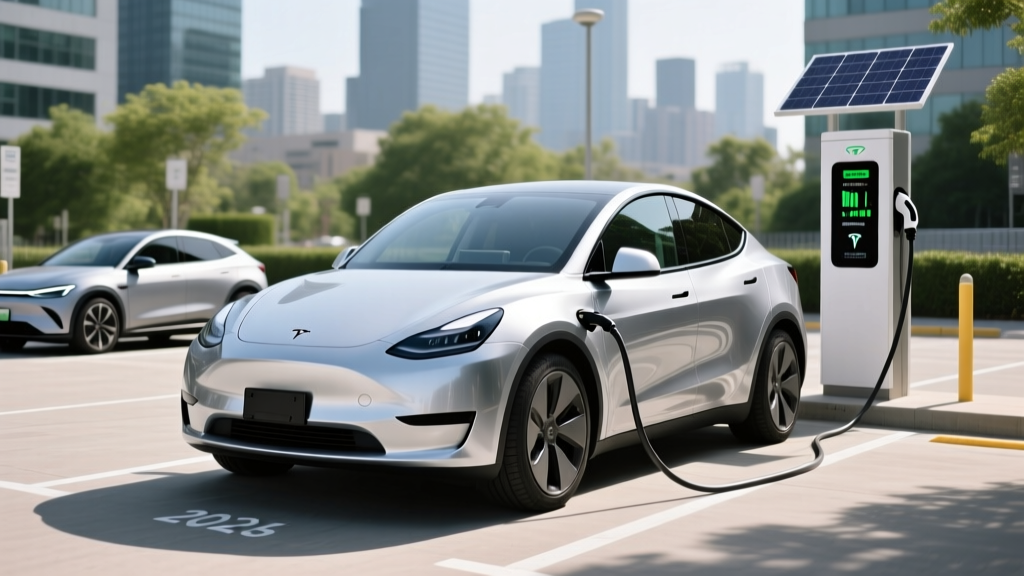
Charging speed is where the Model Y continues to outperform many rivals. Tesla's V4 Superchargers, now widely deployed across the U.S., deliver up to 250 kW to the Model Y on Long Range and Performance trims. The RWD trim, constrained by its smaller LFP pack, peaks around 170 kW.
| Charging Method | RWD | Long Range / Performance | Miles Added per Hour |
|---|---|---|---|
| Level 1 (120V, 12A) | 1.4 kW | 1.4 kW | ~4–5 mi/hr |
| Level 2 (240V, 48A) | 11.5 kW | 11.5 kW | ~37–44 mi/hr |
| DC Fast Charge (peak) | 170 kW | 250 kW | N/A (see 10-80% time) |
| 10-80% DC Fast Charge | ~25 min | ~18 min | N/A |
Peak DC rates are not sustained across the full charge session. Above 80% SoC, the charge curve tapers significantly — expect 80-100% to take nearly as long as 10-80%. Preconditioning the battery (automatic when a Supercharger is set as your navigation destination) is essential for achieving peak rates in cold weather.
The Model Y uses the North American Charging Standard (NACS) connector natively. This is now the dominant connector in the U.S., with Ford, GM, Rivian, Hyundai, and most major automakers adopting it. If you lease a Model Y, you'll have seamless access to Tesla's Supercharger network — over 6,000 stations and 65,000+ connectors in North America — without adapters, which remains the most reliable public charging experience available.
Lease Pricing, MSRP, and the Federal Tax Credit Question
Understanding what you'll actually pay requires separating MSRP from lease economics and tax-credit mechanics. Here is the current pricing landscape for the 2026 Model Y.
| Trim | Base MSRP | As-Tested (typical options) | §30D Purchase Credit | Lease Credit (§45W passthrough) |
|---|---|---|---|---|
| RWD | $44,990 | $46,490 (w/ paint + wheels) | Up to $7,500* | Often $7,500 applied as cap reduction |
| Long Range AWD | $48,990 | $51,490 | Up to $7,500* | Often $7,500 applied as cap reduction |
| Performance AWD | $52,490 | $54,990 | Up to $7,500* | Often $7,500 applied as cap reduction |
*§30D purchase credit subject to buyer income caps ($150K single / $300K joint), MSRP cap ($80K for SUVs), and battery critical-mineral and component sourcing requirements per IRS guidelines. Eligibility varies by model year and sourcing — verify at purchase time.
The lease advantage: When you lease, the leasing company (the legal owner) can claim the commercial clean vehicle credit under §45W and pass the savings to you as a capitalized-cost reduction. This bypasses the personal income caps and some sourcing restrictions that apply to §30D purchase credits. Tesla Financial Services and third-party lessors have historically passed through the full $7,500, but this is not guaranteed — always confirm the "lease cash" or "cap cost reduction" line item in your lease quote.
Typical 2026 Model Y lease terms (36 months, 10,000 miles/year, with $7,500 cap reduction applied):
- RWD: ~$399–$449/month (depending on money factor and residual)
- Long Range AWD: ~$449–$519/month
- Performance AWD: ~$529–$599/month
These figures assume no down payment beyond first month + fees. Putting money down on a lease is generally inadvisable — if the car is totaled, you lose that cash.
Interior Space, Cargo, and Daily Livability
The Model Y's crossover proportions give it a significant cargo advantage over the Model 3 sedan and most electric competitors in its price band.
- Cargo volume (rear seats up): 30.2 cu ft
- Cargo volume (rear seats folded): 72.1 cu ft
- Front trunk (frunk): 4.1 cu ft
- Rear legroom: 41.6 inches
- Front headroom: 41.0 inches
- Seating: 5 passengers standard; 7-seat option available on Long Range (third row best suited for small children)
The 2026 Juniper refresh adds ventilated front seats, power-folding second-row seats, improved sound-deadening glass, and a rear-seat 8-inch touchscreen for climate and entertainment control. Build quality — historically a Tesla weak point — has improved noticeably, with tighter panel gaps and better interior material quality that approaches what you'd expect at this price point.
Tech, Driver Assistance, and What You Should Know About Autopilot
Every Model Y comes standard with Tesla's Autopilot suite, which includes adaptive cruise control, lane-centering steering, automatic emergency braking, and blind-spot monitoring. The optional Full Self-Driving (Supervised) package ($8,000 purchase or $99/month subscription) adds automated lane changes, traffic-light and stop-sign recognition, and navigation-guided on/off-ramp maneuvers.
Both Autopilot and FSD (Supervised) are SAE Level 2 driver-assistance systems. This means the driver must remain fully engaged — hands on or near the wheel, eyes on the road — at all times. The system does not make the car "self-driving." Tesla's steering-wheel torque monitoring and cabin camera enforce attention, but the legal and practical responsibility for every driving decision remains with you.
The 15.4-inch central touchscreen handles all infotainment, navigation, climate, and vehicle settings. There is no traditional instrument cluster — speed and driving info appear in the upper-left corner of the main display. The 2026 refresh adds a powered-folding steering column and a front-row ambient lighting strip. Wireless phone charging, USB-C ports (front and rear), and a 17-speaker premium audio system are standard.
- Drive autonomously without supervision — you are the driver at all times
- Reliably handle construction zones, unmapped roads, or severe weather
- Eliminate liability — you are responsible for all traffic violations and collisions
- Replace attentive driving on complex urban streets with pedestrians and cyclists
Warranty, Battery Longevity, and Depreciation
Tesla provides the following warranty coverage on the 2026 Model Y:
- Basic vehicle: 4 years / 50,000 miles
- Battery and drive unit: 8 years / 120,000 miles (Long Range/Performance) or 8 years / 100,000 miles (RWD)
- Battery capacity retention threshold: 70% of original capacity during the warranty period
Real-world data from Tesla's fleet indicates average battery degradation of approximately 12% after 150,000 miles for NMC packs, with LFP packs showing slightly less degradation but lower initial energy density. If you lease for 36 months and 30,000–36,000 miles, battery degradation is a non-issue — you'll return the car well within warranty.
Depreciation and the lease argument: EV depreciation has been volatile. The Model Y experienced steeper-than-average depreciation in 2023–2024 due to aggressive Tesla price cuts, which hurt resale values across the board. Leasing transfers depreciation risk to the lessor — if values drop further, it's their problem, not yours. This is one of the strongest arguments for leasing a Model Y right now rather than buying.
Who Should Lease the Model Y — And Who Should Look Elsewhere?
- You drive 10,000–12,000 miles/year or fewer (lease penalties for excess mileage are steep)
- You want the Supercharger network without adapter hassles
- You prefer swapping vehicles every 3 years to stay current with EV tech
- You want to sidestep depreciation risk in a volatile EV resale market
- Your household income exceeds §30D caps but you can capture the lease credit passthrough
- You drive 15,000+ miles/year (buying avoids per-mile lease penalties)
- You want to modify the vehicle (wraps, wheels, aftermarket — leases prohibit this)
- You need a physical instrument cluster or traditional control layout
- You prefer a dealership service experience over Tesla's mobile-ranger/service-center model
- Class-leading Supercharger network access (NACS native)
- Best-in-class cargo space for a compact electric crossover
- 250 kW peak DC fast charging (Long Range/Performance)
- Strong efficiency: 27–30 kWh/100 mi depending on trim
- Lease credit passthrough bypasses §30D income/sourcing caps
- OTA updates continuously add features
- LFP battery on RWD allows 100% daily charging
- No physical instrument cluster or traditional stalks (turn signals on steering wheel)
- Ride quality firm on Performance trim with 21-inch wheels
- No Apple CarPlay or Android Auto
- Service center availability varies by region; mobile ranger wait times can stretch
- FSD (Supervised) remains Level 2 despite the "self-driving" name
- Insurance premiums run 15–30% higher than comparable non-Tesla crossovers
- Lease mileage penalties at $0.20–$0.25/mile if you exceed your allotment
Frequently Asked Questions
What is the real-world range of the Tesla Model Y?
The EPA rates the 2026 Model Y Long Range AWD at 327 miles. In real-world highway driving at 75 mph, expect roughly 275 miles. In cold weather (below freezing), plan for 225 miles or less. The RWD trim's LFP battery allows you to charge to 100% daily, giving you the full 300 EPA miles for commutes, but highway and cold-weather reductions still apply.
How fast does the Model Y charge at home and on road trips?
On a home Level 2 charger (240V, 48A), the Model Y adds approximately 37–44 miles of range per hour — an overnight charge from 20% to 80% takes roughly 5–6 hours. On a Tesla V4 Supercharger, the Long Range and Performance trims peak at 250 kW and charge from 10% to 80% in about 18 minutes. The RWD trim peaks at 170 kW and takes about 25 minutes for the same session.
Does leasing a Tesla Model Y qualify for the federal tax credit?
Not directly through §30D (the personal purchase credit). However, the leasing company can claim the §45W commercial clean vehicle credit and pass it to you as a capitalized-cost reduction, effectively lowering your monthly payment. This is currently the most reliable way to capture the full $7,500 benefit regardless of your income level, but confirm the passthrough is reflected in your lease quote. Always verify current rules at IRS.gov.
Is the Model Y worth leasing vs. the Hyundai Ioniq 5 or Ford Mustang Mach-E?
The Model Y wins on Supercharger access, cargo space, and charging speed. The Ioniq 5 offers a more distinctive design, 800V architecture for 10-80% charging in 18 minutes at 350 kW chargers, and a slightly softer ride. The Mach-E provides a more traditional crossover feel with physical controls. If Supercharger reliability is your top priority and you value cargo volume, the Model Y is the strongest choice. If you prefer a more conventional interior or want 800V charging flexibility on non-Tesla networks, the Ioniq 5 is a compelling alternative.
What happens at the end of a Tesla Model Y lease?
Tesla Financial Services leases typically do not include a purchase option at lease-end for the Model Y (this can vary — confirm in your contract). You return the vehicle, pay any excess mileage or wear charges, and walk away or start a new lease. This is different from many traditional automaker leases, which offer a buyout at the residual value. If you think you might want to keep the car long-term, buying may be the better path.
How much does it cost to charge a Model Y vs. gas?
At the U.S. average electricity rate of $0.17/kWh, fully charging a Long Range Model Y (78 kWh) costs about $13.25 for 327 miles — roughly $0.04 per mile. A comparable gas crossover at 28 MPG with $3.50/gallon fuel costs $0.125 per mile. Over 12,000 miles per year, that's approximately $480 in electricity vs. $1,500 in gas — a savings of about $1,020 annually. Supercharger pricing varies ($0.25–$0.40/kWh depending on location and time), which raises road-trip charging costs but still undercuts gasoline.