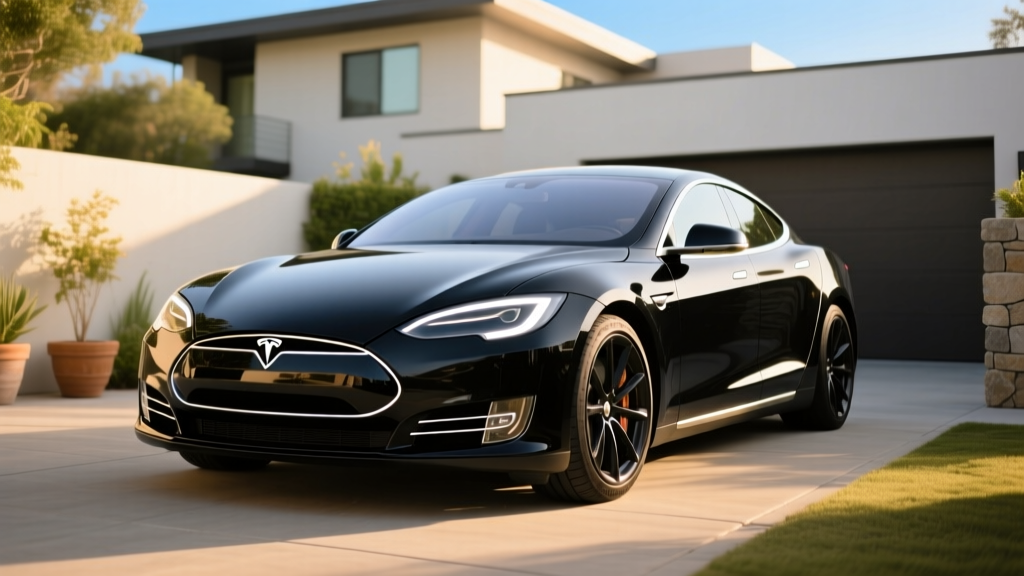
The Tesla Model S remains one of the longest-range, quickest-accelerating sedans on the market more than a decade after its debut. But with a starting price hovering near $80,000, many buyers are exploring whether to lease a Tesla Model S rather than purchase outright. Leasing can lower monthly payments, sidestep depreciation risk, and — crucially — unlock a federal incentive path that a direct purchase may not.
This review covers the 2026 Tesla Model S Long Range and Plaid trims with exact EPA range figures, charging speeds, battery specs, pricing, and a clear-eyed look at who should lease versus buy.
2026 Tesla Model S: Quick Spec Overview
| Spec | Long Range | Plaid |
|---|---|---|
| EPA Range | 402 mi | 359 mi |
| Battery (usable) | ~100 kWh, NMC | ~100 kWh, NMC |
| Drivetrain | Dual-Motor AWD | Tri-Motor AWD |
| Horsepower | 670 hp | 1,020 hp |
| 0–60 mph | 3.1 sec | 1.99 sec |
| Top Speed | 155 mph | 200 mph |
| Max DC Fast Charge | 250 kW | 250 kW |
| 10–80% DCFC Time | ~30 min | ~30 min |
| Level 2 (11.5 kW) | ~41 mi/hr | ~41 mi/hr |
| EPA Efficiency | 124 MPGe (28 kWh/100mi) | 116 MPGe (29 kWh/100mi) |
| Cargo (rear + frunk) | 28 cu ft + 3.1 cu ft | 28 cu ft + 3.1 cu ft |
| Rear Legroom | 35.4 in | 35.4 in |
| Base MSRP | $79,990 | $94,990 |
| Battery Warranty | 8 yr / 150,000 mi | 8 yr / 150,000 mi |
Source: fueleconomy.gov, Tesla.com official specs.
Real-World Range: What the EPA Number Doesn't Tell You
Real-World Expectation: ~320–360 mi highway; ~280–310 mi in freezing temps with cabin heat
The Model S Long Range's 402-mile EPA estimate is genuinely class-leading among luxury sedans. But that number is a blended city/highway cycle. On a sustained 75-mph highway run in moderate temperatures (65–75°F), expect to consume roughly 30–32 kWh/100 miles, which translates to about 320–340 miles of usable range before you'd want to stop.
Cold weather is the equalizer. At 20°F with the cabin heater active, lithium-ion chemistry loses efficiency and the battery's usable capacity effectively shrinks by 15–25%. Plan for 280–310 miles of real range in deep winter. The Model S uses a heat pump (standard since the 2021 refresh), which significantly reduces the climate-system energy draw compared to resistive heating — but physics still wins in sub-freezing conditions.
For daily commuting under 80 miles round-trip, you'll charge every 3–5 days on a home Level 2. For road trips, the 402-mile figure means you can realistically space Supercharger stops 250–280 miles apart while keeping a comfortable 10–15% buffer.
Charging Speed: 250 kW Peak, but Watch the Curve
| Charging Method | Power / Rate | Miles Added per Hour | Notes |
|---|---|---|---|
| Level 1 (120V / 12A) | ~1.4 kW | ~3–4 mi/hr | Emergency/trickle only |
| Level 2 (240V / 48A) | 11.5 kW | ~41 mi/hr | Full charge in ~10 hrs |
| DC Fast (Supercharger V3) | 250 kW peak | ~200 mi in 15 min | 10–80% in ~30 min |
| DC Fast (CCS adapter, EA/others) | Up to 250 kW | Varies by station | CCS adapter required ($175+) |
The Model S peaks at 250 kW on a Tesla V3 Supercharger — but that peak is short-lived. The charge curve tapers progressively: you'll see 250 kW roughly between 5–15% state of charge, then it steps down through 175 kW, 120 kW, and below 50 kW once you cross 80%. This is why Tesla quotes a 10–80% time of approximately 30 minutes rather than a simple peak figure.
For home charging, the onboard charger accepts up to 11.5 kW (48 amps on a 60-amp circuit). A Wall Connector or equivalent Level 2 unit adds roughly 41 miles of range per hour — enough to replenish a full day's driving in 1–2 hours overnight. Expect a full 0–100% Level 2 charge in about 10 hours.
Preconditioning matters. If you navigate to a Supercharger in the Tesla app or onboard nav, the car will warm the battery en route, enabling faster charge acceptance on arrival. Skip preconditioning in cold weather and your first 10 minutes at the stall may be limited to under 100 kW.
Lease vs. Buy: Pricing, Tax Credits, and the §30D Workaround
| Cost Factor | Long Range | Plaid |
|---|---|---|
| Base MSRP | $79,990 | $94,990 |
| Destination Fee | $1,390 | $1,390 |
| Federal §30D Credit (purchase) | $0 — MSRP cap exceeded | $0 — MSRP cap exceeded |
| Lease Incentive (§45W commercial credit) | Up to $7,500 passed through | Up to $7,500 passed through |
| Estimated Monthly Lease (36 mo, $7,500 down) | ~$899–$999/mo | ~$1,099–$1,199/mo |
Here's the critical detail for anyone researching how to lease a Tesla Model S: the federal §30D clean vehicle credit has a $55,000 MSRP cap for sedans. The Model S, starting at $79,990, does not qualify for the $7,500 purchase credit regardless of your income or battery sourcing.
However, when you lease, the vehicle is technically purchased by the leasing entity (a commercial buyer). Under IRS §45W, the leasing company can claim the commercial clean vehicle credit — and many pass some or all of that $7,500 savings to the lessee as a capitalized cost reduction (effectively a down-payment credit). Tesla has historically applied this as a "lease credit" that reduces monthly payments.
- ❌ Sedan MSRP cap: $55,000 (Model S starts at $79,990)
- ❌ Income caps: $150K single / $300K joint (irrelevant — fails MSRP test)
- ❌ Battery sourcing / critical mineral rules (irrelevant — fails MSRP test)
- ✅ Leasing entity claims credit, may pass $7,500 to lessee
- ✅ No MSRP cap, no income cap, no sourcing requirement
- ⚠️ Not guaranteed — confirm with Tesla Finance at signing
This "lease loophole" is the primary financial reason buyers choose to lease a Model S rather than purchase. Always confirm the current lease incentive amount directly with Tesla before signing — it can change quarterly.
Performance and Driving Dynamics
The Long Range dual-motor setup delivers 670 hp and a 3.1-second 0–60 mph time — quicker than nearly any internal-combustion sedan ever built. The Plaid's tri-motor, 1,020-hp configuration hits 1.99 seconds, putting it in hypercar territory.
But beyond straight-line speed, the Model S uses an adaptive air suspension that adjusts ride height and damping automatically. At highway speeds it drops for aerodynamic efficiency; on rough roads it softens. The steering is precise if slightly numb — typical of Tesla's electric power steering tuning.
Regenerative braking offers two modes: Standard (strong, enables one-pedal driving in most conditions) and Low. There is no user-adjustable blend — a common complaint from drivers who prefer gradual regen ramp-up.
Interior, Tech, and Driver Assistance
The Model S interior is minimalist by design: a 17-inch center touchscreen handles virtually all controls, a 12.3-inch driver cluster shows speed and range, and a rear 8-inch screen serves passengers. Build quality has improved substantially since the 2021 refresh — panel gaps are tighter, materials are premium (vegan leather, real aluminum trim), and cabin noise is well-suppressed.
Autopilot comes standard and includes adaptive cruise control, lane-keeping, and automatic emergency braking. Full Self-Driving (Supervised) is a $8,000 option (or $99/month subscription) that adds automated lane changes, city-street navigation, and traffic-light recognition.
Standout tech features:
- Over-the-air software updates that add features post-purchase
- Native Supercharger network access (17,000+ stalls in North America)
- Sentry Mode (360° parking surveillance with cloud clips)
- Dog Mode / Camp Mode for climate control while parked
- Gaming-capable infotainment (AMD Ryzen processor, Steam integration)
Notable drawbacks:
- Yoke steering wheel is polarizing and makes low-speed maneuvers awkward for some
- No physical buttons for climate, wipers, or glovebox — all touchscreen
- Rear seat cushion is relatively flat; long-legged passengers may want more thigh support
- No Apple CarPlay or Android Auto — Tesla's native OS only
Competitors: How Does the Model S Stack Up?
The luxury EV sedan segment has grown. Here's how the Model S compares to its closest rivals on paper and in practice:
| Spec | Tesla Model S LR | Lucid Air Pure | BMW i5 M60 | Mercedes EQS 450+ |
|---|---|---|---|---|
| EPA Range | 402 mi | 419 mi | 295 mi | 390 mi |
| 0–60 mph | 3.1 sec | 5.2 sec | 3.7 sec | 5.3 sec |
| Max DCFC | 250 kW | 200 kW | 205 kW | 200 kW |
| Base MSRP | $79,990 | $69,900 | $84,100 | $104,400 |
| Supercharger Access | Native | Adapter needed | Adapter needed | Adapter needed |
The Lucid Air Pure offers slightly more range at a lower price but with less power and no native Supercharger access. The BMW i5 is more traditionally luxurious but gives up over 100 miles of range. The EQS is a comfort king but costs significantly more and charges slower. The Model S's combination of range, performance, and charging infrastructure remains hard to beat holistically.
Pros, Cons, and Who Should Lease a Tesla Model S
- 402-mile EPA range — longest in its class
- Native Supercharger network (most reliable DCFC in the US)
- Sub-3.2-second 0–60 (Long Range); sub-2.0 (Plaid)
- OTA updates continuously improve the car
- Lease loophole may unlock $7,500 federal incentive
- Strong cargo capacity (28 cu ft hatchback + frunk)
- 8-year / 150,000-mile battery warranty
- $79,990+ MSRP — fails §30D sedan cap for purchase credit
- Touchscreen-only controls frustrate some drivers
- No CarPlay/Android Auto
- Yoke steering is love-it-or-hate-it
- Insurance premiums run 20–40% higher than comparable ICE sedans
- Resale value uncertainty as new competitors enter
- Rear seat comfort lags German luxury rivals
- You want the longest range and fastest charging in a luxury sedan
- You drive 12,000–15,000 miles/year (fits standard lease terms)
- You want to capture the §45W lease incentive unavailable on purchase
- You road-trip frequently and value Supercharger reliability
- You prefer to swap cars every 3 years and avoid battery degradation risk
- You drive over 15,000 miles/year (excess-mile penalties add up at $0.20–$0.30/mi)
- You want to keep the car 7+ years (purchase makes more financial sense)
- You prioritize traditional luxury materials and physical controls (consider BMW i5, Mercedes EQS)
- You need a sub-$55K sedan to qualify for the full §30D purchase credit
Frequently Asked Questions
What is the real-world range of the Tesla Model S?
The Long Range model carries a 402-mile EPA estimate. In real-world highway driving at 70–75 mph in moderate temperatures, expect 320–360 miles. In freezing weather with cabin heat, plan for 280–310 miles. The Plaid trim drops to 359 miles EPA, roughly 280–320 real-world highway.
How fast does the Model S charge at home and on the road?
On a DC fast charger (Tesla Supercharger V3), the Model S peaks at 250 kW and charges from 10–80% in approximately 30 minutes. At home on a Level 2 (240V / 48A / 11.5 kW), it adds about 41 miles of range per hour, fully charging in roughly 10 hours. Level 1 (120V) adds just 3–4 miles per hour and is only practical for emergencies.
Does the Tesla Model S qualify for the $7,500 federal EV tax credit?
Not for direct purchase. The §30D credit caps sedan eligibility at $55,000 MSRP, and the Model S starts at $79,990. However, leasing may allow the leasing company to claim the §45W commercial clean vehicle credit (up to $7,500) and pass savings to you as a capitalized cost reduction. Confirm current incentive amounts with Tesla Finance before signing.
How much does it cost to lease a Tesla Model S monthly?
As of early 2026, a 36-month lease on the Model S Long Range with $7,500 due at signing typically runs $899–$999 per month, depending on the money factor, residual value, and whether the §45W lease credit is applied. Plaid leases generally fall in the $1,099–$1,199 range. Rates vary by region and credit tier.
Is the Model S worth it over the Lucid Air or BMW i5?
If range and charging infrastructure are your top priorities, the Model S (402 mi + native Supercharger access) wins. If you want a lower entry price and slightly more range, the Lucid Air Pure ($69,900, 419 mi EPA) is compelling but has a less proven service network. If you prefer traditional luxury, physical controls, and dealer service, the BMW i5 is excellent but sacrifices 100+ miles of range.
What is the battery warranty on the Tesla Model S?
Tesla covers the Model S battery and drive units for 8 years or 150,000 miles, whichever comes first, with a minimum 70% capacity retention guarantee. If the battery degrades below 70% state of health within that period, Tesla will repair or replace it at no cost.
Can I tow with the Tesla Model S?
Tesla does not rate the Model S for towing and does not offer a factory tow hitch. If towing is a requirement, consider the Model X (rated up to 5,000 lbs) or a truck-based EV like the Rivian R1T or Ford F-150 Lightning.
Tax credit rules referenced are based on IRS guidance for clean vehicle credits as of 2026. Eligibility depends on individual circumstances — consult a tax professional. Range and efficiency data sourced from fueleconomy.gov.