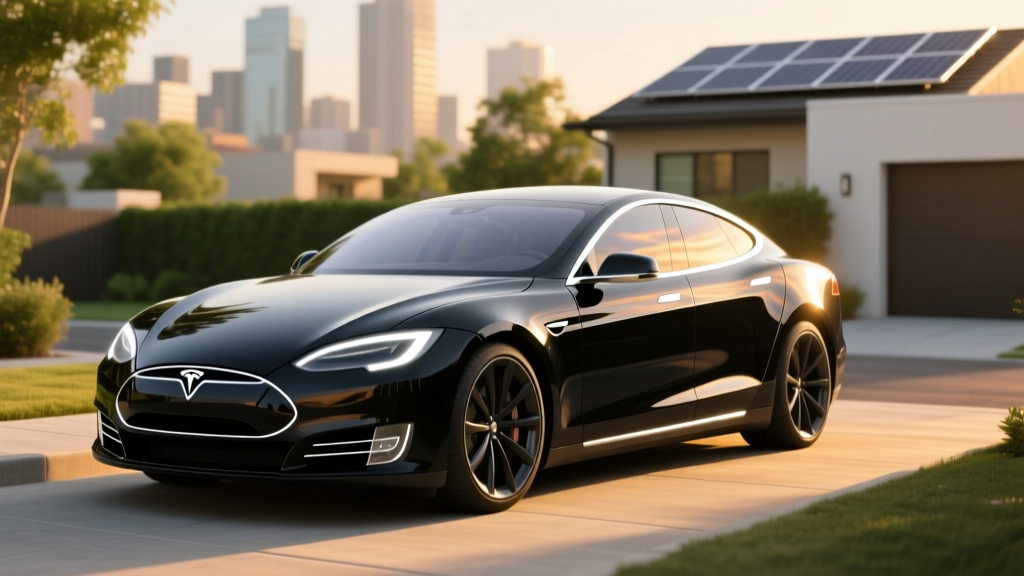
Quick Verdict: Who Should Lease the Model S?
The Tesla Model S remains the benchmark luxury electric sedan — a 400+ mile range, sub-2-second Plaid acceleration, and access to the most reliable DC fast-charging network in North America. But at a starting MSRP of $79,990, buying outright is a steep commitment for a vehicle class where depreciation runs 40-50% over three years. That's where leasing enters the conversation.
Leasing the Model S can lower your monthly outlay, shield you from long-term battery degradation risk, and — critically — let you capture the $7,500 federal EV tax credit even if the vehicle's MSRP exceeds the IRS purchase cap for sedans. Here's everything you need to know before signing.
2026 Tesla Model S Spec Sheet at a Glance
| Spec | Long Range (AWD) | Plaid (Tri-Motor AWD) |
|---|---|---|
| Base MSRP | $79,990 | $94,990 |
| EPA Range | 402 miles | 396 miles |
| Battery (usable) | ~95 kWh (NMC) | ~95 kWh (NMC) |
| Horsepower | 670 hp | 1,020 hp |
| 0–60 mph | 3.1 sec | 1.99 sec |
| Top Speed | 155 mph | 200 mph |
| Drivetrain | Dual-Motor AWD | Tri-Motor AWD |
| Max DC Fast Charge | 250 kW | 250 kW |
| 10–80% DC Time | ~27 min | ~27 min |
| Level 2 Home Charge | 11.5 kW (~44 mi/hr) | 11.5 kW (~44 mi/hr) |
| MPGe (combined) | 120 MPGe | 116 MPGe |
| kWh/100 mi | 28 | 29 |
| Cargo Volume | 28 cu ft (rear seats up) | 28 cu ft (rear seats up) |
| Rear Legroom | 35.4 in | 35.4 in |
| Battery Warranty | 8 yr / 150,000 mi | 8 yr / 150,000 mi |
| Basic Warranty | 4 yr / 50,000 mi | 4 yr / 50,000 mi |
Range & Efficiency: EPA vs. the Real World
Real-World Expectation: ~320–350 miles highway at 70 mph; ~260–290 miles in sub-30°F cold weather with cabin heating.
The Model S Long Range posts a class-leading 402-mile EPA rating. In practice, the large NMC lithium-ion pack delivers strong efficiency in mixed suburban driving — expect 370–390 miles if your commute blends city regen-braking with moderate highway speeds.
Highway cruising is where reality diverges from the sticker. At sustained 75–80 mph, aerodynamic drag cuts range to roughly 320–350 miles. That's still enough for most single-day road trips, but it's not 402. In freezing temperatures, the heat pump helps, but cabin heating and battery thermal management still reduce effective range by 20–30%. Plan winter road trips around ~270 miles of usable range between charges.
Efficiency lands at 28 kWh/100 miles (Long Range) — competitive with the Lucid Air Pure (26 kWh/100 mi) and meaningfully better than the Mercedes EQS 450+ (32 kWh/100 mi), despite the Model S being a decade older in platform architecture.
Charging Speed: 250 kW Peak, But Read the Curve
| Charge Level | Power / Rate | Miles Added per Hour | Notes |
|---|---|---|---|
| Level 1 (120V) | ~1.4 kW | ~5 mi/hr | Emergency/trickle only |
| Level 2 (240V, 48A) | 11.5 kW | ~44 mi/hr | Full charge in ~9 hrs |
| DC Fast (Tesla V3 Supercharger) | 250 kW peak | ~200 mi in 15 min | 10–80% in ~27 min |
| DC Fast (V4 Supercharger) | Up to 250 kW | Similar to V3 | CCS-adapter compatible |
Tesla's Supercharger network remains the gold standard for public charging reliability. The Model S peaks at 250 kW on V3 and V4 stalls, adding up to 200 miles in 15 minutes under ideal conditions — meaning a preconditioned battery at low state of charge (SoC) and moderate ambient temperature.
Here's what the marketing doesn't emphasize: 250 kW is a peak, not a sustained rate. The charge curve tapers sharply above 50% SoC, and by 80% you're pulling closer to 60–70 kW. A realistic 10–80% session takes 25–30 minutes. That's slower than the Hyundai Ioniq 5 (800V architecture, 10–80% in ~18 min at 350 kW chargers), but the Supercharger network's uptime and ease of use partially offset the speed disadvantage.
For home charging, the onboard 11.5 kW AC charger replenishes the pack in about 9 hours on a 48-amp Level 2 circuit. Budget $500–$1,500 for a quality Level 2 wall connector and basic electrician installation, assuming your panel has headroom.
Performance: Dual-Motor Grace or Tri-Motor Violence
The Long Range dual-motor setup delivers 670 horsepower and a 3.1-second 0–60 mph time — sports-car acceleration in a five-passenger sedan. Power delivery is instant, linear, and relentless. For daily driving and highway merging, the Long Range is more than sufficient and arguably the better value.
The Plaid's tri-motor configuration (one front, two rear) produces 1,020 horsepower and a claimed 1.99-second 0–60 time on a prepped surface. It's an engineering showcase, but the $15,000 premium over Long Range buys performance you'll use exactly twice before settling into the reality that both trims are absurdly quick.
Both trims feature adaptive air suspension, which adjusts ride height automatically based on speed and GPS location. The Model S rides firmly but compliantly — it's a grand tourer, not a luxury float-mobile like the Mercedes EQS.
Interior, Tech & Driver Assistance
The minimalist cabin centers on a 17-inch touchscreen running Tesla's proprietary infotainment OS. Response times are excellent, the navigation integrates live Supercharger availability, and the gaming capability (Steam integration) is legitimately impressive for rear-seat passengers on long trips. The 22-speaker audio system rivals anything from Burmester or Bowers & Wilkins.
A secondary 8-inch touchscreen for rear passengers controls climate and media. Build quality has improved markedly since the 2022 refresh — panel gaps are tighter, materials are premium, and the yoke steering wheel (optional) remains polarizing but functional at highway speeds.
Cargo space is a genuine advantage: 28 cubic feet behind the rear seats (expandable with the 60/40 split-fold), plus a front trunk (frunk) adding roughly 5 cubic feet. That crushes most luxury sedans and rivals compact SUVs.
Tesla's Autopilot and optional Full Self-Driving (Supervised) are Level 2 driver-assistance systems. You must keep your hands on the wheel (or demonstrate attention via the cabin camera) and remain fully engaged. These are not autonomous driving systems. FSD performs well on highways and in mapped urban areas, but it requires constant supervision and can make errors at construction zones, unmapped intersections, and in adverse weather.
FSD (Supervised) costs $8,000 as a one-time purchase or $99/month as a subscription. If you're leasing, the subscription model makes more sense — no need to invest $8,000 in a car you'll return in 36 months.
Pricing, Lease Economics & Federal Tax Credit
| Long Range | Plaid | |
|---|---|---|
| Base MSRP | $79,990 | $94,990 |
| As-Tested (typical options) | $83,000–$86,000 | $99,000–$103,000 |
| §30D Credit (Purchase) | NOT eligible — MSRP exceeds $55,000 sedan cap | |
| §45W Commercial Credit (via Lease) | $7,500 — passed through as lease cap reduction | |
| Est. Monthly Lease (36 mo, 10K mi/yr) | $999–$1,149 | $1,199–$1,399 |
This is the crux of the "lease vs. buy" question for the Model S. Under IRS §30D rules, the federal EV tax credit for purchases is capped at vehicles with an MSRP of $55,000 for sedans. Both Model S trims blow past that limit, making them ineligible for the purchase credit.
However, when Tesla structures the transaction as a lease, the vehicle is technically purchased by Tesla Finance (the lessor), which qualifies for the §45W commercial clean vehicle credit of $7,500. Tesla typically passes this through as a capitalized-cost reduction — effectively lowering your lease payments. This "lease loophole" is the primary financial reason to lease rather than buy a Model S.
- ✅ Vehicle assembled in North America (Fremont, CA)
- ✅ Battery capacity ≥ 7 kWh (Model S: ~95 kWh)
- ✅ Lease structure qualifies under §45W (commercial credit to lessor)
- ⚠️ Purchase (§30D): NOT eligible — MSRP exceeds $55K sedan cap
- ⚠️ Buyer income caps for §30D: $300K MFJ / $150K single (applies to purchases only)
- ⚠️ Critical-mineral & battery-component sourcing requirements apply to §30D — less relevant under lease structure
Consult a tax professional. Rules are subject to change. See IRS.gov for current guidance.
How the Model S Stacks Up Against Key Competitors
| Spec | Tesla Model S LR | Lucid Air Pure | Mercedes EQS 450+ | BMW i7 xDrive50 |
|---|---|---|---|---|
| EPA Range | 402 mi | 419 mi | 390 mi | 318 mi |
| Base MSRP | $79,990 | $71,090 | $105,550 | $120,495 |
| Max DC Charge | 250 kW | 220 kW | 200 kW | 195 kW |
| 0–60 mph | 3.1 sec | 3.8 sec | 5.9 sec | 4.5 sec |
| Supercharger Access | Native | Adapter needed | Adapter needed | Adapter needed |
| Rear Legroom | 35.4 in | 36.5 in | 41.7 in | 40.3 in |
The Lucid Air Pure undercuts the Model S on price and beats it on range, but Tesla's Supercharger network and software ecosystem remain advantages. The EQS and i7 offer superior rear-seat luxury and ride comfort, but at significantly higher prices and with slower charging. If back-seat prestige matters most, the EQS wins. If you prioritize range-per-dollar and road-trip infrastructure, the Model S and Air are the two real contenders.
Pros & Cons
✅ Pros
- 402-mile EPA range — longest in its price class
- Native Supercharger access — best public charging network
- 670 hp standard — sports-car acceleration, luxury-sedan comfort
- 28 cu ft cargo + frunk — practical for a sedan
- $7,500 credit accessible via lease structure
- OTA updates continuously improve the vehicle
- 8-yr / 150,000-mi battery warranty
❌ Cons
- MSRP exceeds §30D sedan cap — purchase credit unavailable
- 250 kW peak charge rate trails 800V competitors
- Rear legroom (35.4 in) trails German rivals by 5+ inches
- Yoke steering is love-it-or-hate-it
- High insurance premiums (avg. $3,200–$4,000/yr)
- Service center wait times in some metro areas
- FSD subscription adds cost without Level 4 autonomy
Who Should Lease the Model S?
Lease the Model S if: You want a long-range luxury EV with best-in-class charging infrastructure, you drive 10,000–15,000 miles per year, and you want to capture the $7,500 federal credit that's unavailable on purchase. The lease structure also protects you from the Model S's historically steep depreciation — a 3-year-old Model S typically retains 50–55% of its MSRP, meaning equity risk is substantial.
Buy instead if: You plan to keep the car 6+ years, you drive under 10,000 miles per year (lease mileage penalties add up), or you want to modify the vehicle. And if your priority is maximum range at the lowest price, test-drive the Lucid Air Pure before committing.
Skip the Model S if: Rear-seat comfort is your top priority (the EQS is substantially more spacious), you want the fastest possible DC charging (Ioniq 5 / EV6 with 800V), or you're uncomfortable with Tesla's panelist build-quality variability and service-center dependency.
Frequently Asked Questions
What is the real-world range of the Tesla Model S?
The EPA rates the Long Range at 402 miles and the Plaid at 396 miles. In real-world highway driving at 70–80 mph, expect 320–350 miles. In freezing temperatures with cabin heat, plan for 260–290 miles. Both figures still lead the luxury EV sedan segment.
How fast does the Model S charge at home and on the road?
On a 250 kW Tesla Supercharger, the Model S charges from 10–80% in approximately 27 minutes, adding up to 200 miles in 15 minutes under ideal conditions. At home on a 48-amp Level 2 charger (11.5 kW), a full charge takes about 9 hours, adding roughly 44 miles per hour of charging.
Does the Tesla Model S qualify for the federal EV tax credit?
Not when purchased — the Model S MSRP exceeds the $55,000 sedan cap under IRS §30D. However, when leased, the lessor (Tesla Finance) can claim the $7,500 §45W commercial clean vehicle credit and pass it through as a lease cap-cost reduction. Confirm current eligibility with your tax advisor and at IRS.gov.
Is it better to lease or buy the Model S?
Leasing is generally the smarter financial move. You capture the $7,500 credit (unavailable on purchase), avoid depreciation risk on an $80K+ vehicle, and can upgrade to the next-generation platform in 36 months. Buying makes sense only if you drive very few miles annually and plan to keep the car 6+ years.
How does the Model S compare to the Lucid Air?
The Lucid Air Pure offers 419 miles of range at $71,090 — more range for less money. But Tesla wins on Supercharger network access, software polish, and OTA feature updates. If charging infrastructure reliability matters to you, the Model S still holds the edge. If price-per-mile-of-range is your metric, the Air Pure is the better deal.
What does the Model S battery warranty cover?
Tesla covers the battery and drive unit for 8 years or 150,000 miles (whichever comes first), with a minimum 70% capacity retention guarantee. If the pack degrades below 70% of its original capacity within the warranty period, Tesla will repair or replace it. For a lease, this warranty typically outlasts your term entirely.