Is Leasing a Tesla the Smartest Way to Get Into a Model 3 or Model Y?
If you've searched lease Tesla recently, you're likely weighing whether a monthly lease beats financing or buying outright. Tesla's leasing program has become one of the most popular entry points into electric vehicles, especially for the Model 3 and Model Y. But leasing an EV is different from leasing a gas car — you need to understand real-world range, charging infrastructure, battery chemistry, and how the federal §30D tax credit flows through to your monthly payment.
This guide breaks down exactly what it costs to lease a Tesla in 2026, what you'll actually drive home in, and whether the math works in your favor versus competitors like the Hyundai Ioniq 5, Ford Mustang Mach-E, or Chevrolet Equinox EV.
What You're Actually Leasing: 2026 Tesla Lineup at a Glance
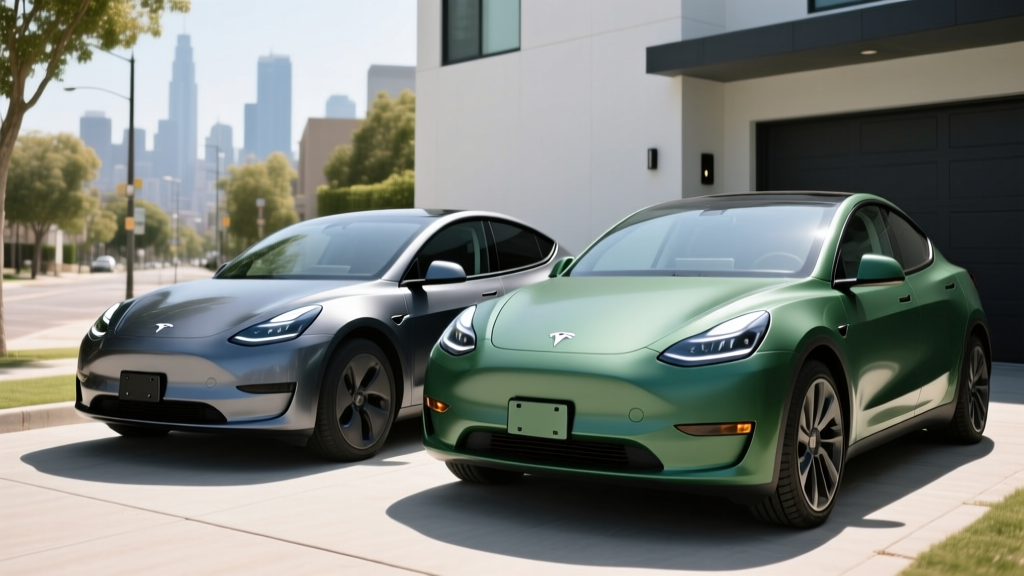
Tesla currently offers leasing on its two highest-volume vehicles: the refreshed Model 3 (Highland refresh) and the Model Y (Juniper refresh, launched early 2025). Both are available in Rear-Wheel Drive (RWD), Long Range AWD, and Performance trims. Leasing terms typically run 24 or 36 months with annual mileage caps of 10,000, 12,000, or 15,000 miles.
| Spec | Model 3 RWD | Model 3 Long Range AWD | Model Y RWD | Model Y Long Range AWD |
|---|---|---|---|---|
| EPA Range | 272 mi | 341 mi | 280 mi | 320 mi |
| Battery (usable) | ~57 kWh (LFP) | ~75 kWh (NMC) | ~57 kWh (LFP) | ~75 kWh (NMC) |
| Peak DC Fast Charge | 170 kW | 250 kW | 170 kW | 250 kW |
| 10–80% DCFC Time | ~28 min | ~22 min | ~28 min | ~22 min |
| Level 2 Home Charge | 7.6 kW (~30 mi/hr) | 11.5 kW (~44 mi/hr) | 7.6 kW (~30 mi/hr) | 11.5 kW (~44 mi/hr) |
| 0–60 mph | 5.8 sec | 4.2 sec | 6.5 sec | 4.8 sec |
| Horsepower | 271 hp | 346 hp | 295 hp | 384 hp |
| Drivetrain | RWD | Dual-Motor AWD | RWD | Dual-Motor AWD |
| MPGe (combined) | 132 MPGe | 125 MPGe | 123 MPGe | 117 MPGe |
| Efficiency (kWh/100mi) | 25 | 27 | 27 | 29 |
Source: fueleconomy.gov and Tesla spec sheets. Specs reflect 2026 model year.
Real-World Range: What the EPA Sticker Doesn't Tell You
EPA Sticker vs. Reality
Model 3 Long Range AWD: EPA 341 miles. Expect ~280–300 miles on sustained highway driving at 70–75 mph. In cold weather (below 32°F), plan for 220–250 miles due to battery resistance and cabin heating demands.
Model Y Long Range AWD: EPA 320 miles. Expect ~265–285 miles highway; ~210–240 miles in freezing temps.
Model 3/Y RWD (LFP): EPA 272/280 miles. LFP chemistry tolerates cold slightly better than NMC, but highway and cold-weather reductions still apply — expect ~225–245 miles highway, ~185–210 miles in deep cold.
The Model 3 and Model Y remain among the most efficient EVs on the market thanks to Tesla's thermal management system and heat pump (standard on all trims since 2021). The heat pump recovers waste heat from the drivetrain to warm the cabin, reducing range loss in cold weather compared to resistive heaters. Still, physics is physics: a 70 mph highway drive in 20°F weather with seat heaters on will shave 25–35% off your EPA number.
If your daily commute is under 60 miles round-trip and you charge at home nightly, even the RWD trims provide ample buffer. For road-trip-heavy owners, the Long Range AWD trims are worth the premium.
Charging Speed: DC Fast Charging and Home Level 2
Charging speed is where Tesla's Supercharger network advantage becomes tangible. Tesla's Supercharger network now includes over 20,000 stalls in North America, many upgraded to V4 architecture capable of delivering up to 350 kW (though current Tesla vehicles peak below that).
| Charging Level | Power / Connector | Miles Added per Hour | Best Use Case |
|---|---|---|---|
| Level 1 (120V) | ~1.4 kW (NACS) | ~3–5 mi/hr | Emergency / trickle top-off |
| Level 2 (240V home) | 7.6–11.5 kW (NACS / Wall Connector) | 30–44 mi/hr | Daily overnight charging |
| DC Fast (Supercharger V3) | Up to 250 kW (NACS) | Up to ~1,000 mi/hr (peak) | Road trips; 10–80% in ~22 min |
| DC Fast (non-Tesla CCS via adapter) | Varies; 50–150 kW typical | 200–600 mi/hr | Electrify America, EVgo, etc. |
Understanding kW vs. kWh: kW (kilowatts) measures charging power — how fast energy flows into the battery. kWh (kilowatt-hours) measures battery capacity — how much energy the battery holds. A 250 kW charge rate filling a 75 kWh battery doesn't mean 250 kW sustained; the charge curve tapers significantly above 60–70% state of charge to protect the cells.
For home charging, Tesla's Wall Connector ($420) delivers up to 11.5 kW on a 60-amp circuit (48-amp continuous draw). Most owners install a NEMA 14-50 outlet ($500–$1,500 with electrician) and use the Mobile Connector included with the car for a slower but adequate 7.6 kW on a 40-amp circuit. A full overnight charge on Level 2 takes roughly 6–8 hours depending on battery size.
Lease Pricing, Tax Credits, and the True Monthly Cost
Tesla's leasing program is structured differently from traditional dealer leases. You configure your vehicle on Tesla's website, select lease term and mileage, and the federal §30D tax credit is typically factored into the lease as a capitalized cost reduction — effectively lowering your monthly payment. However, the mechanics matter.
| Model / Trim | Base MSRP | Est. Monthly Lease (36 mo / 12k mi) | §30D Credit Eligibility | Effective Price After Credit |
|---|---|---|---|---|
| Model 3 RWD | $38,990 | ~$329–$379/mo | Up to $7,500 (if sourcing rules met) | ~$31,490 effective |
| Model 3 Long Range AWD | $47,740 | ~$449–$499/mo | Up to $7,500 (if sourcing rules met) | ~$40,240 effective |
| Model Y RWD | $44,990 | ~$399–$449/mo | Up to $7,500 (if sourcing rules met) | ~$37,490 effective |
| Model Y Long Range AWD | $49,990 | ~$479–$539/mo | Up to $7,500 (if sourcing rules met) | ~$42,490 effective |
Lease estimates are approximate and vary by credit score, region, and Tesla's current lease money factor. Always confirm on Tesla.com before committing.
Federal §30D Tax Credit Rules for Leased EVs (2026):
- MSRP Cap: Sedans (Model 3) must be under $55,000; SUVs/trucks (Model Y) under $80,000. Both qualify.
- Buyer Income Cap: AGI must not exceed $150,000 (single), $225,000 (head of household), or $300,000 (joint). In a lease, the lessor (Tesla Finance) claims the credit and passes savings to you — income caps may not apply to the lessee directly, but confirm with a tax professional.
- Battery Sourcing: Critical minerals and battery components must meet increasing domestic-content thresholds per the Inflation Reduction Act. As of 2026, the sourcing requirements are stringent — check Tesla's current eligibility page and the IRS clean vehicle credit page for up-to-date sourcing compliance.
- Point-of-Sale Transfer: The credit can be applied at signing to reduce your down payment or capitalized cost, effectively lowering monthly payments.
The lease-vs-buy math shifts in Tesla's favor if you plan to drive the car for 2–3 years, want the lowest monthly payment, and don't mind mileage restrictions. If you drive more than 15,000 miles annually or want to keep the car long-term, financing or buying outright may be cheaper despite the higher monthly note.
Interior, Cargo, and Daily Livability
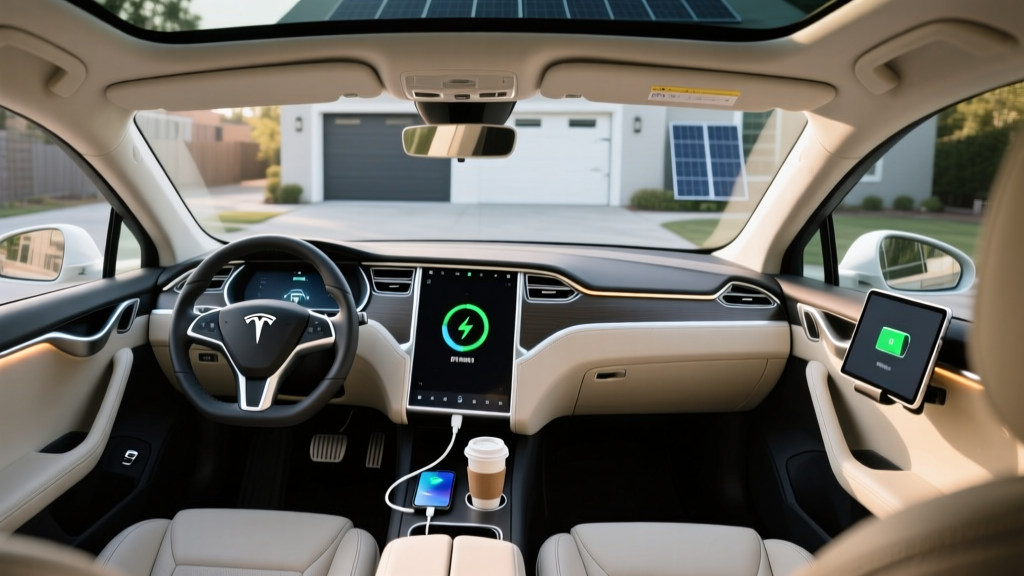
The Model 3's minimalist interior centers on a 15.4-inch touchscreen that controls everything — climate, mirrors, glovebox, and navigation. There is no instrument cluster; speed and range info live in the upper-left corner of the main screen. Some buyers love the clean aesthetic; others find it distracting.
The Model Y offers significantly more practicality for families:
- Model 3 cargo: 23 cu ft (rear seats up), 65 cu ft (seats folded) + 3.1 cu ft frunk
- Model Y cargo: 30 cu ft (rear seats up), 72 cu ft (seats folded) + 4.1 cu ft frunk
- Model 3 rear legroom: 35.2 inches
- Model Y rear legroom: 40.5 inches
- Model Y optional: Third-row seat (adds two small seats for children; reduces cargo to 12 cu ft behind third row)
The Model Y's hatchback design and taller roofline make it substantially more versatile for car seats, strollers, and road-trip luggage. If you're leasing for a growing family, the Y is the clear pick.
Tech, Autopilot, and What Tesla Gets Right (and Wrong)
Every Tesla lease includes Basic Autopilot — a Level 2 driver-assistance system providing adaptive cruise control and lane-centering on highways. This is not self-driving; the driver must remain engaged with hands on the wheel and eyes on the road at all times.
SAE Automation Level: Tesla Autopilot and Full Self-Driving (Supervised) are Level 2 systems. The vehicle handles steering and acceleration under specific conditions, but the human driver is responsible for monitoring and intervention. Only Level 4 systems (like Waymo's robotaxi service) operate without a human driver. Never treat a Level 2 system as autonomous.
Full Self-Driving (Supervised) is available as a $8,000 add-on or $99/month subscription. It adds automatic lane changes, traffic-light and stop-sign recognition, and assisted navigation on city streets. As of 2026, FSD remains a supervised Level 2 system — impressive in capability but legally and practically requiring full driver attention.
Standout tech features:
- Over-the-air (OTA) updates that add features post-delivery (new UI, efficiency improvements, entertainment apps)
- Tesla app with remote climate control, location tracking, and Sentry Mode camera access
- Sentry Mode (dashcam-based security recording when parked)
- Dog Mode and Camp Mode for climate-controlled cabin when unattended
- Native Supercharger navigation with automatic battery preconditioning for fastest charging
Notable drawbacks:
- No Apple CarPlay or Android Auto — Tesla's proprietary infotainment only
- Phantom braking incidents reported with Autopilot (NHTSA has investigated; always stay alert)
- Panel gaps and paint quality inconsistent compared to legacy automakers
- Limited service center network in rural areas — mobile service covers many issues but not all
- No physical buttons for climate, volume, or mirrors — everything is screen-based
Tesla Lease vs. Competitors: Model 3/Y or Something Else?
The Model 3 and Model Y face serious competition in 2026. Here's how they stack up against the most common cross-shops:
| Attribute | Tesla Model 3 LR AWD | Hyundai Ioniq 6 SEL AWD | BMW i4 xDrive40 |
|---|---|---|---|
| EPA Range | 341 mi | 316 mi | 282 mi |
| Peak DCFC | 250 kW | 240 kW | 205 kW |
| 10–80% Time | ~22 min | ~18 min | ~31 min |
| 0–60 mph | 4.2 sec | 5.1 sec | 4.6 sec |
| Base MSRP | $47,740 | $46,500 | $57,900 |
| Charging Network | Supercharger (best-in-class) | NACS adapter needed for SC; IONITY/EA | EA/CCS network |
| Infotainment | Proprietary (no CarPlay) | Wireless CarPlay + Android Auto | iDrive 8.5 (CarPlay) |
Choose a Tesla lease if:
- You road-trip frequently and want access to the Supercharger network (still the most reliable DCFC network in the US)
- You value OTA updates, Sentry Mode, and Tesla's app ecosystem
- You want the best efficiency (kWh/100mi) in the segment
- You're comfortable with a screen-only interior
Choose a competitor if:
- You need Apple CarPlay/Android Auto (Ioniq 5/6, Mach-E, Equinox EV all offer it)
- You want a traditional dealership experience with in-person service
- You prefer physical buttons and a dedicated instrument cluster
- You need faster peak charging (Ioniq 5/6 with 800V architecture hits 10–80% in ~18 min)
Warranty, Battery Longevity, and End-of-Lease Considerations
Tesla's warranty covers the vehicle and battery separately:
- Basic Vehicle Warranty: 4 years / 50,000 miles (whichever comes first)
- Battery & Drive Unit Warranty: 8 years / 100,000 miles (RWD) or 8 years / 120,000 miles (Long Range/Performance) — guaranteed to retain at least 70% of original capacity
Since most Tesla leases run 24–36 months and 30,000–45,000 miles, you'll be well within warranty for the entire lease term. Battery degradation over 3 years is typically 5–8% based on fleet data — meaning a Model 3 LR with 341 miles EPA will still deliver roughly 315–325 miles of range at lease end.
End-of-lease considerations: Tesla does not currently offer a purchase option at lease end on most agreements (this has changed over the years — confirm at signing). You'll return the vehicle and can lease or purchase a new one. Excess wear-and-tear and over-mileage charges apply, so factor in a potential $0.20–$0.25/mile penalty if you exceed your allowance.
Pros of Leasing a Tesla
- Lowest monthly entry into a Tesla — as low as ~$329/mo for Model 3 RWD
- Federal §30D credit flows through as cap-cost reduction (lower payments)
- Full warranty coverage for entire lease term
- OTA updates keep the car current with new features
- Supercharger network makes road trips stress-free
- No long-term battery-degradation risk — return it at lease end
Cons of Leasing a Tesla
- No purchase option at lease end (verify current policy at signing)
- Mileage restrictions (10k–15k/yr) with per-mile penalties
- No Apple CarPlay or Android Auto
- Service center access limited in rural areas
- Panel gaps and build quality can be inconsistent
- Tesla pricing fluctuates — you may see the MSRP drop after you sign
Who Should Lease a Tesla in 2026?
Best for urban and suburban commuters who charge at home, drive under 15,000 miles per year, and want the lowest monthly payment into a premium EV. The Model 3 RWD is the value play; the Model Y Long Range AWD is the family pick.
Not ideal for high-mileage drivers (20,000+ miles/year), rural owners without reliable home charging access, or buyers who want a traditional dealer service relationship. In those cases, consider financing a Tesla outright or cross-shopping the Hyundai Ioniq 5, which offers 800V ultra-fast charging and a dealer network.
For road-trippers, the Supercharger network remains Tesla's strongest moat. While other EVs can now access Superchargers via NACS adapters, Tesla vehicles still get the most seamless plug-and-charge experience with automatic preconditioning and billing.
Frequently Asked Questions
Does a Tesla lease qualify for the $7,500 federal tax credit?
Yes, but with important caveats. In a lease, the lessor (Tesla Finance) technically claims the §30D credit. Tesla typically passes this savings to you as a capitalized cost reduction, lowering your monthly payment. However, the vehicle must meet current battery-sourcing and critical-mineral requirements under the Inflation Reduction Act. Check IRS.gov and Tesla's website for current eligibility before signing. Income caps may not apply to the lessee in a lease structure, but consult a tax professional to confirm your situation.
What is the real-world range of a leased Tesla Model 3 or Model Y?
The EPA rates the Model 3 Long Range AWD at 341 miles and the Model Y Long Range AWD at 320 miles. In real-world highway driving at 70–75 mph, expect roughly 280–300 miles (Model 3) and 265–285 miles (Model Y). In freezing weather, subtract another 20–30%, bringing the Model 3 LR to approximately 220–250 miles. RWD trims with LFP batteries have lower EPA ranges (272–280 mi) but LFP chemistry is slightly more resilient in cold weather.
How fast does a Tesla charge at home and on road trips?
At home on a Level 2 Wall Connector (11.5 kW / 48A), a Long Range Tesla adds about 44 miles of range per hour, fully charging overnight in 6–8 hours. On a Tesla Supercharger V3 stall, Long Range models peak at 250 kW and charge from 10–80% in approximately 22 minutes. RWD models peak at 170 kW and take about 28 minutes for the same 10–80% session. Above 80%, charging slows dramatically to protect battery health — plan to charge to 80% on road trips for the best time efficiency.
Can I buy my Tesla at the end of the lease?
Tesla's lease-end purchase policy has changed multiple times. As of 2026, most Tesla leases do not include a purchase option at lease end — you return the vehicle and walk away (or lease/purchase a new one). Always confirm the lease-end terms in your contract before signing. If ownership at lease-end is important to you, consider financing instead.
Is it better to lease or buy a Tesla in 2026?
Leasing makes sense if you want the lowest monthly payment, plan to drive 10,000–15,000 miles per year, and prefer to swap into a new vehicle every 2–3 years. Buying (or financing) is better if you drive high mileage, want to keep the car 5+ years, or want to build equity. The §30D tax credit benefits both paths, but the lease structure may allow the credit to flow through even if your income exceeds the purchase income caps — confirm with a tax advisor.