Leasing a Tesla in 2026: Quick Verdict
Leasing a Tesla Model Y or Model 3 in 2026 can be a smart way to access the latest EV tech without committing to long-term ownership — especially if you want to lock in the $7,500 federal tax credit via Tesla's lease structure, sidestep depreciation concerns, and upgrade every three years. But leasing isn't for everyone. If you drive more than 15,000 miles annually, plan to keep the car long-term, or want to modify it, buying outright or financing may serve you better.
This guide covers the current Tesla lease landscape for the Model 3 and Model Y — the two models most commonly leased — including real-world range, charging infrastructure, pricing after incentives, and how Tesla's lease terms stack up against buying.
2026 Tesla Model 3 and Model Y: Spec Comparison
| Spec | Model 3 Long Range AWD | Model 3 RWD | Model Y Long Range AWD | Model Y RWD |
|---|---|---|---|---|
| EPA Range | 341 mi | 272 mi | 320 mi | 260 mi |
| Battery (usable kWh) | ~75 kWh (NMC) | ~57.5 kWh (LFP) | ~75 kWh (NMC) | ~57.5 kWh (LFP) |
| MPGe (combined) | 134 MPGe | 142 MPGe | 125 MPGe | 133 MPGe |
| 0–60 mph | 4.2 sec | 5.8 sec | 4.8 sec | 6.6 sec |
| Horsepower | 346 hp | 271 hp | 384 hp | 295 hp |
| Drivetrain | Dual-Motor AWD | RWD | Dual-Motor AWD | RWD |
| Peak DC Charge Rate | 250 kW | 170 kW | 250 kW | 170 kW |
| 10–80% DCFC Time | ~27 min | ~30 min | ~27 min | ~30 min |
| Level 2 Home Charge | 11.5 kW (~44 mi/hr) | 11.5 kW (~44 mi/hr) | 11.5 kW (~44 mi/hr) | 11.5 kW (~44 mi/hr) |
| Base MSRP | $42,380 | $36,380 | $44,380 | $38,380 |
| Battery Warranty | 8 yr / 120,000 mi | 8 yr / 100,000 mi | 8 yr / 120,000 mi | 8 yr / 100,000 mi |
Sources: fueleconomy.gov, Tesla.com. Specs reflect 2026 model year. Prices exclude destination fee.
Real-World Range: What the EPA Sticker Doesn't Tell You
EPA Sticker: Model 3 Long Range — 341 mi | Model Y Long Range — 320 mi
Expect in reality: ~280–310 mi on highway road trips at 70+ mph; ~220–260 mi in freezing weather (below 30°F) without preconditioning.
The EPA test cycle includes low-speed city driving and moderate highway speeds, which flatters range. In real-world highway driving at 75 mph — where aerodynamic drag dominates — expect to use roughly 10–15% more energy than the EPA sticker suggests. For the Model 3 Long Range AWD, that means a realistic highway range of around 290–310 miles before you'd want to stop and charge.
Cold weather compounds the effect. Lithium-ion batteries lose efficiency in freezing temperatures, and cabin heating draws significant power. Without using Tesla's built-in preconditioning (which warms the battery while plugged in before departure), expect a 20–30% range reduction in sustained sub-30°F conditions. With preconditioning and seat heaters instead of cabin heat, you can limit losses to around 15%.
The RWD trims with LFP (lithium iron phosphate) batteries have a different characteristic: they're heavier and offer less total range, but LFP chemistry tolerates regular 100% charging without the degradation concerns of NMC cells. That means you can charge an LFP Model 3 RWD to full daily and still get a usable 250+ real-world miles — effectively closing the gap with the Long Range on daily commutes.
Charging Speed: Home and DC Fast Charging
Charging speed is where Tesla still holds a meaningful edge over most competitors, both in vehicle capability and network access.
DC Fast Charging
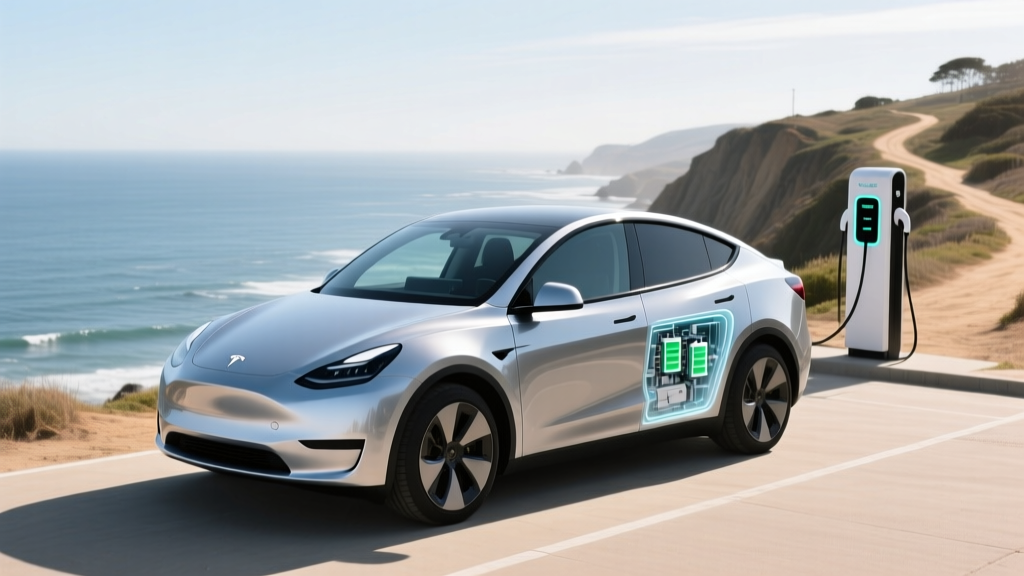
The Long Range variants peak at 250 kW on Tesla Superchargers. In practice, you'll see that peak rate only between roughly 10–30% state of charge. The charge curve tapers progressively: expect ~150 kW at 50% SoC and ~75 kW by 70%. A typical 10–80% session takes about 27 minutes on a V3 Supercharger (250 kW capable).
The RWD trims with LFP batteries peak at 170 kW, adding about 3 minutes to a 10–80% session. For road trips, that's a marginal difference — both variants can add roughly 200 miles of range in a 25-minute stop.
With Tesla's NACS (North American Charging Standard) connector now adopted by most major automakers, Tesla owners also benefit from expanding third-party network compatibility. Non-Tesla networks like Electrify America and EVgo increasingly offer NACS cables or adapters.
Home Level 2 Charging
Both the Model 3 and Model Y accept up to 11.5 kW on Level 2 (240V) AC charging. Using a Tesla Wall Connector on a 60-amp circuit, you'll recover approximately 44 miles of range per hour of charging. A full overnight charge (8 hours) easily replenishes a depleted battery.
Home charging installation typically costs $500–$2,000 depending on panel capacity, wiring distance, and local permit requirements. Tesla's Wall Connector retails for around $475. If your home has a 200-amp electrical panel with spare capacity, installation is straightforward. Older homes with 100-amp panels may need a $1,500–$3,000 panel upgrade — factor this into your total EV transition budget.
Lease Pricing, Tax Credits, and Monthly Costs
Tesla's lease structure works differently from traditional automaker leases. Here's what to know for 2026:
Federal Tax Credit on a Tesla Lease
Under current IRS §30D rules, the $7,500 federal EV tax credit can be transferred to the dealer/lessor at the point of sale — effectively reducing your lease cost. Tesla structures its leases so the $7,500 credit is applied as a capitalized cost reduction, lowering your monthly payment.
However, eligibility is not automatic. You must meet all of the following:
- Income caps: Modified AGI ≤ $150,000 (single) / $300,000 (joint) / $225,000 (head of household)
- MSRP caps: Model 3 qualifies (sedan cap: $55,000). Model Y qualifies (SUV/truck cap: $80,000)
- Battery sourcing: Critical minerals and battery component requirements must be met for the specific build — verify on Tesla's order page at time of purchase
- Assembly: Must be assembled in North America (all US-market Teslas are built in Fremont, CA or Austin, TX)
Note: Tax rules are subject to change. Consult a tax professional and verify current eligibility on irs.gov before signing.
Estimated Lease Payment Breakdown
| Model | MSRP | Est. Monthly (w/ credit) | Due at Signing | Money Factor (est.) |
|---|---|---|---|---|
| Model 3 RWD | $36,380 | ~$329–$379 | ~$3,500–$4,500 | ~0.0025 |
| Model 3 Long Range AWD | $42,380 | ~$409–$469 | ~$3,500–$4,500 | ~0.0025 |
| Model Y RWD | $38,380 | ~$359–$409 | ~$3,500–$4,500 | ~0.0025 |
| Model Y Long Range AWD | $44,380 | ~$429–$489 | ~$3,500–$4,500 | ~0.0025 |
These are estimates based on typical Tesla lease terms as of early 2026. Actual offers vary by region, credit score, and Tesla's periodic pricing adjustments. Tesla's lease residual values and money factors are set by Tesla Financial and are non-negotiable.
Tech, Interior, and Driver Assistance
Tesla's cabin remains minimalist: a single 15.4-inch center touchscreen (Model 3) or 15-inch screen (Model Y) controls virtually everything — no physical buttons for climate, mirrors, or glovebox. This is polarizing. Some owners love the clean aesthetic; others find it distracting for quick adjustments while driving.
Infotainment and Features
The Tesla OS is fast and responsive, with built-in navigation, streaming (Netflix, YouTube, Spotify while parked), and over-the-air updates that regularly add features. A rear 8-inch screen in the Model 3 (Highland refresh) gives back-seat passengers climate and entertainment controls. Both models include a premium 17-speaker audio system, wireless phone charging, and ventilated front seats on Long Range trims.
Driver Assistance: Autopilot and FSD
Tesla Autopilot and Full Self-Driving (Supervised) are Level 2 driver-assistance systems. The driver must remain fully engaged, hands on or near the wheel, and eyes on the road at all times. These systems are not self-driving. They assist with lane centering, adaptive cruise, and (with FSD) navigating highway interchanges and city streets — but they require constant human supervision and can make errors.
Basic Autopilot (traffic-aware cruise + lane centering) is included on all trims. Enhanced Autopilot ($6,000) adds auto lane change, autosteer on highways, and smart summon. FSD Supervised ($8,000 or $99/month) adds city-street navigation. On a 36-month lease, the FSD monthly subscription often makes more financial sense than the outright purchase — you can cancel anytime and aren't paying for a feature whose value may not transfer to your next vehicle.
Cargo and Passenger Space
| Dimension | Model 3 | Model Y |
|---|---|---|
| Front Legroom | 42.7 in | 41.8 in |
| Rear Legroom | 35.2 in | 40.5 in |
| Cargo (rear seats up) | 23 cu ft (trunk + frunk) | 30 cu ft (rear + frunk) |
| Cargo (rear seats folded) | ~60 cu ft | ~72 cu ft |
| Front Trunk (Frunk) | ~3.1 cu ft | ~4.1 cu ft |
The Model Y is the clear pick for families: substantially more rear legroom, a taller roofline for easy car-seat installation, and up to 72 cu ft of cargo with seats folded. The Model 3 is a sportier sedan with adequate but tighter rear quarters — fine for two adults on shorter trips, cramped for taller passengers on long drives.
Lease vs. Buy: Decision Framework
- You drive 10,000–15,000 miles/year or fewer (Tesla leases typically offer 10K or 15K mi/yr options)
- You want to upgrade to newer battery tech or a new model every 3 years
- You want the $7,500 tax credit applied as a lease cap reduction regardless of your tax liability
- You don't want to worry about resale value or battery degradation
- You prefer lower monthly payments and don't need equity in the vehicle
- You drive more than 15,000 miles/year (excess-mile penalties on leases run $0.20–$0.25/mi)
- You plan to keep the car 5+ years (total cost of ownership favors buying long-term)
- You want to modify the vehicle (wraps, wheels, aftermarket — leases restrict this)
- You want the option to sell or trade at any time without a lease transfer hassle
- You qualify for the $7,500 credit as a direct tax offset on a purchase
One critical Tesla-specific note: Tesla leases do not include a purchase option at lease-end for the Model 3 and Model Y in most markets. You return the car. If there's any chance you'll want to keep the vehicle long-term, financing is the better path.
Pros and Cons of Leasing a Tesla
- $7,500 federal credit applied as cap cost reduction (lowers monthly payment)
- No depreciation risk — Tesla resale values fluctuate significantly
- OTA updates keep the car feeling current throughout the lease
- Access to Supercharger network (fastest, most reliable DC network in the US)
- FSD subscription option avoids $8,000 upfront cost
- Warranty covers full lease term (4 yr/50K basic, 8 yr battery)
- No purchase option at lease-end (Tesla policy)
- Mileage limits (10K–15K mi/yr) with $0.20–$0.25/mi excess penalties
- Tesla's money factor and residual are non-negotiable
- Wear-and-tear charges at return can be subjective
- Insurance costs tend to run 15–25% higher than comparable ICE sedans/SUVs
- No customization allowed (wraps, tint beyond legal limits, aftermarket wheels)
Frequently Asked Questions
Does a leased Tesla qualify for the $7,500 federal tax credit?
Yes — but with conditions. Under the current IRS §30D framework, when you lease a qualifying EV, the lessor (Tesla Financial) receives the commercial clean vehicle credit and can pass it to you as a capitalized cost reduction. This effectively gives you the $7,500 benefit even if your personal income exceeds the §30D income caps (since the credit technically goes to the lessor in a lease). However, the vehicle itself must still meet battery-sourcing and North American assembly requirements. Verify eligibility on the specific build you're ordering.
What happens if I exceed the mileage limit on a Tesla lease?
Tesla's standard lease terms charge $0.20 per excess mile at lease-end. If you lease with a 10,000 mi/yr limit and drive 45,000 miles over 3 years, you'd owe $3,000 (15,000 excess miles × $0.20). If you know you'll drive more, choose the 15,000 mi/yr option at signing — it raises your monthly payment by roughly $30–$50/month but avoids a large balloon payment at return.
Can I buy the Tesla at the end of the lease?
Generally, no. Tesla removed the lease-end purchase option for Model 3 and Model Y leases in most US markets. The vehicle must be returned to Tesla. If ownership flexibility matters to you, finance the purchase instead.
Is leasing a Tesla cheaper than buying over 3 years?
On a pure monthly cash-flow basis, yes — leasing typically costs $100–$200/month less than financing at current rates. But over 3 years, you build no equity. A financed Tesla that you keep for 6–8 years will have a lower total cost of ownership because you'll make payments for only 4–5 years and then drive payment-free. Leasing is a rolling commitment: every 3 years, you start a new payment cycle.
How does Tesla's lease compare to leasing a Hyundai Ioniq 5 or BMW i4?
Competitors like the Hyundai Ioniq 5 and BMW i4 often offer more flexible lease terms — including dealer-negotiated money factors, multiple mileage options, and lease-end purchase options. However, Tesla's Supercharger network access, OTA update cadence, and lower starting MSRPs keep its lease payments competitive. The Ioniq 5 Long Range (EPA 310 mi, ~$46,000 MSRP) leases for roughly similar monthly payments once incentives are applied, but its public charging experience depends on third-party networks.
What's the real cost to charge a Tesla at home vs. gas?
At the US average electricity rate of ~$0.17/kWh, fully charging a Model 3 Long Range (75 kWh) costs about $12.75 for 300+ miles — roughly $0.04 per mile. A comparable gas sedan at 30 MPG and $3.50/gallon costs ~$0.12 per mile. Over 12,000 miles/year, that's a fuel savings of approximately $960 annually. Supercharger pricing varies ($0.25–$0.40/kWh depending on location), which raises the per-mile cost to ~$0.06–$0.10 — still below gasoline for most drivers.