The Case for Leasing a Rivian SUV in 2026
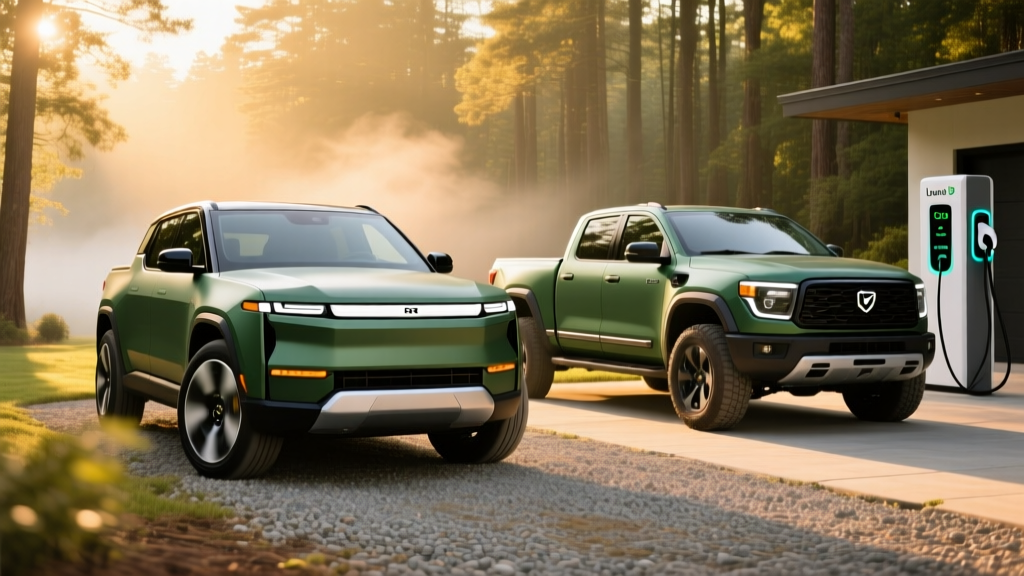
Rivian's second-generation R1S (three-row SUV) and R1T (pickup) arrived for the 2025 model year with a comprehensive refresh: new Enduro and Tri-Motor powertrains, a revised battery lineup including a Standard pack, and a starting price that finally dips below $70,000. For 2026, the lineup carries over with minor software and feature updates, but the core question for buyers remains: should you buy or lease a Rivian SUV?
Leasing has become an increasingly popular path into Rivian ownership — not just because it lowers the monthly barrier, but because it sidesteps some of the thorniest aspects of EV tax-credit eligibility and long-term battery depreciation concerns. This guide breaks down the exact numbers you need to make that decision.
Rivian R1S 2026 Lineup: Trims, Pricing & Tax Credit Eligibility
The 2026 Rivian R1S is available in three main configurations, each with distinct range, performance, and price profiles. The R1T pickup shares most powertrain options and is priced slightly lower.
| Trim / Config | Battery | EPA Range | 0–60 mph | HP | Base MSRP |
|---|---|---|---|---|---|
| Dual-Motor Standard | ~92 kWh (LFP) | 270 mi | 4.5 sec | 533 | $69,900 |
| Dual-Motor Max | ~149 kWh (NMC) | 410 mi | 4.5 sec | 533 | $83,900 |
| Tri-Motor Max | ~149 kWh (NMC) | 390 mi | 2.9 sec | 850 | $99,900 |
Federal Tax Credit: The Lease Loophole
Under IRS §30D rules, the Rivian R1S qualifies for up to $7,500 in federal tax credits — but only if you meet all three conditions:
- MSRP cap: SUVs must be priced at or below $80,000. This eliminates the Tri-Motor Max ($99,900) and most Max-pack Dual-Motor builds once options are added.
- Income cap: Modified AGI must not exceed $150,000 (single), $225,000 (head of household), or $300,000 (joint filers).
- Battery sourcing: Critical minerals and battery components must meet phased-in domestic-content thresholds, which tighten annually. Rivian has confirmed most Dual-Motor Standard builds qualify, but Max-pack sourcing is more complex.
The lease advantage: Under §45W (commercial clean vehicle credit), the leasing company — not you — claims the $7,500 credit and can pass it through as a capitalized-cost reduction. This means you can effectively get the credit on a Tri-Motor Max that wouldn't qualify under §30D purchase rules, and income/MSRP caps don't apply to you. This is the single biggest financial argument for leasing a Rivian SUV in 2026.
| Scenario | MSRP | Federal Credit | Effective Cost |
|---|---|---|---|
| Purchase (qualifying buyer) | $69,900 | –$7,500 (§30D) | $62,400 |
| Lease (credit passed through) | $69,900 | –$7,500 (§45W) | ~$62,400 cap cost |
| Purchase (non-qualifying buyer) | $69,900 | $0 | $69,900 |
Range, Efficiency & Real-World Expectations
EPA range figures for the 2026 R1S are strong on paper, but real-world efficiency in a 7,000-pound three-row SUV tells a more nuanced story.
Real-World Range Reality Check
EPA estimate: 270 mi (Standard) / 410 mi (Max) / 390 mi (Tri-Motor Max)
Real-world highway (70–75 mph): Expect ~220–240 mi from the Standard pack and ~330–360 mi from the Max pack. Aerodynamic drag scales with the square of speed, and the R1S's boxy profile hurts at sustained highway speeds.
Cold weather (below 32°F): Plan for a 20–30% reduction. A Standard-pack R1S in a Minnesota January may deliver 180–190 miles of usable range. The Max pack provides a larger buffer, but preconditioning the battery before departure is essential to minimize losses.
Efficiency ratings from fueleconomy.gov place the Dual-Motor R1S at approximately 73 MPGe combined (46 kWh/100 mi). That's competitive with the Tesla Model X (102 MPGe for the smaller battery variant) but notably thirstier than lighter SUVs like the Hyundai Ioniq 5 or Kia EV9. If you drive mostly in the city with frequent regenerative-braking opportunities, you'll land closer to EPA. Highway-only road trips will fall short.
Charging Speed: DC Fast, Level 2 & Home Setup
Rivian's Gen 2 architecture brought meaningful charging improvements, but the R1S still doesn't match the peak speeds of 800V competitors like the Hyundai Ioniq 5 or Porsche Macan EV.
| Charging Level | Power / Rate | Speed / Time |
|---|---|---|
| Level 1 (120V household) | ~1.4 kW | ~3–4 mi/hr |
| Level 2 (240V home, 48A) | 11.5 kW | ~25 mi/hr (full charge: 10–12 hrs Standard, 16–18 hrs Max) |
| DC Fast Charge (Standard, LFP) | Peak ~200 kW | 10–80% in ~28 min |
| DC Fast Charge (Max, NMC) | Peak ~220 kW | 10–80% in ~30 min (larger battery absorbs more total energy) |
Understanding the Charge Curve
The peak kW number is only part of the story. The R1S holds its peak rate through roughly 30–40% state of charge, then tapers progressively. If you arrive at a DC fast charger at 10% SoC, you'll see 200+ kW initially, but the average rate over a 10–80% session is closer to 130–150 kW. This is typical for 400V-architecture EVs but means you should plan road-trip stops around 25–35 minutes rather than the 18-minute sprints that 800V vehicles manage.
For home charging, Rivian's Wall Connector (or any J1772/NACS-compatible Level 2 unit on a 60A circuit) delivers 11.5 kW — enough to fully replenish the Standard pack overnight. Max-pack owners should budget longer or consider a 80A circuit for 19.2 kW if their panel supports it. Budget $800–$2,500 for a professional Level 2 installation depending on your electrical panel's capacity and the run length from panel to garage.
Performance, Drivetrain & Capability
The Gen 2 Rivian platform uses a permanent-magnet dual-motor setup (or tri-motor on the top trim) with torque vectoring. Every R1S is all-wheel drive.
- Dual-Motor: 533 hp, 610 lb-ft torque, 0–60 in 4.5 seconds. More than adequate for merging, passing, and everyday driving.
- Tri-Motor: 850 hp, 1,100+ lb-ft torque, 0–60 in 2.9 seconds. Supercar acceleration in a three-row SUV — genuinely startling the first time you floor it.
- Towing: Up to 7,700 lbs (Dual-Motor) with a factory hitch. Towing cuts range roughly in half at highway speeds — plan accordingly.
- Ground clearance: Up to 14.9 inches in Max mode, rivaling dedicated off-roaders. Air suspension is standard across the lineup.
Driver Assistance: Highway Assist
SAE Level 2: Rivian's Highway Assist provides adaptive cruise control and lane-centering on divided highways. It is not self-driving. You must keep your hands on the wheel and eyes on the road at all times. The system is competent but less aggressive about lane changes than Tesla Autopilot or GM Super Cruise, and it does not currently operate on surface streets without driver steering input.
Interior, Cargo & Family Practicality
The R1S is a genuine three-row SUV with adult-usable space in all rows — a rarity in the EV segment.
- Cargo (behind 3rd row): 20.7 cu ft
- Cargo (3rd row folded): 57.4 cu ft
- Cargo (all rows folded): 104.6 cu ft
- Front trunk (frunk): 11.0 cu ft — large enough for a full carry-on or charging cables
- Third-row legroom: 30.4 inches — tight for adults on long trips, fine for kids
- Second-row legroom: 38.6 inches
The interior materials are premium without being ostentatious: vegan leather is standard, with available Nappa leather on higher trims. The 15.6-inch center touchscreen runs Rivian's proprietary OS, which is responsive and well-organized but lacks Apple CarPlay and Android Auto — a notable drawback if you rely on phone projection. Wireless phone charging, a 1,200-watt Meridian audio system, and a panoramic glass roof round out the highlights.
Battery Chemistry, Warranty & Long-Term Outlook
Rivian offers two battery chemistries depending on the pack:
| Attribute | Standard Pack (LFP) | Max Pack (NMC) |
|---|---|---|
| Chemistry | Lithium Iron Phosphate | Nickel Manganese Cobalt |
| Usable Capacity | ~92 kWh | ~149 kWh |
| Energy Density | Lower (heavier per kWh) | Higher (more range in similar footprint) |
| Cycle Life | 3,000+ cycles to 80% SoH | ~1,500–2,000 cycles to 80% SoH |
| Cold Performance | Weaker in extreme cold | Better low-temp output |
| Recommended Charging | Can charge to 100% daily | Best kept at 80–90% for daily use |
The LFP Standard pack is a strong choice for commuters who charge at home nightly and don't need 400+ miles. LFP's longer cycle life and tolerance for 100% daily charges make it lower-maintenance over a decade. The NMC Max pack is the road-trip and towing choice, but you'll want to follow the 80% daily charge recommendation to maximize longevity.
Warranty Coverage
- Battery & Drive Unit: 8 years / 175,000 miles (whichever comes first), with a capacity-retention threshold of 70% State of Health.
- Vehicle Limited Warranty: 5 years / 60,000 miles bumper-to-bumper.
- Roadside Assistance: 5 years / unlimited miles.
Rivian's battery warranty mileage (175,000) is among the most generous in the segment, surpassing Tesla's 120,000-mile threshold for the Model X.
Lease vs. Buy: Decision Framework
Lease the R1S If:
- You want access to the $7,500 federal credit without meeting income or MSRP caps (via §45W lease pass-through).
- You plan to upgrade in 3 years and want to avoid long-term depreciation risk on a startup-brand EV.
- You want the Tri-Motor Max or a heavily optioned build that exceeds the $80,000 §30D MSRP cap.
- You drive under 12,000–15,000 miles per year (typical lease limits).
Buy the R1S If:
- You qualify for §30D and are purchasing a Dual-Motor Standard under $80,000.
- You drive high annual miles and would face lease overage penalties.
- You plan to keep the vehicle 7+ years and want to build equity.
- You want to modify the vehicle (lift kits, wraps, aftermarket wheels — all restricted under most leases).
Current Rivian lease deals (via partner lenders) typically run $899–$1,299/month for 36 months with $5,000–$7,500 due at signing on a Dual-Motor Standard. The effective lease credit pass-through can reduce monthly payments by $100–$150 versus a comparable non-credited lease. Compare this to purchase financing at current EV loan rates (6.5–8.5% APR for 60–72 months), and leasing often wins on monthly cash flow — though you won't own the asset at term end.
How the R1S Compares to Key Competitors
The R1S occupies a unique niche: body-on-frame capability with three rows and genuine off-road chops. But it's not the only option for families shopping in the $70K–$100K EV SUV space.
- Tesla Model X: Longer range (348 mi EPA for Long Range), faster Supercharger network access, and a lower starting price (~$79,990). But the Model X is aging, its falcon-wing doors are polarizing, and third-row space is tighter than the R1S.
- Kia EV9: Starts under $55,000, qualifies for §30D on multiple trims, and offers comparable three-row space. But it has less range (304 mi max), slower DC charging (peak ~210 kW, 10–80% in ~24 min), and no air suspension or off-road capability.
- BMW iX: More refined ride and interior, but only two rows, lower ground clearance, and a higher starting price for equivalent range.
Pros and Cons
Pros
- Genuine three-row SUV with usable space in all rows and a large frunk
- Class-leading off-road capability with air suspension and 14.9" ground clearance
- 7,700-lb towing capacity — highest among electric SUVs
- LFP Standard pack offers excellent long-term cycle life and daily 100% charging
- Lease loophole enables $7,500 credit on trims that exceed §30D MSRP caps
- 175,000-mile battery warranty among the best in the industry
Cons
- Efficiency lags lighter competitors (73 MPGe combined vs. 100+ for Model X)
- No Apple CarPlay or Android Auto — a dealbreaker for some buyers
- 400V architecture means slower DC fast charging than 800V rivals
- Real-world highway range falls 15–20% below EPA, especially in cold weather
- Base price still high; most desirable configs push past $80K MSRP cap
- Service center network still expanding — rural owners may face long tow distances
Frequently Asked Questions
What is the real-world range of the 2026 Rivian R1S?
The EPA rates the Dual-Motor Standard at 270 miles and the Max pack at 410 miles. In real-world highway driving at 70–75 mph, expect roughly 220–240 miles (Standard) and 330–360 miles (Max). Cold weather below freezing can reduce these figures by an additional 20–30%.
How fast does the R1S charge at home and on the road?
At home on a 240V Level 2 charger (48A), the R1S adds about 25 miles per hour, fully charging the Standard pack in 10–12 hours. On DC fast chargers, the Standard pack peaks at ~200 kW (10–80% in ~28 min), while the Max pack peaks at ~220 kW (10–80% in ~30 min). Average session speed is closer to 130–150 kW due to charge-curve taper.
Does the Rivian R1S qualify for the federal EV tax credit?
Yes — but with conditions. Under IRS §30D, the Dual-Motor Standard ($69,900 MSRP) qualifies for up to $7,500 if your income is below the cap ($150K single / $300K joint) and the battery meets sourcing requirements. Higher trims exceeding $80,000 MSRP do not qualify for purchase credits but can access the credit through a lease via §45W commercial-credit pass-through.
Is it better to buy or lease a Rivian SUV in 2026?
Leasing is the financially superior path if you want the $7,500 credit on a high-trim R1S that exceeds the $80,000 MSRP cap, or if your income exceeds §30D limits. Buying makes more sense if you qualify for §30D on a Dual-Motor Standard, drive high annual miles, or plan to keep the vehicle 7+ years.
How does the R1S compare to the Tesla Model X and Kia EV9?
The R1S offers the best off-road capability and towing capacity in the segment, with a more usable third row than the Model X. The Model X wins on range and charging infrastructure (Superchargers), while the Kia EV9 is significantly cheaper and more efficient but sacrifices range, power, and capability.
What is Rivian's battery warranty?
Rivian covers the battery and drive unit for 8 years or 175,000 miles, whichever comes first, guaranteeing at least 70% State of Health retention. The bumper-to-bumper vehicle warranty is 5 years / 60,000 miles.