The 2026 Rivian R1T: Quick Verdict for Lease Shoppers
The Rivian R1T occupies a rare space in the electric truck market: it's genuinely capable off-road, quick on pavement, and packed with thoughtful utility features — but it comes at a premium price. For buyers weighing whether to lease a Rivian R1T rather than purchase outright, the math involves more than just monthly payments. Battery depreciation uncertainty, evolving software, and federal tax credit mechanics all factor into the lease-vs-buy decision. This review covers every spec, real-world expectation, and financial detail you need before signing.
Range, Battery, and Real-World Efficiency
The 2026 Rivian R1T continues to offer multiple battery configurations. The Standard Pack uses a ~92 kWh usable NMC (nickel manganese cobalt) lithium-ion battery, while the Large Pack bumps capacity to ~128 kWh usable, also NMC chemistry. Rivian has not adopted LFP (lithium iron phosphate) for the R1T, prioritizing energy density for its adventure-truck use case over the lower cost and longer cycle life that LFP provides.
| Configuration | Battery (usable kWh) | Chemistry | EPA Range (mi) | Efficiency (MPGe) | kWh/100 mi |
|---|---|---|---|---|---|
| Dual-Motor Standard Pack | ~92 kWh | NMC | 270 | 70 MPGe | 48 |
| Dual-Motor Large Pack | ~128 kWh | NMC | 352 | 69 MPGe | 49 |
| Performance Dual-Motor Large | ~128 kWh | NMC | 352 | 67 MPGe | 50 |
| Tri-Motor Large Pack | ~128 kWh | NMC | 328 | 63 MPGe | 53 |
Charging Speed: DC Fast Charging and Home Level 2
Charging speed is where Rivian made meaningful improvements with the second-generation R1T platform. The Dual-Motor variants now support peak DC fast charging up to 220 kW (up from 200 kW on earlier models), while the Tri-Motor can peak at approximately 220 kW as well. However, peak rate is not sustained rate — the charge curve tapers significantly above 80% State of Charge (SoC) to protect the NMC battery.
| Charging Level | Max Rate | Time / Miles Added | Notes |
|---|---|---|---|
| Level 1 (120V household) | ~1.4 kW | ~3–4 mi/hr | Emergency/trickle only |
| Level 2 (240V, 48A home) | 11.5 kW | ~25–27 mi/hr; full charge ~10–13 hrs | Recommended daily charging |
| Level 2 (240V, 32A portable) | 7.7 kW | ~17–19 mi/hr | Rivian portable charger included |
| DC Fast Charge (peak) | 220 kW | 10–80% in ~22–25 min | Tapers above 80%; preconditioning required for peak rate |
Preconditioning matters. If you navigate to a DC fast charger using the R1T's built-in navigation, the battery thermal management system will warm or cool the pack to optimize charge acceptance. Skip preconditioning — especially in cold weather — and you may see peak rates closer to 100–130 kW instead of 220 kW, stretching your stop from 25 minutes to 40+.
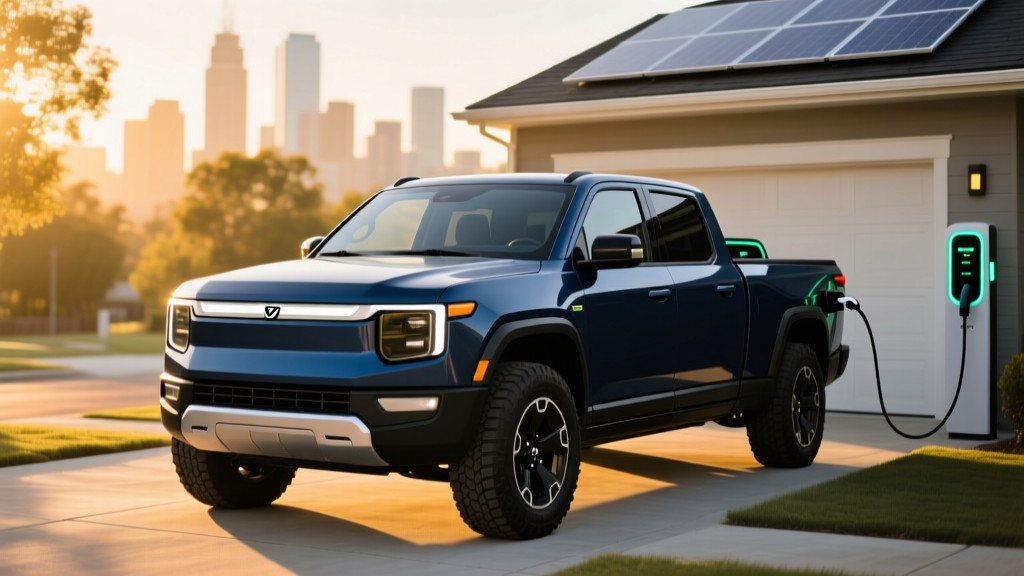
At home, the R1T's 11.5 kW onboard charger is competitive. On a 48-amp Level 2 circuit (60-amp breaker), you'll add roughly 25 miles of range per hour of charging, which is sufficient to replenish a full day's driving overnight. Installation costs for a home Level 2 setup typically range from $800 to $2,500 depending on panel capacity and conduit runs — budget for a potential panel upgrade if your home still has a 100-amp service.
Performance and Drivetrain
The R1T's performance credentials are undeniable regardless of configuration. Here's the breakdown:
- Dual-Motor (Standard/Large Pack): 533 horsepower, 610 lb-ft torque, 0–60 mph in ~4.5 seconds. All-wheel drive with independent front and rear motors.
- Performance Dual-Motor (Large Pack): 665 horsepower, 829 lb-ft torque, 0–60 mph in ~3.4 seconds.
- Tri-Motor (Large Pack): 850 horsepower, 1,103 lb-ft torque, 0–60 mph in ~2.9 seconds. Adds a rear axle with two independent motors for torque vectoring.
All configurations feature a single-speed reduction gear — no multi-speed transmission. Towing capacity is rated at 11,000 pounds across the lineup, though towing at max capacity will cut range roughly in half. The R1T's quad-motor air suspension provides up to 14.9 inches of ground clearance in Off-Road mode and can lower for highway efficiency.
Pricing, Trims, and the Lease-vs-Buy Tax Credit Question
This is where the decision to lease a Rivian R1T gets financially interesting — and potentially advantageous.
| Trim | Base MSRP | Key Features |
|---|---|---|
| Dual-Motor Standard Pack (Adventure) | $69,900 | 270-mi range, 533 hp, Adventure driving modes |
| Dual-Motor Large Pack (Adventure) | $75,900 | 352-mi range, same powertrain |
| Dual-Motor Large Pack (Ascend) | $82,000 | Premium interior, ash wood trim, upgraded audio |
| Performance Dual-Motor Large (Ascend) | $89,000 | 665 hp, performance tuning |
| Tri-Motor Large (Ascend) | $99,900 | 850 hp, 328-mi range, torque vectoring |
Federal Tax Credit: The Lease Loophole (§30D vs. §45W)
Under current IRS rules, the purchase of a new Rivian R1T faces significant §30D tax credit hurdles:
- MSRP cap: Trucks must be under $80,000 MSRP to qualify. This eliminates the Ascend trims, Performance Dual-Motor, and Tri-Motor from purchase credit eligibility.
- Buyer income cap: Modified AGI must not exceed $150,000 (single), $225,000 (head of household), or $300,000 (joint).
- Battery sourcing: Critical minerals and battery component requirements phase in annually, and supply-chain compliance varies by build date. Check IRS.gov §30D guidance for current-year specifics.
- Point-of-sale transfer: If eligible, the up-to-$7,500 credit can be applied at the dealership as a down payment reduction.
The lease advantage: When you lease an R1T, the credit is claimed by the leasing company (the lessor) under §45W (Commercial Clean Vehicle Credit), which has no MSRP cap and no buyer income limit. Many lessors pass this savings through as a lower lease payment — commonly called the "lease loophole." However, this pass-through is not guaranteed by law; it depends on the leasing company's policy. Rivian's own financing arm has historically passed through the $7,500 benefit on leases, but always confirm current terms before signing. A $7,500 credit spread over a 36-month lease reduces payments by roughly $208/month.
MSRP: $69,900 | Estimated residual (36 mo): ~55% ($38,445) | Lease incentive/credit: -$7,500 | Adjusted cap cost: ~$62,400 | Estimated monthly payment (36 mo, $5,000 down): ~$750–$850/mo depending on money factor and local taxes. Compare to purchase at ~$1,100–$1,250/mo on a 72-month loan at 6.5% APR with the $7,500 credit applied.
Cargo, Utility, and Interior Space
The R1T's 4-foot-6-inch bed is shorter than a full-size truck's, but Rivian compensates with clever packaging:
- Bed volume: ~11.4 cu ft (without tonneau); extends to 54+ inches with the tailgate down
- Frunk (front trunk): 11 cu ft, lockable, drainable — ideal for muddy gear or groceries
- Gear Tunnel: 11.6 cu ft pass-through storage behind the rear seats (available on most trims) — a signature R1T feature
- Rear seat legroom: ~38.2 inches — comfortable for adults on longer trips
- Payload capacity: ~1,760 lbs
- Towing: 11,000 lbs max (braked)
The combination of frunk, bed, and Gear Tunnel gives the R1T roughly 34 cu ft of enclosed/semi-enclosed storage — more versatile than the bed length alone suggests. The Camp Kitchen accessory (slide-out induction cooktop and sink) integrates into the Gear Tunnel for overlanding enthusiasts.
Technology, Driver Assistance, and Drawbacks
The 2026 R1T runs Rivian's latest software stack on a 15.6-inch center touchscreen with a 12.3-inch digital instrument cluster. Key tech highlights:
- Rivian Driver+ (Level 2 ADAS): Adaptive cruise control with lane centering on highways. This is an SAE Level 2 system — the driver must remain attentive and keep hands on the wheel. It is not autonomous driving.
- OTA updates: Continuous over-the-air software improvements, including new driving modes, efficiency optimizations, and UI enhancements.
- Connected navigation: Integrated route planning with automatic charging stop suggestions and battery preconditioning.
- Phone-as-key: Bluetooth-based entry and start; no physical fob required (backup card key included).
- V2L (Vehicle-to-Load): Bed-mounted 120V outlets can power tools, camp equipment, or tailgate setups up to ~3.6 kW.
- No Apple CarPlay or Android Auto — Rivian uses its proprietary infotainment system exclusively. Some buyers find this limiting.
- Rear seat cushion is relatively flat; long-trip comfort trails competitors like the F-150 Lightning's rear bench.
- Service center network is still expanding. Depending on your region, warranty service may require a lengthy drive or mobile service wait.
- Insurance premiums run 15–25% higher than comparable gas trucks, reflecting repair costs and parts pricing.
- Regenerative braking is not strong enough for full one-pedal driving in all conditions — expect to use the brake pedal more than in a Tesla or Hyundai Ioniq 5.
Warranty Coverage
| Component | Coverage |
|---|---|
| Basic Vehicle | 5 years / 60,000 miles |
| Battery & Drive Units | 8 years / 175,000 miles (retains ≥70% capacity) |
| Corrosion Perforation | 5 years / unlimited miles |
| Roadside Assistance | 5 years / 60,000 miles |
The 8-year/175,000-mile battery warranty with a 70% capacity retention threshold is competitive with the industry standard. For lease shoppers, this warranty will likely outlast the lease term (typically 36 months), meaning battery degradation risk falls on Rivian, not you — a strong argument for leasing over buying if long-term battery health is a concern.
Who Should Lease the Rivian R1T?
Lease the R1T if:
- You want a premium electric adventure truck without committing to long-term battery depreciation risk.
- Your household income exceeds the §30D purchase income caps, but you can still benefit from the lease credit pass-through.
- You plan to upgrade in 3 years as solid-state batteries and next-gen charging platforms mature.
- You value off-road capability, the Gear Tunnel, and frunk utility over maximum bed length.
- You have home Level 2 charging access and mostly drive under 200 miles round-trip.
Look elsewhere if:
- You need a full 6-foot+ bed for work use (consider the F-150 Lightning or Silverado EV).
- Apple CarPlay/Android Auto is non-negotiable for your infotainment workflow.
- You live in a region with no Rivian service center within reasonable distance.
- Your budget is strictly under $60,000 — the R1T doesn't play in that segment.
Frequently Asked Questions
What is the real-world range of the Rivian R1T?
The EPA rates the Dual-Motor Large Pack at 352 miles, but real-world highway driving at 70+ mph typically yields 290–310 miles. In cold weather (below 30°F), expect 230–270 miles. The Standard Pack's 270-mile EPA rating translates to roughly 220–240 miles highway and 190–210 miles in freezing conditions. Towing at or near max capacity cuts range approximately in half.
How fast does the R1T charge at home and on the road?
On a 48-amp Level 2 home charger, the R1T charges at up to 11.5 kW, adding roughly 25–27 miles of range per hour — a full charge takes 10–13 hours depending on pack size. On DC fast chargers, the R1T peaks at 220 kW and can charge from 10–80% in approximately 22–25 minutes with proper battery preconditioning. Without preconditioning, expect slower rates.
How much does a Rivian R1T cost after tax credits?
If purchasing and fully eligible for the §30D credit (income under cap, MSRP under $80,000, battery sourcing compliant), the Dual-Motor Standard Pack effectively drops from $69,900 to ~$62,400. On a lease, the $7,500 commercial credit is typically passed through by the lessor, reducing monthly payments by ~$208 on a 36-month term. Always verify current IRS eligibility rules and lessor pass-through policy before committing.
Is the Rivian R1T worth it vs. the Ford F-150 Lightning or Chevy Silverado EV?
The R1T excels in off-road capability, acceleration, and clever storage (Gear Tunnel, frunk). The F-150 Lightning offers a larger bed (5.5 or 6.5 ft), lower starting price (~$55,000), and Pro Power Onboard, but less ground clearance and a less premium interior. The Silverado EV provides a 6-foot bed and available 400+ mile range but is larger and less agile. If adventure and premium feel matter most, the R1T wins. If work utility and budget are priorities, the Lightning or Silverado EV may fit better.
Does the Rivian R1T qualify for the federal EV tax credit?
For purchase: only trims under the $80,000 MSRP cap (Dual-Motor Standard and Large Pack Adventure trims) potentially qualify, subject to buyer income limits, battery sourcing requirements, and point-of-sale transfer rules per IRS §30D. For lease: the lessor claims the §45W commercial credit with no MSRP or income cap, and most lessors pass savings to the lessee. Confirm current-year rules at irs.gov.
What happens at the end of a Rivian R1T lease?
You can return the truck (subject to mileage and wear charges), or — if your lease agreement includes a purchase option — buy it at the predetermined residual value. Some lessees use the lease period to evaluate long-term ownership satisfaction and battery health before deciding. Note that Rivian's lease purchase options and residual values are set at signing and may differ from market value at lease end.