Quick Verdict: Is Leasing a Rivian the Smartest Way to Get Into One?
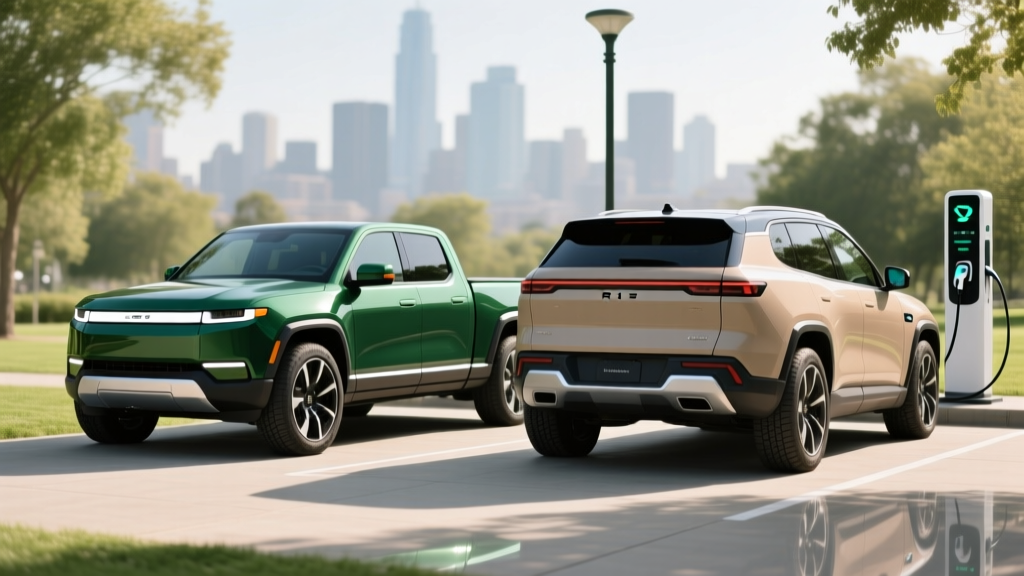
Rivian's R1T pickup and R1S SUV occupy a unique space in the EV market: genuinely capable off-road machines with sports-car acceleration and premium interiors, but with price tags that routinely cross $80,000. For many buyers, leasing is the most practical entry point — and in 2025 and 2026, leasing a Rivian can unlock a $7,500 federal tax credit that the buyer might not qualify for if purchasing outright, thanks to the commercial clean vehicle credit loophole (IRC §45W) that lessors can pass through as a capitalized cost reduction.
This guide breaks down the real lease Rivian cost for the current-generation R1T and R1S (the updated dual-motor and tri-motor configurations introduced for the 2025 model year), including monthly payment estimates, tax credit mechanics, range and charging realities, and how these trucks stack up against competitors like the Ford F-150 Lightning, Tesla Cybertruck, and Chevrolet Silverado EV.
Rivian R1T and R1S: Core Specs at a Glance
| Spec | R1T Dual-Motor (Standard Battery) | R1T Dual-Motor (Large Battery) | R1T Tri-Motor (Max Battery) |
|---|---|---|---|
| EPA Range | 270 miles | 342 miles | 420 miles |
| Battery Capacity (usable) | ~92 kWh (LFP) | ~109 kWh (NMC) | ~141 kWh (NMC) |
| Horsepower | 533 hp | 533 hp | 850 hp |
| 0–60 mph | 4.5 sec | 4.5 sec | 3.0 sec |
| Drivetrain | Dual-Motor AWD | Dual-Motor AWD | Tri-Motor AWD |
| Max DC Fast Charge | ~200 kW | ~220 kW | ~220 kW |
| 10–80% DC Charge Time | ~28 min | ~25 min | ~38 min |
| Level 2 Home Charging | 11.5 kW (~25 mi/hr) | 11.5 kW (~31 mi/hr) | 11.5 kW (~37 mi/hr) |
| MPGe (combined) | 73 MPGe | 73 MPGe | 69 MPGe |
| Towing Capacity | 11,000 lbs | 11,000 lbs | 11,000 lbs |
| Starting MSRP | $69,900 | $75,900 | $99,900 |
Source: Rivian R1T specifications and EPA fueleconomy.gov. The R1S SUV shares the same powertrain options with slightly lower range figures due to increased weight and less aerodynamic profile.
Real-World Range: What the EPA Sticker Doesn't Tell You
Rivian's thermal management system is robust — the heat pump and battery preconditioning help mitigate cold-weather losses better than many competitors. But physics is physics: a 7,000-lb truck pushing a brick-wall frontal area at highway speeds consumes energy at a far higher rate than a sedan. If your commute is 60 miles round-trip with Level 2 home charging, even the Standard Pack is more than adequate. If you're towing a 5,000-lb trailer on a road trip, expect range to roughly halve — plan charging stops accordingly.
The LFP (lithium iron phosphate) Standard Pack battery trades some energy density for durability and cost savings. LFP chemistry tolerates regular 100% charging without the degradation concerns of NMC, meaning daily drivers can use the full 270-mile capacity without babying the state of charge. The NMC Large and Max packs benefit from an 80% daily charge recommendation for longevity, reserving 100% for road trips.
Charging Speed: DC Fast Charging and Home Setup
Rivian's updated battery architecture supports competitive but not class-leading DC fast charging. The Dual-Motor Large Battery peaks around 220 kW on a compatible CCS or NACS charger, tapering significantly above 80% state of charge — as all EVs do. The 10–80% charge time of roughly 25 minutes is practical for road-trip stops but trails the Hyundai Ioniq 5's 18-minute 10–80% on its 800V architecture.
| Charging Level | Power | Miles Added per Hour | Use Case |
|---|---|---|---|
| Level 1 (120V household) | ~1.4 kW | ~3–4 mi/hr | Emergency/top-off only |
| Level 2 (240V home, 48A) | 11.5 kW | 25–37 mi/hr (varies by pack) | Daily home charging |
| DC Fast Charge (CCS/NACS) | Up to 220 kW peak | ~140+ mi in 10 min (peak) | Road trips |
For home Level 2 charging, you'll need a 60-amp circuit to support the truck's 11.5 kW onboard charger at 48 amps. Most Rivian owners install a Wall Connector or the Rivian Wall Charger. Expect a full overnight charge from 20% to 80% in about 6–7 hours for the Large Battery — more than enough for daily use.
Rivian has partnered with Tesla's Supercharger network via a NACS adapter (included with new vehicles as of 2024), dramatically expanding the practical fast-charging map. The Rivian Adventure Network also offers proprietary chargers near popular outdoor destinations, though this network remains small compared to Electrify America or Tesla.
Lease Rivian Cost: Monthly Payments, Down Payments, and Tax Credit Strategy
Here's where the financial picture gets interesting — and where leasing can meaningfully reduce your out-of-pocket cost compared to buying.
Estimated Lease Terms (2025 Model Year)
| Configuration | MSRP | Est. Monthly Payment | Due at Signing | Lease Credit Applied |
|---|---|---|---|---|
| R1T Dual-Motor Standard | $69,900 | $799–$899 | $3,500–$5,500 | $7,500 lease credit |
| R1T Dual-Motor Large | $75,900 | $899–$999 | $4,000–$6,000 | $7,500 lease credit |
| R1T Tri-Motor Max | $99,900 | $1,199–$1,399 | $5,000–$8,000 | $7,500 lease credit |
| R1S Dual-Motor Large | $79,900 | $949–$1,099 | $4,500–$6,500 | $7,500 lease credit |
Estimates based on typical money factors and residual values observed in 2025. Actual lease terms vary by credit tier, region, dealer, and current Rivian promotions. Always request a formal lease quote.
The $7,500 Lease Credit Explained
Under the IRS's interpretation of the clean vehicle credit rules (§30D and §45W), when a vehicle is leased, the lessor (the financing company) is considered the "owner" and can claim the commercial clean vehicle credit under IRC §45W. Many lessors pass this $7,500 benefit to the lessee as a capitalized cost reduction — effectively lowering your monthly payment.
This is significant because the purchase-path §30D credit has strict requirements:
- Buyer income caps: $150,000 single / $225,000 head of household / $300,000 joint (MAGI)
- MSRP caps: $80,000 for SUVs, pickups, and vans
- Battery sourcing requirements: Critical minerals and battery components must meet escalating domestic/free-trade-partner thresholds
Many R1T and R1S configurations exceed the $80,000 MSRP cap for purchases, making the purchase credit unavailable. But through leasing, the MSRP cap and buyer income limits don't apply to the lessee in the same way. This is the core reason many Rivian buyers choose to lease.
Performance and Capability: Where Rivian Earns Its Price
The R1T Dual-Motor's 533 horsepower and 4.5-second 0–60 time make it quicker than nearly every gas pickup on the road. The Tri-Motor's 850 hp and 3.0-second sprint put it in supercar territory — in a truck with a 5-foot bed and 11,000-lb tow rating.
Off-road, Rivian's quad-motor option (available on certain trims) offers true torque vectoring at each wheel, a feature no competitor matches. The air suspension provides up to 14.4 inches of ground clearance in Off-Road mode and can lower for highway efficiency. The gear tunnel — a full-width pass-through storage compartment behind the cab — is a genuinely unique feature that owners rave about for camping gear, skis, or groceries.
The R1S three-row SUV seats seven and offers 104.7 cu ft of total cargo volume behind the front seats (with second and third rows folded). The R1T bed is 4.5 feet long with the tailgate up, but the gear tunnel and front trunk (frunk, 11 cu ft) add meaningful storage.
Tech, Driver Assistance, and Ownership Experience
Rivian's infotainment runs on a custom 15.6-inch center display with a clean, responsive interface. Wireless Apple CarPlay and Android Auto are supported. The driver display is a 12.3-inch digital cluster, supplemented by a 6.8-inch lower touchscreen for climate and vehicle controls.
The Rivian Driver+ system is a Level 2 driver-assistance suite (per SAE classification) — it includes adaptive cruise control, lane centering, and automatic lane changes on highways. It is not a self-driving system and requires the driver to remain attentive at all times. In testing, Driver+ is competent but trails GM's Super Cruise and Ford's BlueCruise in hands-free highway capability, as Rivian currently requires steering-wheel contact.
Over-the-air (OTA) updates are a core Rivian strength. The company regularly ships software improvements that add features, refine driving dynamics, and improve efficiency — similar to Tesla's update cadence but with fewer controversies.
Warranty and Long-Term Battery Confidence
| Coverage | Term |
|---|---|
| Basic Vehicle | 5 years / 60,000 miles |
| Battery & Powertrain | 8 years / 175,000 miles |
| Battery Capacity Retention | 70% minimum over 8 yr / 175,000 mi |
| Corrosion | 5 years / unlimited miles |
The 8-year/175,000-mile battery warranty is competitive and exceeds the federal minimum of 8 years/100,000 miles. The 70% capacity retention threshold is standard for the industry. If you're leasing for 36 months, battery degradation is unlikely to be a concern — most EV batteries lose only 5–8% capacity in the first three years based on fleet data from similar NMC and LFP packs.
Rivian's service network has expanded significantly but remains thinner than legacy automakers. Mobile service vans handle many repairs at your home or office, and the company has opened dedicated service centers in major metros. Rural owners may face longer wait times for body repair or complex diagnostics — a real consideration if you're far from a service hub.
Rivian vs. the Competition: What Else Could You Lease?
| Spec | Rivian R1T Dual-Motor Large | Ford F-150 Lightning Extended Range | Tesla Cybertruck AWD | Chevy Silverado EV 4WT |
|---|---|---|---|---|
| EPA Range | 342 mi | 320 mi | 340 mi | 450 mi |
| Starting MSRP | $75,900 | $71,990 | $79,990 | $74,800 |
| 0–60 mph | 4.5 sec | 4.5 sec | 4.1 sec | ~5.5 sec |
| Towing | 11,000 lbs | 10,000 lbs | 11,000 lbs | 10,000 lbs |
| Max DC Charge | ~220 kW | ~150 kW | ~250 kW | ~200 kW |
| Bed Length | 4.5 ft | 5.5 ft | 6.0 ft | 5.9 ft |
| Off-Road Capability | Excellent (air susp.) | Moderate | Good | Moderate |
The R1T wins on off-road sophistication, acceleration (Tri-Motor), build quality perception, and the unique gear tunnel. It loses on bed length (the shortest in the segment), charging speed (behind Cybertruck's 250 kW peak), and price. The F-150 Lightning is the pragmatic work-truck choice; the Cybertruck offers more range per dollar and faster charging; the Silverado EV leads on range but trails on performance.
Pros
- Class-leading off-road capability with air suspension
- Tri-Motor performance (3.0-sec 0–60) is extraordinary
- LFP Standard Pack allows daily 100% charging
- $7,500 lease credit bypasses purchase MSRP/income caps
- Gear tunnel and frunk add versatile storage
- Strong OTA update cadence and improving software
- Premium interior materials and quiet cabin
Cons
- 4.5-ft bed is short for a pickup
- High MSRP — most trims exceed $80K purchase credit cap
- DC fast charging trails Tesla and Hyundai/Kia 800V platforms
- Service network still growing — rural coverage gaps
- Driver+ is competent but not class-leading ADAS
- Real-world highway range ~15–20% below EPA sticker
- Insurance premiums run 15–25% above comparable gas trucks
Who Should Lease a Rivian?
The R1T is best for: Outdoor enthusiasts who want a premium electric adventure vehicle, not a fleet work truck. If you tow a boat on weekends, hit trailheads on Saturday mornings, and want a daily-driver that's genuinely quick and refined, the R1T has no equal. The lease path makes financial sense if you exceed the purchase credit's income or MSRP caps, want to avoid long-term depreciation risk on a first-generation platform, or prefer swapping vehicles every 36 months.
The R1S is best for: Families needing three rows, AWD capability, and electric efficiency. With seven seats and substantial cargo space, it competes with the Kia EV9 but offers more power and off-road ability at a higher price.
Look elsewhere if: You need a full-size 6-foot bed for work, want the longest possible range per dollar (Silverado EV or Cybertruck), or live far from a Rivian service center with no tolerance for mobile-service wait times.
Frequently Asked Questions
What is the real-world range of the Rivian R1T?
The EPA-estimated 342 miles (Dual-Motor Large Battery) translates to roughly 280–310 miles in mixed real-world driving, 260–285 on sustained highway trips, and 220–250 in freezing temperatures. The Standard Pack's 270-mile EPA figure drops to about 220–240 miles real-world mixed. Towing cuts range roughly in half regardless of pack size.
How fast does the R1T charge at home and on the road?
At home on a Level 2 (240V, 48A) charger, the R1T adds 25–37 miles of range per hour depending on battery pack, fully replenishing overnight. On DC fast chargers, it peaks at approximately 220 kW (Large/Max packs), achieving a 10–80% charge in about 25 minutes for the Large Battery and 38 minutes for the Max. Charging slows considerably above 80% SoC — plan to charge to 80% on road trips for time efficiency.
Does the Rivian R1T qualify for the $7,500 federal EV tax credit?
When purchasing, many R1T configurations exceed the $80,000 MSRP cap for SUVs and pickups under §30D, making the purchase credit unavailable. Buyer income limits ($150K single/$300K joint) and battery sourcing requirements further restrict eligibility. However, through leasing, the lessor can claim the §45W commercial credit and pass $7,500 to you as a cap cost reduction. Confirm this with your dealer and review current IRS guidance before committing.
Is leasing a Rivian better than buying?
Leasing makes sense if you want the $7,500 credit without income/MSRP restrictions, prefer lower monthly payments, want to avoid long-term depreciation risk on an evolving EV platform, and typically drive under 10,000–15,000 miles per year. Buying is better if you drive high annual miles (lease overage penalties add up), want to keep the vehicle 5+ years, or qualify for the purchase credit and prefer building equity. Run both scenarios with your dealer's actual numbers.
What are the biggest drawbacks of the Rivian R1T?
The short 4.5-foot bed limits utility compared to full-size trucks. DC fast charging at ~220 kW peak is adequate but not segment-leading. The service network, while growing, has gaps in rural areas. Highway range falls 15–20% short of the EPA sticker. Insurance costs tend to be higher than comparable gas pickups. And the premium price means most buyers will spend $80,000+ before options.
How does Rivian's battery warranty compare?
Rivian covers the battery and powertrain for 8 years or 175,000 miles, guaranteeing at least 70% capacity retention. This exceeds the federal minimum (8yr/100K mi) and matches or exceeds most competitors. For a 36-month lease, battery degradation is essentially a non-issue — expect 93–95% capacity retention at lease-end based on industry fleet data.