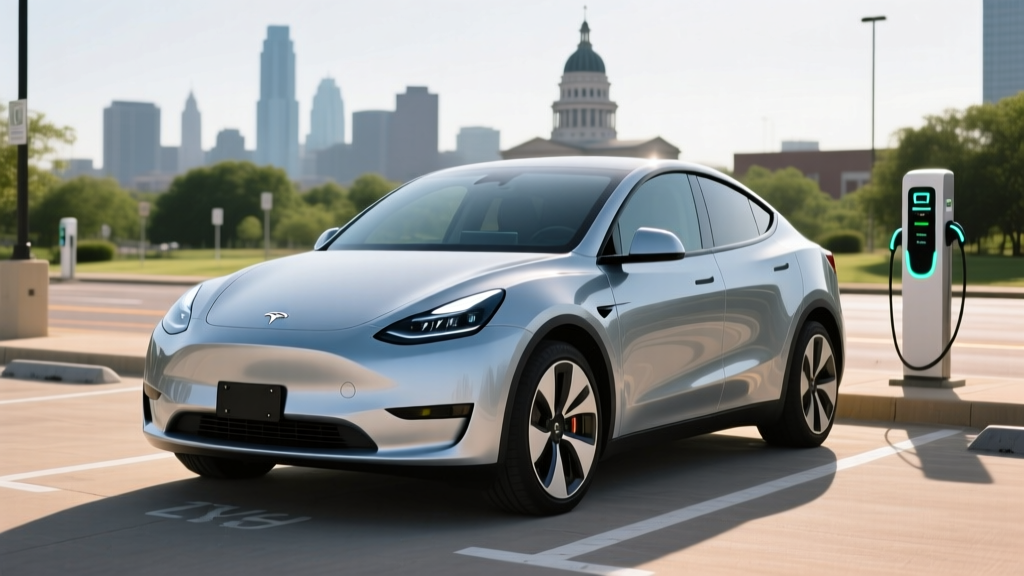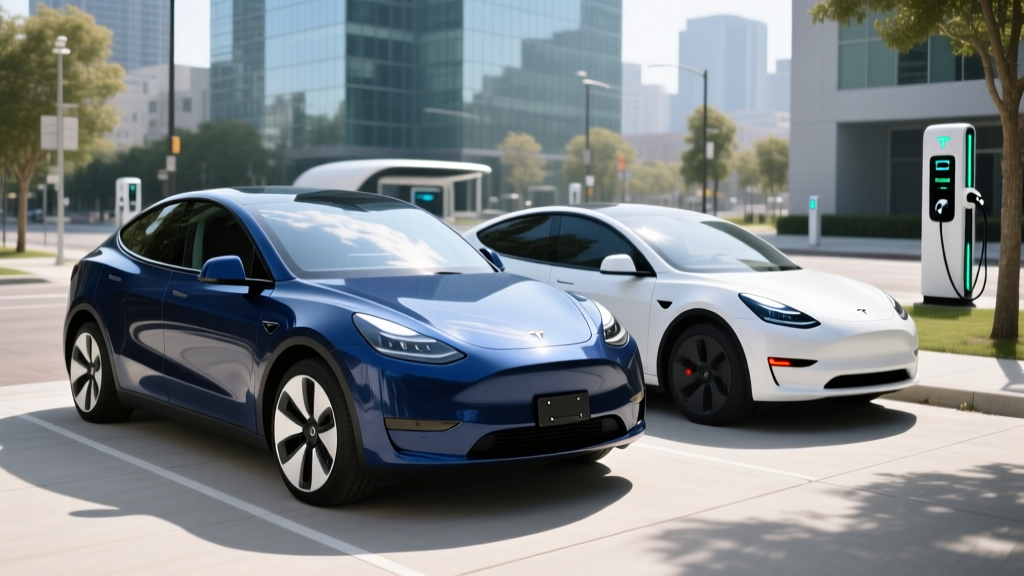
Leasing a Tesla in 2026 looks different than it did even a year ago. Prices have settled, the North American Charging Standard (NACS) is now the industry default, and Tesla's own lease terms have shifted to reflect a more competitive EV market. If you're weighing whether to lease a new Tesla versus buying outright or choosing a rival, the answer depends on how you value monthly cash flow, mileage flexibility, and the federal tax credit.
This guide dissects the two most popular models — the refreshed Model 3 and the current-generation Model Y — through the lens of a potential lessee. We'll cover real-world range, charging realities, what the §30D tax credit actually means inside a lease, and who should (and shouldn't) sign a Tesla lease this year.
2026 Tesla Model 3 and Model Y at a Glance
| Spec | Model 3 Long Range AWD | Model Y Long Range AWD |
|---|---|---|
| EPA Range | 346 miles | 320 miles |
| Battery (usable) | ~75 kWh, NMC | ~75 kWh, NMC |
| Peak DC Fast Charge | 250 kW | 250 kW |
| 10–80% DC Charge Time | ~27 min | ~28 min |
| Level 2 Home Charge Rate | 11.5 kW (~44 mi/hr) | 11.5 kW (~40 mi/hr) |
| 0–60 mph | 4.2 sec | 4.8 sec |
| Horsepower | ~346 hp | ~384 hp |
| Drivetrain | Dual-Motor AWD | Dual-Motor AWD |
| Efficiency | 132 MPGe / 25 kWh/100mi | 122 MPGe / 28 kWh/100mi |
| Cargo Volume | 23 cu ft (trunk) + 3 cu ft (frunk) | 72 cu ft (rear seats folded) + 4 cu ft (frunk) |
| Rear Legroom | 35.2 in | 41.6 in |
| Battery Warranty | 8 yr / 120,000 mi | 8 yr / 120,000 mi |
| Base MSRP | $47,740 | $48,740 |
Source: fueleconomy.gov and Tesla's official specifications page. Real-world figures may vary by driving conditions.
Real-World Range: What the EPA Sticker Doesn't Tell You
Model 3 Long Range AWD: EPA 346 mi — Expect ~290–310 mi on highway-heavy trips at 70 mph; ~240–260 mi in sub-30°F winter conditions.
Model Y Long Range AWD: EPA 320 mi — Expect ~265–285 mi highway; ~220–240 mi in cold weather with cabin heat.
Tesla's efficiency numbers are among the best in the industry, thanks to strong thermal management and a heat pump that's standard on both models. The heat pump recovers waste heat from the drivetrain to warm the cabin, reducing the range penalty in cold weather compared to resistive heaters. That said, physics still applies: any EV loses 15–30% of its range in sustained freezing temperatures, and Tesla is no exception.
On a 75°F day with mixed city/highway driving at moderate speeds, you'll likely match or come close to the EPA sticker. Push 80 mph on the interstate, and expect consumption to climb to 30–33 kWh/100mi, cutting effective range to roughly 230–260 miles in the Model 3. For road-trippers who regularly drive mountain passes or tow (the Model Y is rated for 3,500 lbs), plan your charging stops conservatively.
Charging Speed and Infrastructure: The Supercharger Advantage
| Level | Power (kW) | Approx. Miles Added per Hour | Typical Use Case |
|---|---|---|---|
| Level 1 (120V household) | ~1.4 kW | 3–5 mi/hr | Overnight trickle / emergency |
| Level 2 (240V home / public) | Up to 11.5 kW | 40–44 mi/hr | Daily home charging |
| DC Fast (Supercharger V3) | Peak 250 kW | ~1,000+ mi/hr (peak) | Road trips |
| DC Fast (Supercharger V4) | Up to 350 kW (cabinet) | Varies by vehicle acceptance | Newer Supercharger stations |
Important distinction: kW (kilowatts) measures power — the rate of energy delivery. kWh (kilowatt-hours) measures energy — the total capacity of the battery. A 250 kW charger delivers energy fast, but the vehicle's battery management system controls how much it actually accepts.
Both the Model 3 and Model Y peak at 250 kW on V3 Superchargers. In practice, that peak rate holds only between roughly 10–30% state of charge (SoC). By 50% SoC, the rate tapers to around 150 kW, and above 80%, it drops further to 40–60 kW. This is why Tesla (and most EV makers) quote 10–80% charge times rather than 0–100%. Expect a full 10–80% session in about 27–28 minutes under ideal conditions — battery preconditioned, moderate ambient temperature.
For home charging, a Level 2 Wall Connector on a 60-amp circuit delivers up to 11.5 kW, replenishing roughly 300 miles overnight. Installation costs typically range from $800–$2,000 depending on your electrical panel's capacity and the run length from panel to charger. A licensed electrician should evaluate whether your home needs a panel upgrade (common in older homes with 100-amp service).
Leasing vs. Buying: How the Tax Credit Works Inside a Tesla Lease
This is where things get nuanced. Under IRS §30D rules, the federal clean vehicle credit has strict requirements:
- MSRP caps: $55,000 for sedans (Model 3), $80,000 for SUVs/trucks (Model Y)
- Buyer income limits: $150,000 single / $300,000 joint modified AGI
- Battery sourcing: Critical minerals and battery components must meet phased-in domestic/free-trade-agreement sourcing thresholds
- Point-of-sale transfer: Eligible buyers can transfer the credit to the dealer for an upfront price reduction
Here's the key for lessees: when you lease, the leasing company (lessor) owns the vehicle and technically claims any tax credit. However, Tesla has historically passed the credit's value through to the lessee in the form of a lower capitalized cost (the lease equivalent of a purchase price reduction). This is sometimes called the "lease loophole" — because the commercial credit (§45W) that applies to leased vehicles has fewer sourcing and income restrictions, some lessees may benefit even if they wouldn't qualify under §30D purchase rules.
| Scenario | Model 3 LR AWD | Model Y LR AWD |
|---|---|---|
| Base MSRP | $47,740 | $48,740 |
| Estimated Lease Cap Cost (with credit pass-through) | ~$40,240 | ~$41,240 |
| Money Factor (est.) | 0.0025 (~6.0% APR) | 0.0025 (~6.0% APR) |
| Residual Value (est. 36-mo) | 55% | 57% |
| Est. Monthly Payment ($0 down) | ~$580–$650 | ~$590–$670 |
These are illustrative estimates. Actual lease terms depend on Tesla Financial Services' current money factor, residual tables, your credit tier, and applicable state/local incentives. Always verify current terms directly with Tesla before committing.
Autopilot, FSD, and the Tech That Comes Standard
Tesla Autopilot and Full Self-Driving (Supervised) are Level 2 driver-assistance systems. The driver must remain fully engaged, hands on or near the wheel, and eyes on the road at all times. These are not self-driving systems. Only Level 4 services like Waymo operate without a human driver in geofenced areas.
Every new Tesla ships with Basic Autopilot, which includes traffic-aware cruise control and lane-keeping assist. The optional FSD (Supervised) package — currently priced around $8,000 upfront or $99/month — adds automated lane changes, Navigate on Autopilot (highway on/off-ramp guidance), and city-street traffic-light and stop-sign recognition.
From a leasing perspective, think carefully before adding FSD. You're paying for a software capability on a car you'll return in three years. The subscription option ($99/month) is often the smarter play for lessees since you can cancel it when the lease ends. Note that FSD's capabilities vary significantly by region and road type — it excels on well-marked highways but can struggle with construction zones, unmapped intersections, and adverse weather.
Other standout tech includes:
- 15.4-inch center touchscreen with integrated navigation, streaming, and gaming
- Over-the-air (OTA) updates that add features post-purchase
- Tesla app with remote climate control, charging status, and vehicle location
- Sentry Mode dashcam surveillance when parked
- NACS charge port — the standard now adopted by Ford, GM, Rivian, Hyundai, and others
Pros, Cons, and the Honest Drawbacks
- Best-in-class Supercharger network reliability
- Industry-leading efficiency (kWh/100mi)
- Strong OTA update pipeline keeps the car current
- Spacious Model Y cargo area (72 cu ft seats-down)
- Heat pump standard — better cold-weather range retention
- NACS port = broadest fast-charging access
- No Apple CarPlay or Android Auto
- Minimalist interior isn't for everyone (no instrument cluster)
- FSD is expensive and still requires full driver supervision
- Panel-gap and build-quality inconsistencies still reported
- Insurance premiums run 15–30% higher than comparable gas cars
- Lease mileage penalties at $0.20–$0.25/mi if you exceed your limit
Who Should Lease a Tesla — and Who Shouldn't
- You drive 8,000–12,000 miles/year (fits standard lease limits)
- You want the lowest monthly payment with tax-credit pass-through
- You like upgrading every 3 years to get the latest tech
- You're uncertain about long-term battery degradation and want warranty coverage for the full ownership period
- You have home Level 2 charging access
- You drive 15,000+ miles/year — excess mileage fees add up fast
- You want to keep the car 7–10 years (buying is cheaper long-term)
- You rely on Apple CarPlay/Android Auto for daily navigation
- You live in an apartment without charging access and public infrastructure is sparse
- You want to modify the vehicle (wraps, aftermarket wheels — leases restrict this)
How the Tesla Lease Compares to Key Rivals
The Model Y's most direct competitors in the lease market include the Hyundai Ioniq 5, Ford Mustang Mach-E, and Kia EV6. Here's how they stack up on the metrics that matter to lessees:
| Metric | Tesla Model Y LR AWD | Hyundai Ioniq 5 Limited AWD | Ford Mustang Mach-E Premium AWD |
|---|---|---|---|
| EPA Range | 320 mi | 290 mi | 290 mi |
| Peak DC Charge | 250 kW | 240 kW | 150 kW |
| 10–80% DC Time | ~28 min | ~18 min | ~38 min |
| Charging Standard | NACS (native) | NACS (2025+) | NACS (2025+) |
| Cargo (seats folded) | 72 cu ft | 59 cu ft | 59 cu ft |
| Apple CarPlay | No | Yes (wireless) | Yes (wireless) |
| IIHS Top Safety Pick+ | No (not tested 2026) | Yes | Yes |
The Ioniq 5 charges faster (10–80% in ~18 minutes thanks to its 800V architecture), offers CarPlay, and has earned top safety ratings from IIHS. The Mach-E provides a more traditional cockpit layout. But the Model Y still wins on total range, cargo space, and Supercharger network seamlessness — which matters if you road-trip frequently.
Frequently Asked Questions
What is the real-world range of a leased Tesla Model Y?
The EPA rates the Model Y Long Range AWD at 320 miles. In real-world highway driving at 70 mph in mild weather, expect 265–285 miles. In freezing temperatures with the heater running, plan for 220–240 miles between charges. City driving with regenerative braking can actually exceed the EPA estimate.
How fast does a Tesla charge at home and on the road?
At home on a Level 2 Wall Connector (11.5 kW), both models add roughly 40–44 miles of range per hour — a full overnight charge covers most weekly driving. On a V3 Supercharger, peak rate is 250 kW, with a 10–80% session taking about 27–28 minutes. Charging slows significantly above 80% to protect the battery.
How much does a Tesla lease cost after tax credits?
With the federal credit passed through the lease, expect roughly $580–$670/month for a Model 3 or Model Y Long Range AWD on a 36-month, 10,000-mile lease with little or no money down. Exact figures depend on Tesla Financial's current money factor, your credit, and regional incentives.
Does a leased Tesla qualify for the federal EV tax credit?
Technically, the leasing company claims the credit — but Tesla has consistently passed the value to lessees as a cap-cost reduction. Because leased vehicles may qualify under the commercial clean vehicle credit (§45W), some buyers who exceed §30D income limits or whose vehicles don't meet battery-sourcing rules may still benefit. Always confirm current eligibility with Tesla and consult a tax professional regarding your specific situation.
Is leasing a Tesla worth it compared to competitors?
If you prioritize Supercharger access, range, and cargo space, the Model Y lease remains compelling. If you value faster DC charging, CarPlay integration, or top IIHS safety ratings, the Hyundai Ioniq 5 or Kia EV6 may offer better value. Test-drive both and compare actual lease quotes side-by-side before deciding.
What happens at the end of a Tesla lease?
Tesla typically offers a purchase option at the residual value stated in your lease contract. You can also return the vehicle (subject to excess wear and mileage charges) or, in some cases, lease a new Tesla. Inspect your contract for the specific purchase-option terms, as these have varied by model year.