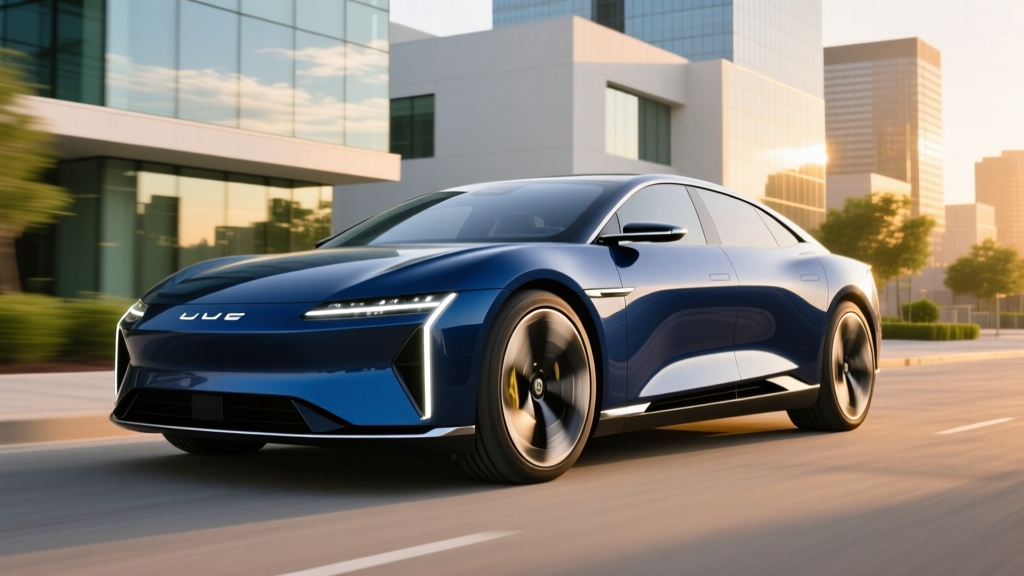
The Lucid Gravity arrives as the luxury three-row electric SUV many have been waiting for: a spacious family hauler with the range and efficiency Lucid pioneered in the Air sedan. But with a starting price pushing six figures and a complex federal incentive landscape, many buyers are asking a very specific question: does it make more sense to lease the Lucid Gravity rather than buy it outright?
This review covers the 2026 Lucid Gravity's real-world range, charging performance, interior practicality, and the financial mechanics of leasing versus buying — including how the §30D federal tax credit works when you lease through Lucid's financial arm.
Lucid Gravity at a Glance: 2026 Model Year Specs
| Specification | Lucid Gravity Pure (RWD) | Lucid Gravity Touring (AWD) | Lucid Gravity Grand Touring (AWD) |
|---|---|---|---|
| EPA Range | ~440 miles (est.) | ~390 miles (est.) | ~440 miles (est.) |
| Battery Capacity | ~112 kWh usable (NMC) | ~112 kWh usable (NMC) | ~112 kWh usable (NMC) |
| Horsepower | ~480 hp | ~620 hp | ~828 hp |
| 0–60 mph | ~5.5 sec | ~3.5 sec | ~3.0 sec |
| Drivetrain | RWD (single motor) | AWD (dual motor) | AWD (dual motor) |
| Max DC Fast Charge | ~300 kW | ~300 kW | ~300 kW (900V architecture) |
| 10–80% DC Charge | ~22 min | ~22 min | ~15–20 min |
| Level 2 Home Charge | 19.2 kW (~70 mi/hr) | 19.2 kW (~70 mi/hr) | 19.2 kW (~70 mi/hr) |
| Base MSRP | $79,900 | $94,900 | $109,900 |
| MPGe (combined, est.) | ~120 MPGe | ~110 MPGe | ~115 MPGe |
| Efficiency (kWh/100 mi) | ~28 kWh | ~30 kWh | ~29 kWh |
Note: Some 2026 model year specifications are based on Lucid's announced preliminary data. Final EPA certification figures may vary. Check fueleconomy.gov for confirmed numbers once published.
Real-World Range: What the EPA Sticker Doesn't Tell You
Real-World Expectation:
- Highway (70–75 mph, moderate temps): Expect ~340–380 miles. Aerodynamic drag hits any SUV hard at sustained highway speeds, and the Gravity's three-row profile is no exception.
- Cold weather (below 32°F): Plan for ~280–330 miles. NMC chemistry loses efficiency in the cold, and cabin heating draws significant energy even with a heat pump.
- City/commuter driving (with regen): You can approach or even slightly exceed the EPA number thanks to Lucid's highly efficient powertrain and strong regenerative braking.
Lucid's efficiency engineering is genuinely class-leading. The Gravity's motor design, low-drag body tuning, and 900-volt electrical architecture all contribute to squeezing more miles out of each kilowatt-hour than competitors like the BMW iX or Rivian R1S. But physics is physics: a three-row SUV pushing over 6,000 pounds will consume more energy at highway speed than a sleek sedan.
For most families doing a mix of school runs, grocery trips, and the occasional road trip, the Gravity's real-world range is outstanding. You'll charge at home overnight and likely only visit a DC fast charger on long interstate drives.
Charging Speed: 900V Architecture in Practice
| Charging Level | Power (kW) | Speed (miles/hour) | Notes |
|---|---|---|---|
| Level 1 (120V outlet) | ~1.4 kW | ~5 mi/hr | Emergency/trickle only |
| Level 2 (240V, 48A circuit) | 11.5 kW | ~42 mi/hr | Standard home setup |
| Level 2 (240V, 80A circuit) | 19.2 kW | ~70 mi/hr | Requires upgraded panel/wiring |
| DC Fast (peak, Grand Touring) | ~300 kW | ~200+ mi/hr (peak) | 10–80% in ~15–20 min on 350 kW charger |
| DC Fast (sustained average) | ~180–220 kW avg | — | Charge curve tapers above 80% SoC |
The Gravity's 900-volt architecture is the key to its DC fast-charging advantage. Higher voltage means lower current for the same power output, which reduces heat in the battery and cables. On a 350 kW Electrify America or Tesla Supercharger (with NACS adapter), the Grand Touring can accept peak rates approaching 300 kW — but only in the 10–50% state-of-charge window.
What this means practically: The charge curve tapers noticeably after 60% SoC, and drops sharply past 80%. If you're road-tripping, plan to charge from 10% to 80% and then move on. Sitting at a charger from 80–100% can take as long as the initial 10–80% fill. This is normal for all lithium-ion batteries, but it's important to understand when planning stops.
At home, the Gravity's 19.2 kW onboard charger is among the fastest in the industry. With a hardwired 80-amp Level 2 wall connector on a dedicated 100-amp circuit, you'll recover roughly 70 miles of range per hour of charging. That means a full overnight session easily replenishes even a near-empty battery. Most buyers will opt for a 48-amp circuit (11.5 kW / ~42 mi/hr), which is sufficient for daily use and requires less electrical panel headroom.
Interior, Cargo, and Family Practicality
The Gravity is a genuine three-row SUV, and unlike some competitors where the third row is a penalty box, the Gravity accommodates adults in all three rows thanks to its skateboard platform and Lucid's miniaturized motor packaging.
- Cargo behind 3rd row: ~24 cu ft
- Cargo behind 2nd row (3rd row folded): ~60 cu ft
- Total cargo (2nd and 3rd folded): ~110 cu ft
- Front trunk (frunk): ~10 cu ft — useful for charging cables or a small cooler
- Second-row legroom: ~41 inches
- Third-row legroom: ~35 inches
The standout interior feature is the 34-inch curved glass cockpit display that spans the entire dashboard — what Lucid calls the "Clearview" display. It replaces a traditional instrument cluster and central touchscreen with a single, driver-angled panoramic screen. Below it, a retractable lower touchscreen handles climate and secondary controls, then slides away to open up shelf space.
For families, the Gravity offers a practical advantage over the Tesla Model X: conventional rear doors (no falcon-wing complexity) and a more intuitive third-row entry. The available panoramic glass roof floods the cabin with light, though the lack of a retractable shade may bother some in hot climates.
Pricing, Leasing, and the Federal Tax Credit Explained
| Trim | Base MSRP | Federal §30D Credit (Purchase) | Lease Credit (Commercial) | Effective Starting Price |
|---|---|---|---|---|
| Pure (RWD) | $79,900 | Up to $7,500 (if eligible) | Passed through by lessor | ~$72,400 (if credit applies) |
| Touring (AWD) | $94,900 | $0 (exceeds MSRP cap) | Passed through by lessor | Varies by lease terms |
| Grand Touring (AWD) | $109,900 | $0 (exceeds MSRP cap) | Passed through by lessor | Varies by lease terms |
Here's where leasing gets interesting — and why the search term "lease Lucid Gravity" is surging.
Under IRS §30D rules for purchasing, the federal EV tax credit has an MSRP cap of $80,000 for SUVs. This means only the Gravity Pure (at $79,900) qualifies — and only if you also meet the adjusted gross income limits ($150,000 single / $300,000 joint / $225,000 head of household) and the vehicle's battery meets critical mineral and component sourcing requirements. See the full rules at IRS.gov §30D.
The Touring and Grand Touring trims exceed the $80,000 SUV cap and are ineligible for the §30D purchase credit.
However, when you lease, a different section of the tax code applies: §45W (the commercial clean vehicle credit). This credit has no MSRP cap and no buyer income cap. The credit goes to the lessor (Lucid's financing arm), and many automakers pass the savings through as a "lease cash" reduction or lower monthly payment. This is commonly called the "lease loophole," though it's fully legal and intended by the statute.
The leasing advantage for the Gravity is clear: If you want a Touring or Grand Touring, leasing may be the only way to capture any portion of the $7,500 federal incentive. Whether Lucid passes the full amount through to your lease depends on their current offers — always confirm the exact lease cash amount with the dealer or Lucid directly before signing.
Performance and Driving Impressions
Even the base Gravity Pure delivers a 480-horsepower punch and a sub-6-second 0–60 time — more than adequate for merging, passing, and general daily driving. The dual-motor AWD Touring drops that to about 3.5 seconds, which is firmly in sports-car territory for a three-row SUV.
The Grand Touring, with 828 horsepower and a ~3.0-second 0–60, is genuinely absurd in its acceleration. But the Gravity's real dynamic strength isn't straight-line speed — it's the ride quality. Lucid's available adaptive air suspension smooths out highway imperfections and can raise the vehicle for rough roads or light off-pavement use. The steering is precise and well-weighted, though the Gravity's size is always apparent in tight parking lots.
Towing: The Gravity is rated for up to 6,000 pounds when properly equipped. That's competitive with the Rivian R1S and sufficient for a boat, small camper, or utility trailer. Keep in mind that towing at capacity will cut your range roughly in half — plan for ~200 miles between charges when hauling heavy.
Driver Assistance and Smart Features
The Lucid Gravity ships with Lucid's DreamDrive Pro ADAS suite, which includes adaptive cruise control, lane centering, automatic lane changes, and hands-free highway driving on mapped roads. This is a Level 2 driver-assistance system — you must remain attentive, keep your eyes on the road, and be ready to take over at any moment. It is not self-driving.
DreamDrive Pro uses a combination of cameras, radar, and LiDAR (on higher trims) for its sensor suite. In real-world use, the system is smooth and confident on well-marked highways, though it can be conservative in construction zones and may disengage in heavy rain or faded lane markings. Lucid has committed to over-the-air updates that will expand hands-free coverage areas over time.
Other standout tech includes:
- Phone-as-key with Bluetooth LE proximity unlock
- Over-the-air software updates covering powertrain, infotainment, and ADAS
- Wireless Apple CarPlay and Android Auto
- Surreal Sound Pro — a 21-speaker Dolby Atmos audio system
- Vehicle-to-load (V2L) capability for powering devices or tools from the battery
Warranty and Long-Term Ownership
- Battery & Drive Unit: 8 years / 100,000 miles (whichever comes first)
- New Vehicle Limited Warranty: 4 years / 50,000 miles
- Battery capacity retention: Lucid warrants that the high-voltage battery will retain at least 70% of its original capacity during the warranty period
Lucid uses NMC (nickel manganese cobalt) battery chemistry, which offers high energy density but is slightly more susceptible to calendar degradation than LFP chemistry. To maximize longevity, avoid routinely charging to 100% — set your daily charge limit to 80–90% and only charge to full when preparing for a long road trip. The 900V system's excellent thermal management should help keep degradation in check over the long haul.
Lucid Gravity vs. Key Competitors
| Attribute | Lucid Gravity GT | Tesla Model X Plaid | Rivian R1S (Tri-Motor) | BMW iX M70 |
|---|---|---|---|---|
| EPA Range | ~440 mi | ~326 mi | ~390 mi | ~310 mi |
| 0–60 mph | ~3.0 sec | ~2.5 sec | ~2.9 sec | ~3.6 sec |
| Third Row? | Yes | Yes (tight) | Yes | No |
| Max DC Charge | ~300 kW | ~250 kW | ~220 kW | ~200 kW |
| Starting MSRP | $109,900 | ~$110,000 | ~$99,900 | ~$111,500 |
| Tow Rating | 6,000 lbs | 5,000 lbs | 7,700 lbs | 3,500 lbs |
The Gravity's range advantage is its headline differentiator — nothing in the three-row luxury EV class comes close to 440 EPA miles. The Rivian R1S is the better off-roader and tow rig. The Tesla Model X has the Supercharger network advantage and slightly quicker acceleration in Plaid trim, but its aging interior and falcon-wing door quirks are real trade-offs. The BMW iX is a five-seater only and can't match the Gravity's practicality for families needing three rows.
- Class-leading 440-mile EPA range
- Best-in-class DC fast charging via 900V architecture
- Spacious, genuine three-row interior
- Outstanding energy efficiency (kWh/100 mi)
- Leasing may unlock $7,500 credit on higher trims
- 19.2 kW Level 2 onboard charger (fastest home charging in class)
- High starting price; Touring/GT exceed §30D MSRP cap
- Limited service center network vs. Tesla
- NMC battery requires mindful charging habits for longevity
- No NACS port standard (CCS1; adapter required for Tesla Superchargers)
- Relatively new brand — long-term reliability unproven
- Third-row access less convenient than minivan alternatives
Who Should Lease the Lucid Gravity?
- You want a Touring or Grand Touring trim and want to capture the $7,500 commercial EV credit via §45W that you can't get through a purchase
- Your household AGI exceeds the §30D income caps ($300K joint / $150K single)
- You prefer to swap vehicles every 3 years and avoid long-term battery degradation risk
- You want the latest tech and plan to upgrade as Lucid rolls out next-gen features via OTA
- You're purchasing the Pure trim (under the $80K MSRP cap), meet income requirements, and the battery sourcing qualifies for §30D
- You plan to keep the vehicle 6+ years and want to build equity
- You drive high annual miles (15,000+) where lease mileage penalties add up fast
- You want to modify the vehicle (wraps, wheels, etc.) without lease restrictions
Best use cases for the Gravity: Families who need three rows but refuse to drive a minivan. Commuters with long daily drives who benefit from the 440-mile range buffer. Road trippers who want fewer charging stops. Light-to-moderate towers (boat, small camper). It is not the best pick for serious off-roading (choose the Rivian R1S) or for buyers on a tight budget (the Hyundai Ioniq 9 or Kia EV9 offer three rows at much lower prices).
Frequently Asked Questions
What is the real-world range of the Lucid Gravity?
The EPA-estimated range is up to 440 miles for the Grand Touring trim. In real-world mixed driving, expect roughly 340–380 miles at highway speeds, dropping to 280–330 miles in cold weather below freezing. City driving with regenerative braking can approach or slightly exceed the EPA number.
How fast does the Lucid Gravity charge?
On a 350 kW DC fast charger, the Grand Touring peaks near 300 kW and charges from 10–80% in approximately 15–20 minutes. At home on a Level 2 charger, the Gravity accepts up to 19.2 kW (80-amp circuit), adding roughly 70 miles of range per hour. A standard 48-amp Level 2 setup delivers about 42 miles per hour of charging.
How much does the Lucid Gravity cost after tax credits?
The Pure starts at $79,900 and may qualify for the $7,500 §30D federal credit if purchased by an eligible buyer, bringing the effective price to ~$72,400. The Touring ($94,900) and Grand Touring ($109,900) exceed the §30D MSRP cap for SUVs but may capture the $7,500 commercial credit through a lease via §45W. State incentives vary — check afdc.energy.gov for your area.
Does the Lucid Gravity qualify for the federal EV tax credit?
For purchase: Only the Pure trim (MSRP under $80,000) potentially qualifies under §30D, subject to buyer income caps and battery sourcing requirements. For lease: All trims may benefit from the §45W commercial credit, which has no MSRP or income cap. The credit goes to the lessor and may be passed through as a lease incentive. Confirm current eligibility at IRS.gov and with Lucid directly.
Is the Lucid Gravity worth leasing vs. buying?
Leasing is financially compelling if you want a Touring or Grand Touring trim, exceed the income caps, or prefer to change vehicles every few years. Buying makes more sense for the Pure trim if you qualify for §30D, drive high annual miles, and plan to keep the vehicle long-term. Compare the total lease cost (monthly payment × term + fees) against the purchase cost (loan interest + depreciation + incentives) for your specific situation.
What connector does the Lucid Gravity use?
The 2026 Gravity uses a CCS1 charge port for DC fast charging and a J1772 inlet for Level 2 AC. Lucid provides or offers a NACS adapter for access to Tesla's Supercharger network. As the industry transitions to NACS natively, future model years may ship with a built-in NACS port.
How does the Gravity's efficiency compare to competitors?
Lucid's powertrain efficiency is among the best in the industry. The Gravity is expected to achieve roughly 28–30 kWh per 100 miles depending on trim, translating to approximately 110–120 MPGe combined. That's notably better than the Tesla Model X (~100 MPGe) and BMW iX (~86 MPGe), meaning you'll spend less on electricity per mile driven.