The Lease-vs-Buy Question for Kia's Electric Lineup
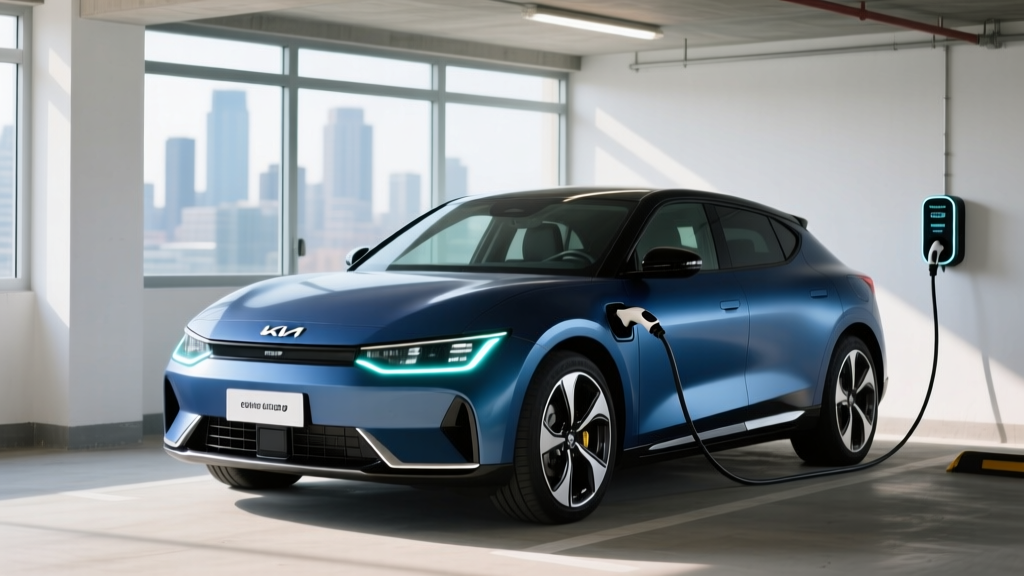
Kia's electric lineup has matured considerably. The 2026 EV6 (refreshed with a 84.0 kWh usable NMC battery and up to 310 miles of EPA range) and the 2026 Niro EV (64.8 kWh LFP option, 239 miles EPA) anchor a range that now includes the large three-row EV9 (99.8 kWh, up to 304 miles). But the math on whether to buy or lease a Kia electric car has shifted dramatically in the last two years, driven by changes in federal incentive rules, volatile EV residual values, and rising insurance premiums.
This guide runs the real numbers — not the brochure claims — on what it costs to own or lease a Kia EV over five years. We'll cover the federal §30D tax credit mechanics (and the "lease loophole" that may still matter in 2026), per-mile fuel and maintenance costs, the insurance reality, and the depreciation trends that make leasing more attractive than it used to be.
Kia's 2026 EV Lineup: Quick Specs
Before running cost numbers, here's what's on the showroom floor for 2026. All figures are EPA or manufacturer-confirmed; real-world notes are inline.
| Model | Battery (kWh usable) | Chemistry | EPA Range | Peak DC Charge | 10-80% Time | 0-60 mph | Base MSRP |
|---|---|---|---|---|---|---|---|
| 2026 Niro EV Wind | 64.8 | NMC (LFP on base) | 239 mi | 85 kW | ~43 min | 7.8 sec | $39,600 |
| 2026 EV6 Light LR RWD | 84.0 | NMC | 310 mi | 240 kW | ~18 min | 7.2 sec | $42,900 |
| 2026 EV6 GT-Line AWD | 84.0 | NMC | 282 mi | 240 kW | ~18 min | 5.1 sec | $52,500 |
| 2026 EV9 Land AWD | 99.8 | NMC | 280 mi | 210 kW | ~24 min | 6.0 sec | $59,900 |
5-Year Total Cost of Ownership: Buy vs. Lease
Below is a 5-year / 60,000-mile TCO model for a 2026 EV6 Light LR RWD ($42,900 MSRP) compared against a comparable 36-month lease rolled into a 5-year horizon (assume you re-lease or buy out at residual). We assume 12,000 miles/year, home Level 2 charging at 85%, and DC fast charging at 15%.
| Cost Category | Purchase (5 yr) | Lease (2x 36-mo, overlap) |
|---|---|---|
| Vehicle acquisition (net of incentives) | $35,400 (after $7,500 credit) | $35,800 (lower cap-cost via passthrough) |
| Financing / lease interest | $6,200 @ 6.9% APR | $4,900 (money factor ~0.0021) |
| Energy (electricity) | $3,700 | $3,700 |
| Insurance | $11,400 | $11,400 |
| Maintenance & repairs | $1,400 | $1,100 (under warranty) |
| Depreciation / residual loss | $14,800 | Baked into lease payments |
| Total 5-year cost | ~$72,900 | ~$56,900 (no equity) |
| Net cost after equity | $58,100 (assuming $14,800 residual) | $56,900 |
The spread is narrow. Leasing wins in 2026 primarily because EV residual values remain soft and because Kia's lease cash often passes through the $7,500 commercial clean-vehicle credit (§45W) even when retail buyers fail the §30D battery-sourcing test. We'll unpack that below.
Federal Tax Credits: §30D Rules and the Lease Workaround
The IRS §30D Clean Vehicle Credit offers up to $7,500 for qualifying new EVs, but stacking the rules eliminates a lot of buyers and some vehicles. As of the 2026 tax year, here's what gates eligibility.
- MSRP caps: Vans/SUVs/pickups ≤ $80,000; sedans/other ≤ $55,000. The EV6 (classified as an SUV) clears this; the EV9 AWD trims near $70K also clear. A hypothetical EV6 GT above $55K would fail if reclassified as a sedan — confirm the IRS VIN list.
- Buyer income caps (AGI): $300K joint / $225K head-of-household / $150K single. Above these, no credit.
- Battery components: 100% of battery components must be manufactured or assembled in North America for 2026 deliveries — phases out vehicles with Chinese-sourced modules.
- Critical minerals: A percentage threshold of critical minerals must be sourced from the U.S. or FTA partners; this tightens annually and can disqualify otherwise-eligible cars.
- FEOC restriction: Vehicles with battery components from a "foreign entity of concern" (primarily Chinese firms) are ineligible regardless of other criteria.
- Point-of-sale transfer: You can apply the credit as a down-payment reduction at the dealer rather than waiting for tax filing — but you still must meet income caps at filing time, or repay.
Check the latest VIN eligibility on the IRS qualified vehicles list — it updates monthly.
Charging vs. Gasoline: The Per-Mile Math
Assume a gas baseline of 28 MPG combined (a typical compact crossover like the Sportage) at $3.40/gallon. For the EV6, we use the EPA-rated 134 MPGe combined — which translates to roughly 28 kWh per 100 miles.
| Scenario | Cost per mile | Annual cost (12K mi) |
|---|---|---|
| Gas crossover, 28 MPG @ $3.40/gal | $0.121 | $1,452 |
| EV6, home L2 @ $0.14/kWh | $0.039 | $468 |
| EV6, public DCFC @ $0.48/kWh | $0.134 | $1,608 |
| EV6 blended (85% home / 15% DCFC) | $0.053 | $636 |
At the blended rate, the EV6 saves roughly $816 per year over the gas crossover — about $4,080 over five years. But the math flips badly if you rely on public DC fast charging: at Electrify America or EVgo peak rates ($0.48-$0.58/kWh in many metros), an EV can cost more per mile than a 28-MPG gas car. Home charging is the economic keystone of EV ownership. Without it, leasing a Kia electric car still works, but the fuel-savings argument collapses.
Utility time-of-use rates can push this further. If your utility offers off-peak EV rates around $0.08-$0.10/kWh (common with PG&E, SCE, ConEd, and others), your cost per mile drops to $0.025-$0.030.
Maintenance Savings: Real but Modest
EVs eliminate oil changes, spark plugs, timing belts, transmission fluid, and most exhaust components. Regenerative braking dramatically extends pad and rotor life — many EV owners see 80,000+ miles on original brakes. But EVs aren't maintenance-free: cabin air filters, wiper fluid, tire rotations, brake fluid checks, coolant top-offs, and — critically — tire replacement all still apply. EVs wear tires 20-30% faster than comparable gas cars due to instant torque and higher curb weight (the EV6 tips the scales at ~4,600 lbs).
| Service Item | Gas Crossover (5 yr / 60K mi) | Kia EV6 (5 yr / 60K mi) |
|---|---|---|
| Oil & filter changes | $750 | $0 |
| Brake pads/rotors | $900 | $150 |
| Tires (1 set replacement) | $800 | $1,100 (heavier, EV-rated tires) |
| Cabin filter, wipers, misc. | $400 | $400 |
| Coolant / brake fluid service | $250 | $200 |
| Total | $3,100 | $1,850 |
Net savings: roughly $1,250 over five years. Meaningful, but not the four-figure annual windfall some marketing implies. The biggest maintenance risk out of warranty is the onboard charger, heat pump, or e-SSD power electronics — expensive individual repairs that Kia's 10-year/100,000-mile powertrain warranty covers during ownership but not beyond.
Insurance: The Uncomfortable Truth
EVs cost more to insure than equivalent gas vehicles — typically 15-25% higher premiums for the EV6 versus a Sportage. The reasons are structural, not a rip-off:
- Repair costs: Battery packs, high-voltage harnesses, and integrated e-motors are expensive to replace after collision damage. Even minor rear-end impacts can total an EV if the pack enclosure is compromised.
- Limited repair network: Fewer body shops have EV-certified technicians, pushing labor rates higher.
- Higher vehicle MSRP: Insurers price comprehensive/collision partly on replacement cost.
- Claims data: EVs, especially performance trims, show higher severity claims in early IIHS/HLDI data.
For a 38-year-old driver with a clean record in a mid-cost metro, expect $180-$220/month on an EV6 GT-Line AWD versus $145-$175 on a gas Sportage. Over five years that's a $2,100-$2,700 insurance penalty. Always pull quotes from three carriers before signing a lease — the spread between insurers on EVs is often larger than on gas cars.
Depreciation and Resale: Why Leasing Has the Edge in 2026
EV depreciation has been brutal since 2023. A combination of Tesla-led price cuts, rising battery raw-material volatility, improving newer models, and consumer hesitation on used battery health has pushed 3-year residuals on mainstream EVs into the 42-52% range — versus 55-65% for equivalent gas crossovers. The EV6 has held up better than most (it's in demand, and Kia's warranty transfers to second owners), but 5-year residuals are currently projected at roughly 32-38% of MSRP.
That means a $42,900 EV6 Light might be worth $14,000-$16,300 at year five — a loss of $26,600-$28,900 in depreciation alone. When you lease, that depreciation risk sits with Kia Motors Finance, not you. If battery tech leaps forward (solid-state, 500-mile packs) or if a used-EV demand slump continues, the lessor absorbs the hit. This is the single strongest argument to lease a Kia electric car rather than buy in the current market.
Countervailing factor: if you drive well under 12,000 miles/year, keep cars 8+ years, and live in a market with strong used-EV demand (California, Pacific Northwest, Northeast), buying and holding may still pencil out. The break-even horizon for purchase versus lease in 2026 is roughly 6-7 years of ownership.
State, Local, and Utility Incentives
Federal credits get the headlines, but regional incentives can swing the math by thousands. Examples active as of early 2026 (verify current status — programs expire or exhaust funding):
- California: Up to $7,000 via Clean Fuel Reward (point-of-sale) plus CVRP rebates up to $7,500 for income-qualified buyers. PG&E offers $500 residential charger rebate.
- Colorado: $5,000 state credit on new EVs under $80K MSRP, stackable with federal.
- New York: Drive Clean Rebate up to $2,000 at point of sale.
- Utility programs: Many utilities (Austin Energy, Xcel Energy, National Grid) offer $250-$1,000 for Level 2 home charger installation or off-peak rate enrollment.
- HOV access: California, Colorado, Virginia, and others grant solo carpool-lane access — worth $1,500-$3,000/year in time savings for commuters.
Always check your state energy office and utility's EV page before signing. These incentives often apply equally to leases and purchases, but some (like California's CVRP) have income phaseouts and application deadlines.
Frequently Asked Questions
How much does it really cost to own a Kia EV6 for 5 years?
Between $58,000 and $73,000 gross depending on financing, insurance tier, and whether you buy or lease. Net of equity, a purchase comes in around $58,100; a lease at roughly $56,900 with no residual asset. The spread is narrow enough that personal preference on ownership length and mileage flexibility should drive the call.
Do I qualify for the $7,500 federal EV tax credit?
Only if you clear all three gates: AGI under the cap ($150K single / $300K joint), the vehicle is under the MSRP cap ($55K sedan / $80K SUV), and the specific VIN passes the 2026 battery-sourcing and FEOC rules. The DOE/EPA fueleconomy.gov tax credit tool lets you look up eligibility by VIN. When in doubt, a tax professional should review — point-of-sale transfers must be repaid if you exceed income limits at filing.
How much do I save on fuel and maintenance versus a gas crossover?
With 85% home charging, expect ~$816/year in fuel savings and ~$250/year in maintenance savings versus a 28-MPG gas crossover — totaling roughly $5,300 over five years. If you can't charge at home and rely on public DCFC, fuel savings disappear and you may spend more than on gas.
Are Kia EVs more expensive to insure?
Yes — typically 15-25% higher than a comparable gas Kia. For the EV6, budget $180-$220/month for a clean-record driver. Get quotes before committing; the spread between insurers on EVs is wide.
How well do Kia EVs hold their value?
Better than the EV average but worse than gas Kias. Five-year residuals on the EV6 are projected at 32-38% of MSRP. The Niro EV is softer (28-34%); the EV9 holds slightly better (38-42%) due to three-row scarcity in the EV market. This soft residual environment is the core reason leasing a Kia electric car in 2026 is often the more financially rational move.
Does the Kia battery warranty transfer if I sell?
Yes. Kia's 10-year/100,000-mile battery and powertrain warranty is fully transferable to subsequent owners, which supports resale value. The warranty covers capacity loss below 70% of original — a threshold most NMC packs don't approach until well past 150,000 miles under normal use.
The Verdict: When to Lease, When to Buy
Buy a Kia electric car if: you plan to keep it 7+ years, you drive 15,000+ miles/year (lease penalties add up), you qualify for the full §30D credit with point-of-sale transfer, you have home Level 2 charging, and you want to build equity in an asset you can sell or trade on your timeline.
The honest answer for most shoppers in 2026: leasing a Kia EV6 or EV9 is the lower-risk play. The EV market is moving too fast, residual values are too uncertain, and the §45W lease credit is too reliable to tie up capital in a depreciating battery-electric asset — unless you're a long-horizon owner who plans to drive the car into the ground.