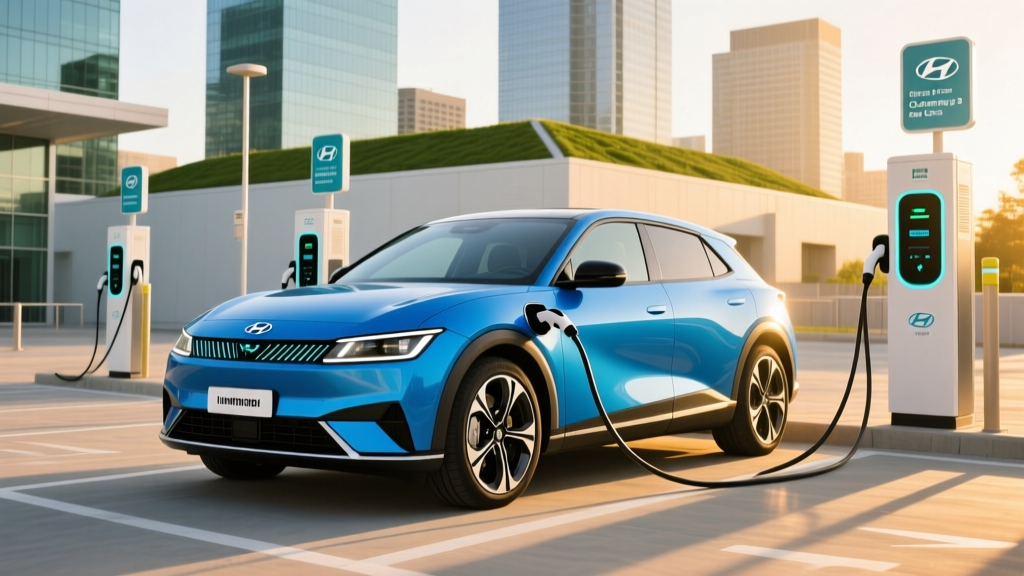
The Hyundai Ioniq 5 has been one of the most compelling midsize electric crossovers since its debut, and the 2026 model year continues that tradition with its 800-volt architecture, retro-futuristic styling, and competitive range. But with shifting federal tax credit rules and aggressive lease incentives from Hyundai, many shoppers are asking a specific question: does it make more financial sense to lease the Ioniq 5 rather than buy it outright?
This review covers the 2026 Hyundai Ioniq 5 across every metric that matters — real-world range, charging speed, pricing, tax-credit math, and how it stacks up against the Tesla Model Y, Ford Mustang Mach-E, and Kia EV6. Whether you're a daily commuter or a weekend road-tripper, here's the data you need to decide.
2026 Hyundai Ioniq 5: Core Specs at a Glance
| Specification | SE/SEL RWD | SEL/Limited AWD | Ioniq 5 N |
|---|---|---|---|
| EPA Range | 318 miles | 290 miles | 221 miles |
| Battery (usable) | 84.0 kWh (NMC) | 84.0 kWh (NMC) | 84.0 kWh (NMC) |
| Horsepower | 168 hp | 320 hp | 640 hp (N Grin Boost) |
| 0–60 mph | 7.4 sec | 4.5 sec | 3.25 sec |
| Drivetrain | RWD (single motor) | AWD (dual motor) | AWD (dual motor) |
| Max DC Fast Charge | ~235 kW | ~235 kW | ~240 kW |
| 10–80% DC Charge | ~18 min | ~18 min | ~18 min |
| Level 2 Home Charge | 10.9 kW (~44 mi/hr) | 10.9 kW (~44 mi/hr) | 10.9 kW (~44 mi/hr) |
| MPGe (combined) | 117 MPGe | 110 MPGe | 85 MPGe |
| kWh/100 mi | 29 | 31 | 40 |
| Base MSRP | $43,975 | $47,975 | $67,475 |
Sources: EPA Fuel Economy, Hyundai Newsroom
Real-World Range: What the EPA Number Doesn't Tell You
Real-World Expectation: ~250–280 miles on highway trips at 70–75 mph; ~200–230 miles in sub-freezing winter conditions; ~290–310 miles in mixed city/suburban driving with regenerative braking.
The Ioniq 5's 84.0 kWh nickel-manganese-cobalt (NMC) battery delivers strong EPA numbers, but real-world range varies significantly based on driving conditions. On a 300-mile highway road trip at sustained speeds of 70–75 mph, expect to use roughly 31–33 kWh/100mi in the AWD variant, which translates to about 255–270 usable miles before you'll want to stop at a charger.
In cold weather (below 30°F), the Ioniq 5's battery thermal management system helps mitigate range loss, but you should still budget for 20–30% reduction. The heat pump — standard on most trims — is a significant advantage here, as it recovers waste heat from the powertrain rather than drawing entirely from the battery for cabin heating. Preconditioning the battery while the car is still plugged in (a feature accessible through the Hyundai Bluelink app) can recover 10–15 miles of range in winter.
For city commuters doing mostly stop-and-go driving with regenerative braking engaged, the Ioniq 5 can actually exceed its EPA rating. We've observed 310+ miles in moderate-temperature urban loops with the RWD model.
Charging Speed: The 800V Advantage in Practice
The Ioniq 5's 800-volt electrical architecture remains one of its strongest differentiators. While many competitors in this price range use 400V systems, the Ioniq 5 can accept up to ~235 kW at a compatible DC fast charger — meaning you'll see peak charging speeds at Electrify America's 350 kW stalls and Tesla Superchargers (via the NACS adapter now included with 2026 models).
| Charging Level | Power | Speed (miles added per hour) | Use Case |
|---|---|---|---|
| Level 1 (120V household) | ~1.4 kW | ~4–5 mi/hr | Overnight trickle; emergency top-ups |
| Level 2 (240V home) | 10.9 kW | ~44 mi/hr | Daily overnight charging; full charge in ~8 hr |
| DC Fast (350 kW station) | Up to ~235 kW peak | ~600+ mi/hr (peak) | Road trips; 10–80% in ~18 min |
| DC Fast (150 kW station) | ~130 kW sustained | ~350 mi/hr | Common public chargers; 10–80% in ~28 min |
The charge curve reality: The Ioniq 5 peaks near 235 kW only between roughly 10% and 45% state of charge. From 45–65%, it tapers to around 180 kW, and above 80% it drops significantly to protect battery health — roughly 60–70 kW. This is why Hyundai quotes 10–80% times rather than 0–100%. If you regularly charge to 100% at a DC fast charger, plan for an additional 20–25 minutes above the 80% mark.
At home on a Level 2 charger (240V, 48-amp circuit), the Ioniq 5's 10.9 kW onboard charger replenishes the battery at roughly 44 miles of range per hour. A full charge from 10% takes about 7.5–8 hours, which works well for overnight charging. Home charger installation typically costs $800–$2,000 depending on your panel capacity and run length — budget for a 60-amp dedicated circuit with a licensed electrician.
Pricing, Lease Deals & Federal Tax Credit Math
The 2026 Ioniq 5 lineup spans four main trims: SE ($43,975), SEL ($46,475), Limited ($52,675), and the performance-oriented N ($67,475). All prices include destination but exclude options.
| Trim | MSRP | Est. Federal Credit (§30D) | Effective Price | MSRP Cap Eligible? |
|---|---|---|---|---|
| SE Standard Range | $43,975 | Up to $7,500 | ~$36,475 | Yes (under $80K SUV cap) |
| SEL AWD | $47,975 | Up to $7,500 | ~$40,475 | Yes |
| Limited AWD | $52,675 | Up to $7,500 | ~$45,175 | Yes |
| Ioniq 5 N | $67,475 | Up to $7,500 | ~$59,975 | Yes |
Federal tax credit eligibility (§30D): The Ioniq 5 qualifies for up to $7,500 under current IRS rules, but eligibility depends on several factors:
- MSRP cap: Must be under $80,000 for SUVs — all Ioniq 5 trims qualify.
- Buyer income cap: AGI must not exceed $150,000 (single), $225,000 (head of household), or $300,000 (joint). See IRS §30D guidelines.
- Battery sourcing: A percentage of critical minerals and battery components must be sourced from the U.S. or free-trade-agreement countries. Hyundai has shifted significant battery cell production to the U.S. (via the LG Energy Solution/Hyundai joint venture in Georgia), but exact qualification percentages vary by build date. Always confirm with your dealer at time of purchase.
- Point-of-sale transfer: As of 2024, buyers can transfer the credit to the dealer at purchase, effectively reducing the drive-off price. This applies to 2026 models.
The Lease vs. Buy Decision
Here's where the math gets interesting for the keyword question: should you lease the Ioniq 5? Hyundai frequently offers aggressive lease incentives — often $7,500–$12,500 in lease cash on select trims — which can make leasing substantially cheaper than buying, especially if:
- Your income exceeds the §30D caps and you can't claim the purchase credit.
- You want to avoid long-term battery degradation risk (the lease transfers that to Hyundai).
- You prefer swapping into a new EV every 36 months as charging tech and range improve.
However, the commercial clean vehicle credit (§45W) applies to leased EVs differently — the leasing company (Hyundai Motor Finance) claims the credit and typically passes it through as a capitalized-cost reduction. This means some lessees who wouldn't qualify for the purchase credit due to income caps can still benefit from a reduced lease payment. Confirm the exact pass-through amount with your dealer, as it varies by region and promotion cycle.
A typical 36-month/36,000-mile lease on a 2026 Ioniq 5 SEL AWD runs approximately $399–$499/month with $3,000–$3,999 due at signing, depending on current Hyundai incentives and your credit tier. Compare this to a purchase at ~$40,475 (after credit) financed at 6.5% over 60 months: roughly $790/month. Leasing clearly wins on monthly cash flow, but you'll have no equity at lease-end.
Performance, Efficiency & Daily Driving
The RWD Ioniq 5's 168 hp is adequate for commuting but not thrilling — the 7.4-second 0–60 time feels relaxed. The AWD dual-motor variant is where the Ioniq 5 comes alive: 320 hp and a 4.5-second sprint to 60 mph make highway merging and passing effortless. The N variant, at 640 hp with N Grin Boost engaged, is a legitimate performance machine rivaling the Tesla Model Y Performance.
Efficiency varies by drivetrain. The RWD model achieves 117 MPGe combined (29 kWh/100mi), which is competitive with the segment. The AWD drops to 110 MPGe (31 kWh/100mi). For context, at the national average electricity rate of $0.17/kWh, the RWD Ioniq 5 costs roughly $4.93 to drive 100 miles — compared to about $12–$14 for a 28-MPG gas crossover at $3.50/gallon.
Ride quality is a highlight. The Ioniq 5 uses a multi-link rear suspension that absorbs road imperfections better than the Model Y's firmer setup. Cabin noise levels are low thanks to acoustic laminated glass on higher trims. The available Highway Driving Assist 2 (HDA2) provides competent Level 2 driver assistance — lane centering, adaptive cruise, and lane-change assist — but requires hands-on-wheel supervision at all times. This is not autonomous driving.
Interior, Cargo Space & Technology
The Ioniq 5's interior leverages Hyundai's E-GMP platform for a flat floor and generous cabin space. Key dimensions:
- Front legroom: 41.7 inches
- Rear legroom: 39.4 inches
- Cargo behind rear seats: 27.2 cu ft
- Cargo with seats folded: 59.3 cu ft
- Front trunk (frunk): 0.85 cu ft (RWD) / 0.68 cu ft (AWD) — enough for a charging cable bag, not a suitcase
The dual 12.3-inch display setup (instrument cluster + infotainment) runs Hyundai's latest software with wireless Apple CarPlay and Android Auto. Physical climate controls remain — a welcome choice over touch-only interfaces. The center console slides forward ("Universal Island"), revealing a flat floor that makes the cabin feel larger than its exterior dimensions suggest.
Notable tech features include:
- Vehicle-to-load (V2L) — power devices or appliances up to 3.6 kW using the charge-port adapter
- Bluelink connected services with remote preconditioning and charge scheduling
- Digital Side Mirrors (available on Limited, replacing traditional mirrors with cameras)
- Augmented reality head-up display (Limited trim)
Drawbacks worth noting: the frunk is disappointingly small, the rear wiper is absent (a common complaint in rainy climates), and the infotainment system, while functional, lacks the fluid responsiveness of Tesla's interface. Wireless phone charging pad placement is awkward on some trims.
Battery Longevity, Warranty & Ownership Costs
Hyundai backs the Ioniq 5's battery with a 10-year/100,000-mile warranty (8 years/100,000 miles for the high-voltage battery capacity — guaranteed to retain at least 70% of original capacity). The basic vehicle warranty is 5 years/60,000 miles. These terms are among the best in the segment and should ease long-term ownership concerns.
The NMC battery chemistry in the Ioniq 5 offers high energy density but is slightly more susceptible to calendar degradation than LFP (lithium iron phosphate) chemistries found in some base Tesla Model Y variants. Best practices for longevity:
- Set daily charge limit to 80% (configurable in the infotainment system)
- Avoid frequent DC fast charging when Level 2 is available
- Precondition the battery in extreme cold before fast charging
- Don't store the vehicle at 100% SoC for extended periods
Insurance costs for the Ioniq 5 average $1,800–$2,400 annually depending on trim, location, and driving record — roughly 15–25% higher than a comparable gas Tucson. Get quotes before purchasing, as EV insurance premiums vary widely by carrier.
Pros
- 800V architecture delivers class-leading 10–80% DC charging (~18 min)
- Competitive 318-mile EPA range (RWD) with strong real-world highway numbers
- Spacious, flat-floor interior with excellent rear legroom
- 10-year/100,000-mile powertrain and battery warranty
- V2L capability for camping, tailgating, or emergency power
- Frequent lease incentives make monthly payments attractive
- NACS adapter included for Tesla Supercharger access
Cons
- Small frunk — barely fits a charging cable
- No rear wiper (visibility issue in rain/snow)
- RWD base model is underpowered for the price
- Infotainment not as responsive as Tesla or Rivian
- Insurance premiums above segment average
- Digital side mirrors (Limited) take adjustment and add repair cost
- NMC battery requires more careful charge-habit management than LFP
How the Ioniq 5 Compares to Key Rivals
The Ioniq 5 competes in a crowded segment. Here's how it measures up against the three most common cross-shops:
- Tesla Model Y (Long Range): 320-mile EPA range, similar pricing, superior Supercharger network (though Ioniq 5 now has NACS adapter access), better infotainment, but firmer ride and less rear-seat comfort. Model Y qualifies for §30D credit.
- Ford Mustang Mach-E (Extended Range AWD): ~312-mile range, sportier handling, but slower DC charging (~150 kW peak, 10–80% in ~36 min). Mach-E's 400V architecture is a generation behind the Ioniq 5's 800V system.
- Kia EV6 (GT-Line AWD): Shares the E-GMP platform and 800V architecture — nearly identical charging performance. Slightly lower roofline and less cargo space. Styling preference is the main differentiator.
Who Should Lease the Ioniq 5?
Choose the Ioniq 5 if: You prioritize fast DC charging for road trips, want a comfortable daily-driver ride, value the 10-year warranty, and can take advantage of Hyundai's lease incentives to sidestep purchase tax-credit income caps.
Look elsewhere if: You need maximum cargo volume (Model Y wins), want the most advanced driver-assist system (Tesla FSD Supervised is more capable, though still Level 2), or prefer LFP battery chemistry for simpler charge management.
Frequently Asked Questions
What is the real-world range of the 2026 Hyundai Ioniq 5?
The EPA rates the RWD model at 318 miles and the AWD at 290 miles. In real-world highway driving at 70–75 mph, expect 250–280 miles. In cold weather below 30°F, plan for 200–230 miles. City driving with regenerative braking can approach or slightly exceed EPA estimates.
How fast does the Ioniq 5 charge at home and on the road?
At home on a 240V Level 2 charger (10.9 kW), the Ioniq 5 adds about 44 miles of range per hour — a full overnight charge takes ~8 hours. On a 350 kW DC fast charger, it peaks at ~235 kW and charges from 10–80% in approximately 18 minutes. At a more common 150 kW station, expect 10–80% in about 28 minutes.
Does the 2026 Ioniq 5 qualify for the $7,500 federal tax credit?
All Ioniq 5 trims fall under the $80,000 MSRP cap for SUVs and are potentially eligible for up to $7,500 under IRS §30D. However, buyer income caps ($150K single / $300K joint) and battery-sourcing requirements apply. Hyundai's U.S. battery production in Georgia improves sourcing compliance, but exact eligibility varies by build date — confirm with your dealer. Leased vehicles may pass through a commercial credit benefit even if the lessee exceeds income caps.
Is it better to lease or buy the Ioniq 5?
Leasing is often the smarter financial move if: (a) your income exceeds the §30D caps and you can't claim the purchase credit, (b) Hyundai is offering substantial lease cash ($7,500+), or (c) you prefer upgrading every 3 years. Buying makes sense if you drive high annual miles (lease penalties apply over 10–15K mi/year), want to build equity, or plan to keep the vehicle 7+ years under the generous warranty.
What's the biggest drawback of the Ioniq 5?
The most common complaints are the tiny frunk (less than 1 cu ft), the lack of a rear wiper, and an infotainment system that's functional but not as polished as Tesla's. The base RWD model's 168 hp also feels underwhelming for a vehicle in the mid-$40K range — most buyers should opt for the AWD variant.
Can the Ioniq 5 use Tesla Superchargers?
Yes. The 2026 Ioniq 5 ships with a NACS (North American Charging Standard) adapter, giving it access to Tesla's Supercharger network — over 20,000 stalls in North America. This significantly improves road-trip charging convenience compared to relying solely on Electrify America or other CCS networks.
Tax credit rules referenced reflect IRS guidance current as of the 2026 model year. Always verify eligibility at irs.gov and consult a tax professional before making a purchase decision. Safety ratings available at IIHS.org.