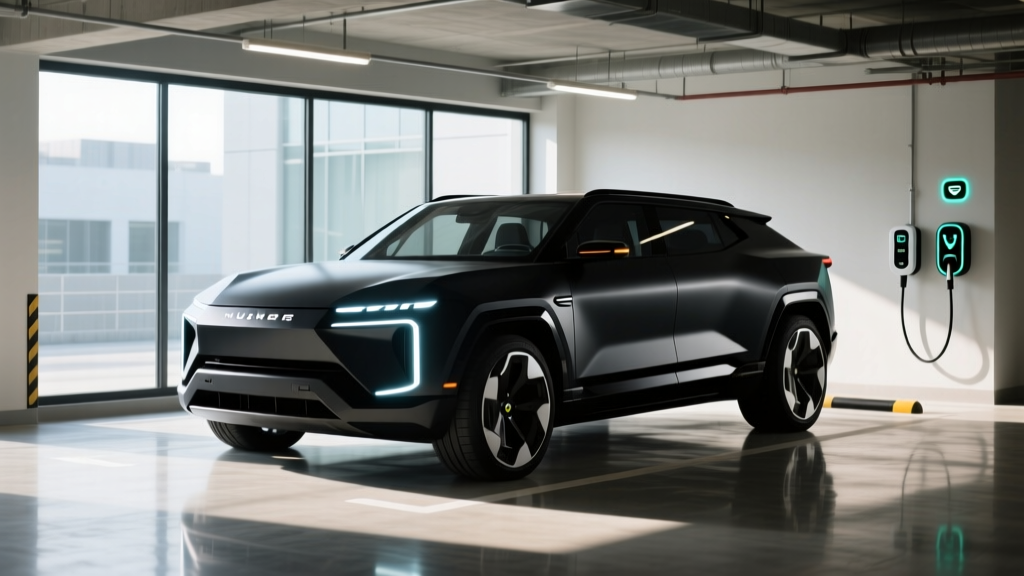
The GMC Hummer EV is one of the most polarizing electric vehicles on the road — a 9,000-pound, 1,000-horsepower supertruck with a 24-module Ultium battery and a window sticker that routinely crosses $100,000. For many buyers eyeing this rig, leasing looks like the obvious path: lower monthly payments, no long-term depreciation risk, and potentially a way to capture federal tax incentives. But the math behind a lease Hummer EV decision is more nuanced than the sticker suggests.
This guide walks through every ownership cost layer — from the §30D tax credit's tricky interaction with leases, to real-world charging costs versus a gas truck, to the insurance premiums that catch new EV owners off guard. We'll use the 2026 GMC Hummer EV lineup (2X and 3X trims) as the baseline.
2026 GMC Hummer EV: The Numbers That Matter
Before calculating ownership costs, here's what you're working with on the spec sheet:
| Spec | 2X (Dual Motor) | 3X (Tri Motor) |
|---|---|---|
| MSRP (base) | ~$99,995 | ~$119,995 |
| EPA Range | ~314 miles | ~329 miles |
| Battery (usable) | ~212 kWh (NMC, 24 modules) | ~212 kWh (NMC, 24 modules) |
| Horsepower | 625 hp | 830 hp (1,000 hp w/Watts to Freedom) |
| 0-60 mph | ~4.0 sec | ~3.0 sec |
| Peak DC Fast Charge | ~350 kW | ~350 kW |
| 10-80% DC Charge | ~32 min | ~32 min |
| Level 2 Charge Rate | 11.5 kW | 11.5 kW |
| Efficiency (MPGe) | ~47 MPGe | ~45 MPGe |
| Battery/Powertrain Warranty | 8 yr / 100,000 mi | 8 yr / 100,000 mi |
The Federal Tax Credit: Can You Claim §30D on a Lease?
This is where the lease Hummer EV question gets genuinely complicated — and where many buyers get bad advice.
The Problem: MSRP Cap
Under IRS §30D, the federal clean vehicle credit provides up to $7,500 for qualifying new EVs. However, the vehicle must meet several criteria, and the Hummer EV runs into an immediate wall: the MSRP cap for trucks is $80,000. Every 2026 Hummer EV trim starts at or above $99,995. That means the Hummer EV does not qualify for the §30D new-vehicle tax credit when purchased.
- ✅ Vehicle must be new, purchased from a dealer (not resold)
- ❌ MSRP cap: ≤$80,000 for trucks/SUVs, ≤$55,000 for sedans — Hummer EV exceeds this
- ⚠️ Buyer income limits: AGI ≤$300K joint / ≤$225K HOH / ≤$150K single
- ⚠️ Battery sourcing: Critical minerals and battery components must meet phased-in % thresholds from FTA countries
- ✅ Point-of-sale transfer available (dealer applies credit at purchase)
- ⚠️ Manufacturer must be eligible (GM is — credit cap was removed in 2023)
Rules are subject to change. Verify current requirements at IRS.gov §30D page before committing.
The Lease Loophole: §45W Commercial Credit
Here's the nuance that makes leasing a Hummer EV potentially worthwhile from a tax perspective. When you lease, the leasing company (lessor) is the legal owner of the vehicle. Under §45W (the commercial clean vehicle credit), the lessor can claim a credit of up to $7,500 for vehicles over 14,000 lbs GVWR — and the Hummer EV's GVWR is approximately 10,400–10,900 lbs, so it may not qualify for the heavy-vehicle threshold. For vehicles under 14,000 lbs, the §45W credit is up to $3,750.
Many leasing companies do pass this savings through to the lessee in the form of reduced monthly payments (often called "lease cash" or a capitalized-cost reduction). However, this is not guaranteed — it depends entirely on the leasing company's policies and how they structure the deal. Ask the dealer explicitly: "Is the §45W commercial credit being passed through as a cap-cost reduction on this lease?"
5-Year Total Cost of Ownership: Hummer EV vs. Gas Truck
Let's model a realistic 5-year, 75,000-mile ownership period. We'll compare the Hummer EV 2X (~$99,995 MSRP) against a comparably priced gas truck (e.g., a loaded Ford F-150 Lariat at ~$65,000). We'll assume the Hummer EV is leased at approximately $1,200/month with $5,000 down, and the gas truck is financed.
| Cost Category | Hummer EV 2X (Leased) | Gas Truck (Financed) |
|---|---|---|
| Vehicle Payments / Lease | $77,000 ($1,200/mo × 60 + $5K down) | $42,000 (financed at ~6.5%) |
| Fuel / Charging | $6,375 (see breakdown below) | $13,125 (see breakdown below) |
| Insurance | $18,000 (~$300/mo) | $10,800 (~$180/mo) |
| Maintenance | $2,500 | $5,500 |
| Federal Tax Credit | −$3,750 to $0 (depends on lessor passthrough) | $0 |
| Estimated Residual / End-of-Lease | $0 (returned to lessor) | −$28,000 (trade-in value) |
| Net 5-Year Cost | ~$100,125 – $103,875 | ~$43,425 |
The Hummer EV is dramatically more expensive to own over 5 years — not because of operating costs, but because of its base price and insurance premiums. The fuel and maintenance savings are real, but they don't come close to offsetting a $100K+ vehicle payment.
Charging vs. Gas: The Per-Mile Math
This is where the Hummer EV does shine on a per-mile basis, even with its brutal efficiency numbers.
| Scenario | Hummer EV | Gas Truck (17 MPG) |
|---|---|---|
| Home charging ($0.14/kWh) / Gas ($3.50/gal) | $0.105/mi (at 2.1 kWh/mi) | $0.206/mi |
| Public DC fast charging ($0.45/kWh avg) | $0.336/mi | $0.206/mi |
| Annual fuel cost (15,000 mi, 80% home / 20% DCFC) | $2,550 | $3,500 |
Assumptions: Hummer EV consumes ~75 kWh/100mi (EPA combined). Gas truck averages 17 MPG combined. Electricity rates from EIA national average; gas prices from AAA national average. Your rates will vary.
At home on a Level 2 charger, the Hummer EV costs roughly half as much per mile as a comparable gas truck. The catch: if you rely heavily on public DC fast charging (which can cost $0.35–$0.55/kWh at networks like Electrify America or EVgo), the EV can actually be more expensive per mile than gas. For Hummer EV owners, home charging access isn't optional — it's financial necessity.
Charging speed reality check: The Hummer EV's 212 kWh battery is massive. Even at its peak ~350 kW rate, you're adding roughly 100 miles in 15 minutes. The charge curve tapers significantly above 80% SoC — expect the 10-80% session to take ~32 minutes at a 350 kW charger, but 80-100% can add another 25-30 minutes. Always plan road-trip charging around 10-80% sessions.
Maintenance Savings: Where EVs Genuinely Win
The Hummer EV eliminates most of the recurring maintenance costs that gas truck owners absorb:
| Service | Hummer EV | Gas Truck |
|---|---|---|
| Oil Changes | $0 (none required) | $750–$1,200 (every 7,500–10,000 mi) |
| Transmission Fluid | $0 (single-speed reducer) | $200–$400 |
| Brake Pads/Rotors | $300–$500 (regen extends life 2-3×) | $1,200–$2,000 |
| Air Filters / Spark Plugs | $0 | $300–$500 |
| Coolant / Belts / Hoses | $200–$400 (thermal system service) | $400–$800 |
| Tire Rotation / Replacement | $2,000–$3,000 (heavy EV = faster wear, 35"+ tires are expensive) | $1,500–$2,500 |
| Total Estimated | ~$2,500–$3,900 | ~$4,350–$7,400 |
Net savings: roughly $2,000–$3,500 over 5 years. The biggest caveat is tires. At 9,000+ pounds with instant torque, the Hummer EV chews through tires faster than a gas truck. Replacement 35-inch all-terrain tires for the Hummer EV can cost $1,800–$2,400 for a set. Budget for at least one full tire replacement during a 75,000-mile ownership period.
Insurance: The Cost That Catches Buyers Off Guard
EV insurance premiums are typically 20–40% higher than equivalent gas vehicles, and the Hummer EV sits at the extreme end of that spectrum. Here's why:
- Repair costs: The Ultium battery pack, tri-motor powertrain, and specialized aluminum/steel structure mean collision repairs are expensive. Many body shops lack EV-certified technicians.
- Vehicle value: At $100K+, comprehensive and collision coverage premiums scale with replacement cost.
- Claim severity: Insurance industry data shows EV total-loss claims tend to be higher due to battery damage protocols — a minor collision that compromises the battery enclosure can trigger a full battery replacement ($30,000–$45,000+ for the 212 kWh pack).
- Performance risk: 830–1,000 horsepower in a heavy vehicle correlates with higher-speed incident severity in actuarial models.
Expect to pay $250–$400/month for full coverage on a Hummer EV, depending on your state, driving record, and deductible. That's $15,000–$24,000 over five years — a substantial line item that erases fuel savings. Get quotes from at least three insurers (Geico, Progressive, State Farm, and specialty carriers like Hagerty for high-value vehicles) before signing a lease.
Depreciation & Resale: Why Leasing Makes Sense Here
EV depreciation has been volatile. Between 2023 and 2025, several EVs experienced steeper-than-expected depreciation due to:
- Tesla price cuts cascading through the used market
- Rapid improvements in new EV range and charging speed making 2-3-year-old models feel outdated
- Uncertainty about long-term battery health and replacement costs
- Lease returns flooding the used market
The Hummer EV is somewhat insulated by its niche status and limited production volume, but it's not immune. Industry estimates suggest the Hummer EV may retain 45–55% of its value after 5 years — below the 55–65% retention rate of popular gas trucks like the F-150 or Tacoma.
On a $100,000 purchase, that means $45,000–$55,000 in depreciation over five years. This is precisely why leasing the Hummer EV is strategically smart: the leasing company absorbs the depreciation risk. You return the truck at lease end and walk away, regardless of what the used EV market looks like in 2031.
- Mileage penalties: Most Hummer EV leases allow 10,000–12,000 miles/year. Excess mileage charges can be $0.25–$0.40/mile — that's $7,500–$12,000 if you drive 15,000 miles/year on a 10K lease.
- Wear-and-tear: GMC's lease-end inspection standards can flag tire tread depth, wheel curb rash, and interior wear. Budget $1,000–$3,000 for potential charges.
- Purchase option: Your lease will include a residual-value purchase option. If the Hummer EV depreciates more than projected, you may be able to buy it below market and flip it — or simply walk away.
State, Local & Utility Incentives
While the Hummer EV doesn't qualify for the federal §30D credit on purchase (due to the MSRP cap), other incentives may still apply:
- State EV rebates: Some states offer rebates that have no MSRP cap, or higher caps. Check your state's energy office or DMV website.
- Utility charging rebates: Many utilities offer $500–$1,500 rebates for home Level 2 charger installation, or off-peak charging credits. PG&E, ConEdison, Xcel Energy, and others run these programs.
- HOV lane access: States like California, Colorado, and Virginia offer carpool-lane stickers for EVs, which have measurable time and fuel savings for commuters.
- Property/sales tax exemptions: Some states exempt EVs from personal property tax or reduce registration fees.
These vary significantly by jurisdiction. Check AFDC's state incentive database for current programs in your area.
Verdict: Should You Lease a Hummer EV?
- You want the experience without $50K+ depreciation risk
- You have reliable home Level 2 charging (essential given the 212 kWh battery — Level 1 would take 7+ days for a full charge)
- Your AGI and the lessor's §45W passthrough make the numbers work
- You drive under 12,000 miles/year (to avoid lease-end mileage penalties)
- You can absorb $300+/month insurance premiums
Don't lease the Hummer EV if:
- You're counting on the $7,500 federal tax credit — the MSRP cap disqualifies it on purchase, and lease passthrough is not guaranteed
- You rely on public DC fast charging — at $0.45/kWh and 75 kWh/100mi, you'll spend more per mile than a gas truck
- You need a practical daily driver — the Hummer EV is 82 inches wide and won't fit many parking structures or drive-through lanes
- Total cost of ownership is your primary decision driver — a leased Hummer EV will cost $55,000–$60,000 more over 5 years than a financed gas truck
Frequently Asked Questions
How much does it really cost to own a Hummer EV over 5 years?
When leased, expect a net 5-year cost of approximately $100,000–$105,000 including payments, insurance, charging, and maintenance (with no residual value since you return the vehicle). This is substantially more than a gas truck, driven primarily by the high lease payments and insurance premiums. The Hummer EV is a luxury/experience purchase, not a cost-savings play.
Do I qualify for the federal tax credit if I lease a Hummer EV?
Not directly. The §30D credit has an $80,000 MSRP cap for trucks, which the Hummer EV exceeds. However, the leasing company may claim the §45W commercial credit and pass some savings through as a cap-cost reduction — typically up to $3,750. This is not guaranteed and varies by lessor. Ask the dealer for written confirmation of any passthrough before signing.
How much do I save on fuel and maintenance with the Hummer EV?
Fuel savings: approximately $950/year (or ~$4,750 over 5 years) when charging primarily at home at $0.14/kWh versus a 17 MPG gas truck at $3.50/gallon. Maintenance savings: approximately $2,000–$3,500 over 5 years, offset partially by expensive tire replacements. Combined, you save roughly $6,750–$8,250 over 5 years on operating costs — a real but modest figure against a $100K vehicle.
Are EVs more expensive to insure?
Yes. EV insurance premiums average 20–40% higher than comparable gas vehicles. For the Hummer EV specifically, expect $250–$400/month for full coverage, driven by high repair costs, expensive battery replacement, and the vehicle's $100K+ value. Always get quotes before committing to a lease.
How well does the Hummer EV hold its value?
Estimated 5-year retention is 45–55%, below mainstream gas trucks (55–65%). On a $100K purchase, that's $45K–$55K in depreciation. This depreciation risk is the primary reason leasing makes financial sense for the Hummer EV — you shift that risk to the lessor.
What's the real-world range of the Hummer EV?
EPA estimates are ~314 miles (2X) and ~329 miles (3X), but real-world highway driving at 70-75 mph yields ~240–270 miles. In cold weather (below 32°F), expect ~200–230 miles. The 212 kWh battery is large, but the truck's aerodynamic profile and weight work against it at speed.