The Lease-an-EV Decision: Why the Math Is More Nuanced Than a Headline
If you've searched "lease EV" recently, you've likely seen two competing narratives. One camp says leasing is the smartest way to drive electric — lower monthly payments, no long-term battery risk, and an easy exit when the next generation arrives. The other warns that EV leases are money pits with punishing mileage limits and disposition fees. The truth, as usual, lives in the data.
In this analysis, we model the real five-year total cost of ownership (TCO) for leasing versus buying a mainstream EV — using a 2026 Hyundai Ioniq 5 SEL (MSRP $45,500, 84 kWh NMC battery, EPA 305-mile range) as our baseline. We'll walk through every line item: purchase price, federal and state incentives, electricity versus gasoline, insurance premiums, maintenance, and the depreciation curve that haunts many EV resale values. By the end, you'll know exactly whether leasing or buying makes financial sense for your situation.
Federal Tax Credit (§30D): The $7,500 Question — and Its Many Caveats
The IRS §30D Clean Vehicle Credit remains the single largest financial lever for EV buyers, offering up to $7,500. But qualifying is not automatic. The rules tightened significantly after the Inflation Reduction Act, and they continue to evolve. Here is the current-year eligibility checklist:
- Income caps: Modified AGI must not exceed $300,000 (married filing jointly), $225,000 (head of household), or $150,000 (single).
- MSRP caps: The vehicle's base MSRP must be ≤ $80,000 for vans, SUVs, and trucks, or ≤ $55,000 for sedans and other body styles.
- Battery sourcing: A percentage of critical minerals must be extracted or processed in the US or a free-trade-agreement country, and battery components must be manufactured or assembled in North America. These thresholds increase annually.
- Foreign Entity of Concern (FEOC): Vehicles with battery components or critical minerals from a FEOC (notably certain Chinese suppliers) are disqualified.
- Point-of-sale transfer: As of 2024, buyers can transfer the credit to the dealer at purchase, reducing the upfront cost immediately — rather than waiting to claim it on their tax return.
- One credit per VIN, one vehicle per taxpayer per year.
The lease loophole: Under IRC §45W, the commercial clean vehicle credit can apply to leased vehicles, with the credit going to the lessor (the leasing company). Many automakers pass this through as a "lease cash" incentive, effectively giving the lessee the $7,500 benefit even when the vehicle wouldn't qualify under §30D's strict consumer rules — for instance, if the buyer exceeds the income cap or the vehicle fails the sourcing requirements. This is a major reason "lease EV" searches have surged. However, lessors are not legally required to pass the credit to you, so always confirm the lease incentive is itemized in your deal.
Check current eligibility at fueleconomy.gov, which maintains an updated list of qualifying vehicles and credit amounts.
State, Local, and Utility Incentives: The Variable Layer
Important: State and local EV incentives vary dramatically by jurisdiction and change frequently. The figures below are illustrative examples as of early 2026 — always verify current programs with your state energy office and utility provider.
Beyond the federal credit, dozens of states and utilities stack additional savings:
- Colorado: Up to $5,000 state tax credit for new EV purchases (income-dependent), plus utility rebates of $500–$1,500 for home Level 2 charger installation.
- California: The Clean Cars 4 All program offers up to $9,500 for income-qualified buyers trading in older gas vehicles. Many utilities (PG&E, SCE, SDG&E) offer $500–$1,000 rebates for home charging equipment and installation.
- New York: The Drive Clean Rebate provides up to $2,000 at point of sale for qualifying EVs under $60,000 MSRP.
- Utility time-of-use (TOU) rates: Many utilities offer off-peak electricity rates as low as $0.06–$0.09/kWh for EV charging, dramatically reducing fuel costs compared to standard residential rates of $0.14–$0.18/kWh.
- HOV lane access: States including California, Colorado, Virginia, and Maryland grant single-occupant carpool lane access to EVs — a non-monetary perk worth thousands in time savings for commuters.
When modeling your personal TCO, add these line items after confirming exact amounts with official state and utility sources.
5-Year Total Cost of Ownership: Lease vs. Buy Head to Head
Below is a side-by-side TCO model for a 2026 Hyundai Ioniq 5 SEL, comparing a 36-month lease (extended to a second 24-month lease for a full 5-year picture) versus a 60-month purchase financed at 6.5% APR with a 10% down payment. Both scenarios assume 12,000 miles/year (60,000 miles total), home Level 2 charging, and a national-average electricity rate of $0.16/kWh.
| Cost Category | Lease (5 Years / 2 Leases) | Buy (5 Years / 60-Mo Loan) |
|---|---|---|
| Upfront (down + fees) | $4,500 | $6,500 |
| Monthly payment × 60 | $29,400 ($490/mo) | $34,800 ($580/mo) |
| Federal tax credit applied | −$7,500 (lease cash) | −$7,500 (point-of-sale) |
| Electricity (60,000 mi) | $2,880 | $2,880 |
| Insurance (5 years) | $12,600 | $12,600 |
| Maintenance (5 years) | $1,200 | $1,200 |
| Disposition / resale | $400 (disposition fee) | −$18,000 (resale value) |
| Net 5-Year Cost | $36,080 | $32,480 |
Key takeaway: Buying comes out roughly $3,600 ahead over five years in this scenario, primarily because the buyer retains equity at trade-in time. But leasing offers lower monthly cash flow ($490 vs. $580), zero battery-degradation risk, and the ability to upgrade to a next-generation EV with faster charging and better range when the lease ends. The "right" answer depends on whether you optimize for monthly budget or long-term net cost.
Charging vs. Gasoline: The Per-Mile Fuel Math
The single most tangible EV savings come at the fuel pump — or rather, the charger. Here's a concrete cost-per-mile comparison using the Ioniq 5 (combined efficiency of 30 kWh/100 miles, or 114 MPGe) versus a comparable gas-powered Hyundai Tucson (combined 28 MPG):
| Scenario | Cost Per Mile | Annual Cost (12,000 mi) |
|---|---|---|
| Ioniq 5 — home charging at $0.16/kWh | $0.048 | $576 |
| Ioniq 5 — home charging at TOU off-peak $0.08/kWh | $0.024 | $288 |
| Ioniq 5 — public DC fast charging at $0.40/kWh | $0.120 | $1,440 |
| Hyundai Tucson (28 MPG) at $3.40/gallon | $0.121 | $1,457 |
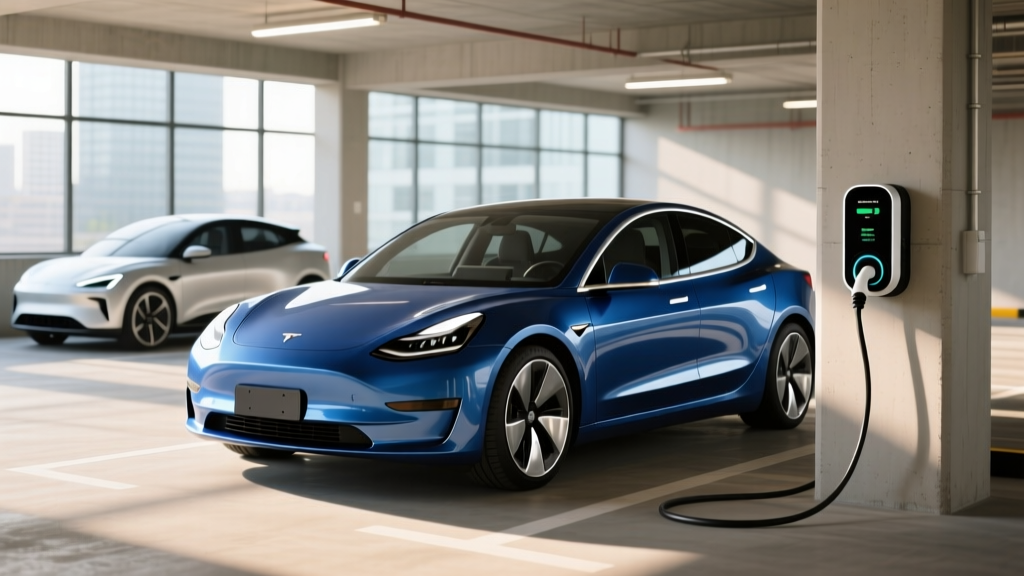
Home-charged EVs cost roughly 60–80% less per mile than their gas counterparts. But notice the public DC fast charging line: at $0.40/kWh (typical for Electrify America or EVgo without a subscription), the cost advantage nearly disappears. This is why home Level 2 charging is the economic backbone of EV ownership. If you cannot charge at home or at work, the fuel savings shrink dramatically, and leasing may actually compound costs since you'll rely more on expensive public charging.
Maintenance Savings: Where EVs Quietly Win
EVs have roughly 20 moving parts in their drivetrain versus 2,000+ in an internal combustion engine. That mechanical simplicity translates directly to lower maintenance spending:
| Service Item | EV (Ioniq 5) | Gas (Tucson) |
|---|---|---|
| Oil changes | $0 | $1,500 (10 changes × $150) |
| Brake pads | $0–$200 (regen extends life 2–3×) | $600–$900 |
| Transmission fluid | $0 (single-speed reduction gear) | $200–$400 |
| Cabin air filter | $150 | $150 |
| Coolant / other fluids | $100 | $300 |
| Tire rotation & replacement | $1,800 (EVs are heavier; tires wear ~15% faster) | $1,400 |
| Total 5-Year Maintenance | ~$2,050–$2,250 | ~$4,150–$4,650 |
The net maintenance savings of roughly $2,000–$2,400 over five years is real but not revolutionary. The biggest gotcha is tires: EVs' instant torque and higher curb weight (the Ioniq 5 weighs 4,431 lbs vs. the Tucson's 3,474 lbs) accelerate tread wear. Budget for one extra tire set over five years compared to a gas equivalent.
Insurance: The Line Item EV Owners Underestimate
Here's the cost that catches most new EV owners off guard. Average EV insurance premiums run 15–25% higher than comparable gas vehicles, according to industry data. For our Ioniq 5 example, expect roughly $2,520/year ($210/month) versus $1,900/year for a Tucson — a $3,100 gap over five years.
Why the premium?
- Higher repair costs: EV battery packs, power electronics, and specialized sensors (lidar, radar, cameras) are expensive to replace after a collision.
- Total-loss thresholds: Insurers often declare EVs a total loss at lower damage thresholds because battery safety inspections are costly and the pack itself can represent 30–40% of vehicle value.
- Limited repair network: Fewer body shops have EV-certified technicians, increasing labor rates and cycle times.
- Higher vehicle MSRP: Insurers price premiums partly on replacement cost, and EVs still carry a price premium over gas equivalents in many segments.
Always get an insurance quote before signing a lease or purchase order. Some insurers (Geico, Progressive, State Farm) now offer specific EV discounts, and bundling with home insurance can narrow the gap. If you lease, the leasing company will require comprehensive and collision coverage with specific deductible limits — typically $1,000 or less.
Depreciation and Resale Value: The Elephant in the Garage
Depreciation is the single largest cost of vehicle ownership, and EVs have experienced a rough ride. According to iSeeCars and industry resale data, the average EV lost 49–55% of its value over three years in 2024–2025, compared to roughly 38–42% for gas vehicles. Several factors drive this:
- Tesla price cuts: Aggressive MSRP reductions on the Model 3 and Model Y in 2023–2024 cascaded through the entire used EV market, crushing resale values for competitors.
- Rapid tech advancement: Newer EVs charge faster (350 kW vs. 150 kW), offer longer range (350+ miles vs. 250 miles), and feature better thermal management — making 3-year-old models feel outdated.
- Battery health uncertainty: Used buyers discount EVs because battery replacement costs $10,000–$20,000 out of warranty, even though most modern packs retain 85–92% capacity at 100,000 miles.
- Incentive compression: When new EVs qualify for $7,500 in federal credits plus state rebates, the effective "real" price is much lower than MSRP, which resets used-market expectations.
For our Ioniq 5 SEL at $45,500 MSRP, we estimate a 5-year resale value of roughly $18,000–$22,000 (50–60% depreciation). If you buy, this depreciation is your cost. If you lease, the leasing company absorbs it — but they price it into your monthly payment via the residual value and money factor.
Leasing advantage here: In a volatile depreciation environment, leasing transfers the resale risk to the lessor. If EV values continue to soften, you walk away. If they rebound, you miss the upside. It's a hedge, not a savings guarantee.
When Leasing an EV Makes the Most Sense — and When It Doesn't
Choose to lease an EV if:
- You want the lowest monthly payment and can benefit from the §45W lease credit loophole.
- You drive fewer than 12,000–15,000 miles per year (excess mileage penalties are typically $0.15–$0.30/mile).
- You want to upgrade every 2–3 years as charging speeds, range, and ADAS technology improve rapidly.
- You're concerned about long-term battery degradation or resale value volatility.
- Your employer offers a salary-reduction EV lease program with pre-tax benefits.
Choose to buy an EV if:
- You plan to keep the vehicle 5+ years (the depreciation curve flattens significantly after year 4).
- You drive 15,000+ miles per year (lease penalties add up fast).
- You qualify for the full §30D credit and can apply it at point of sale.
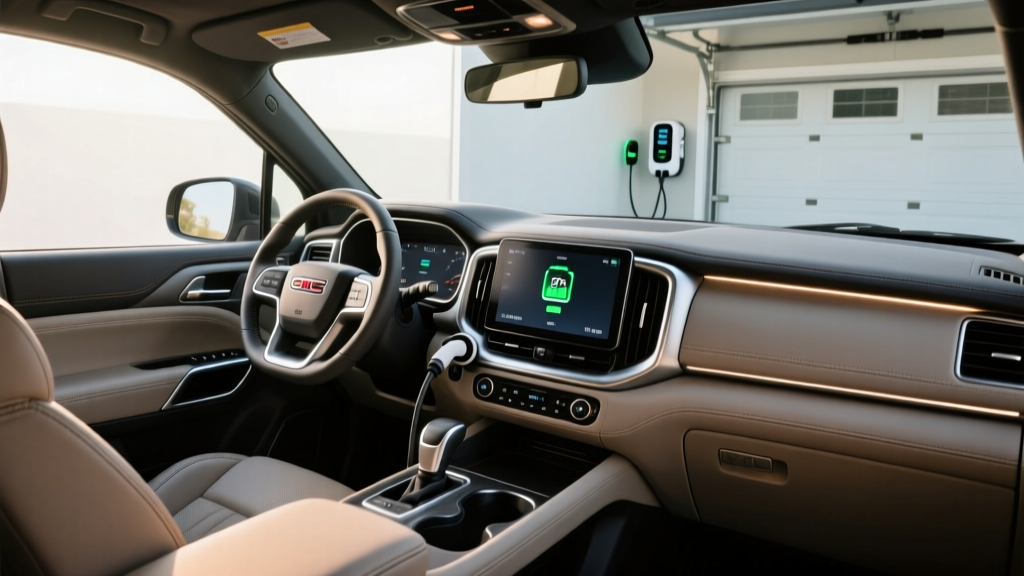
- You have home Level 2 charging and can maximize off-peak electricity rates.
- You want to modify the vehicle (wraps, wheels, roof racks — leases prohibit most modifications).
Frequently Asked Questions
How much does it really cost to own an EV over 5 years?
Based on our Ioniq 5 model, expect a net 5-year cost of $32,000–$36,000 depending on whether you buy or lease — including purchase price, electricity, insurance, maintenance, and depreciation, minus tax credits and resale value. The comparable gas SUV costs roughly $38,000–$42,000 over the same period, giving the EV a $4,000–$8,000 advantage driven primarily by fuel and maintenance savings.
Do I qualify for the $7,500 federal EV tax credit?
It depends on your income, the vehicle's MSRP, and battery sourcing. Your modified AGI must be under $150,000 (single) or $300,000 (joint), the vehicle MSRP must be under $55,000 (sedans) or $80,000 (SUVs/trucks), and the battery must meet critical-mineral and North American component thresholds. Check the current qualifying vehicle list at fueleconomy.gov. If you don't qualify, leasing may still let you capture the equivalent credit through the §45W commercial vehicle provision.
How much do I save on fuel and maintenance with an EV?
Home-charged EVs save roughly $800–$1,200 per year on fuel compared to a 28-MPG gas vehicle at $3.40/gallon. Maintenance savings add another $400–$500 per year. Combined, expect $6,000–$8,500 in savings over five years — but only if you charge primarily at home. Exclusive reliance on public DC fast charging can erase the fuel savings entirely.
Are EVs more expensive to insure?
Yes, typically 15–25% more expensive than comparable gas vehicles. For a $45,000 EV, expect premiums of $2,400–$2,700/year versus $1,800–$2,100 for a gas equivalent. The gap is driven by higher repair costs, battery replacement risk, and limited EV-certified body shops. Always get a quote before committing, and ask about EV-specific discounts.
How well do EVs hold their value?
Currently, not as well as gas vehicles. Average 3-year EV depreciation runs 49–55% versus 38–42% for gas cars. The market is volatile — Tesla price cuts, rapid technology improvements, and battery-health concerns all compress resale values. If resale risk concerns you, leasing transfers that exposure to the lessor.
What happens if I exceed the mileage limit on my EV lease?
Most EV leases set a 10,000-, 12,000-, or 15,000-mile annual limit. Excess mileage charges typically run $0.15–$0.30 per mile. If you drive 18,000 miles/year on a 12,000-mile lease, you'd owe $5,400–$10,800 at lease-end — potentially more than buying would have cost. Be honest about your mileage when structuring the deal, and negotiate a higher-mileage lease upfront if needed (the per-mile rate is usually lower when prepaid).
Can I install a home Level 2 charger in a leased home or apartment?
You'll need landlord permission for any hardwired Level 2 installation (240V, 32–48 amps). Portable Level 2 chargers that plug into an existing NEMA 14-50 outlet are a lease-friendly alternative. If your building has shared parking, ask about utility make-ready programs — many utilities cover the cost of running conduit and wiring to parking areas to support future EV adoption.