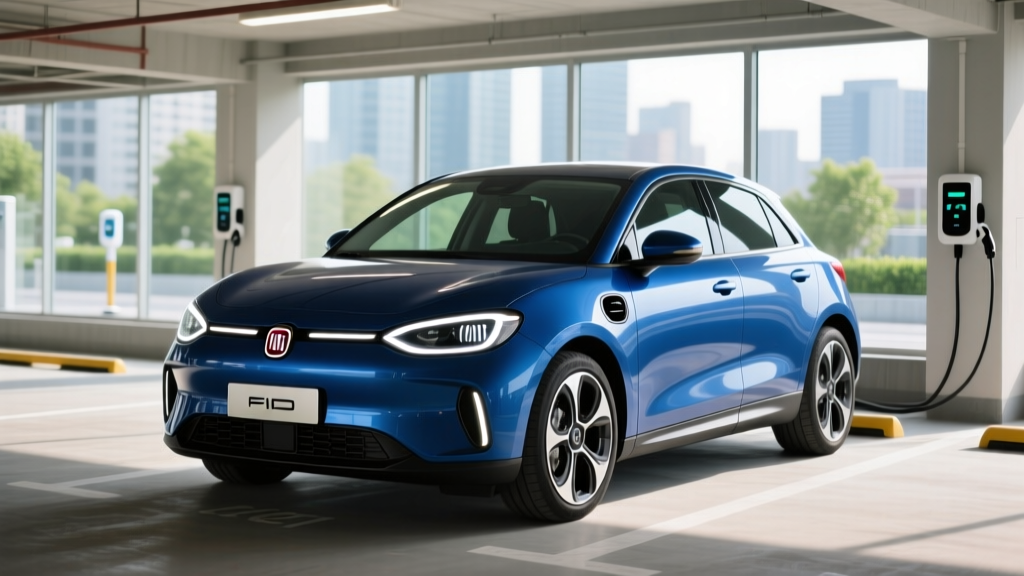
Stellantis has been steadily expanding the Fiat 500e's footprint in the U.S. market, and with a starting MSRP hovering around $36,000 for the 2026 model year, many buyers are asking whether it makes more sense to buy or lease an electric Fiat. The answer hinges on a tangle of variables: federal tax credit eligibility, depreciation curves, your local electricity rate, and how Stellantis structures its lease incentives. This guide walks through every cost lever so you can run the numbers against your own situation.
The 2026 Fiat 500e at a Glance
Before we get into cost math, here is what you are actually leasing. The U.S.-spec 2026 Fiat 500e carries over the 42 kWh (usable ~37.3 kWh) NMC lithium-ion battery and front-mounted permanent-magnet motor producing 118 hp and 162 lb-ft of torque.
| Spec | Value |
|---|---|
| EPA Range | 149 miles (real-world highway ~120–130 mi; cold-weather ~100 mi) |
| Battery (usable) | 37.3 kWh, NMC chemistry |
| DC Fast Charge Peak | 85 kW (10–80% in ~35 min) |
| Level 2 AC Charge | 11 kW (~4 hours 0–100%) |
| 0–60 mph | 8.5 seconds |
| MPGe (combined) | 116 MPGe |
| Base MSRP (RedLine trim) | $36,095 + $1,595 destination |
| Battery Warranty | 8 years / 100,000 miles (≥70% capacity retention) |
5-Year Total Cost of Ownership Breakdown
Whether you lease an electric Fiat or buy one outright, the five-year cost picture determines whether you come out ahead versus a comparable gas-powered subcompact like the gasoline Fiat 500 or a Hyundai Venue. Below is a modeled 5-year/75,000-mile TCO assuming a purchase with the federal credit applied, compared to a typical lease scenario.
| Cost Category | 500e Purchase (w/ §30D) | 500e Lease (36-mo, then swap) | Gas Subcompact (~30 MPG) |
|---|---|---|---|
| Vehicle Price / Lease Payments | $37,595 − $7,500 = $30,095 | $299/mo × 36 + $2,500 down = $13,264 (first 3 yr); est. $14,000 second lease | |
| Fuel / Charging | $3,375 (home charging at $0.16/kWh) | $3,375 | $9,375 (gas at $3.50/gal, 30 MPG) |
| Insurance | $9,500 ($1,900/yr avg) | $9,500 | $7,500 ($1,500/yr avg) |
| Maintenance | $1,800 | $1,200 (under warranty) | $4,500 |
| Depreciation (or Disposition) | ~$14,000 loss over 5 yr | $0 (return at lease-end) | ~$8,500 loss |
| Estimated 5-Year Total | ~$44,770 | ~$41,339 | ~$39,250 |
Key takeaway: the 500e's higher insurance premiums and steep depreciation erode much of the fuel and maintenance savings. Leasing partially shields you from the depreciation hit — which is exactly why many EV shoppers choose that path.
Federal Tax Credit: Does the 500e Qualify?
The IRS §30D Clean Vehicle Credit offers up to $7,500 for qualifying new EVs. However, eligibility is far from automatic. The credit splits into two $3,750 halves: one tied to critical-mineral sourcing and one to battery-component manufacturing, both with escalating domestic-content thresholds through 2026.
- MSRP Cap: Vehicle must have an MSRP at or below $55,000 for sedans/hatchbacks (the 500e qualifies at ~$37,595).
- Buyer Income Cap: Modified AGI must not exceed $150,000 (single), $225,000 (head of household), or $300,000 (joint).
- Battery Sourcing: Critical minerals and battery components must meet 2026 percentage thresholds for U.S./FTA-country sourcing and assembly. Stellantis has structured 500e battery supply to qualify for at least partial credit — confirm the exact amount on the DOE/EPA fueleconomy.gov tax credit page at time of purchase.
- Point-of-Sale Transfer: You may transfer the credit to the dealer at purchase, reducing your out-of-pocket cost immediately — even if your tax liability is lower than the credit amount.
- Final Assembly: Vehicle must undergo final assembly in North America. The U.S.-spec 500e is assembled in Toluca, Mexico — a USMCA partner — which satisfies this requirement.
The Lease Loophole: Commercial Credit Passthrough
Here is where leasing an electric Fiat gets interesting. Under IRC §45W (the commercial clean vehicle credit), the lessor — typically the automaker's captive finance arm — can claim the full $7,500 credit regardless of battery-sourcing rules, buyer income, or MSRP caps. Stellantis can then pass some or all of that savings to you as a capitalized-cost reduction on the lease. This is commonly called the "lease loophole." In practice, Stellantis has been advertising $7,500 in lease cash on the 500e, effectively bringing monthly payments well below what a purchase loan would produce.
Important caveat: Lease credit passthrough is at the lessor's discretion. It is not guaranteed by law, and it can change month to month. Always confirm the current incentive on Stellantis's official offers page before signing.
Charging Cost vs. Gasoline: The Per-Mile Math
The Fiat 500e achieves roughly 3.5 miles per kWh in mixed driving (116 MPGe combined per fueleconomy.gov). At the U.S. residential average of $0.16/kWh (EIA data, early 2026), that works out to:
| Scenario | Cost/Mile | Annual (15,000 mi) |
|---|---|---|
| Home charging ($0.16/kWh) | $0.046 | $686 |
| Public DC fast charging ($0.40/kWh avg) | $0.114 | $1,714 |
| Gasoline ($3.50/gal, 30 MPG) | $0.117 | $1,750 |
If you charge predominantly at home on a Level 2 setup, the 500e costs roughly 60% less per mile than a comparable gas car. If you rely entirely on public DC fast charging networks like Electrify America or EVgo, the savings nearly vanish — a critical factor for apartment dwellers or those without a garage.
Maintenance Savings: Where EVs Genuinely Win
The 500e eliminates oil changes, spark plugs, timing belts, exhaust systems, and multi-speed transmissions. Regenerative braking also dramatically reduces brake-pad wear; many EV owners report original brake pads lasting 80,000+ miles.
| Service Item | Fiat 500e | Gas Subcompact |
|---|---|---|
| Oil Changes (5 yr) | $0 | $750–$1,250 |
| Brake Pads | $0–$300 | $600–$1,200 |
| Transmission Fluid / Service | $0 | $200–$400 |
| Coolant / Spark Plugs | $0–$150 | $400–$800 |
| Cabin Air Filter / Wipers / Tires | $1,200 | $1,200 |
| 5-Year Total | ~$1,500–$1,800 | ~$3,500–$4,500 |
Over five years, expect to save roughly $2,000–$2,700 on maintenance. That is real money, but it does not fully offset the higher insurance costs discussed next.
Insurance: The Cost That Catches EV Buyers Off Guard
EV insurance premiums typically run 15–25% higher than equivalent gas vehicles. The reasons are structural:
- Higher repair costs: Battery packs are expensive to replace if damaged; even minor collision damage near the battery enclosure can trigger a full-pack replacement claim.
- Specialized labor: Fewer body shops have high-voltage-certified technicians, driving up labor rates.
- Vehicle price: The 500e's MSRP is higher than a gas Fiat 500 was, raising comprehensive/collision premiums.
- Total-loss frequency: Insurers sometimes total EVs after battery-adjacent damage that would be repairable on a gas car.
For the 500e, expect annual premiums of $1,700–$2,100 depending on your state, driving record, and coverage levels — roughly $400/year more than a gas subcompact. Always get a personalized quote before signing a lease or purchase agreement.
Depreciation and Resale Value Trends
EVs have experienced steeper depreciation than gas vehicles in the 2023–2025 period, driven by aggressive price cuts from Tesla, rapidly improving newer models making older ones feel dated, and consumer uncertainty about long-term battery health. According to iSeeCars and Kelley Blue Book data, compact EVs have seen 3-year depreciation rates of 45–55%, compared to 30–40% for gas subcompacts.
For the 500e specifically, its limited 149-mile range and small battery put it at a disadvantage as competitors push 250+ mile ranges at similar prices. Expect 5-year depreciation in the 50–60% range if purchased outright.
This is precisely why leasing is compelling. When you lease an electric Fiat, the residual-value risk belongs to Stellantis Financial, not you. If the 500e depreciates faster than projected, that is their problem at lease-end. You simply hand back the keys.
Beyond the federal §30D credit, many states and utilities offer additional rebates. California's CVRP program, Colorado's state tax credit (up to $5,000 in 2026), New York's DRIVE Clean Rebate, and various utility-company off-peak charging rebates can stack on top of federal incentives. Some programs apply to leases; others require purchase. Check your state energy office and local utility for current programs — these change frequently and often have funding caps. This is in addition to potential home-charger installation rebates (often $250–$1,000 from utilities).
Lease vs. Buy Decision Framework
- You want to capture the full $7,500 incentive regardless of your income level or the battery-sourcing status
- You are concerned about EV depreciation and want to offload residual risk
- You plan to upgrade to a longer-range EV within 3 years as battery tech improves
- Your daily commute fits within the 149-mile range with margin
- You want the lowest possible monthly payment with $7,500 lease-cash applied
Choose to BUY a Fiat 500e if:
- You qualify for the full §30D credit (income + sourcing) and want long-term ownership
- You drive under 10,000 miles/year and will keep the car 7+ years
- You want to avoid lease mileage penalties (typically $0.20–$0.25/mile over limit)
- You have access to affordable home Level 2 charging
- You want to build equity and avoid perpetual car payments
Frequently Asked Questions
How much does it really cost to own a Fiat 500e over 5 years?
With the $7,500 federal credit applied at purchase, expect approximately $44,000–$46,000 in total 5-year cost including vehicle net price, home charging, insurance, and maintenance. Leasing for two consecutive 36-month terms comes in slightly lower (~$41,000) because you avoid depreciation risk. Both paths cost more than a gas subcompact primarily due to insurance premiums, though the gap narrows if gas prices rise.
Do I qualify for the federal tax credit on the Fiat 500e?
You qualify for up to $7,500 if your modified AGI is below the thresholds ($150K single / $300K joint), the vehicle MSRP is under $55,000 (it is), and the battery meets 2026 critical-mineral and component-sourcing requirements. The safest approach is to check the specific 500e listing on fueleconomy.gov at time of purchase, as sourcing compliance can shift model year to model year. If you lease, the lessor claims the credit and may pass it through as lease cash regardless of your income.
How much do I save on fuel and maintenance with the 500e?
Home-charging the 500e at $0.16/kWh costs about $0.046/mile versus $0.117/mile for gas at $3.50/gallon and 30 MPG — a savings of roughly $1,064/year at 15,000 miles. Combined with $2,000–$2,700 in maintenance savings over five years, total operational savings reach $7,000–$8,000. However, higher insurance (~$2,000 extra over 5 years) and steeper depreciation reduce the net advantage.
Are EVs more expensive to insure than gas cars?
Yes, typically 15–25% more. For the 500e, budget $1,700–$2,100/year versus $1,300–$1,600 for a gas subcompact. The premium reflects higher repair costs, specialized labor requirements, and battery-replacement risk. Always compare quotes from multiple insurers — some now offer EV-specific policies with competitive rates.
How well does the Fiat 500e hold its value?
Not as well as gas equivalents. Compact EVs with sub-200-mile ranges have seen 45–55% depreciation over three years in the current market. The 500e's 149-mile EPA range and relatively small battery accelerate depreciation as competitors offer 250+ miles at similar prices. This depreciation reality is the strongest argument for leasing rather than buying.
Can I charge the 500e on Tesla Superchargers?
The U.S.-spec 500e uses a CCS1 connector for DC fast charging. As of 2026, Tesla's Supercharger network is open to non-Tesla EVs at select stations via the built-in Tesla app or a Magic Dock adapter. However, at the 500e's 85 kW peak charge rate, you will not take full advantage of Supercharger V3/V4 speeds (which peak at 250–350 kW). Charging from 10–80% takes approximately 35 minutes regardless of the network.