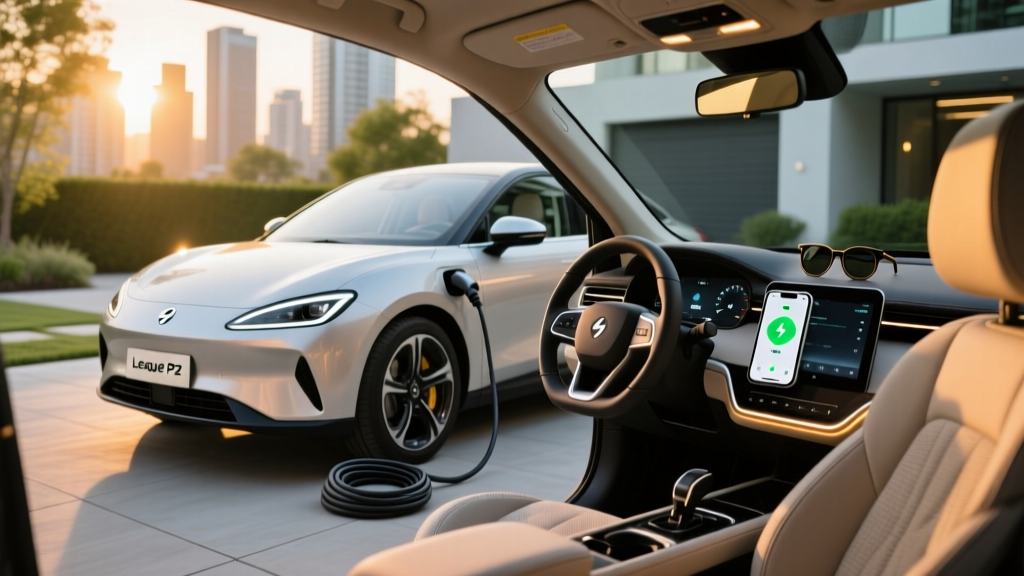
If you are researching League P3 electric car 2022 sales figures to decide whether this compact EV is a sound purchase today, here is the practical answer: the League P3 (also marketed under the Wuling Bingo and related GM-SAIC micro-EV platforms) sold in limited volumes outside China during 2022, with most units concentrated in the domestic Chinese market and select Southeast Asian export regions. In the United States, the League P3 was not officially sold or homologated for street use in 2022, meaning there are zero US retail sales figures reported by Edmunds or Good Car Bad Car. If you are encountering references to this model online, it likely pertains to grey-market imports, neighborhood electric vehicle (NEV) classifications, or confusion with similarly named platforms. Below, we break down what the League P3 actually is, what ownership costs look like for a compact EV in this class, and a practical framework to decide whether importing or choosing a US-legal alternative makes financial sense.
What Is the League P3 Electric Car?
The League P3 is a subcompact electric vehicle positioned in the ultra-budget segment, typically featuring a 25–40 kWh lithium iron phosphate (LFP) battery pack, a single-speed reduction gear, and a front-mounted permanent magnet synchronous motor producing roughly 50–75 kW (67–100 hp). In its home market, the P3 competes against vehicles like the Wuling Hongguang Mini EV, BYD Seagull, and Changan Lumin — all of which prioritize affordability over range or performance.
Typical specifications for vehicles in this class (based on comparable Chinese-market micro-EVs from 2022):
- Battery: 26–38 kWh usable, LFP chemistry
- Range (CLTC, China standard): 185–305 km (115–190 miles)
- Estimated EPA-equivalent range: 80–130 miles (CLTC overstates range by roughly 25–35% vs. EPA methodology)
- Motor output: 50–75 kW / 67–100 hp
- 0–60 mph: 11–15 seconds (estimated)
- DC fast charging: 30–50 kW peak (CCS or GB/T depending on market)
- 10–80% DC charge time: 35–50 minutes at peak rate
- Level 2 AC charging: 6.6 kW onboard charger, ~5–7 hours for full charge
- Price (China domestic): ¥60,000–¥100,000 (~$8,500–$14,000 USD at 2022 exchange rates)
These numbers place the P3 firmly in the "city commuter" category — adequate for daily urban driving but limited for highway travel or regions with sparse charging infrastructure.
League P3 2022 Sales Context: Why US Data Doesn't Exist
Understanding the 2022 sales landscape for the League P3 requires separating Chinese domestic figures from global availability. In China, micro-EVs collectively sold over 1.3 million units in 2022 according to IEA Global EV Outlook 2023. The League P3 and its badge-engineered siblings captured a fraction of this — estimated in the low tens of thousands — but exact model-level breakdowns from the manufacturer are not publicly disaggregated in Western automotive databases.
For US buyers, the critical regulatory barriers include:
- NHTSA certification: All vehicles sold in the US must meet Federal Motor Vehicle Safety Standards (FMVSS). Chinese-market micro-EVs generally lack required crash-test validation, airbag configurations, and lighting standards for US compliance.
- EPA certification: Electric vehicles require EPA range and efficiency testing under the fueleconomy.gov methodology before they can be legally sold.
- §30D tax credit eligibility: Even if imported, a vehicle must be assembled in North America (under current IRS §30D rules) and meet battery-sourcing and critical-mineral thresholds to qualify for up to $7,500 in federal credits. The League P3, assembled in China with Chinese-sourced battery cells, would not qualify.
- Parts and service network: No US dealer network exists for the League P3, meaning any repair requiring proprietary parts would involve international shipping with multi-week lead times.
Cost Comparison: Compact EV vs. Gas Car vs. Hybrid
Since the League P3 is not a viable US purchase, let's compare what a buyer in this price segment would actually spend on a US-legal compact EV, a comparable gas car, and a hybrid over five years. We'll use the 2025 Hyundai Kona Electric (closest US-market analog to the P3's size and price class), a 2025 Hyundai Elantra (gas), and a 2025 Toyota Corolla Hybrid as benchmarks.
| Metric | 2025 Kona Electric SE | 2025 Elantra SE (Gas) | 2025 Corolla Hybrid LE |
|---|---|---|---|
| Base MSRP | $32,675 | $22,125 | $24,400 |
| Est. §30D Credit | $0 (Korea assembly)* | N/A | N/A |
| EPA Range / MPG | 261 mi / 118 MPGe | 36 MPG combined | 52 MPG combined |
| 5-Year Fuel/Energy Cost (15k mi/yr) | $4,125 (home charging at $0.14/kWh) | $10,420 ($3.50/gal) | $7,215 ($3.50/gal) |
| 5-Year Maintenance | $1,800 | $3,500 | $3,200 |
| 5-Year Insurance (avg) | $9,250 | $7,100 | $7,400 |
| 5-Year Total Cost | $47,850 | $43,145 | $42,215 |
*The Kona Electric is assembled in South Korea and does not qualify for the §30D new-vehicle credit as of 2026. However, a used Kona Electric (model year 2022–2023) purchased from a dealer for under $25,000 may qualify for up to $4,000 under the §25E used clean vehicle credit, subject to buyer income caps ($75,000 single / $150,000 joint). Consult IRS §25E guidelines and a tax professional.
The data shows that even without a federal tax credit, the compact EV's lower energy and maintenance costs narrow the gap substantially over five years. At 15,000 miles per year, the Kona Electric saves roughly $6,295 in fuel compared to the gas Elantra and $3,090 compared to the Corolla Hybrid. The EV's higher insurance premiums (typically 15–25% above equivalent gas models due to repair costs and battery replacement risk) partially offset these savings.
Real-World Ownership: What First-Time EV Buyers Must Know
Whether you're considering a compact EV like the Kona Electric, a used Bolt EV, or researching imported micro-EVs like the League P3, these ownership realities apply universally:
Home Charging Access Is Non-Negotiable for Most Owners
Over 80% of EV charging happens at home. If you live in an apartment without dedicated parking and charging access, or if your home electrical panel is at capacity, the economics shift dramatically. A Level 2 home charger installation (240V, 32–48 amp circuit) typically costs:
- Charger hardware: $300–$700 (e.g., ChargePoint Home Flex, Emporia Level 2, Tesla Wall Connector)
- Electrician labor (standard install): $500–$1,500 if the panel is nearby and has capacity
- Panel upgrade (if needed): $1,500–$3,500 for a 200-amp service upgrade
- Permit and inspection: $100–$300
- Total typical range: $900–$2,500 (without panel upgrade) or $2,500–$5,500 (with upgrade)
Without home charging, you'll rely on public DC fast charging, which costs $0.30–$0.50/kWh at networks like Electrify America and EVgo — roughly doubling your per-mile energy cost and adding 20–40 minutes of charging time per session.
Cold Weather Reduces Range by 20–40%
LFP batteries (used in most budget EVs including the League P3 class) are particularly sensitive to cold temperatures. In testing by Recurrent Auto, EVs without heat pumps lose an average of 25–30% of rated range at 20°F. With a heat pump, the loss narrows to 15–20%. A vehicle rated at 130 miles EPA-equivalent could realistically deliver 80–95 miles in a Minnesota winter — a serious limitation if your commute exceeds 40 miles each way.
Charging Speed Matters More Than Peak kW Claims
Compact EVs in the P3's class typically peak at 30–50 kW on DC fast chargers, but that peak is sustained only between roughly 10–50% state of charge. Above 60%, the charge curve tapers significantly. A realistic 10–80% session takes 35–50 minutes — acceptable for occasional road trips but a daily inconvenience if you lack home charging.
EV vs. Gas vs. Hybrid: Decision Framework
Choose a Battery Electric Vehicle (BEV) If:
- You have reliable home charging (garage, driveway, or workplace Level 2 access)
- Your daily driving is under 80% of the vehicle's real-world range (leaving a buffer for detours, climate, and cold weather)
- You drive 12,000+ miles per year (higher mileage = faster payback on fuel savings)
- You want to minimize routine maintenance (no oil changes, fewer brake replacements due to regenerative braking)
- Your state offers additional EV incentives (check AFDC state incentive database)
Choose a Hybrid (HEV) If:
- You lack home charging access and public charging is sparse in your area
- You regularly drive 300+ miles in a single trip and don't want to plan around charging stops
- Your budget is under $28,000 and you need a new vehicle with full warranty
- You live in a region with extreme cold (below 0°F regularly) where range loss would be debilitating
Choose a Plug-In Hybrid (PHEV) If:
- Your commute is under 30 miles and you can charge at home nightly (covering most daily driving on electric-only power)
- You want electric commuting but also need 400+ mile total range for road trips
- You're not ready to commit to a full BEV but want to reduce gasoline consumption by 60–80%
Common Misconceptions About Budget EVs
| Myth | Fact |
|---|---|
| "A $10,000 Chinese EV is a great deal — I'll just import one." | Importing a non-FMVSS-compliant vehicle is illegal for street use in the US. You'd face seizure at customs, inability to register, insure, or legally drive it. The 25-year import exemption applies only to vehicles manufactured before 2001. |
| "EVs are always cheaper to own than gas cars." | At low annual mileage (under 8,000 miles), the higher purchase price and insurance of an EV may not be offset by fuel savings within a typical 5-year ownership period. Hybrids often win on pure economics for low-mileage drivers. |
| "All EVs charge at the same speed." | Charge rates vary enormously: budget EVs peak at 30–50 kW (45+ min for 10–80%), mid-range at 100–175 kW (25–35 min), and premium platforms like Hyundai E-GMP or Tesla at 250–350 kW (15–20 min). The sustained charge curve matters more than peak kW. |
| "The battery will need expensive replacement within 5 years." | Modern LFP and NMC batteries degrade roughly 1.5–2.5% per year under normal use. Most manufacturers warrant 70–80% capacity retention at 8 years / 100,000 miles. Full replacements cost $5,000–$15,000 but are rarely needed before 150,000+ miles. |
| "I can charge from any outlet." | Level 1 charging (120V standard outlet) delivers only 1.0–1.4 kW, adding roughly 3–5 miles of range per hour. For a 130-mile range EV, a full charge takes 26–40+ hours. Level 2 (240V) is essential for practical daily use. |
What Should You Buy Instead of the League P3?
If the League P3's price point and compact size appeal to you, here are US-legal alternatives that deliver similar value with full regulatory compliance, warranty protection, and charging infrastructure compatibility:
| Vehicle | MSRP | EPA Range | DC Charge (10-80%) | §30D Eligible? |
|---|---|---|---|---|
| 2025 Chevrolet Equinox EV LT | $33,600 | 319 mi | ~26 min (150 kW peak) | Yes (up to $7,500)* |
| 2025 Nissan Leaf S | $28,140 | 149 mi | ~45 min (50 kW peak, CHAdeMO) | Yes (up to $7,500)* |
| 2025 Hyundai Kona Electric | $32,675 | 261 mi | ~43 min (100 kW peak) | No (Korea assembly) |
| Used 2022 Bolt EV (dealer) | $16,000–$22,000 | 259 mi | ~37 min (55 kW peak) | §25E used credit up to $4,000 |
*§30D eligibility requires: buyer AGI under $150,000 (single) or $300,000 (joint), vehicle MSRP under $55,000 (cars) or $80,000 (SUVs/trucks), North American assembly, and compliance with battery component and critical mineral sourcing requirements. Rules are subject to change — verify current eligibility at IRS.gov and confirm the specific VIN qualifies at fueleconomy.gov.
Frequently Asked Questions
Can I legally import and drive a League P3 in the United States?
No. The League P3 does not meet Federal Motor Vehicle Safety Standards (FMVSS) and has not been certified by NHTSA or EPA for US sale or registration. Importing one for street use would result in customs seizure. The only legal pathway would be importing it as a non-road vehicle (e.g., for a private track or collection), which requires specific bond and documentation procedures.
Why do Chinese EV sales figures not match US automotive databases?
Chinese domestic sales are tracked by the China Passenger Car Association (CPCA) and China Association of Automobile Manufacturers (CAAM), which use different reporting standards and model naming conventions than US sources like Edmunds, Kelley Blue Book, or Good Car Bad Car. Many Chinese-market models are never exported and therefore have no US sales data.
What's the cheapest legal EV I can buy in the US in 2026?
The 2025 Nissan Leaf S at $28,140 MSRP is currently the least expensive new EV available in the US. With the §30D credit (if eligible), the effective price drops to approximately $20,640. On the used market, a 2022 Chevrolet Bolt EV can be found for $16,000–$22,000, potentially qualifying for the $4,000 §25E used EV credit.
Is a 130-mile range EV practical for daily commuting?
It depends on your commute and charging access. If your round-trip commute is under 60 miles and you charge at home nightly, a 130-mile EV is workable — but you'll have minimal buffer for detours, extreme cold (which can reduce range to 80–95 miles), or unplanned trips. Most EV analysts recommend a minimum 200-mile EPA range for a primary vehicle to maintain practical flexibility.
How does LFP battery chemistry compare to NMC in budget EVs?
LFP (lithium iron phosphate) batteries, common in Chinese-market budget EVs and increasingly in US models like the Tesla Model 3 RWD, offer longer cycle life (3,000–5,000 cycles vs. 1,000–2,000 for NMC), better thermal stability (lower fire risk), and can be charged to 100% regularly without accelerated degradation. The trade-off is lower energy density (heavier pack for the same range) and worse cold-weather performance. NMC batteries deliver more range per kilogram and perform better in freezing temperatures but degrade faster if routinely charged to 100%.