The Short Answer on Land Rover Electric Vehicles
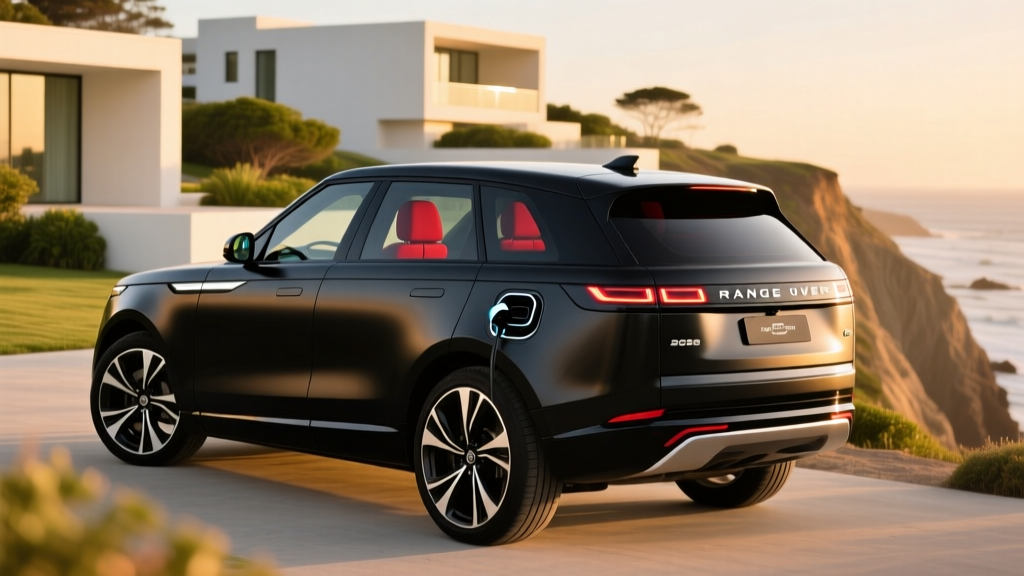
As of early 2026, Land Rover's first all-electric model — the Range Rover Electric — is in final pre-production with customer deliveries expected in late 2026. It rides on JLR's new MLA-Flex architecture and targets an EPA-estimated range of approximately 300–320 miles, 800V-class DC fast charging, and a starting MSRP likely above $120,000. If you're shopping for a luxury electric SUV with serious off-road capability and a Land Rover badge, the Range Rover Electric will be the brand's only BEV offering at launch. Plug-in hybrid (PHEV) variants of the Range Rover and Range Rover Sport remain the electrified options you can actually buy today.
What Land Rover Electric Vehicles Are Available or Coming?
JLR has been deliberate — some would say slow — in its transition to battery-electric vehicles. The company's "Reimagine" strategy, announced in 2021, promised six all-electric models by 2030, with the Range Rover Electric leading the charge. Here is where things stand for the 2026 model year:
Range Rover Electric (Announced — Deliveries Expected Late 2026)
The flagship. Built on the Modular Longitudinal Architecture (MLA-Flex), which supports both ICE and BEV powertrains. JLR has confirmed an 800V electrical architecture, enabling high-speed DC charging. The battery pack is expected to be a large-format NMC (nickel manganese cobalt) lithium-ion unit with usable capacity estimated between 100–115 kWh. Official EPA range figures have not been published as of this writing; JLR's WLTP-targeted range suggests a real-world EPA equivalent in the low 300-mile range.
Currently Available: PHEV Options
If you need an electrified Land Rover product today, the Range Rover P550e PHEV and Range Rover Sport PHEV offer approximately 48–51 miles of EPA-rated electric-only range before the inline-six gasoline engine engages. These are legitimate daily-commute EVs for shorter drives, with the gas engine providing unlimited range for road trips.
| Model | Powertrain | Status | Est. Electric Range | Battery | Est. MSRP |
|---|---|---|---|---|---|
| Range Rover Electric | BEV (800V) | Announced — Late 2026 | ~300–320 mi (EPA est.) | ~100–115 kWh NMC | ~$120,000+ |
| Range Rover P550e | PHEV | Available Now | 51 mi (EPA) | 31.8 kWh NMC | $119,900 |
| Range Rover Sport PHEV | PHEV | Available Now | 48 mi (EPA) | 31.8 kWh NMC | $86,475 |
Range Rover Electric: What We Know About Range, Charging, and Performance
Real-World Range Expectations
EPA Estimate: ~300–320 miles (preliminary, not yet certified)
Real-World Highway: Expect ~250–280 miles at sustained 70–75 mph. Large luxury SUVs with aggressive frontal area suffer disproportionate highway efficiency losses.
Cold Weather (below 32°F): Anticipate 20–30% range reduction, bringing usable range to roughly 210–256 miles. Battery preconditioning and a heat pump (expected but unconfirmed) would help mitigate this.
Charging Speed
The 800V architecture is the headline. JLR has indicated DC fast-charge capability targeting up to 250+ kW peak. At that rate, a 10–80% charge could take approximately 22–28 minutes, depending on the pack's thermal management and charge-curve taper above 80%. For context, the Porsche Taycan and Hyundai Ioniq 5 — both 800V vehicles — sustain strong charging rates through 60–70% SoC before tapering significantly. We expect similar behavior here.
Level 2 (AC) charging at home should support at least 11–19.2 kW, meaning a full overnight charge in roughly 6–10 hours depending on your home charger's output and the final onboard charger spec.
| Level | Power (kW) | Approx. Miles Added/Hour | Use Case |
|---|---|---|---|
| Level 1 (120V) | ~1.4 kW | ~3–4 mi/hr | Emergency/trickle only |
| Level 2 (240V, 48A) | ~11.5 kW | ~30–35 mi/hr | Overnight home charging |
| Level 2 (240V, 80A) | ~19.2 kW | ~50–55 mi/hr | High-power home (if supported) |
| DC Fast Charge | Up to ~250+ kW | ~500+ mi/hr (peak) | 10–80% in ~22–28 min |
Performance
JLR has confirmed a dual-motor all-wheel-drive layout. Expect output in the 500–550 horsepower range with a 0–60 mph time around 4.5–5.0 seconds. For a vehicle that will likely weigh over 6,000 pounds, that's brisk. The brand has also committed to maintaining Land Rover's off-road credentials, including wading depth and terrain-response modes adapted for electric torque delivery.
Cost Breakdown: What Will Ownership Actually Cost?
Purchase Price and Tax Credits
The Range Rover Electric is positioned against the BMW iX, Mercedes EQS SUV, and Tesla Model X in the ultra-premium segment. Based on current Range Rover pricing and the typical BEV premium:
- Estimated Base MSRP: $120,000–$130,000
- Fully Loaded (Autobiography/First Edition): $150,000–$170,000+
Federal §30D Tax Credit — Likely Ineligible
The IRS §30D Clean Vehicle Credit imposes a $80,000 MSRP cap for SUVs. The Range Rover Electric will almost certainly exceed this cap, making it ineligible for the $7,500 federal credit. Additionally, buyer income caps ($300,000 joint / $150,000 individual AGI) and critical-mineral/battery-sourcing requirements further limit eligibility. Consult a tax professional before making purchase decisions based on incentive assumptions.
Charging vs. Fueling: The 5-Year Cost Picture
Let's compare a hypothetical Range Rover Electric against the gas-powered Range Rover P400 (mild-hybrid inline-six) over five years and 75,000 miles.
| Category | Range Rover Electric (Est.) | Range Rover P400 (Gas) |
|---|---|---|
| Purchase Price (MSRP) | $125,000 | $115,000 |
| Fuel/Energy (75k mi) | $5,600 (home L2 @ $0.14/kWh) | $13,500 (@ $3.80/gal, 19 MPG combined) |
| Maintenance (5 yr) | $2,500 | $5,800 |
| Insurance (5 yr avg) | $14,000 | $12,500 |
| Federal Tax Credit | $0 (MSRP cap exceeded) | $0 |
| Estimated Depreciation | $52,000 | $48,000 |
| 5-Year Total | ~$199,100 | ~$194,800 |
The electric Range Rover saves roughly $10,000–$12,000 on energy and maintenance over five years, but those savings are partially offset by a higher purchase price, potentially steeper depreciation (luxury EVs have depreciated aggressively in 2024–2025), and higher insurance premiums. Total cost of ownership is roughly comparable — the financial case hinges on your local electricity rates, annual mileage, and how long you hold the vehicle.
For data on comparable gas and electric efficiency, see the EPA's fueleconomy.gov tool, which allows direct model comparisons.
EV vs. Gas vs. PHEV: Which Land Rover Makes Sense for You?
| Factor | Range Rover Electric (BEV) | Range Rover P550e (PHEV) | Range Rover P400 (Gas MHEV) |
|---|---|---|---|
| Daily Commute (under 50 mi) | Zero emissions, cheapest per mile | Electric-only covers most days | Always burning fuel |
| Road Trips (300+ mi) | Plan 1–2 DC fast stops; 25+ min each | Gas engine takes over seamlessly | Refuel in 5 minutes, go |
| Home Charging Access | Essential — Level 2 strongly recommended | Helpful but not mandatory | Not needed |
| Cold Climate (sub-32°F winters) | 20–30% range loss; preconditioning helps | Engine provides cabin heat; range unaffected | No range concern |
| Off-Road Use | Instant torque; wading depth TBD | Proven capability | Proven capability |
| Maintenance Cost | Lowest (no oil, filters, spark plugs) | Moderate (ICE still requires service) | Highest |
| Fuel Cost per Mile | ~$0.06–0.08/mi (home L2) | $0.06/mi (EV) + $0.20/mi (gas) | ~$0.18–0.22/mi |
Real-World Ownership: What First-Time EV Buyers Need to Know
Home Charging Is Non-Negotiable for This Vehicle
A luxury BEV at this price point demands reliable Level 2 home charging. Expect to invest in a 48-amp or 80-amp Level 2 wall connector (such as a ChargePoint Home Flex or Tesla Wall Connector with J1772 adapter). Installation costs vary widely:
| Component | Cost Range |
|---|---|
| Level 2 Charger Unit (48A–80A) | $500–$900 |
| Electrician Labor (240V circuit, 50–100 ft run) | $800–$2,500 |
| Permit & Inspection | $100–$400 |
| Electrical Panel Upgrade (if needed, 200A service) | $1,500–$3,500 |
| Total (no panel upgrade) | $1,400–$3,800 |
| Total (with panel upgrade) | $2,900–$7,300 |
Have a licensed electrician evaluate your panel before purchasing. A 6,000+ lb luxury SUV with a 100+ kWh battery draws significant energy — a 200-amp panel is typically the minimum for comfortable 48A Level 2 charging alongside normal household loads.
Public Charging Realities
The Range Rover Electric is expected to use the NACS (North American Charging Standard) connector, given JLR's 2024 announcement to adopt NACS across its EV lineup. This grants access to Tesla's Supercharger network (17,000+ stalls in North America) as well as Electrify America, EVgo, and other networks via NACS-equipped stations. For cross-country travel, plan routes around DC fast-charger availability — apps like PlugShare and A Better Routeplanner are essential.
Battery Longevity and Warranty
JLR is expected to offer a standard EV battery warranty of 8 years / 100,000 miles with a capacity-retention threshold of 70%, consistent with industry norms and EPA/California mandate baselines. NMC chemistry degrades faster than LFP when routinely charged to 100% — daily charging to 80–90% SoC is recommended for longevity, reserving full charges for road trips.
Common Misconceptions About Land Rover Electric Vehicles
| Myth | Fact |
|---|---|
| "Land Rover already sells an electric Range Rover." | As of early 2026, the Range Rover Electric is announced but not yet delivering to customers. Only PHEV variants are available now. |
| "It will qualify for the $7,500 federal tax credit." | Almost certainly not. The IRS §30D MSRP cap for SUVs is $80,000. The Range Rover Electric will far exceed that threshold. |
| "An electric Land Rover can't go off-road." | Electric motors deliver instant torque at zero RPM — ideal for rock crawling. JLR has committed to full Terrain Response integration. Wading depth may even improve without intake/exhaust concerns. |
| "I can charge it on a regular outlet overnight." | Level 1 (120V) adds roughly 3–4 miles per hour. A 100+ kWh battery would take 70+ hours for a full charge. Level 2 (240V) is effectively required. |
| "The range will be exactly what the sticker says." | EPA range is a laboratory estimate. Real-world highway driving at 75 mph, cold weather, and terrain can reduce range by 15–30%. Plan conservatively. |
Decision Framework: Should You Wait, Buy PHEV, or Look Elsewhere?
If-Then Guide for Land Rover EV Buyers
- Choose the Range Rover Electric (wait for late 2026) if: You have Level 2 home charging, your daily driving is under 200 miles, you want the quietest and most refined Range Rover experience, and you can absorb a $120,000+ purchase without relying on federal tax credits.
- Choose the Range Rover P550e PHEV (available now) if: You want an electrified Range Rover today, your commute is under 50 miles (covering electric-only range), you regularly take road trips where charging infrastructure is sparse, or you live in a cold climate where BEV range loss is a concern.
- Look at the BMW iX or Mercedes EQS SUV if: You need a luxury electric SUV now and cannot wait until late 2026. Both are available, EPA-certified, and have established charging and service networks.
- Look at the Tesla Model X if: You prioritize Supercharger network access, over-the-air updates, and a lower starting price (~$80,000), and you're willing to trade traditional luxury materials for a minimalist tech-forward cabin.
- Reconsider an EV entirely if: You lack home charging access, regularly drive 400+ miles in a day through charging-desert regions, or live in an area with extreme cold and limited public fast-charging infrastructure.
Frequently Asked Questions
When can I actually buy the Range Rover Electric?
JLR has targeted customer deliveries for late 2026, with reservations potentially opening in mid-2026. Exact timing depends on production ramp at the Solihull plant. No firm on-sale date has been published as of this writing.
Will the Range Rover Electric use NACS or CCS?
JLR has committed to the NACS connector for its North American EVs. This means native compatibility with Tesla Superchargers and the growing ecosystem of NACS-equipped public chargers.
How does the Range Rover Electric compare to the BMW iX?
The BMW iX xDrive50 starts around $87,250, offers an EPA-estimated 307 miles of range, and charges at up to 200 kW (CCS). The Range Rover Electric is expected to be significantly more expensive ($120,000+), with comparable or slightly better range and faster 800V-class charging, but with superior off-road capability and traditional Range Rover luxury appointments. The iX is available now; the Range Rover Electric is not.
Can I tow with the Range Rover Electric?
JLR has indicated towing capability will be maintained, but an official tow rating has not been published. The gas Range Rover tows up to 7,716 lbs. Expect the EV variant to offer a competitive rating, though towing will dramatically reduce range — typically by 30–50% depending on trailer weight and aerodynamics.
What about state incentives if the federal credit doesn't apply?
Some states offer additional rebates or HOV-lane access for EV purchases regardless of MSRP. California, Colorado, and New York have programs that may apply. Check your state's energy office or DMV for current rules, as these vary by jurisdiction and change frequently.
Is the battery covered under warranty?
Expected coverage is 8 years / 100,000 miles with a minimum 70% capacity retention guarantee, in line with industry standards and California Air Resources Board requirements. If the battery degrades below that threshold within the warranty period, JLR would be obligated to repair or replace it.